Search “are essential oils safe for dogs” and the first page hands you two opposite answers. Half the results list “safe” oils with confident dilution recipes. The other half quotes poison control lines saying no oil is proven safe for dogs. Both sides cite vets. The poison control side is the one with the case files, so this article follows their lead: some oils are far more dangerous than others, concentration and route decide the outcome, and the popular uses deserve more skepticism than they get.
Are essential oils safe for dogs?
No essential oil is proven safe for dogs, though the risk varies enormously from oil to oil and case to case. That sentence annoys everyone. The aromatherapy crowd hears an attack on their hobby. The fear crowd hears permission to keep diffusing. Both misread it. “Not proven safe” is not the same as “all oils poison all dogs.” It means safety depends on specifics, and the specifics are what this article covers.

The ASPCA Animal Poison Control Center puts it plainly: concentrated oils can absolutely endanger pets, while a brief diffuser session in a pet-free room is not likely to be an issue. Between those poles sits everything owners actually do.
Dogs are not small humans with fur. Their livers process plant compounds differently, their noses magnify every scent, and they groom oil off their coats with their tongues. Any safety assessment that ignores those three facts is a human assessment wearing a dog costume.
Why dogs react differently than people
Dogs absorb essential oils fast through the skin and airways, and through the gut when swallowed, which is why whole-body effects follow significant exposures. The Merck Veterinary Manual describes this rapid absorption as the reason whole-body effects should be expected after a significant exposure. An oil rubbed on the skin enters the bloodstream rather than staying put, and the dog’s grooming adds an oral dose on top.
Cats get the famous warning because their livers lack key enzymes for breaking down plant compounds, especially phenols and terpenes. Dogs have the enzymes, which makes them less sensitive than cats, but “less sensitive than cats” is a low bar. Dogs still get poisoned by essential oils every week, and the Pet Poison Helpline reports rising case numbers as home use grows.
Size matters too. A few drops represent a much larger dose per kilogram in a Chihuahua than in a Labrador. Dogs that are very young, very old, or living with liver disease clear compounds more slowly, which stretches a moderate exposure into a long one. The same bottle is a different risk in different houses.
The four oils behind most dog poisonings
Tea tree and pennyroyal cause the most essential oil poisonings in dogs, followed by wintergreen and pine. The Pet Poison Helpline names these four as its most common offenders, and each injures dogs differently. Memorizing this short list matters more than memorizing any “safe” list.

Pennyroyal is the grimmest of the four. Its toxic compound attacks the liver directly, causing hepatic necrosis, which is liver tissue death. Dogs develop vomiting and diarrhea that can turn bloody, then lethargy, then liver failure. Pennyroyal has a folk history as an insect repellent, which is how it keeps ending up on dogs. Every form of it should be kept away from dogs entirely.
Wintergreen oil is liquid aspirin in effect. It contains methyl salicylate, and dogs that ingest it develop the same toxicity as an aspirin overdose: severe gut upset and ulcers, kidney injury, liver injury. Sweet birch oil carries the same compound and the same risk. Pine oils irritate the gut and skin, cause drooling and vomiting that can turn bloody, and affect the nervous system and kidneys at higher doses.
Tea tree oil: the number one offender
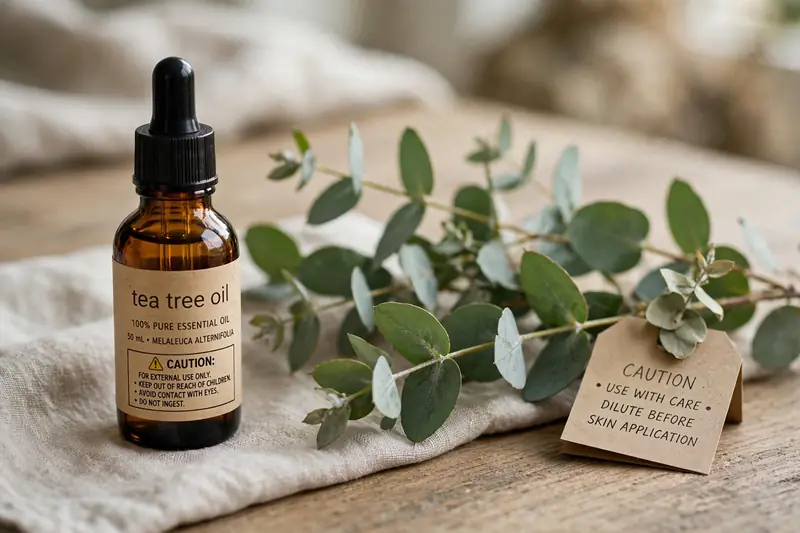
Tea tree oil, also called melaleuca, is the single most common essential oil poison in dogs. It deserves its own section because it also appears in “natural” pet products like skin sprays and ear cleaners marketed as gentle alternatives. Dogs get poisoned by products their owners bought specifically to be safe.

The toxic compounds include terpinen-4-ol, and the signs are distinctive: depression, tremors, incoordination, weakness or paralysis in the rear legs, vomiting, and low body temperature. The ASPCA notes that as few as seven or eight drops of concentrated tea tree oil can cause problems. Signs can linger for up to four days even with aggressive veterinary care, which tells you how slowly dogs clear it.
Check your pet product labels. “Contains melaleuca” or “tea tree” is a reason to switch, not a selling point. Low concentrations in rinse-off products are less risky than pure oil, but dogs that lick their coats can still react.
How exposure happens: swallowed, skin, or breathed
Swallowing essential oil is the most dangerous route, skin contact comes next, and breathing diffused scent is the least dangerous. The Pet Poison Helpline ranks the routes in exactly that order, and the ranking surprises owners who fear the diffuser most. The diffuser is the most visible use, so it gets the most worry. The bottle the dog licks is the quieter, worse event.
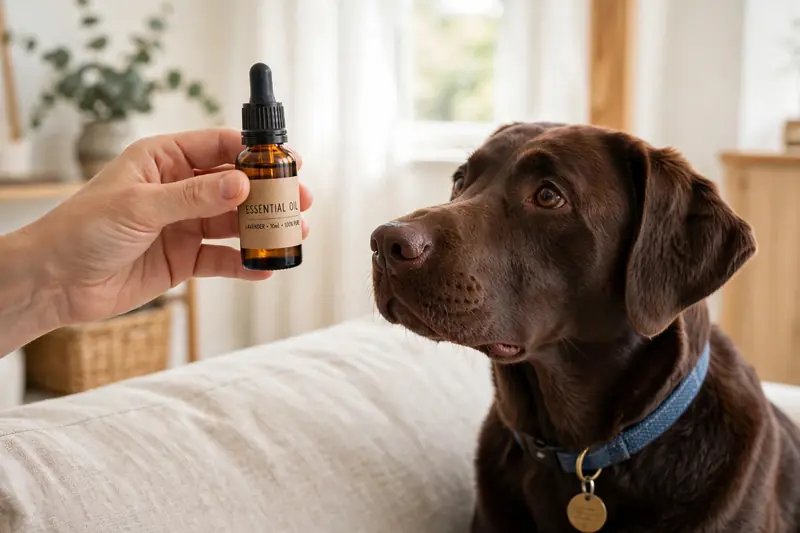
Ingestion usually happens through grooming. Oil on the coat becomes oil in the stomach within the hour, which is why “just a dab on the fur” is never just on the fur. Dogs also get into bottles directly or lap up diffuser water, which is diluted poison in a bowl. Skin exposure alone still absorbs, and broken or inflamed skin absorbs far more.
Inhalation gets its own caution for specific dogs. Healthy dogs tolerate brief, diluted diffusion in ventilated rooms. Dogs with breathing problems, flat-faced breeds with narrow airways, and birds in the house do not. Aspiration is the hidden inhalation risk: oils are viscous, and a dog that vomits after swallowing oil can inhale droplets into the lungs, causing aspiration pneumonia on top of the poisoning.
Diffusers: passive vs active
Passive diffusers mainly risk respiratory irritation, while active diffusers add a fur-contamination route most owners miss. Reed sticks and candles release scent without droplets. Unless the dog knocks one over and gets oil on its coat, the main hazard is strong fragrance irritating eyes and airways. Keep them high, keep rooms ventilated, and keep them away from birds entirely.

Ultrasonic and nebulizing diffusers emit microdroplets of actual oil into the air. Those droplets settle on every surface in the room, including the dog. The dog then grooms the oil off its fur and swallows it. This is the route that turns an “aromatherapy evening” into a low-grade oral exposure, and almost no diffuser marketing mentions it.
Keep the dog out of the room during the session. Ventilate afterward, and never let the dog sleep next to a running diffuser. Watch for watery eyes, sneezing, coughing, drooling, or restlessness. Any of those signs means the diffuser goes off. A dog that leaves the room on its own has already voted.
The “safe oils” list problem
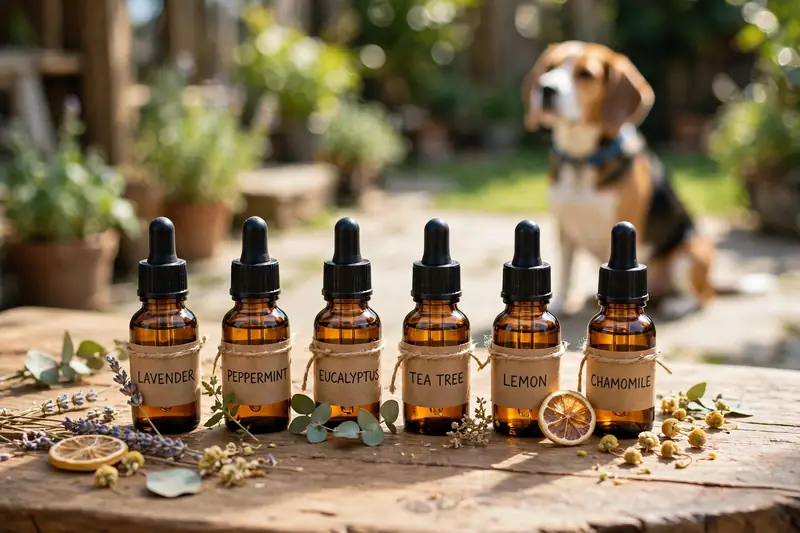
No veterinary toxicology body publishes an official list of safe essential oils for dogs, so every “safe oils” list online is one author’s opinion. Lavender tops nearly every list, with chamomile and frankincense close behind, all described as gentle and calming. Veterinary references describe the same oils with limits and cautions, and none declare them proven safe. The gap between those two framings is where dogs get hurt.

The only controlled dog study of a diffused oil, a 2006 lavender trial, measured travel behavior, calmer dogs on car rides, not safety. So the most cited “safe” oil has behavior data and almost no safety data in dogs. That inversion runs through the whole topic: popularity first, evidence later, maybe.
Lavender or chamomile will not poison every dog. Still, “safe” is doing heavy lifting it cannot support. An oil can be lower-risk than tea tree and still be unproven, still be dose-dependent, and still be the wrong choice for a puppy, a senior, or a dog with liver disease. Treat every safe list as a starting point for a vet conversation, not as permission.
What to do if your dog gets into essential oils
Call your vet or poison control immediately if your dog swallows, licks, or gets essential oil on its skin, and do not induce vomiting. Oils can enter the lungs on the way back up, causing aspiration pneumonia. The Pet Poison Helpline’s essential oil fact sheet stresses seeking veterinary care as soon as possible, since treatment depends on the specific oil and the dog’s signs.

If oil is on the coat, bathe the dog with lukewarm water and plain dog shampoo to stop further absorption and grooming ingestion. Do not use more essential oil to “counteract” anything, do not give milk or cooking oil, and do not wait to see if signs develop. Bring the bottle or a photo of the label, because the oil type and concentration shape the treatment plan.
Watch for the documented signs: drooling, vomiting, diarrhea, wobbliness, tremors, unusual tiredness, weakness in the rear legs, and low body temperature. Note when they started and what the dog contacted. Our notes on inducing vomiting in dogs explain why the vet makes that call, not the owner. Save the poison control number in your phone now: (888) 426-4435 for the ASPCA line.
Calming your dog without essential oils
Routine and exercise, plus vet-guided products, calm anxious dogs better than any diffuser. The pattern behind most essential oil use on dogs is an owner trying to help with anxiety, storms, or travel stress. The impulse is good. The tool is unproven, and better tools exist.

Calming treats made for dogs deliver measured doses of ingredients with animal data behind them. Melatonin has veterinary literature supporting its use for noise anxiety, with dosing your vet sets by weight. Pressure wraps help some dogs through thunderstorms. A tired dog with a predictable daily routine out-calms a rested dog in a chaotic house, and no scent changes that.
One substitution to avoid: swapping a risky oil for peppermint oil, which carries its own documented risks for dogs. The fix is stepping away from the shelf, not reaching for a different bottle on it. Use approaches with dosing guidance and safety data. Your vet can match the tool to the dog, which is something no internet oil chart can do.
Essential oils and dogs: quick answers
The same questions repeat everywhere oils and dogs mix, so here are the short versions.
Which essential oils are toxic to dogs?
Tea tree, pennyroyal, wintergreen, sweet birch, pine, cinnamon, and eucalyptus are the most documented dangers. The Pet Poison Helpline’s toxicology update lists these with their specific poisoning signs.
Can I diffuse lavender oil around my dog?
Briefly, diluted, in a ventilated room the dog can leave, it is low risk for healthy dogs. Skip diffusers for dogs with breathing problems, and never run one for hours in a closed room.
Is tea tree oil safe for dogs?
It is not. Tea tree oil is the most common essential oil poison in dogs, causing tremors, weakness, rear leg paralysis, and low body temperature. Avoid it in all forms, including pet products.
Can I put essential oils on my dog’s skin?
Do not apply concentrated oils to skin or fur. Even diluted topical use risks absorption plus ingestion through grooming. Discuss any topical product with your vet first.
What are signs of essential oil poisoning in dogs?
Drooling, vomiting, diarrhea, wobbliness, tremors, depression, weakness in the rear legs, and low body temperature. Signs can last for days with oils like tea tree.
Are essential oils safe for puppies?
Puppies face higher risk because their livers and detox systems are still developing. Keep essential oils and diffusers away from puppies unless your vet approves a specific product.
Essential oils sit in an odd spot: beloved by owners, unproven by science, and documented by poison control as a real hazard. The honest position is narrow. A few oils are lower-risk than others, no oil is proven safe, concentration and route decide the outcome, and the most popular uses have the thinnest evidence. When the goal is a calmer dog, proven tools and your vet’s advice will always beat the prettiest bottle.
Disclaimer: This article is for general information only and is not veterinary advice. Any dog that is very young, very old, or dealing with liver or breathing trouble faces higher risk from essential oils and needs the vet’s guidance first.