
Dog dental treats reduce plaque and tartar through mechanical scrubbing as the dog chews, sometimes with added ingredients that slow tartar formation, and the ones worth buying carry the VOHC Seal of Acceptance. The Veterinary Oral Health Council awards that seal only after trial data shows real plaque or tartar reduction. Everything else on the shelf is a promise without proof. This guide explains how the treats work, which products earned the seal, and how to match one to your dog.

How dental treats actually clean teeth
A dental treat cleans by abrasion: the chew’s texture scrapes plaque off the tooth crowns while the dog works it, and some formulas add chemicals that slow new tartar from hardening. Plaque is the soft bacterial film that forms daily; tartar is plaque that mineralized into a hard crust. Chews can remove plaque and slow tartar. Nothing you buy over the counter removes established tartar well, which is why a professional cleaning comes first and treats maintain afterward.
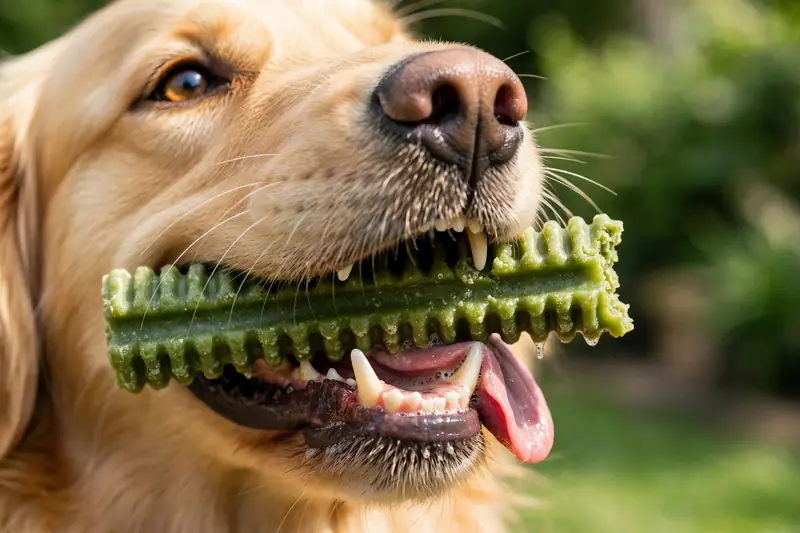
Active ingredients do the second half of the work. Sodium hexametaphosphate and sodium tripolyphosphate bind calcium in saliva so it cannot cement into tartar as quickly. Delmopinol (in OraVet) forms a barrier film that makes it harder for bacteria to stick. Enzymes in some formulas break down the plaque matrix. These are real mechanisms with trial data behind them, not marketing fairy dust.
Chewing time is the variable owners control. A treat swallowed in two crunches cleans almost nothing regardless of its ingredients. Size the treat to the dog so it takes actual work: the package weight ranges exist for this reason. A 70-pound dog eating a petite chew gets a snack, not a dental benefit.
What VOHC acceptance means (and what it does not)
The VOHC Seal of Acceptance means a product proved at least 10% plaque reduction or 20% tartar reduction in a controlled trial, and it says nothing about safety. The council reviews submitted study data against preset standards and awards the seal for the specific claim shown: plaque, tartar, or both. A seal for tartar does not promise plaque control, and the seal never promises the product suits every dog.

The safety gap matters. VOHC evaluates efficacy, which means a sealed product can still be wrong for a particular dog: wrong size, too hard, or an ingredient the dog cannot tolerate. Real bones, antlers, and hard nylon chews carry no VOHC acceptance at all, and vets warn they fracture teeth. PetMD’s bones guide recommends against giving dogs bones of any kind, cooked or raw. The seal answers “does it work,” not “is it safe for my dog.”
The list also changes. Products get added when companies submit new data and dropped when acceptances lapse, so a 2022 roundup may name products no longer listed. The official VOHC accepted-products page is the only source that stays current. Check it before buying, not after.
The VOHC-accepted chew treats worth knowing
The current VOHC dog list includes Greenies, OraVet, Purina DentaLife, WHIMZEES Brushzees and Toothbrush, Virbac C.E.T. VeggieDent, Milk-Bone Brushing Chews, Pedigree Dentastix Advanced, ProDen PlaqueOff, Yummy Combs, and Member’s Mark dental treats among the edible chews. Each earned the seal for plaque, tartar, or both, and each takes a different approach to the same job.

| Product | VOHC claim | Approach |
|---|---|---|
| Greenies Original | Plaque and tartar | Chewy, flexible texture; the long-studied benchmark |
| OraVet | Plaque and tartar | Delmopinol barrier plus abrasive chew |
| Purina DentaLife | Plaque and tartar | Porous, spongy texture with ridges |
| WHIMZEES Brushzees | Plaque and tartar | Stiff vegetable-based chew in molded shapes |
| VeggieDent FR3SH | Plaque and tartar | Z-shaped chew; plant-based |
| Milk-Bone Brushing Chews | Plaque and tartar | Twisted shape for scrubbing action |
| Dentastix Advanced | Plaque and tartar | X-shape with active ingredients |
| ProDen PlaqueOff | Plaque and tartar | Seaweed-based (Ascophyllum nodosum) approach |
| Yummy Combs | Listed (check current claim) | Honeycomb shape; 44% protein |
Greenies earn the benchmark slot on the record: decades of use, VOHC acceptance across five sizes, and the most published data of any chew. The Greenies dental chew review breaks down the sizes and calories per piece. A Regular Greenies runs about 88 calories for the 25-to-50-pound size, which is the number to budget. OraVet suits owners who want the barrier chemistry; WHIMZEES suit the grain-free crowd. The differences between sealed products are smaller than the gap between sealed and unsealed.
One caution from the list’s history: Minties appeared in VOHC’s 2014 news archive but does not appear on the current accepted-products list. Old roundups still recommend it. This is exactly why the live list matters more than any article, including this one.
Dental diets: the other VOHC category
VOHC-accepted dental diets (Hill’s t/d, Hill’s Science Diet Oral Care, Purina Pro Plan Veterinary Diets DH, Royal Canin dental formulas, Eukanuba Adult Maintenance) clean teeth through oversized kibble that scrubs as the dog crunches. The kibble is engineered to resist shattering so the tooth sinks in before the piece breaks, maximizing contact time. It is the same abrasion principle as a chew, delivered through the daily meal.
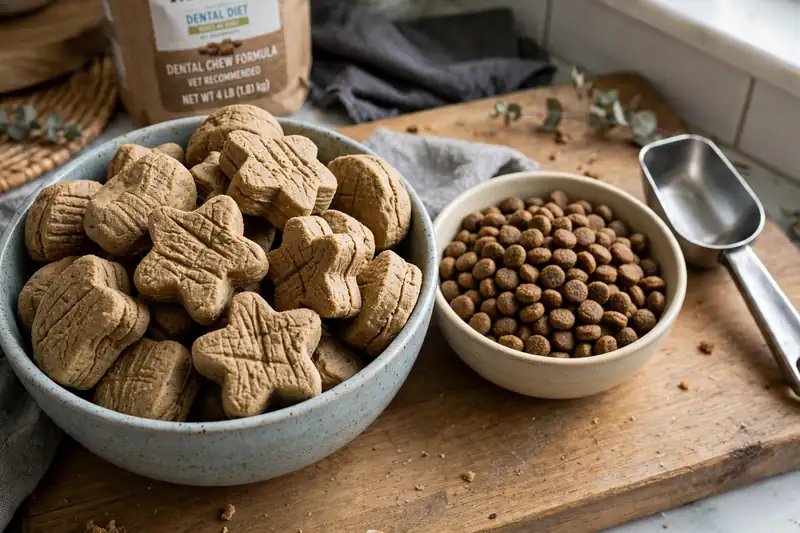
Dental diets suit dogs that will not chew treats properly. Gulpers who swallow chews whole still have to crunch kibble, because kibble is the meal. The trade-off is commitment: a dental diet is the whole diet, not an add-on, and switching foods needs a vet’s input, especially for dogs with medical conditions. Hill’s t/d is veterinary-only for that reason.
Treats plus a dental diet is not double-dipping; it is layering. The diet handles the daily baseline and the chew adds focused abrasion. But the calories stack, so the treat budget shrinks when the diet already does dental work. Most owners pick one lane and do it consistently.
What to look for on the label
The label check has five items: VOHC seal, correct size for the dog’s weight, a texture the dog will actually chew, calories per piece, and no ingredient the dog cannot tolerate. Miss any one and the product underperforms. The seal without the right size is the most common miss; owners buy the value bag in one size and feed it to two different dogs.

Texture honesty matters more than ingredient poetry. A “natural” chew the dog swallows whole cleans nothing. A conventional chew the dog works for five minutes cleans plenty. Watch the first three treats: if the dog crunches thoughtfully, the texture fits; if it inhales, size up or switch brands. The dog’s chewing style is data.
Calories deserve the same attention as any treat. Dental chews run 50 to 130 calories apiece depending on size, and they count fully toward the VCA’s 10-percent treat guideline. A large dog’s daily dental chew can eat half the treat budget. Budget it like food, because that is what it is.
Hard chews that never earned the seal
Antlers, marrow bones, hooves, and hard nylon bones carry no VOHC acceptance and fracture teeth often enough that veterinary dentists warn against them. The rule of thumb from dental specialists: if you would not want it hit against your own kneecap, it is too hard for teeth. Enamel loses against antler every time, and a slab fracture of a carnassial tooth means extraction or root canal. Cooked bones splinter just as dangerously, as the chicken bone safety guide explains.

Rawhide sits in the middle. Most rawhide has no VOHC acceptance, but two products do: Tartar Shield Soft Rawhide Chews and Purina Pro Plan Veterinary Diets Dental Chewz. The distinction is processing and testing, not the material’s reputation. Standard rawhide still carries the gulping and blockage risks covered in the rawhide safety guide.
The marketing trap is “long-lasting.” A chew that lasts an hour is either too hard (fracture risk) or being gummed rather than chewed (no abrasion). Effective dental chews take minutes, not hours. Duration is not the metric; contact between texture and tooth is.
Treats are not brushing
Daily tooth brushing remains the gold standard for canine dental health, and every dental treat is a supplement to it, not a replacement. Brushing cleans below the gumline where periodontal disease begins; chews clean the crowns they touch. No chew reaches the gumline. The AKC’s dental care tips walks through the technique, and most dogs accept it within two weeks of patient introduction.
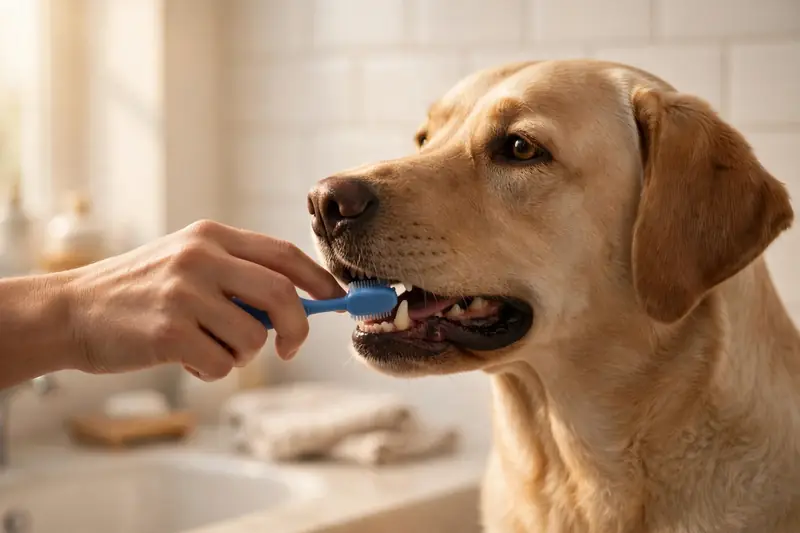
The honest hierarchy runs: professional cleaning for existing disease, daily brushing for prevention, VOHC-accepted chews for maintenance between brushings, water additives as a distant fourth. Skipping straight to chews is like mouthwash instead of a toothbrush: better than nothing, not the program.
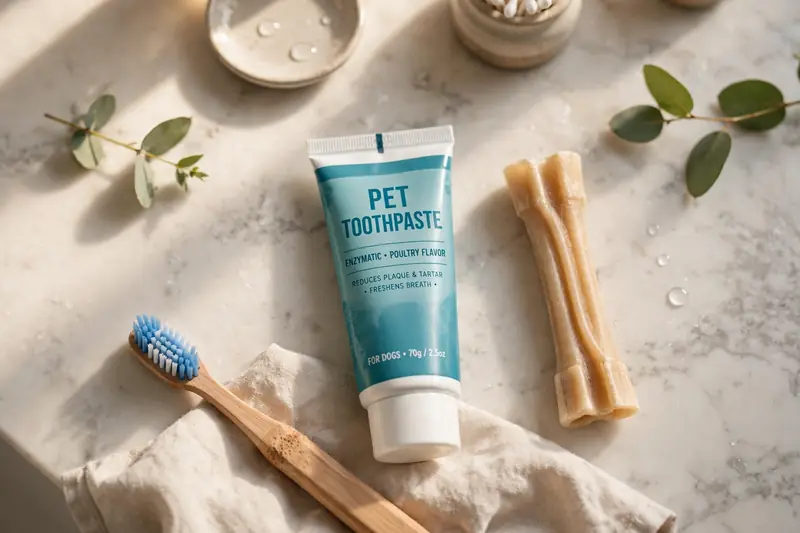
Puppy owners get the easiest win. Introduce brushing before the adult teeth finish coming in, and the dog never knows a life without it. Adult dogs learn too; the first week is the hard part, and poultry-flavored enzymatic toothpaste (note: the toothpaste itself is not VOHC-accepted, only some chews and diets are) makes the introduction easier.
Matching the treat to your dog
Match the treat to the dog’s weight, chewing style, calorie budget, and ingredient sensitivities, in that order. Weight picks the size. Chewing style picks the texture: thoughtful chewers suit firm molded chews like WHIMZEES; enthusiastic gulpers need wide, flat shapes like Yummy Combs or OraVet that resist swallowing whole.

Seniors need the softness check. Older dogs with worn teeth or missing teeth do better with chewier, more flexible options (Greenies, DentaLife) than with stiff molded chews. Natural options like chicken feet for dogs offer chewing enrichment, though they lack VOHC testing. Watch the first session: dropping the chew, chewing on one side, or giving up signals the texture is wrong for that mouth.
Allergy households read panels first. Grain-free options (WHIMZEES, VeggieDent, some Greenies lines) cover grain sensitivities, and the pig ear guide weighs another popular chew with its own trade-offs; single-protein or limited recipes cover the rest. Chicken appears in several formulas, so poultry-sensitive dogs need the panel check, not the brand assumption. When the ingredient list is unclear, the manufacturer’s site beats the retailer’s summary.
The daily routine that actually works
One right-sized VOHC-accepted chew per day, brushing a few times a week, and an annual vet dental check is the routine that keeps most dogs’ mouths healthy. The chew handles daily plaque; brushing handles the gumline; the vet catches what both miss. Complexity kills compliance, so the routine stays this simple on purpose.
Timing helps. Give the chew after the evening meal, when the day’s plaque is freshest and the dog is settling. Brushing right before bed extends the clean window through the night. Morning breath in dogs is normal to a degree; breath that smells foul at any hour is a vet visit, not a treat problem.
Track the mouth, not just the routine. Lift the lip monthly and look at the gumline: pink gums and white tooth edges mean the routine works; red gums, brown crust at the gum edge, or bleeding mean the vet needs to see the dog. Photos once a month make changes visible that daily looking misses.
Frequently asked questions about dog dental treats
Owners usually ask whether treats replace cleanings, which product is best, and how many to give. The answers below keep to what the evidence supports.
Do dental treats replace professional cleanings?
They do not. Treats maintain; cleanings treat. Established tartar and gum disease need a professional cleaning under anesthesia, where the vet cleans below the gumline and takes X-rays. Start the daily chew after the cleaning, not instead of it.
Which dental treat is best?
The best one is a VOHC-accepted chew, correctly sized, that your dog actually chews and that you will buy every month. Greenies are the most studied benchmark; OraVet, WHIMZEES, DentaLife, and the others on the list all earned the same seal. Consistency with any of them beats occasional use of the “best” one.
How many dental treats per day?
One per day for most products, sized to the dog. That is the tested dose behind the VOHC seal. Count the calories in the day’s treat budget; a large chew can use half of it.
Are dental treats safe for puppies?
Puppies can use puppy-appropriate chews once they have their adult teeth, usually around six months. Match the size carefully and supervise. Very young puppies do better with a brushing introduction than with chews.
Do water additives work?
One water additive (Oxyfresh) holds full VOHC acceptance; the rest are unproven. Additives are the weakest tier of dental care: easy, but with thin evidence. They can supplement a chew-and-brush routine, not replace it.
Can dental treats cause stomach upset?
Any new treat can, especially rich or large ones. Introduce over several days and watch the stool. Dogs with sensitive stomachs do better with simpler formulas; the bland diet guide covers the reset if a new chew disagrees with the gut.
The seal is the shortcut through the marketing noise. Pick a VOHC-accepted chew that fits the dog’s mouth and the owner’s budget, give one a day, brush when you can, and let the vet check the rest. Dental care is the least glamorous part of dog ownership and one of the highest-return habits in it.
Disclaimer: This article is for general information only and is not veterinary advice. If your dog has bad breath, red or bleeding gums, loose teeth, or mouth pain, see your veterinarian. Dental treats do not replace professional dental care.


