

Greenies are among the best-known dental chews for dogs, and they carry the Veterinary Oral Health Council‘s Seal of Acceptance for plaque and tartar control, which is the strongest independent backing a dental chew can have. They are also the dental chew with the most baggage: safety scares from the mid-2000s still follow the brand. This guide gives you both sides straight: how Greenies work, what the VOHC seal actually proves, the safety history, correct sizing, and the feeding rules that keep them safe.
What are Greenies for dogs?
Greenies are daily dental chews made by Mars PetCare, shaped with a chewy, flexible texture. Your dog bites in, the tooth sinks into the treat, and the chewing action scrubs the tooth surface down to the gumline. They come in five sizes matched to weight, and the guideline is one treat per day.

The design is deliberate. The chewy texture is meant to give way under the tooth rather than shatter, so the treat wraps around the tooth and wipes as the dog chews. The original formula is chicken-flavored in the classic version, and the line now includes variants for puppies, seniors, weight management, and grain-free diets. They are made with highly soluble ingredients, which matters because a dental chew spends time in the stomach after the chewing is done. The brand’s core claim is simple: one a day for cleaner teeth, fresher breath, and less plaque and tartar. Whether that claim holds up is exactly what the VOHC seal is for, which the next sections unpack.
Do Greenies actually clean teeth?
The chewing action does remove some plaque mechanically, and the VOHC seal confirms that Greenies reduced plaque and tartar in controlled trials when fed daily as directed. They work as a maintenance tool for dogs with reasonably healthy teeth. They cannot remove hardened tartar that is already there, and they cannot fix gum disease on their own.

Think of Greenies as a toothbrush, not a dentist. A toothbrush slows the buildup of new plaque; it does not scrape off the hardened tartar a hygienist removes. Same deal here. The scrubbing happens while the dog chews, which is why size and chewing style matter so much. A dog that gulps the treat in two bites gets almost no cleaning benefit. A dog that gnaws for several minutes gets the intended effect. The breath-freshening most owners notice is real but partly cosmetic: less plaque means fewer odor-causing bacteria, but bad breath with an underlying dental problem will not resolve with chews alone. If your dog already has visible tartar, red gums, or bad breath that persists, a professional dental cleaning comes first, and daily chews become the maintenance after.
The VOHC seal and what it proves
The Veterinary Oral Health Council is an independent body founded by veterinary dental specialists. Its Seal of Acceptance means the manufacturer submitted study data showing at least the preset reduction in plaque or tartar, typically around 20 percent, versus a control group. Greenies Original has carried the seal for plaque and tartar since 2007, across all five sizes.

This matters because pet dental claims are otherwise a free-for-all. Any brand can print “fights tartar” on a bag. The VOHC seal is the only independent check that the claim was tested in a controlled trial. It is product-specific, not brand-wide: each Greenies formula earned its own listing. The council also publishes the full accepted-products list, which you can check yourself. One caveat worth knowing: the seal confirms the product reduced plaque or tartar under trial conditions when used as directed, meaning daily, at the right size. It is not a promise that every dog will see the same result, and it does not evaluate safety. Still, when comparing dental chews, the VOHC list is the tie-breaker. A chew with the seal beat a chew without one in the only test that counts.
Greenies sizes and how to choose
Greenies come in five sizes by weight: Teenie for 5 to 15 pounds, Petite for 15 to 25, Regular for 25 to 50, Large for 50 to 100, and Jumbo for over 100. Always match the size to your dog’s current weight. Too small gets swallowed whole; too large for a small dog is a choking risk.

Weigh your dog before you buy, especially if you are between sizes. The size bands exist because the treat needs to be big enough to force real chewing. When a 40-pound dog gets a Teenie, it inhales it in one bite and the dental benefit disappears along with the safety margin. The package states the treats are not suitable for dogs under 5 pounds or under 6 months of age, and that rule is not negotiable. Puppies under six months get the Puppy formula in the right size once they are old enough. Re-check the size as your dog grows or loses weight. A dog that dropped from 55 to 45 pounds moved from Large to Regular, and feeding the old size wastes money and chewing time.
Calories and the treat budget
Dental chews are treats, and their calories count. The Teenie size runs about 25 calories per treat, and larger sizes run higher, so check your package. Count the chew inside the daily treat budget, which should stay under 10 percent of your dog’s total calories. For small dogs especially, one Greenie can be a meaningful chunk of the day’s extras.
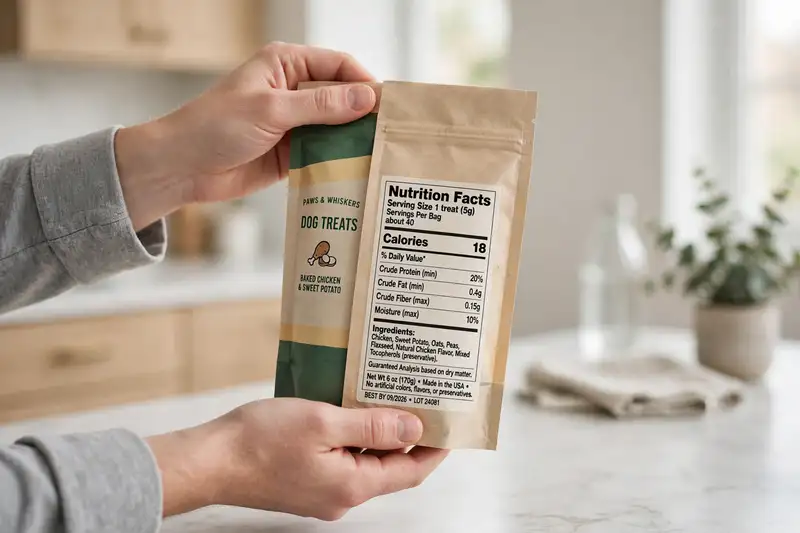
Owners forget this because the chew feels like healthcare, not a snack. It is both. A 12-pound dog eating a daily Teenie is spending roughly a tenth of its treat allowance on dental care, which is fine as long as nothing else piles on top. The problem comes when the Greenie joins training treats, table scraps, and a stuffed Kong, and the day’s extras quietly double. If your dog is on a weight-loss plan, tell your vet about the daily chew so it is factored into the calorie math. One practical move: subtract a small portion of kibble from dinner to offset the chew, keeping the day’s total steady. Dental health and weight control can coexist. They just need to share the same calorie budget.
Are Greenies safe? The honest history
In the mid-2000s, Greenies faced reports of dogs choking on or developing blockages from swallowed chunks, and the cases drew national coverage. The company reformulated in 2006 to make the treats more soluble and digestible, with clearer sizing and supervision guidance. Today’s safety picture is far better than the old headlines suggest.

Here is the balanced read. The original formula did not break down fast enough when dogs swallowed large pieces whole, and some dogs paid for it with emergency surgery. That happened, and the brand earned the scrutiny. The reformulation changed the ingredient matrix so the treat dissolves more readily in stomach acid. Since then, Greenies have become one of the most widely fed dental chews in the world, with the VOHC listing intact and no repeat of the original crisis. But “safer” is not “risk-free.” Any chew swallowed in large chunks can still cause trouble, which is why the supervision rules in the next section exist. If your dog is a gulper that swallows chews whole, Greenies may simply be the wrong product for that dog, regardless of the formula.
How to feed Greenies safely
Feed one per day, matched to your dog’s weight, and supervise the chewing. Watch that your dog actually chews rather than gulping. Take the chew away if it breaks into pieces small enough to swallow whole, and throw away the last small nub instead of letting the dog finish it. Always have fresh water available.

The supervision part is the part people skip. Hand over the chew when you can stay in the room for the few minutes it takes. If your dog tries to swallow it whole, the size is wrong or the dog is the wrong candidate for this chew. Some owners hold one end of the treat while the dog gnaws the other, which forces slower chewing and is a genuinely good trick for enthusiastic eaters. Remove the treat when it gets small enough to swallow. Yes, you will throw away the last inch. That inch is the cheapest insurance in the package. After chewing, check that your dog seems comfortable and has water nearby. If a dog ever starts gagging, drooling heavily, pawing at the mouth, or vomiting after a chew, treat it as urgent and call your vet.
Dogs who should skip Greenies
Greenies are not for dogs under 5 pounds, puppies under 6 months, dogs with wheat sensitivities (the original formula contains wheat flour and wheat gluten), or aggressive gulpers who swallow chews whole. Dogs with significant dental disease, loose teeth, or a history of intestinal blockage should get a vet’s opinion first.

The weight and age floors are the manufacturer’s own rules, and they exist for choking reasons. Tiny dogs and young puppies have small airways and developing teeth, and a chew sized for bigger dogs is a hazard. For wheat-sensitive dogs, the grain-free line exists, but check its own VOHC status and ingredient list before assuming it is equivalent. Dogs with advanced dental disease may find chewing painful, and a sore mouth makes them more likely to gulp. If your dog has had a blockage before, any chew is suspect until the vet clears it. None of this makes Greenies a bad product. It makes them a product with a defined audience. Matching the dog to the product is the owner’s job, and the package rules are the starting point.
Greenies vs other dental chews
The main VOHC-accepted alternatives include OraVet, Virbac C.E.T. VeggieDent, Whimzees, Milk-Bone Brushing Chews, and Purina DentaLife. Greenies’ edge is the broad plaque-and-tartar claim across the most size options. OraVet adds a chemical barrier against future buildup. The best choice depends on your dog’s size, chewing style, and any ingredient sensitivities.
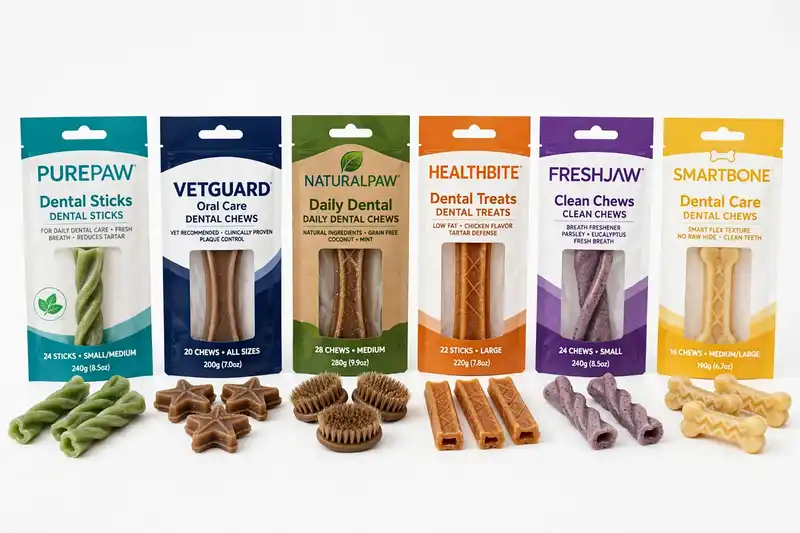
There is no single winner, and marketing will not tell you that. OraVet’s delmopinol coating is a genuinely different mechanism: it leaves a protective layer after chewing. VeggieDent and Whimzees suit owners who want different ingredient profiles. Milk-Bone Brushing Chews carry the seal for tartar. What actually decides the best chew for your dog is boring and practical: does the dog chew it slowly, does it fit the weight band, does the ingredient list work for the dog’s sensitivities, and will you buy it consistently. A premium chew the dog gulps is worse than a basic chew the dog gnaws. If your dog loves Greenies and chews them properly, there is little reason to switch. If not, the VOHC list is your shortlist, and your vet can help you pick from it.
Do Greenies replace brushing?
No. Nothing replaces brushing. Daily tooth brushing remains the gold standard for dog dental care, and Greenies are the backup for days and dogs where brushing does not happen. Professional veterinary cleanings under anesthesia handle the tartar and gum disease that no chew or brush can address.

The honest hierarchy is simple. Professional cleaning fixes what is already wrong. Daily brushing prevents most of what would go wrong. Dental chews slow buildup in between. Most owners will not brush daily, and the industry knows it, which is exactly why chews exist. But framing a chew as a replacement sets the dog up for dental disease by middle age. If brushing is new to your household, start with a finger brush and tasty pet toothpaste, keep sessions short, and build the habit before expecting cooperation. Use the Greenie on the days brushing does not happen, not as the reason brushing never starts. Your vet can show you the technique and tell you whether your dog’s teeth need a professional cleaning first, because brushing over diseased gums helps no one.
Greenies earn their place for most dogs: VOHC-backed plaque and tartar reduction, a size for every weight band, and a safety record that recovered from a real crisis through reformulation. The rules are simple: right size, one a day, supervised chewing, calories counted. For the wider picture of what belongs in your dog’s diet, our human food guide is the reference, and if you want crunchy whole-food chew alternatives, our carrot guide and peanut guide cover two of the safest options.
Frequently Asked Questions
Are Greenies safe for dogs?
Today’s Greenies are the 2006 reformulated version, made to dissolve more readily, and they carry the VOHC seal for plaque and tartar. They are safe for most dogs when sized correctly and given under supervision. They are not suitable for dogs under 5 pounds, puppies under 6 months, or dogs that gulp chews whole.
How many Greenies can a dog have per day?
One per day, matched to your dog’s weight band. More than that adds calories without added dental benefit and increases the chance of digestive upset. Count the chew inside the daily treat budget of under 10 percent of total calories.
What was the Greenies controversy?
In the mid-2000s, there were reports of dogs developing esophageal or intestinal blockages after swallowing chunks of Greenies, which drew national media attention. The company reformulated the treats in 2006 to be more soluble and digestible, and added clearer sizing and supervision guidance.
Can puppies have Greenies?
Not under 6 months of age. Puppies old enough for chews should get the Puppy formula in the correct size for their weight. Always supervise, since puppies are enthusiastic chewers and prone to gulping.
Do Greenies have wheat?
The Original formula contains wheat flour and wheat gluten. Dogs with wheat sensitivities should look at the grain-free line instead, checking its ingredient list and VOHC status, or ask the vet about alternatives.
Do vets recommend Greenies?
Many do, largely because of the VOHC Seal of Acceptance for plaque and tartar, which is the main independent credential in this category. Vets also stress that chews supplement brushing and professional cleanings rather than replacing them.
Can Greenies cause blockages?
Any chew swallowed in large chunks can cause choking or blockage, which is why correct sizing and supervision matter. The reformulated treats dissolve more readily than the original version, but aggressive gulpers remain poor candidates for any dental chew.
This article is general information only and is not a substitute for veterinary advice. If your dog has dental pain, persistent bad breath, or trouble chewing, see your veterinarian.


1 thought on “Greenies for Dogs: Do They Work and Are They Safe?”