
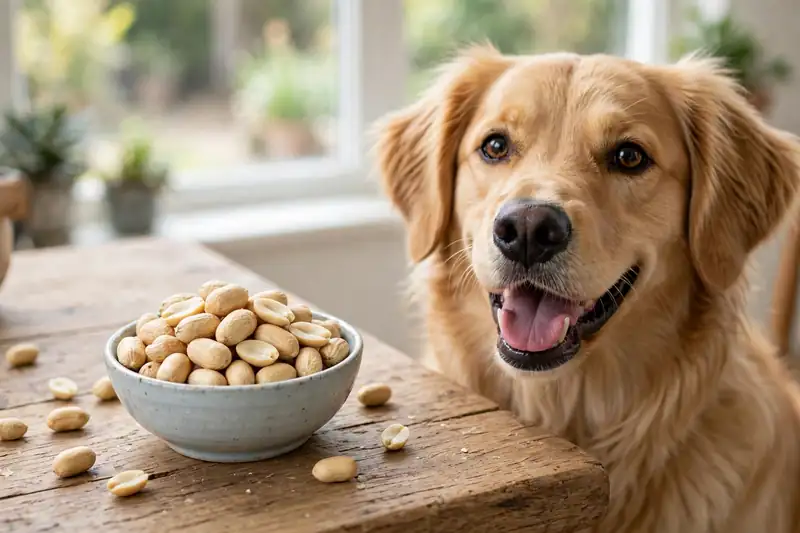
Yes, dogs can eat plain, unsalted, shelled peanuts in moderation. But before the good news settles in, here is the warning that matters more: many peanut butters contain xylitol, also labeled birch sugar, an artificial sweetener that is extremely toxic to dogs. It causes a rapid, dangerous blood sugar crash and can lead to liver failure. If you remember one thing from this guide, remember to read the peanut butter label every single time.
The short answer: plain, unsalted, and few
Dogs can eat peanuts that are dry-roasted or raw, unsalted, unseasoned, and fully shelled, in small amounts, occasionally. Peanuts bring real nutrition, protein, vitamin B6, vitamin E, niacin, and healthy fats, which the American Kennel Club acknowledges. But they are very high in fat and calories, so they stay an occasional treat, never a regular food.

Peanuts are technically legumes, not true nuts, and their nutrient profile is genuinely solid. The catch is the calorie cost. A small handful can carry over 150 calories, which for a medium dog is a serious dent in the 10 percent daily treat allowance before the day has properly started. The nutrition is real; the calorie cost is what keeps peanuts in the “sometimes” column. And as always, introduce any new food gradually and watch for digestive upset over the next day.
The xylitol danger: read every label
Xylitol kills dogs and hides in plain sight. It is a sugar alcohol used as a sweetener in many sugar-free, natural, or low-sugar peanut butters. In dogs it triggers a massive insulin release: blood sugar plummets within 10 to 60 minutes, causing weakness, vomiting, collapse, and seizures, and larger doses can cause fatal liver failure.

Check for these names on every label: xylitol, birch sugar, sugar alcohol. If any appear, that jar never goes near your dog. Not a taste, not a smear. This applies to peanut butter used for Kong stuffing, pill-hiding, and training alike. When in doubt, buy peanut butter made specifically for pets, or make your own from plain peanuts so you control every ingredient. Signs of xylitol poisoning need no waiting period: call your veterinarian or the Pet Poison Helpline at 855-764-7661 immediately, or the ASPCA Animal Poison Control Center at 888-426-4435. This is one of the genuine minutes-matter emergencies.
Which peanuts are safe: the plain-only rule
The only peanuts for dogs are dry-roasted or raw, unsalted, unseasoned, with shells fully removed. That is the complete list. Salted peanuts bring excess sodium; honey-roasted or flavored kinds bring sugar, salt, and additives like onion or garlic powder. Chocolate-covered peanuts add theobromine toxicity, commercial boiled peanuts are usually very salty, and shells pose a choking hazard.

A salted peanut or two stolen off the floor will probably not harm a healthy dog, but “probably fine as a theft” and “safe to feed” are different standards. Feed only the plain kind, on purpose, and keep party mixes, trail mixes with their raisins and chocolate, and bar snacks away from dogs entirely. PetMD specifically warns that nuts are often coated with cocoa or spices such as garlic, both toxic to dogs, plus high salt loads. Buy plain, single-ingredient peanuts and the problem disappears.
The fat problem and pancreatitis risk
High-fat foods eaten regularly or in large amounts can cause digestive upset and pancreatitis, a painful inflammation of the pancreas. The AKC and PetMD both flag it for peanuts specifically. Certain breeds, like Miniature Schnauzers, are prone to pancreatitis, and for those dogs fatty treats are a risk not worth taking.
Watch for the warning signs after a peanut binge: repeated vomiting, diarrhea, appetite loss, abdominal pain that shows as a hunched posture, and lethargy. If they appear, call your vet promptly. Puppies, overweight dogs, and dogs with a pancreatitis history should get no peanuts at all, or only vet-approved amounts. Fat is the quiet constraint on every otherwise-safe treat, and peanuts carry more of it than their size suggests.
Peanut butter: the right way to use it
Peanut butter is where peanuts earn their keep in dog life, as a delivery system rather than a food. A smear of xylitol-free peanut butter inside a chew toy buys long, calm enrichment, a small dab molded around a tablet hides pills, and a lick works as a high-value reward for difficult behaviors.

In every case the rules are the same: xylitol-free, unsalted, unsweetened, and small amounts. A tablespoon is a lot for a small dog. The peanut butter should be the accent, never the meal. Smooth is the safer texture choice, since crunchy contains peanut pieces that add a mild choking consideration, especially for small dogs. Either way, the label matters more than the texture. Highly refined peanut oil, by contrast, contains very little peanut protein and is pure fat, so it is never a treat or supplement on its own. Peanut flour in commercial dog treats is fine as an ingredient provided the overall treat is reputable; check the full label for xylitol, excess salt, and chocolate. And “peanut-flavored” products may contain no peanut at all, just flavoring, so judge them by their actual ingredient list, not the picture on the bag.
Portions: how many peanuts
Keep portions genuinely small and genuinely occasional. Small dogs get one or two peanuts. Medium dogs get a small pinch, three to five peanuts. Large dogs get up to a small handful. “Occasionally” means a few times a week at most, always inside the 10 percent treat allowance, never as a daily habit.

Training complicates the math, because training multiplies quantity fast. Twenty half-peanut rewards in a session is ten peanuts, and for a small dog that can blow the whole treat budget before lunch. If you train with peanuts, break them into halves or quarters, reserve them for high-value moments like recall or difficult behaviors, and balance the session’s calories against meals. For routine repetition, kibble pieces or tiny carrot bits do the job cheaper. The peanut should be the jackpot, not the paycheck. Even the safe kind is too fatty and caloric for daily feeding, so daily high-value rewards should come from lower-calorie options.
Shells and choking hazards
Peanut shells are fibrous, indigestible, and a genuine choking and intestinal-blockage hazard, especially for small dogs. Never feed peanuts in the shell, and do not assume your dog will spit the shells out. If your dog gets into shells from a bowl left out, watch for gagging, drooling, vomiting, or abdominal discomfort over the next day or two.
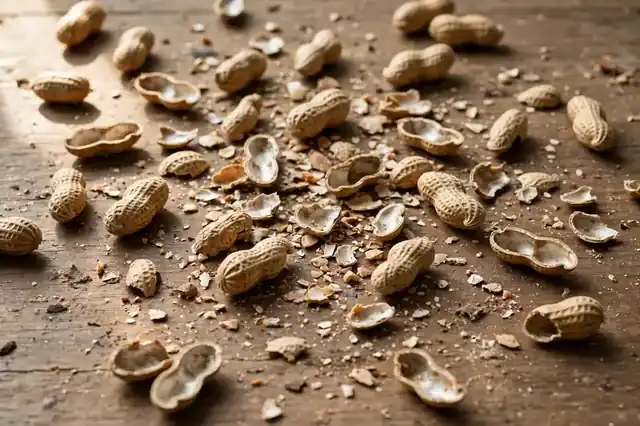
Call your vet if symptoms appear, persist, or the amount eaten was large. Shells can also irritate the gut on the way through, so even a dog that seems fine deserves a watchful day. The prevention is total: shells in the trash, shelled peanuts in the treat jar, and party bowls kept at human height.
Peanuts vs. other nuts: the safety ranking
Plain peanuts and cashews are acceptable in small amounts, plain and unsalted. Almonds are a step down: not toxic, but choking hazards and hard to digest. Pistachios are best avoided for fat, shells, and mold risk; walnuts and pecans bring high fat and possible mold toxins. Macadamia nuts sit at the bottom, clinically toxic to dogs.

The pattern is consistent across the whole list. No nut is nutritious enough to be worth real risk. The safe ones are only safe plain and few, and the mixed bowl is always the enemy, because it hides chocolate, raisins, and heavy salt behind the peanuts. When the question is “which nut should I feed my dog,” the honest answer is usually “none; have a blueberry.”
What to do if your dog eats the wrong kind
Your response depends on what “wrong” means. Xylitol-containing peanut butter in any amount is an emergency: vet or poison helpline immediately, with no waiting for symptoms. A large amount of plain peanuts calls for monitoring over 24 to 48 hours; call your vet if symptoms appear. Chocolate-covered or raisin-mix peanuts mean calling your vet, since the coatings are the emergency.

Shells eaten means watching for choking or blockage signs and calling if you are concerned. And do not induce vomiting unless your vet specifically instructs it. Keep the packaging of whatever was eaten, because the ingredient list and the amount are the two facts your vet needs most.
Allergies, sensitivities, and the final word
True peanut allergy is uncommon in dogs, but sensitivities occur. Watch for itching, red or inflamed skin, ear infections that flare after peanut exposure, or gastrointestinal upset beyond what the fat content explains. If you suspect a sensitivity, stop the peanuts and mention the pattern to your vet, who may suggest a food trial rather than guesswork.

Do not confuse a fat-related stomach upset, which is common and dose-dependent, with an allergy, which is an immune response that can trigger from tiny amounts. Most dogs that react to peanuts are reacting to too many peanuts, not to peanuts at all. The honest summary stands: peanuts are one of the better nuts for dogs, plain, unsalted, shelled, and few, with real protein and healthy fats behind them. But the modern peanut aisle is a minefield of xylitol, salt, flavorings, chocolate, and raisins, with fat throughout. The peanut itself is fine; almost everything done to peanuts for human tastes is not. Read the label, keep it plain, keep it few.
Frequently Asked Questions
How many peanuts can a dog eat?
One or two for a small dog, a few for a medium dog, a small handful for a large dog, and only occasionally, not daily. Keep all treats within 10 percent of daily calories.
Is peanut butter safe for dogs?
Plain, unsalted, unsweetened peanut butter without xylitol is safe in small amounts. Always read the label, because xylitol, also called birch sugar, is deadly to dogs. Pet-specific peanut butters are the safest choice.
What are the signs of xylitol poisoning?
Weakness, vomiting, collapse, seizures, and loss of coordination, starting within 10 to 60 minutes. It is an emergency: call your vet or the Pet Poison Helpline at 855-764-7661 immediately.
Can puppies eat peanuts?
It is best to wait. Puppies have sensitive stomachs, and high-fat foods cause quick digestive upset. Stick to puppy-appropriate treats and introduce peanuts only when older, in tiny amounts.
Are boiled peanuts safe for dogs?
Commercial boiled peanuts are usually very salty, so skip them. The salt load is the problem, not the peanut itself.
Can dogs be allergic to peanuts?
True peanut allergies are uncommon, but sensitivities happen. Watch for itching, skin redness, or ear inflammation after a first taste, as with any new food.
My dog ate peanut shells. What should I do?
Watch for gagging, drooling, vomiting, abdominal pain, or trouble passing stool over the next 24 to 48 hours. Shells can choke or block; call your vet if you see symptoms or the amount was large.
Is homemade peanut butter safer for dogs?
Yes, provided it is just ground plain peanuts with nothing added. You control the salt, oil, and sweeteners, which eliminates the xylitol risk entirely.
For the same plain-only, small-portion thinking across the foods dogs meet most often, see our wider guide to what human food dogs can eat. For another treat where the label decides everything, our honey guide covers hidden sugars, and our strawberry guide offers a sweet treat with fewer strings attached.
Sources: American Kennel Club, “Can Dogs Eat Peanuts?” (dry-roasted or raw unsalted only; protein, B6, E, niacin, healthy fats; xylitol poisoning risk in peanut butter; high fat and pancreatitis risk): https://www.akc.org/expert-advice/health/can-dogs-eat-peanuts/
This article is general information only and is not a substitute for veterinary advice. If your dog has a health condition, is on a prescription diet, or you are unsure about any food, check with your veterinarian first.


2 thoughts on “Can Dogs Eat Peanuts? The Xylitol Warning First”