

Can dogs eat pistachios? They are not poisonous, but you should not feed them to your dog. That distinction matters. Pistachios will not poison a dog the way macadamia nuts do, yet the American Kennel Club’s chief veterinary officer, Dr. Jerry Klein, advises against feeding them, because the fat, the salt, the shells, and the mold risk add up to a snack with real downsides and no real benefit for your dog.
If your dog just stole a single pistachio off the floor, do not panic, but do read on, because the details decide whether this is a non-event or a vet visit.
Are pistachios poisonous to dogs?
No, pistachios are not poisonous to dogs in the way macadamia nuts are, and one plain shelled pistachio is unlikely to harm a healthy adult dog. Still, vets advise against feeding them because the fat, salt, shells, and mold risk make them a poor snack with no nutritional payoff for your dog.

The confusion is understandable. For people, pistachios are a respectable snack: fiber, protein, vitamin B6, and unsaturated fats. Dogs, however, process food differently, and the parts of the pistachio that look good on a human nutrition label are exactly the parts that cause trouble for dogs.
A pistachio is roughly half fat by weight. Dogs can digest fat, but their pancreas handles sudden fatty loads poorly, and a small dog eating a handful of pistachios is getting a fat bomb relative to its body size. The nuts are also frequently sold roasted and salted, which piles sodium on top of the fat. None of this is something your dog’s balanced dog food is missing. The American Kennel Club pistachio guide flags the choking hazard, the pancreatitis risk from fat and salt, and the mold concern in one place, which is why vets land on the same advice: not toxic, but not worth it.
The fat problem: why pancreatitis is the biggest worry
Pistachios are about half fat by weight, and that fat is the single biggest reason vets say no, because a fatty snack can trigger pancreatitis, a painful and fast-moving inflammation of the pancreas. Dogs with a history of pancreatitis, dogs on low-fat prescription diets, and breeds prone to the condition should never get pistachios at all.

Dr. Klein puts it plainly: the high fat and salt content of pistachios can cause gastrointestinal issues, and fatty, salty snacks can lead to pancreatitis in dogs. A dog that grabs a handful of pistachios off the coffee table is not eating a handful relative to your body, it is eating it relative to a body a fraction of yours, and small dogs feel that fat load hardest.
Watch for these signs after your dog eats a fatty snack: repeated vomiting, diarrhoea, loss of appetite, belly pain (a hunched posture is the classic tell), and lethargy. If you see them, call your veterinarian immediately. Pancreatitis is not a wait-and-see situation, and it can progress quickly from a dog that seems a bit off to a dog that needs emergency care.
Pistachio shells are the choking and blockage hazard
Pistachio shells are hard, sharp-edged, and irregularly shaped, and they are the most immediate physical danger in the whole snack. A dog that gulps a shell can choke, lodge it in the throat, or pass it into the gut where it can scrape the intestinal lining or cause a blockage.
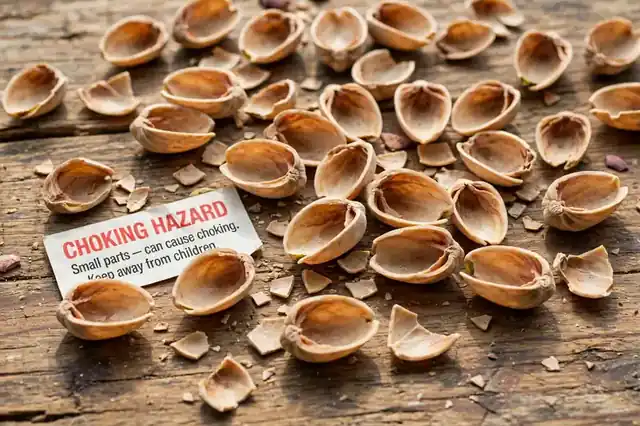
Small dogs, flat-faced breeds, and fast eaters run the highest risk. If you eat pistachios around your dog, dispose of the shells in a closed bin your dog cannot open. Dogs are remarkably good at raiding open trash for exactly this kind of thing, and a bin that seems secure to you may be a puzzle your dog has already solved.
If your dog has eaten shells, watch for gagging, drooling, retching, pawing at the mouth, abdominal pain, or trouble passing stool, and call your vet promptly. The shells are woody, indigestible fiber, and in quantity they can contribute to blockages, especially in small dogs. Always buy shelled pistachios for the household, and keep the in-shell bowl out of reach.
Salt, seasonings, and flavored varieties
Most pistachios sold for snacking are roasted and salted, and many come dusted with chili, cheese powder, or onion and garlic seasoning. Plain, unsalted, shelled pistachios are the only form that is even in the conversation, and even those are best skipped, as this guide argues.
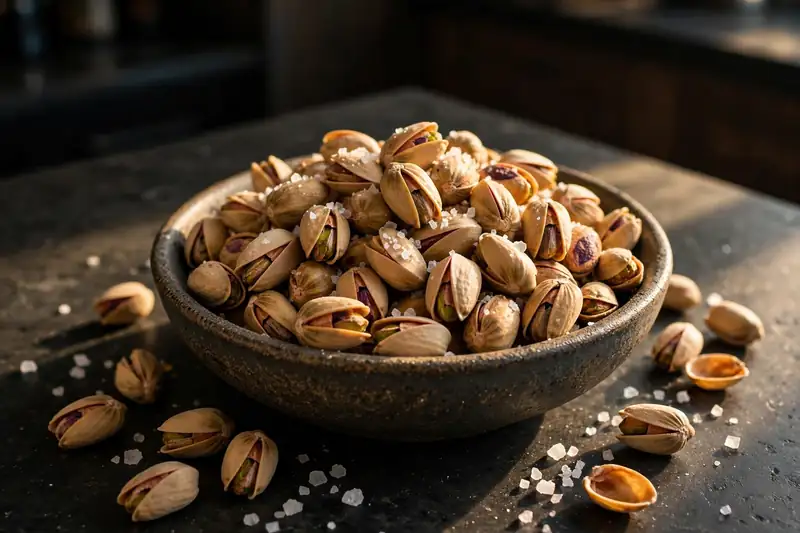
Each coating adds its own problem:
- Excess salt causes extreme thirst and urination, and in large amounts can lead to salt poisoning.
- Onion and garlic powder damage dogs’ red blood cells over time. Even the modest amounts in flavored nuts add up.
- Chili and spice coatings irritate the mouth and gut.
- Sweetened or dessert pistachios may contain chocolate or xylitol, both genuinely toxic.
If a bag in your kitchen lists ingredients you would not recognize, keep it away from your dog entirely. The simpler the label, the safer the snack, and with pistachios the answer stays no either way.
The aflatoxin mold risk most owners miss
Pistachios can develop mold that produces aflatoxin, a toxin that harms the liver, and dogs are more sensitive to aflatoxin than people are. The AKC specifically flags this risk, yet it is the one most owners never think about when they hand over a nut.
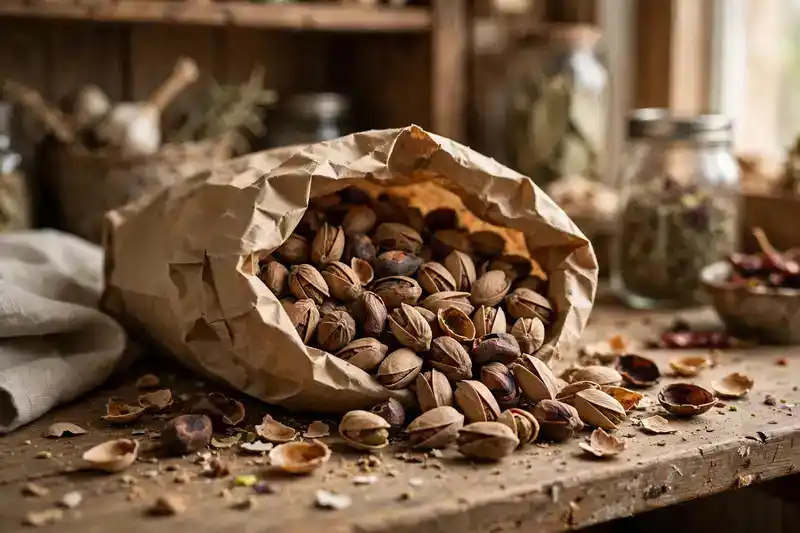
A bag of pistachios that has been sitting open in a warm pantry is exactly where mold thrives. Stale, soft, or odd-smelling pistachios should go in the trash, and well away from your dog. The same goes for the bottom of the bag, where broken bits and dust collect and spoil fastest.
This matters most at party season and after holidays, when big bags of nuts sit half open for weeks. If you would not eat them yourself because they taste off, your dog should not get them either, and honestly your dog should not get the fresh ones.
Pistachios vs macadamia nuts: know the difference
Macadamia nuts are clinically toxic to dogs through a specific mechanism, while pistachios have no such direct toxin, so owners who lump all nuts together miss the real distinction. A dog that eats macadamias needs a vet call every time; a dog that eats one plain pistachio needs watching, not panic.

Even small amounts of macadamia nuts can cause vomiting, weakness, tremors, wobbliness, and overheating within hours. Pistachios cause their damage differently: through the fat, the salt, the shells, and the mold. It is a lower-grade danger, but it is still a danger.
The practical upshot is simple. Neither nut belongs in your dog’s diet. And mixed-nut bowls, which often contain macadamias alongside pistachios, should never be within your dog’s reach, because one bowl can contain both the direct toxin and the slow-burn risks at once.
What to do if your dog eats pistachios
If your dog ate pistachios, stay calm and assess three things: how many, shelled or in-shell, and plain or flavored. A few plain shelled pistachios stolen by a healthy adult dog usually means watchful waiting, while a large amount, shells, or flavored nuts means calling your veterinarian promptly.

Work through this step by step:
- Figure out what and how much. One shelled, unsalted pistachio in a healthy adult dog? Monitor at home. A handful, the shells, or a salted or flavored variety? Take it more seriously.
- Check for shells. If shells were eaten, watch closely for choking or blockage signs for 24 to 48 hours.
- Watch for GI upset and pancreatitis signs over the next day: vomiting, diarrhoea, appetite loss, belly pain, lethargy.
- Call your vet if a large amount was eaten, if shells were involved, or if any symptoms appear. In the US, the ASPCA Animal Poison Control Center (888-426-4435) is another line of help, though note that a consultation fee may apply.
- Do not induce vomiting unless your vet specifically tells you to.
On the question of how much is too much: there is no safe serving size, because vets do not recommend pistachios at all. For triage after a theft, a single unsalted, shelled pistachio in a medium or large healthy dog is very unlikely to cause harm beyond possible mild stomach upset. A small dog, a puppy, or a dog with pancreatitis history has a lower threshold, so call your vet sooner rather than later. A whole bag, or any amount of shells, is firmly in call-the-vet territory. Save the packaging if there is any, the ingredient list answers half the vet’s questions.
Dogs who should never have pistachios
Some dogs should not get even one pistachio, not shelled, not plain, not ever. The AKC notes that pistachios can trigger allergy-like reactions in some dogs, so a dog that has reacted to nuts before is automatically on the no list along with every high-risk group below.

The groups that should never get even one: dogs with a history of pancreatitis, dogs on low-fat or prescription diets, dogs with kidney or heart conditions where the salt is the concern, very small breeds at choking risk, puppies with sensitive stomachs, and dogs with known nut sensitivities. When in doubt, the answer is no. Your dog will not miss a food it was never meant to eat, and the few seconds of snack-sharing joy are not worth a night at the emergency vet.
Safer treats, desserts to skip, and storing pistachios safely
If you want the ritual of sharing a snack without the risk, there is a long list of better options, and pistachios rarely travel alone, so their company deserves attention too. Keep pistachios sealed and out of reach, skip the desserts they appear in, and spend the treat budget on foods your dog actually welcomes.

Better treats worth offering instead
Crunchy carrots, blueberries, apple slices with no seeds, cucumber rounds, watermelon chunks with no seeds, or a smear of xylitol-free peanut butter in a chew toy. All deliver the bonding moment with a fraction of the risk, and most cost less than a bag of pistachios.
Pistachio desserts and party mixes
Pistachios rarely travel alone, and the company is usually worse than the nut. Pistachio ice cream brings sugar and dairy, a double hit for a lactose-sensitive dog, and sugar-free versions may contain xylitol, which is extremely toxic. Baklava layers pistachios with honey, butter, and pastry: a fat-and-sugar bomb no dog needs. And the mixed snack bowls at parties combine salted pistachios with other seasoned nuts, chocolate pieces, and sometimes raisins.
The rule of thumb: if pistachios arrive inside a human dessert or a seasoned mix, the answer is always no. The nut was never the only ingredient, and it is never the most dangerous one.
Storing pistachios in a dog household
Most pistachio incidents are crimes of opportunity, and prevention is boringly effective. Keep pistachios in sealed containers on high shelves or inside closed cupboards, not in the decorative bowl on the coffee table, not in a jacket pocket on a low hook. Party season deserves special attention: snack bowls at dog-nose height are an invitation, so put them on tables the dog cannot reach and brief your guests to keep the dog away from the bowl. Train the household habit once and it protects the dog from every salty snack, not just pistachios.
Frequently asked questions
These are the questions owners ask most about dogs and pistachios, answered the way a vet would frame them. The short version of every answer is the same: pistachios are not worth the risk, and there is always a safer treat.

My dog ate one pistachio, should I call the vet?
For one shelled, unsalted pistachio in a healthy adult dog, monitoring at home is reasonable. Watch for vomiting, diarrhoea, or appetite loss over the next 24 hours. Call your vet if your dog is small, a puppy, has pancreatitis history, ate the shell, or shows any symptoms.
Are pistachio shells dangerous for dogs?
Yes. The shells are hard and sharp, they can choke a dog, lodge in the throat, or cause intestinal irritation or blockage. They are woody, indigestible fiber, and in quantity they can contribute to blockages, especially in small dogs. Dispose of shells in a closed bin, and call your vet if your dog eats them.
Are pistachios as dangerous as macadamia nuts?
No. Macadamia nuts are directly toxic to dogs and always warrant a vet call. Pistachios are risky because of fat, salt, shells, and mold, a different, lower-grade danger. Neither should be fed to dogs.
Can dogs eat salted pistachios?
No. Salted pistachios add excess sodium to the fat and choking risks. Too much salt can cause extreme thirst, and in large amounts, salt poisoning. Only plain, unsalted nuts are even discussable, and even those are best avoided.
Can puppies eat pistachios?
No. Puppies have sensitive stomachs, and the fat and salt in pistachios can cause digestive upset quickly. Stick to puppy-appropriate treats.
What are the signs of pancreatitis after eating pistachios?
Repeated vomiting, diarrhoea, loss of appetite, abdominal pain (often a hunched posture), and lethargy. These signs warrant an immediate vet visit, since pancreatitis can progress fast.
Can dogs eat pistachio ice cream?
No. Beyond the pistachios themselves, ice cream adds sugar and dairy, and sugar-free versions may contain xylitol, which is deadly to dogs. A dog that laps up a dropped spoonful will probably be fine, but never serve it on purpose.
Are there any safe nuts for dogs?
Plain, unsalted peanuts and cashews in tiny amounts are the least-bad options, but even those are high-fat occasional treats, never a regular snack. Most vets suggest skipping nuts entirely in favor of fruits and vegetables.
The honest summary: pistachios sit in an awkward middle ground, not poisonous, but not safe enough to recommend. The fat threatens the pancreas, the shells threaten the throat and gut, the salt and flavorings add their own problems, and mold can make things worse. Your dog gains nothing from them that a carrot or blueberry cannot provide more safely. Keep the pistachios for yourself, keep the shells out of reach, and spend the treat budget on something your dog’s body actually welcomes.
For the same plain-only, small-portion thinking across the foods dogs meet most often, see our wider guide to what human food dogs can eat. For another food where the portion rule decides everything, our tomato guide is worth a read, and if rich treats are a theme in your house, our honey guide covers a high-sugar treat with similar strict limits.
This article is general information only and is not a substitute for veterinary advice. If your dog has a health condition, is on a prescription diet, or you are unsure about any food, check with your veterinarian first.

1 thought on “Can Dogs Eat Pistachios? Why Vets Say Skip Them”