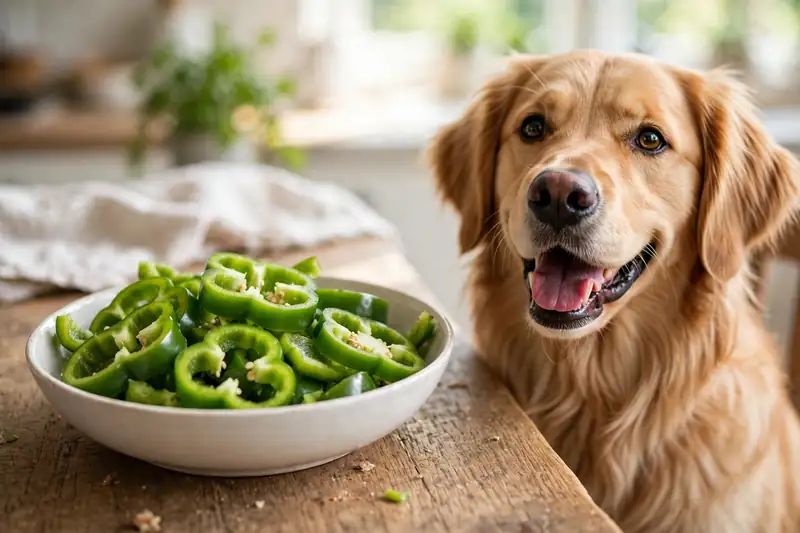
Yes, dogs can eat green bell peppers. The safe kind is the sweet, crunchy bell pepper, not the hot kind. Green bell peppers are safe for most dogs in moderation, low in calories, and carry real nutrition, including vitamins A and C. This guide covers the one distinction that matters most, the right portions, how to prepare them, and which peppers to keep away from your dog.
Green bell peppers vs hot peppers: the critical distinction
Sweet green bell peppers are safe for dogs in moderation, but hot peppers are not. The two foods only share a name: bell peppers contain almost no capsaicin, while chilies burn a dog’s mouth and stomach. Before sharing anything called a pepper, confirm it is sweet, or do not offer it.

Bell peppers, green, red, yellow, or orange, are sweet peppers with no meaningful heat. They come from the capsicum family but hold virtually none of the capsaicin that gives chili peppers their burn. Hot peppers, jalapeños, serranos, habaneros, cayenne, and the sauces and dishes made with them, are a different story. They irritate a dog’s mouth and digestive tract, and prepared spicy dishes often include onion or garlic as well. The rule is simple: sweet bell peppers yes, hot peppers no. If you are ever unsure which one you are holding, do not share it.
If your dog does eat a hot pepper, do not panic, but act. Offer water to help rinse the mouth, and watch for drooling, pawing at the mouth, vomiting, or diarrhoea over the next few hours. Most single hot-pepper incidents resolve with mild, short-lived discomfort. Call your vet if vomiting repeats, if your dog seems in significant pain, or if the pepper came from a dish containing onion or garlic, because those ingredients change the calculation entirely.
Why green peppers are good for dogs
Green bell peppers are a genuinely useful treat because they deliver vitamins A and C, vitamin E, B6, lutein, and beta-carotene for about 30 calories per pepper. The AKC lists them as non-toxic and a healthy snack option. They add nutrition to the treat routine, though they never replace balanced dog food.

The nutrient lineup is the real story. Pet nutritionists point to vitamins A, E, and B6, plus lutein, and green peppers are strong sources of vitamin C and beta-carotene, antioxidants that support a healthy immune system. Beta-carotene deserves a special mention because the body converts it into vitamin A, which matters for skin, coat, and eye health. Green peppers are also high in water and fiber while staying very low in calories, which makes them one of the better crunchy treats for dogs watching their weight. The American Kennel Club bell pepper guide confirms they are non-toxic and a healthy alternative snack.
They will never replace balanced dog food, but as an occasional extra they pull their weight. Think of them as a treat with benefits rather than a supplement, and keep expectations in line with that.
Which color bell pepper is best
All bell pepper colors are safe for dogs; the color only shows how ripe the pepper was at harvest. Red peppers are the ripest and carry the most vitamins and antioxidants. Green peppers are the least ripe, slightly more bitter, and often cheaper. Feed whichever color your dog enjoys and will actually eat.

All bell pepper colors are the same plant at different ripeness stages. Green is the least ripe: slightly bitter, lowest in sugar. Yellow and orange sit in the middle. Red is fully ripe: sweetest, and richest in vitamin C and beta-carotene. Nutritionally, red edges out green by a little, which is why several vets call red the best choice, but the difference is small.
If your dog likes the crunch of green peppers, there is no reason to force a color switch. Rotating colors across the week is a simple way to vary the nutrients, and every color follows the same rules: plain, chopped, seeds and stem removed, in small portions. The best pepper is the one your dog will actually eat.
Raw or cooked, which is better
Both raw and plain-cooked green peppers are safe, so choose based on your dog. Raw keeps the crunch and the most vitamin C; lightly steamed or roasted pieces are softer and easier to digest for seniors, small breeds, or sensitive stomachs. Whatever you choose, keep it plain: no oil, butter, salt, or seasoning.

Raw peppers keep the full crunch and the most vitamin C, since cooking reduces it. Raw suits healthy adult dogs that chew well. Always chop into small, bite-size pieces first, whatever the preparation.
Lightly steamed or roasted with nothing added is softer and easier to digest, a good option for seniors, small breeds, or dogs with sensitive stomachs. Cook only for texture preference, not for safety, because raw is equally safe.
What never changes: plain, with no oil, butter, salt, seasoning, onion, or garlic. And never serve peppers from a cooked dish. Stir-fries and fajita mixes are loaded with ingredients dogs should not have, so only share peppers you have prepared plain, separately.
How much is safe: the AKC portion guide
The AKC suggests less than one-quarter of a pepper for a small dog and less than one-half for a large dog at a time. Treat those as upper limits, not targets. Start a first taste with one or two small pieces, watch for digestive upset for 24 hours, and keep all treats within 10 percent of daily calories.
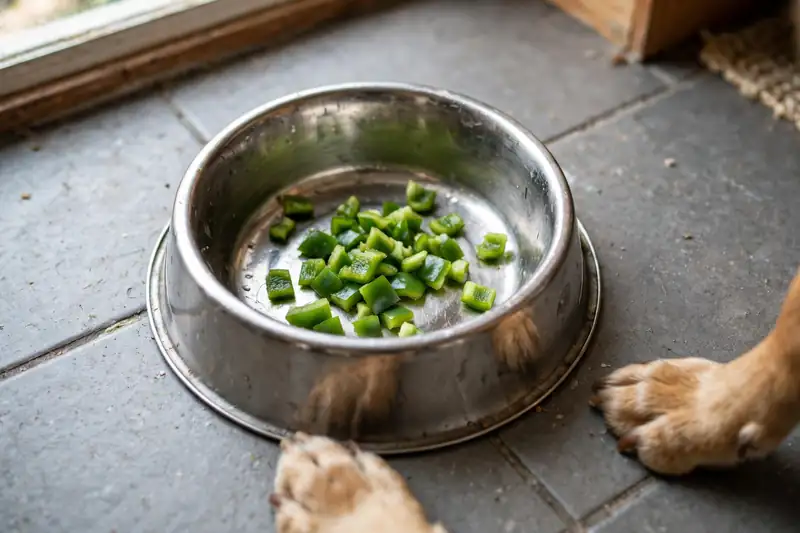
There is no single perfect portion, because size, age, and health all matter. The AKC portion guide, less than a quarter pepper for a small dog and less than half for a large dog at a time, gives you an upper ceiling to work under. The American Kennel Club bell pepper guide is the source for these limits.
For a first taste, go smaller. Offer one or two small pieces, keep the rest of the day’s food unchanged, and watch for digestive upset over the next 24 hours. If all is well, green pepper can become a small occasional treat a few times a week, inside the 10 percent treat allowance that covers all extras.
How to serve green peppers safely
Safe serving comes down to five steps: wash the pepper, remove the stem, seeds, and white ribs, chop the flesh into bite-size pieces for your dog’s size, serve it raw or plain-cooked, and introduce it gradually. Never share peppers from a cooked dish, and never use canned peppers because the sodium is far too high.
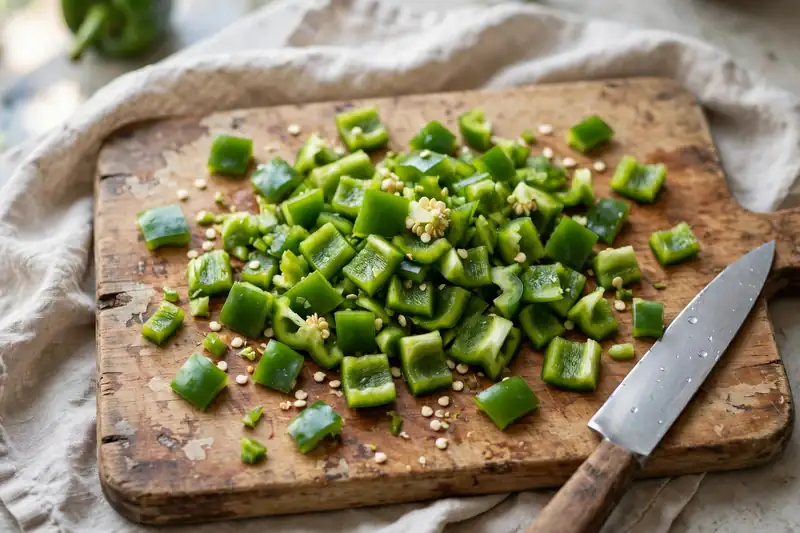
First, wash the pepper thoroughly to remove dirt and pesticide residue. Next, remove the stem, seeds, and white inner ribs. The flesh is the treat; the rest adds nothing, and the seeds are a mild choking nuisance. Then chop the flesh into bite-size pieces matched to your dog’s size, smaller for small dogs and gulpers. Serve raw or plain-cooked, with no dips, no seasoning, no oil. Introduce it gradually, like any new food.
Serving ideas worth trying
A little creativity goes a long way with a crunchy, low-calorie vegetable. Try finely chopped raw pepper mixed into regular food for a reluctant vegetable eater, or frozen pepper cubes as a cooling summer chew for teething puppies and hot days. A thin smear of xylitol-free peanut butter on a pepper strip turns it into a high-value training reward with the calories still under control. For seniors with dental issues, lightly steam the pieces until just soft. Whichever method you choose, introduce peppers gradually: a new vegetable in quantity can loosen stools even when it is perfectly safe.
Storage that keeps them fresh
Chop fresh peppers and store them in an airtight container in the fridge for 3 to 4 days. For longer storage, freeze chopped pieces in water-filled ice cube trays and thaw before serving. Never use canned peppers, because the sodium content is far too high for dogs.
The fiber factor: why more is not better
Fiber is the reason green peppers stay an occasional treat. In small amounts it supports digestion; in large amounts it causes gas, bloating, and diarrhoea. If your dog eats a large amount, expect digestive upset and monitor. Mild loose stool that clears within a day is typical; repeated vomiting or lethargy means a vet call.

Green peppers are fibrous, and fiber is a double-edged sword. In small amounts it supports digestion, which is part of what makes peppers a sensible treat. In large amounts it causes gas, bloating, and diarrhoea, and this is the main reason green peppers stay an occasional treat rather than a daily vegetable course.
If your dog gets into a large amount, say a whole pepper bowl left at snout height, expect digestive upset and monitor. Mild gas or loose stool that resolves within a day is typical. Repeated vomiting, persistent diarrhoea, or lethargy means a vet call, no waiting to see.
Green peppers for weight management
At roughly 30 calories per whole pepper, green peppers are one of the lowest-calorie crunchy treats you can offer. Swapping a biscuit for pepper pieces keeps the reward ritual of training and good-behaviour rewards without the calorie load, and the fiber helps the dog feel fuller. Confirm the swap with your vet if your dog is on a weight plan.

For an overweight dog, swapping a biscuit for pepper pieces keeps the reward ritual, training treats and good-behaviour rewards, without the calorie load. The fiber also helps the dog feel fuller between meals, which takes a little pressure off begging.
If your dog is on a vet-supervised weight plan, ask where green pepper pieces fit. Most vets welcome the swap. Combined with proper food portions and exercise, it is a small change that supports the bigger plan.
Dogs who should be careful
Most healthy dogs handle green peppers fine, but check with your vet first for puppies under six months, dogs with chronic digestive problems or very sensitive stomachs, dogs on prescription diets, and dogs with diabetes. The fiber can aggravate delicate stomachs, prescription diets often leave no room for extras, and portions should fit the overall diet.

Puppies under six months need nutrient-dense puppy food, and fibrous extras can upset delicate tummies. Wait until at least six months, then start with one tiny piece. Dogs with chronic digestive problems or very sensitive stomachs can find the fiber aggravating rather than helpful. Dogs on prescription diets often have no room for extras at all, since the diet is balanced to the last calorie. Dogs with diabetes do fine with peppers’ low sugar content, but confirm portions with your vet as part of the overall diet.
A quick note for gardeners
If you grow bell peppers, the fruit your dog might snatch off a low plant is safe, but supervise garden time anyway. Dogs that graze on garden plants can chew stems, leaves, or unripe fruit in quantity, and can dig up seedlings, fertilizer, or mulch along the way. A low fence around the vegetable bed solves most of it: the dog keeps the yard, the peppers keep their peace, and nobody’s dinner plans change unexpectedly.
Frequently asked questions
This FAQ answers the most common questions about green peppers and dogs in one place: which peppers are safe, how much to serve, raw versus cooked, seeds, puppies, colors, spicy-pepper accidents, and stir-fry leftovers. Read it after the guide above, or use it as a quick reference before sharing a pepper with your dog.

Can dogs eat green peppers every day?
They can tolerate small amounts daily, but occasional is better: a few times a week inside the 10 percent treat allowance. Daily large portions can cause gas or loose stool from the fiber.
Are green pepper seeds safe for dogs?
The seeds are not toxic, but they add nothing and can be a mild choking consideration in quantity. Remove the stem, seeds, and white ribs before serving; the flesh is the treat. It takes five seconds and removes the question entirely.
Can puppies eat green peppers?
Wait until at least six months. Young puppies need nutrient-dense puppy food, and fibrous extras can upset their delicate stomachs. When you do introduce peppers, start with one tiny piece.
Are raw or cooked green peppers better?
Raw keeps the crunch and the most vitamin C; lightly steamed or roasted plain is gentler for seniors, small breeds, and sensitive stomachs. Both are safe when plain. Never serve peppers cooked with oil, seasoning, onion, or garlic.
Are red peppers better than green peppers for dogs?
Red bell peppers contain the highest levels of vitamins and antioxidants, so they are the most nutritious choice. But green, yellow, and orange are all safe. Feed whichever your dog enjoys.
What should I do if my dog eats a spicy pepper?
Offer water, watch for drooling, vomiting, or diarrhoea over the next few hours, and call your vet if symptoms persist or the pepper came with onion or garlic. Most single-pepper incidents resolve on their own.
How much green pepper can I give my dog?
The AKC suggests less than a quarter pepper for a small dog and less than half for a large dog at a time, as an upper limit. Start with one or two small pieces and keep all treats within 10 percent of daily calories.
Can dogs eat cooked peppers from my stir-fry?
No. Stir-fries and fajita mixes almost always contain oil, salt, onion, or garlic, all problematic for dogs. Only share peppers you have prepared plain, separately. Mini sweet peppers follow the same rules: plain, chopped, seeds removed, small portions.
The honest summary: green bell peppers are one of the easier wins in dog treats, safe, crunchy, and low in calories, with vitamins A and C doing real work. They are also completely optional; your dog’s balanced food already covers the nutrition. If you share, share washed, chopped small, and plain, and keep the hot peppers, and anything cooked with onion or garlic, far from the dog bowl.
For the same plain-only, small-portion thinking across the foods dogs meet most often, see our wider guide to what human food dogs can eat. For another crunchy vegetable with a firm portion rule, our broccoli guide follows the same logic, and our carrot guide covers a treat that is even better for teeth.
This article is general information only and is not a substitute for veterinary advice. If your dog has a health condition, is on a prescription diet, or you are unsure about any food, check with your veterinarian first.