
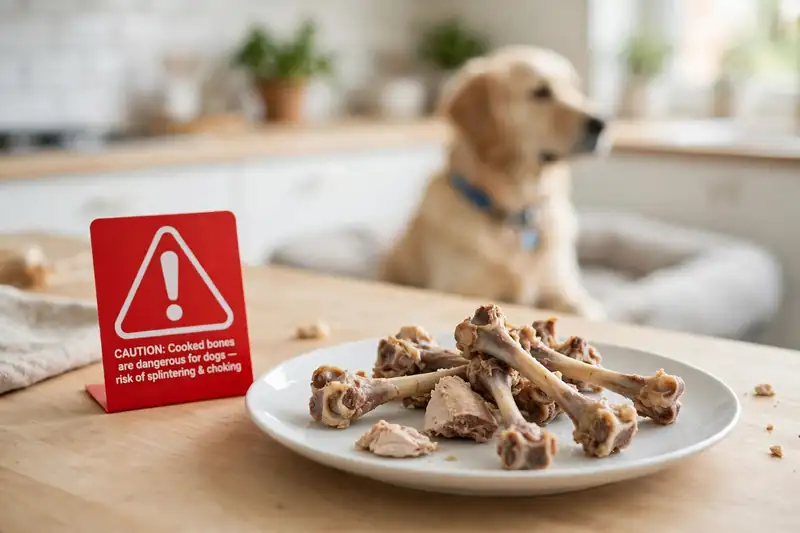
Can dogs eat chicken bones? No. Not cooked, not raw, not “just this once.” Chicken bones are among the most dangerous bones a dog can get because they are hollow and brittle, which means they splinter into sharp shards that can tear the mouth, throat, stomach, or intestines. This guide explains exactly why chicken bones are dangerous, what to do if your dog already ate one, the warning signs over the next three days, and the safe chews that satisfy the craving.
Can dogs eat chicken bones?
No. Dogs should not eat chicken bones of any kind. Cooked chicken bones splinter easily into sharp fragments that can choke a dog or puncture the digestive tract. Raw chicken bones are less likely to splinter but still pose choking hazards and carry bacteria like Salmonella and E. coli. Veterinary guidance is consistent: keep all chicken bones away from dogs.

This is one of the clearest no’s in dog nutrition. It does not depend on the dog’s size, the bone’s size, or how the chicken was cooked. The structure of bird bones is the problem: they are light and hollow, an evolutionary design for flight that makes them shatter under a dog’s jaws instead of yielding. PetMD‘s veterinary guidance puts it bluntly: dogs should not have bones of any kind, cooked or raw. The cartoon image of a happy dog with a bone belongs in cartoons. In real life, that bone is a vet visit waiting to happen, and the rest of this guide explains the mechanics of why.
Why cooked chicken bones are dangerous
Cooking changes bone structure. Heat breaks down the collagen that gives bone flexibility, leaving it dry, brittle, and prone to shattering into sharp shards. When a dog crunches a cooked chicken bone, those shards can cut the mouth and throat, lodge in the esophagus, or travel down to pierce the stomach or intestinal wall.
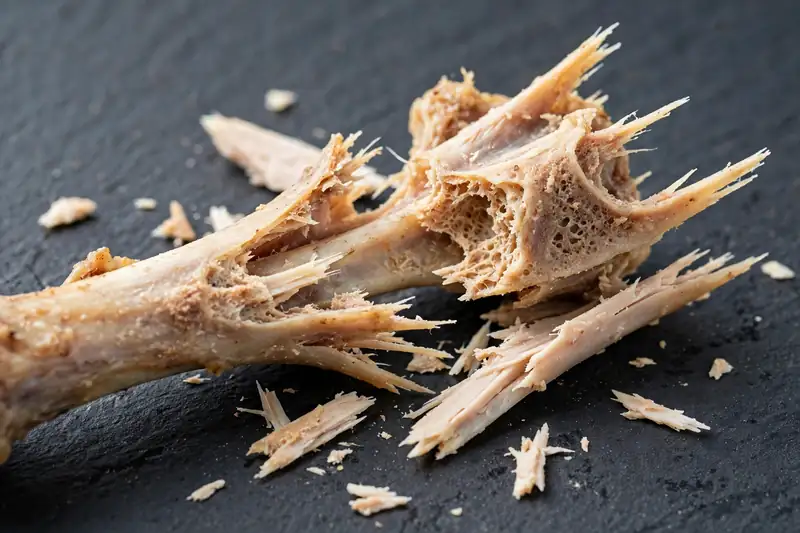
Every cooking method does this: roasted, grilled, boiled, fried, smoked. There is no safe preparation. A rotisserie chicken carcass is one of the most common sources of bone emergencies because the whole bird goes in the trash and the dog goes after it. Drumstick and wing bones are the worst offenders: small, hollow, and easy to swallow whole or in large pieces. Thigh bones are bigger but splinter just as readily. The danger is not theoretical. Emergency vets treat bone-splinter injuries regularly, from mouth lacerations to intestinal perforations that need surgery. The shards do not soften in the stomach. They travel sharp, and every inch of the digestive tract they pass is at risk.
What about raw chicken bones?
Raw chicken bones are less brittle than cooked ones, but still not safe. They can break into pieces that cause choking or mouth injuries, and raw poultry carries Salmonella, E. coli, and Campylobacter, which can sicken your dog and your family. Some raw-feeding advocates accept these risks; veterinary organizations generally do not.

The raw debate is the one place you will find disagreement. Raw-feeding communities argue that raw bones are softer and that dogs evolved eating them. Veterinarians counter with the bacterial risk, which is well documented, and the fact that “less likely to splinter” is not “safe.” Raw chicken is one of the most bacteria-prone foods in the kitchen, and a dog chewing a raw bone spreads those bacteria around its mouth, the floor, and your hands. Children, elderly people, and immunocompromised family members face real risk from that exposure. If you feed raw under veterinary guidance, that is a conversation with your vet about the whole diet. For everyone else, the answer stays simple: no chicken bones, raw or cooked, no exceptions for “just the big ones.”
What happens inside: the injuries bones cause
Bone emergencies fall into four categories. Choking, when a piece lodges in the throat or esophagus. Perforation, when a sharp shard pierces the stomach or intestinal wall, leaking bacteria into the abdomen. Obstruction, when fragments block the intestines. And dental trauma, when hard bone cracks or breaks teeth. Perforation and obstruction are surgical emergencies.
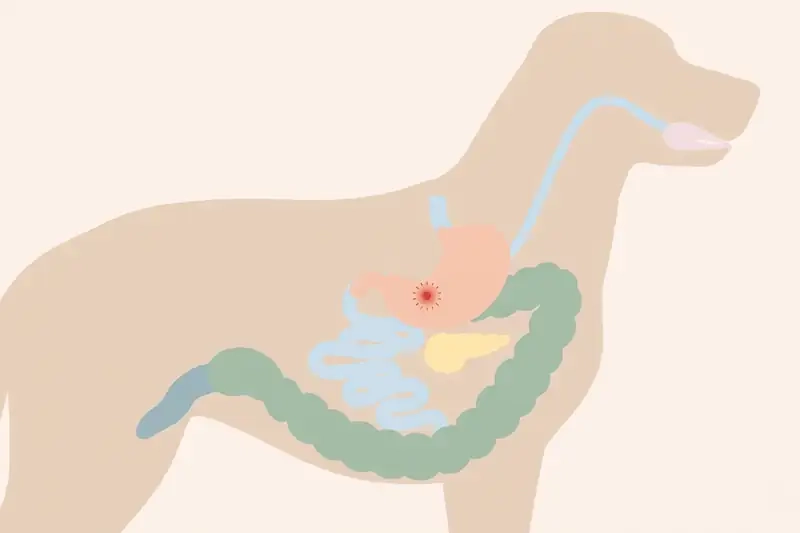
Perforation is the nightmare scenario. A shard pierces the intestinal wall, gut bacteria spill into the abdominal cavity, and peritonitis, a life-threatening abdominal infection, develops. This needs emergency surgery and intensive care. Obstruction is nearly as serious: the dog cannot pass food or waste, starts vomiting, and needs surgical removal of the blockage. Esophageal injuries are their own crisis, because the esophagus heals poorly and a lodged bone may need endoscopic or surgical removal. Even the “mild” outcomes hurt: mouth lacerations bleed dramatically and heal slowly, and a cracked slab fracture of a tooth means a dental procedure. None of this is rare. Ask any emergency vet about chicken bones and watch the expression change.
My dog ate chicken bones: what to do now
Stay calm and do not make your dog vomit: sharp fragments can do more damage coming back up. If your dog is choking, gagging, or pawing at the mouth, go to the emergency vet immediately. Otherwise feed a soft meal like plain bread to cushion fragments, then call your vet and monitor closely.

The no-vomiting rule surprises people, but it is important. Vomiting a sharp shard risks tearing the esophagus on the way up, adding an injury to the one you already have. The cushioning meal is a widely recommended step: soft bread, plain canned pumpkin, or canned dog food surrounds sharp pieces and helps them pass more safely. It is not a guarantee, just the best home measure available. Then call your vet and describe exactly what happened: how many bones, what kind, how long ago, and how the dog is acting. The vet may advise monitoring at home or may want to see the dog, especially for small dogs or large quantities. Do not give mineral oil, hydrogen peroxide, or any home remedy without veterinary direction. Our vomiting induction guide explains why inducing vomiting is only for specific situations with vet approval.
Signs of trouble in the next 72 hours
Watch your dog closely for one to three days. Warning signs include vomiting (especially with blood), lethargy, loss of appetite, abdominal pain or a swollen belly, straining to defecate, bloody or black stool, drooling, gagging, or difficulty swallowing. Symptoms can appear within hours or develop over a couple of days as fragments travel.

Set a mental checklist and run through it a few times a day. Eating and drinking normally is the best sign. Energy normal is the second. Stool passing normally, even if it takes a day, is the third. Any vomiting is a flag. Repeated vomiting is an emergency flag. Abdominal tenderness, whimpering when touched, or a hunched posture suggests pain inside. Straining without producing stool can mean an obstruction forming. Bloody stool means a shard has cut something on the way through. Black, tarry stool suggests bleeding higher up. Keep your vet’s number and the emergency clinic’s number where you can grab them. Most dogs that swallow a small number of bones pass them without incident, but “most” is not “all,” and the monitoring period is not optional.
When it is an emergency
Go to the emergency vet immediately if your dog is choking, cannot swallow, drools excessively, vomits repeatedly, vomits blood, collapses, has a swollen or painful abdomen, or strains without producing stool. Do not wait to see if these improve. Obstruction and perforation worsen fast, and early surgery has far better outcomes than late surgery.

Time matters enormously with perforation and obstruction. A dog seen within hours of symptom onset has dramatically better odds than one brought in a day later after the owners hoped it would pass. Emergency vets would rather X-ray a dog that turns out fine than operate on one that waited too long. If you are unsure whether it is an emergency, call the emergency clinic and describe the symptoms. They triage by phone constantly and will tell you whether to come now or monitor. Bring information: what the dog ate, how much, when, and the cushioning meal you gave. Do not feel embarrassed about the trash raid. Vets see bone cases weekly. The only mistake is waiting.
Why dogs love bones (and what to give instead)
Dogs love bones because chewing is deeply satisfying: it relieves stress, exercises jaw muscles, and cleans teeth mechanically. You do not need real bones to deliver any of that. Safe alternatives include VOHC-accepted dental chews, durable rubber toys like Kongs, and long-lasting chews sized for your dog. The craving is for chewing, not for bone specifically.
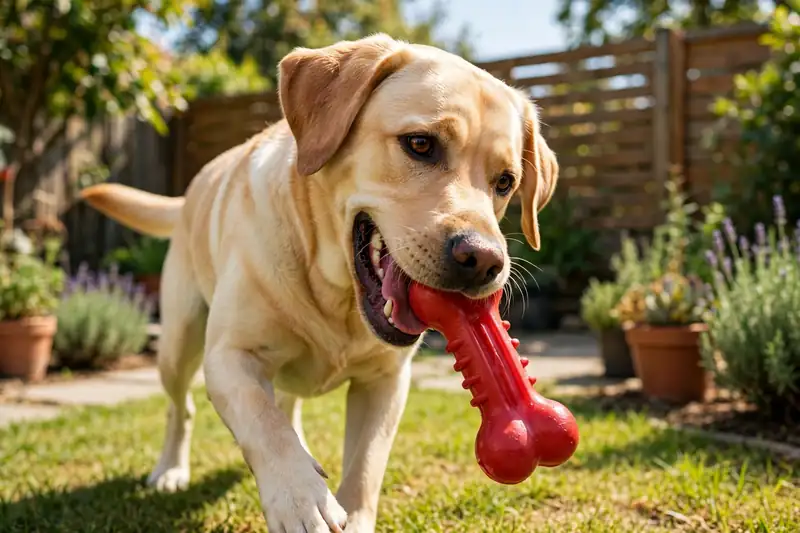
Understanding the motivation helps you substitute successfully. A dog that steals bones from the trash is usually an under-chewed dog, not a badly behaved one. Provide appropriate chewing outlets and the trash raids often stop on their own. Rotate toys to keep them interesting. Stuff a Kong with peanut butter and freeze it for a long-lasting project. Offer dental chews that carry the VOHC seal, which means they actually reduced plaque or tartar in testing. For power chewers, look for toys rated for aggressive chewing and replace them when they start breaking down. The goal is a dog with plenty of legal chewing options, so the illegal ones lose their appeal.
Bones vs dental chews
Dental chews beat bones on every measure that matters: they are designed to be chewed safely, many carry the VOHC Seal for plaque and tartar control, they cannot splinter into gut-piercing shards, and their calories are on the package. Bones offer none of this. For dental health, chews win; for a busy dog, rubber toys win.

The comparison is not close. A VOHC-accepted dental chew has been through controlled trials proving it reduces plaque or tartar. A chicken bone has been through nothing except dinner. Chews are formulated to break down safely in the stomach; bones are formulated by evolution to be light and strong, which is exactly what makes them dangerous. Chews come in weight-matched sizes; bones come as they come. Some owners argue bones are “natural.” So are splinters. The naturalistic argument collapses the moment you look at an X-ray of a perforated intestine. Spend the money on chews with the seal and toys built for the job. Your dog gets the chewing, you skip the emergency bill.
How to keep bones away from your dog
Secure the kitchen trash with a locking lid or keep it inside a cabinet. Clear plates immediately after meals instead of leaving them on low tables. At cookouts and holidays, brief your guests: no bones for the dog, no exceptions. Teach a solid “leave it” and “drop it” for the moments prevention fails.

Most bone emergencies are trash raids, and trash raids are a management problem, not a training problem. A locking trash can costs less than an X-ray. Plate-clearing is a habit that takes two weeks to build. Holiday vigilance matters because that is when the most bones are around and the most distracted humans are in charge. rotisserie chicken night deserves special attention: the carcass goes straight into a secured bin, not onto the counter “for a minute.” Training helps at the margins. A reliable “drop it” can save a dog that picks up a bone on a walk. But training fails sometimes, and management does not. Do both, and lean on management.
Chicken bones are a hard no, and now you know exactly why and what to do when prevention fails. The chicken meat itself is a different story: plain cooked chicken is one of the safest foods you can share. Our chicken guide covers safe preparation, our turkey guide covers the holiday bird’s bones too, and the human food guide is the reference for everything else.
Frequently Asked Questions
Can dogs eat chicken bones if they are cooked?
No. Cooked chicken bones are the most dangerous kind because cooking makes them brittle and prone to splintering into sharp shards. No cooking method makes them safe: roasted, grilled, boiled, fried, and smoked bones all splinter.
What should I do if my dog ate a chicken bone?
Do not induce vomiting. If the dog is choking or in distress, go to the emergency vet immediately. Otherwise, feed a soft cushioning meal like plain bread, call your vet for guidance, and monitor closely for 72 hours for vomiting, lethargy, abdominal pain, or bloody stool.
How long does it take for a dog to pass a chicken bone?
Many dogs pass small bone fragments within 24 to 72 hours. Monitor stool and behavior throughout that window. Lack of stool, straining, vomiting, or pain during that period warrants a vet visit, since fragments can cause trouble anywhere along the way.
Can chicken bones kill a dog?
Yes, though it is uncommon. Perforation of the intestines can cause life-threatening abdominal infection, and obstruction can be fatal without surgery. Choking on a lodged bone is also possible. Most incidents resolve without tragedy, but the severe outcomes are real enough to justify the strict rule.
Are raw chicken bones safe for dogs?
No, not safely. Raw bones splinter less than cooked ones but can still break, cause choking or mouth injuries, and carry Salmonella, E. coli, and Campylobacter that endanger both the dog and the household. Veterinary organizations generally advise against them.
Will one small chicken bone hurt my dog?
Possibly not, and many dogs pass a single small bone without issue, but there is no safe threshold. A single shard in the wrong place can perforate. Treat any bone ingestion seriously: cushion, call the vet, and monitor for 72 hours.
What can I give my dog to chew instead of bones?
VOHC-accepted dental chews, durable rubber toys, and appropriately sized long-lasting chews. These satisfy the chewing drive without splintering risk, and dental chews with the VOHC seal have proven plaque and tartar benefits that bones never had.
This article is general information only and is not a substitute for veterinary advice. If your dog has eaten chicken bones and shows any concerning symptoms, contact your veterinarian or an emergency clinic immediately.

4 thoughts on “Can Dogs Eat Chicken Bones? The Answer Is No”