HGE, hemorrhagic gastroenteritis, is one of the scariest things a dog owner can witness: a healthy dog suddenly passing large amounts of bloody diarrhea, often described as looking like raspberry jam. It is a genuine emergency that can turn fatal within hours without treatment, and it responds remarkably well to prompt veterinary care. This guide covers what HGE is, why vets now call it AHDS, how to recognize it fast, what treatment involves, and what recovery looks like.
What is HGE in dogs?
HGE stands for hemorrhagic gastroenteritis, a sudden disorder in dogs marked by vomiting and profuse bloody diarrhea. The intestinal lining becomes leaky, so fluid, protein, and blood pour into the gut. It strikes without warning in otherwise healthy dogs, causes dangerous fluid loss within hours, and needs emergency veterinary treatment. It is not contagious.

The defining feature is speed. A dog that was fine at breakfast can be passing bloody diarrhea by lunch and collapsing by dinner. The gut wall damage lets water and electrolytes flood out of the bloodstream into the intestines, which is why dehydration outpaces what the dog’s appearance suggests. Shock can develop before the dog looks obviously dehydrated. Despite the dramatic presentation, HGE is not an infection spreading between dogs. It is an individual crisis of the gut lining, which is why one dog in a multi-dog household gets it while the others stay fine. The name most vets use today is different, which the next section explains, but if you search “HGE in dogs,” this is the condition you are reading about.
Why vets renamed it AHDS
Veterinarians now call this condition AHDS, acute hemorrhagic diarrhea syndrome. The rename happened because “gastroenteritis” implies the stomach is involved, and it is not. The damage is in the intestines. The new name describes what actually happens: sudden, bloody diarrhea as a syndrome with no single proven cause.
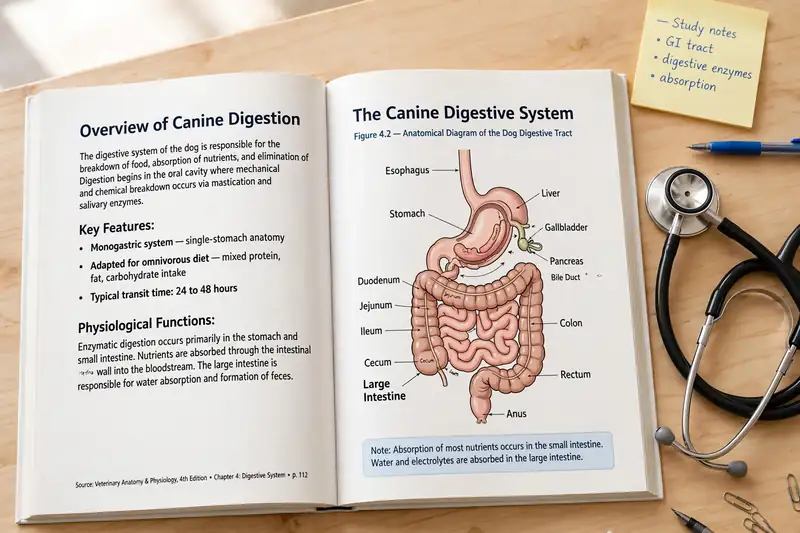
The old name misled in a practical way. Owners hearing “gastroenteritis” pictured a stomach bug, something like food poisoning that might pass. AHDS signals the truth: this is an intestinal emergency, not a tummy ache. Both names still circulate, and your vet may use either. Medical records and newer articles say AHDS; older articles and many owners say HGE. They mean the same condition. When reading about it, treat the terms as interchangeable and focus on the clinical picture: sudden vomiting plus bloody diarrhea in a previously healthy dog. The rename also reflects honest science. Calling it a “syndrome” admits that the exact cause remains unproven, which is more accurate than the old name’s implication of a straightforward stomach inflammation.
Signs of HGE to recognize fast
The classic signs arrive suddenly: vomiting, often first, followed by profuse bloody diarrhea with a jelly-like, raspberry-jam appearance. The dog becomes lethargic, may develop a painful abdomen and fever, and can progress to collapse as fluid loss mounts. Heart rate rises. Any dog showing this combination needs emergency care immediately.

The stool is the signature. Owners describe it as looking like raspberry or strawberry jam: red, jelly-like, and alarming in volume. Vomiting commonly comes first, sometimes hours before the diarrhea. Between episodes the dog looks miserable: reluctant to move, possibly stretching oddly or standing with an arched back from abdominal pain. Lethargy deepens quickly because the fluid loss is massive relative to the dog’s size, especially in small breeds. Do not wait to see if it improves. HGE does not improve on its own in the early hours; it worsens. The decision point is simple: sudden bloody diarrhea plus vomiting equals emergency vet, now. Call on the way so the clinic is ready.
Which dogs get HGE
Any dog can develop HGE, but it clusters in small and toy breeds, especially young adults around five years old. Yorkshire Terriers, Miniature Schnauzers, Miniature Pinschers, Miniature Poodles, and Maltese appear most often in the records. It is a condition of dogs, not cats.

The breed pattern is striking enough that vets think of HGE first when a young Miniature Schnauzer or Yorkie presents with bloody diarrhea. Why small breeds are overrepresented is not fully understood; it may relate to gut physiology, immune responses, or simply that fluid loss hits a five-pound dog harder and gets noticed faster. Young to middle-aged dogs dominate the case records, though older dogs are not exempt. If you own one of the predisposed breeds, this is worth knowing the way you know the location of the emergency clinic: not to worry daily, but to recognize instantly. Breed predisposition does not change the response. It just means owners of these breeds should treat sudden bloody diarrhea as HGE until the vet says otherwise.
What causes HGE?
The exact cause remains unknown. A toxin-producing type of Clostridium perfringens is found in the damaged gut of some affected dogs and may play a role, but the same bacterium lives in many healthy dogs. Dietary indiscretion, stress, and immune factors are studied as possible triggers. What is established is that it is not contagious.

The uncertainty frustrates owners who want something to blame or prevent. The honest state of knowledge: something damages the intestinal lining suddenly and severely, fluid and blood pour out, and the trigger is often never identified. Clostridium perfringens enterotoxin is the leading suspect, which is why some vets discuss it, but finding the bacterium does not prove it caused the episode. This matters for expectations. There is no vaccine, no single preventive, and no diet guaranteed to stop it. What you can control is response speed. The cause may be mysterious, but the treatment is well established, and outcomes depend far more on how fast the dog gets fluids than on identifying the trigger.
How vets diagnose HGE
Diagnosis rests on the clinical picture plus bloodwork. The hallmark lab finding is a very high packed cell volume, often above 60 percent against a normal 37 to 55, paired with low or normal total protein. That combination points strongly to AHDS. Vets also rule out look-alikes like parvovirus, foreign bodies, and poisoning.
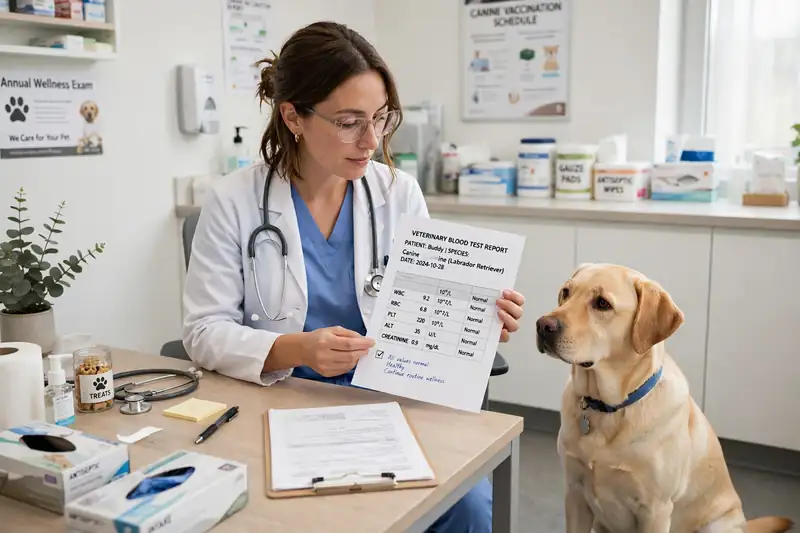
The bloodwork tells the story numbers cannot hide. As fluid pours into the gut, the blood left behind becomes concentrated, driving the red cell percentage up. Protein leaks out with the fluid, so total protein stays low or normal instead of rising with the dehydration. That mismatch is the fingerprint. Your vet will also run fecal tests, and in young unvaccinated dogs will rule out parvovirus, which can look similar and is contagious. X-rays or ultrasound may check for foreign bodies or intussusception. None of this delays treatment. Fluids start while the workup runs, because the diagnosis is clinical enough to act on and the bloodwork confirms what the vet already suspects.
Treatment: why IV fluids are everything
Intravenous fluid therapy with potassium and electrolyte supplementation is the foundation of HGE treatment, given in hospital with monitoring. Subcutaneous fluids are not enough for the massive fluid losses involved. Anti-nausea medication and gut protectants support recovery. Antibiotics are no longer routine and are reserved for severely ill dogs. Plasma may be needed when protein loss is extreme.
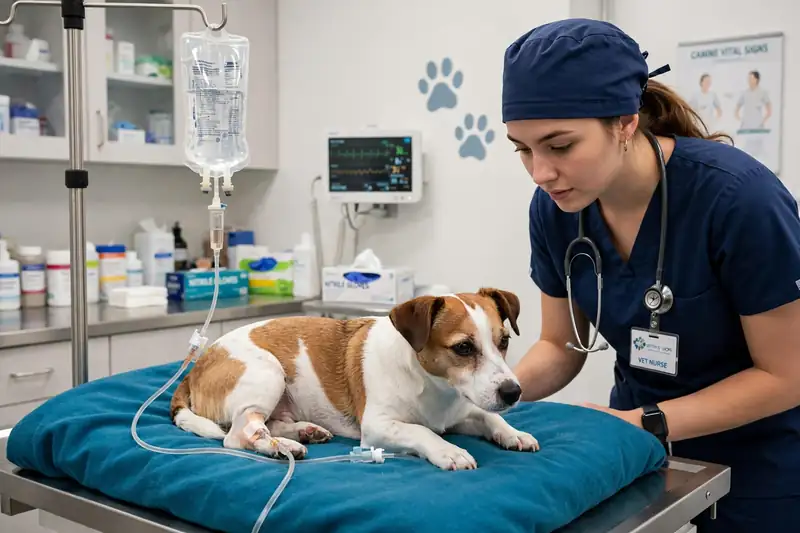
Fluids do what no home measure can. They replace the water and electrolytes pouring into the gut, support blood pressure, protect the kidneys, and buy the intestinal lining time to heal. Most dogs are hospitalized for one to three days on a drip, with blood values rechecked as they stabilize. Anti-vomiting drugs like maropitant (Cerenia) keep the dog comfortable and protect the fluid balance. Gut protectants such as sucralfate coat the damaged lining. The antibiotic shift is worth noting: older protocols gave them routinely, but current guidance reserves them for dogs with fever or signs of bloodstream infection, since most cases recover without them. Without IV fluids, the red cell concentration keeps climbing and the dog risks a fatal clotting disorder. With them, the turnaround is often dramatic.
Recovery and home care after hospitalization
Most dogs turn the corner within 48 to 72 hours and go home on a bland, easy-to-digest diet fed in small frequent meals. Your vet may recommend a gut-support food, probiotics, and sometimes ongoing fiber. Expect the stool to take several more days to fully normalize. Follow all recheck appointments even if the dog seems fine.

Home recovery is deliberately boring. Small meals of plain boiled chicken and white rice, or the recovery diet your vet prescribes, fed three to four times daily. Our bone broth guide can help with gentle hydration and appetite during this phase. No treats, no chews, no dietary experiments until the vet clears them. Probiotics help the gut flora re-establish; your vet may recommend a specific product. Watch the stool: it should progress from bloody to soft to formed over several days. Any backsliding, renewed vomiting, lethargy, or refusal to eat means calling the vet, not waiting. Some vets suggest a high-fiber diet and long-term probiotics afterward, since these may reduce the Clostridium populations suspected in the condition. The gut needs weeks, not days, to fully steady itself.
Prognosis: will my dog survive?
With prompt treatment, the prognosis is good. Fewer than 10 percent of hospitalized dogs die, and most recover fully within a few days. Dogs treated late or not at all face a much worse outlook: severe dehydration, shock, and clotting complications can be fatal. Speed of treatment is the single biggest factor in the outcome.
Those numbers should reassure without breeding complacency. Under 10 percent mortality with hospitalization is a strong outcome for a condition this dramatic. But the same sources are blunt about the alternative: untreated, HGE can kill, and it can do it fast. The dogs that do poorly are usually the ones that arrived late, after owners waited to see if the bloody diarrhea would pass. Recurrence is possible but not the rule; most dogs have a single episode and never repeat it. There is no lasting organ damage in typical recoveries. The dog that walks out of the hospital is, for practical purposes, the same dog that walked in, just with an owner who now knows exactly what bloody diarrhea means and exactly how fast to move.
HGE vs other causes of bloody diarrhea
Bloody diarrhea has many causes, and HGE is only one. Parvovirus strikes unvaccinated puppies and is contagious. Dietary indiscretion causes milder bloody stool. Colitis produces mucus with streaks of blood but rarely the dramatic volume of HGE. Parasites, foreign bodies, and poisoning each have their own patterns, which your vet distinguishes through history, exam, and testing.

The distinctions matter because the treatments differ completely. Parvo needs isolation and intensive care. A foreign body may need surgery. Poisoning needs decontamination. Colitis often needs only rest and diet. What they share is the presenting sign, which is why “bloody diarrhea” alone never determines the plan. Age and vaccine history point toward or away from parvo. A known garbage raid points toward indiscretion. The suddenness and volume point toward HGE. Do not try to sort this out at home. The sorting is the vet’s job, and it happens fast in the clinic. Your job is the one thing common to all of them: notice quickly, and get the dog seen quickly. For milder bloody stool patterns, our pumpkin guide and electrolytes guide cover supportive care, and our grass-eating guide explains a common mild-stomach behavior.
HGE is the emergency every dog owner should be able to recognize: sudden vomiting plus profuse bloody diarrhea in a previously healthy dog means the emergency clinic, now. With fast IV fluids, most dogs walk out in a few days. For recovery support, our electrolytes guide and bone broth guide are useful, and the human food guide is the reference for the diet rebuild after.
Frequently Asked Questions
What does HGE poop look like in dogs?
It is often described as looking like raspberry jam: profuse, red, jelly-like bloody diarrhea, very different from the small streaks of blood seen with mild colitis. The volume is striking and it appears suddenly, usually with vomiting.
Is HGE in dogs contagious?
No. HGE (AHDS) is not considered contagious. It is an individual gut crisis, which is why one dog in a household gets it while the others stay healthy. This also distinguishes it from parvovirus, which is highly contagious and strikes unvaccinated puppies.
Why is HGE now called AHDS?
Veterinarians renamed it acute hemorrhagic diarrhea syndrome because the stomach is not involved, so “gastroenteritis” was misleading. The damage is in the intestines. Both names refer to the same condition and are still used interchangeably.
Can HGE in dogs be treated at home?
No. HGE is a true emergency that needs hospital care with intravenous fluids. Home fasting, bland diets, or over-the-counter remedies cannot replace the massive fluid losses involved. Dogs that do not receive IV fluids risk shock, clotting disorders, and death.
How long does it take a dog to recover from HGE?
Most hospitalized dogs turn the corner within 48 to 72 hours and go home within a few days. The stool then takes several more days to fully normalize on a bland diet. Full gut steadiness takes weeks, with rechecks to confirm recovery.
Can HGE come back?
Recurrence is possible but most dogs have a single episode. Some vets recommend a high-fiber diet and long-term probiotics after recovery, since these may reduce the Clostridium bacteria suspected of playing a role. Report any repeat of bloody diarrhea immediately.
Which dogs are most likely to get HGE?
Small and toy breeds are overrepresented, especially young adults around five years old. Yorkshire Terriers, Miniature Schnauzers, Miniature Pinschers, Miniature Poodles, and Maltese appear most often. Any dog can develop it, however.
This article is general information only and is not a substitute for veterinary advice. Sudden bloody diarrhea with vomiting is an emergency: contact your veterinarian or an emergency clinic immediately.
Source: VCA Animal Hospitals: Hemorrhagic Gastroenteritis in Dogs.