

Activated charcoal has a reputation as a universal poison remedy, and that reputation is dangerous. In veterinary medicine it is a specific tool for specific poisonings, given in a narrow time window, by professionals. Given to the wrong dog at the wrong time, it can cause a second emergency on top of the first. This guide explains what activated charcoal actually does, when vets use it, the long list of poisons it cannot touch, and what to do instead when your dog eats something toxic.
What is activated charcoal for dogs?
Activated charcoal is a fine black powder made by superheating carbon-rich material, creating millions of tiny pores that trap chemicals. In veterinary medicine it is a gastrointestinal decontaminant: given by mouth after certain poisonings to bind toxin in the gut before it absorbs. It is not an antidote and not a home remedy.

The “activated” part is the key. Regular charcoal does little. Activation opens a huge internal surface area, a single gram can have the surface area of a football field, and toxins stick to those surfaces through adsorption. Veterinary products come as powder mixed into a slurry, pre-mixed suspensions (sometimes with sorbitol, a laxative), and capsules. The capsules sold for human digestive use are not the same as a veterinary decontamination dose, and the dose difference is enormous. This is a clinic tool that happens to be purchasable, not a home treatment that happens to be used in clinics. That distinction shapes everything that follows.
How activated charcoal works
Charcoal binds many drugs and chemicals in the stomach and intestines, holding them so they pass out in the stool instead of absorbing into the blood. It only works on toxin still sitting in the gut. Once a poison has crossed into the bloodstream, charcoal cannot reach it, which is why timing dominates every decision about its use.

Think of it as a sponge moved through the gut ahead of the poison. The charcoal slurry coats the stomach and intestinal lining, and susceptible molecules stick to it as they pass. The bound complex then travels out with the stool, which turns black. That is the entire mechanism. There is no systemic effect, no neutralization in the blood, no reversal of symptoms already underway. This is why charcoal is classified as decontamination, not treatment. It reduces how much poison gets in. It does nothing about the poison that already got in. Vets pair it with the actual treatments for the specific toxin: IV fluids, specific antidotes, seizure control, monitoring. Charcoal is one tool in the protocol, never the protocol.
When vets actually use it
Vets consider charcoal for recent ingestions of toxins it binds well, such as many human medications, certain pesticides, and some plant toxins, in a conscious dog with a protected airway. It is also used in repeated doses for toxins that recirculate through the liver and bile. The decision always depends on the toxin, the amount, and the timing.

The ideal candidate is a dog that swallowed a charcoal-susceptible toxin within the last hour, is fully alert, and can swallow safely. That is a narrow profile, and most real cases only partly fit it. Vets weigh the fit every time: how long ago, what exactly, how much, and how is the dog right now. Multi-dose charcoal has a specific job for toxins with enterohepatic recirculation, meaning the liver dumps the toxin into the bile, the gut reabsorbs it, and the cycle repeats. Repeated charcoal doses interrupt that loop. Chocolate is a familiar example where vets sometimes use charcoal as part of the protocol. But “sometimes” is doing work in that sentence. The vet decides based on the theobromine dose calculation, not on a reflex.
The one-hour window that matters
Charcoal’s benefit falls off fast. Given within about an hour of ingestion, it can substantially reduce absorption. After that, most of the toxin has already moved into the bloodstream where charcoal cannot follow. By two hours, the benefit is small. This is why poisoning calls start with “when did it happen” before anything else.

This timing reality is the strongest argument against home dosing. By the time an owner finds the chewed package, searches whether charcoal helps, finds the product, mixes a dose, and gets it into a reluctant dog, the window is usually closed. Meanwhile the clock that matters, the one measuring time to professional care, kept running. Every minute spent on home charcoal is a minute not spent getting to the vet, and the vet has charcoal too, plus everything else. Note the time the moment you discover the ingestion. That single fact shapes the entire treatment plan more than almost anything else you can report.
What charcoal does NOT help with
The list of poisons charcoal cannot handle is long and includes common household dangers. Per the Merck Veterinary Manual, charcoal does not appreciably bind xylitol, and it is unlikely to reduce absorption of ethylene glycol, the toxic ingredient in antifreeze. Alcohols, heavy metals, and corrosive acids and alkalis are also on the ineffective list.
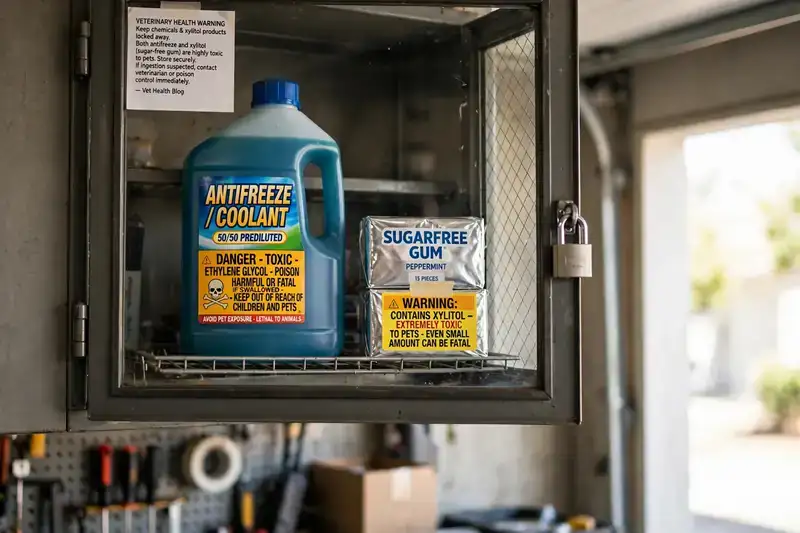
Read that list twice, because it demolishes the universal-remedy myth. Xylitol poisoning, one of the fastest-moving emergencies in dogs, gets no benefit from charcoal. Antifreeze, another top killer, likewise. Corrosive substances are worse than unhelped: giving charcoal after a caustic ingestion can complicate treatment and endoscopy. Petroleum products, another common ingestion, do not bind either. This is why “give charcoal for any poisoning” is dangerous advice. For several major toxins it wastes the critical window, and for caustics it can actively harm. The only person who knows whether charcoal fits your dog’s specific ingestion is the vet or poison control specialist on the phone, and that is who should make the call.
Why you should not give it at home alone
Do not give activated charcoal at home unless a veterinarian or poison control tells you to. Home dosing risks using it for a toxin it cannot bind, giving it too late, giving it to a dog that cannot protect its airway, or delaying professional care. The decision requires knowing the toxin, the dose, the timing, and the dog’s state.

The airway risk deserves emphasis. Charcoal is a fine black powder going into a stressed dog’s mouth. If the dog inhales it, aspiration pneumonia follows, which is a second emergency stacked on the first. Dogs that are already showing signs, tremors, agitation, seizures, heavy sedation, cannot protect their airways and must not receive charcoal by mouth. Dogs with intestinal blockage or no gut motility are also poor candidates. Then there is the dosing problem: veterinary charcoal dosing is weight-based and product-specific, and the wrong product or wrong amount helps nothing. The safe home action is always the same: note what was eaten, how much, and when, then call your vet, the emergency clinic, or a poison control line immediately.
Dosing: what the references say
Published veterinary references describe charcoal at roughly 1 to 2 grams per kilogram of body weight by mouth, with the Merck Veterinary Manual describing repeat doses at four to six hour intervals for appropriate cases. A laxative such as sorbitol is added to the first dose only. This is context for understanding veterinary care, not home-dosing instructions.
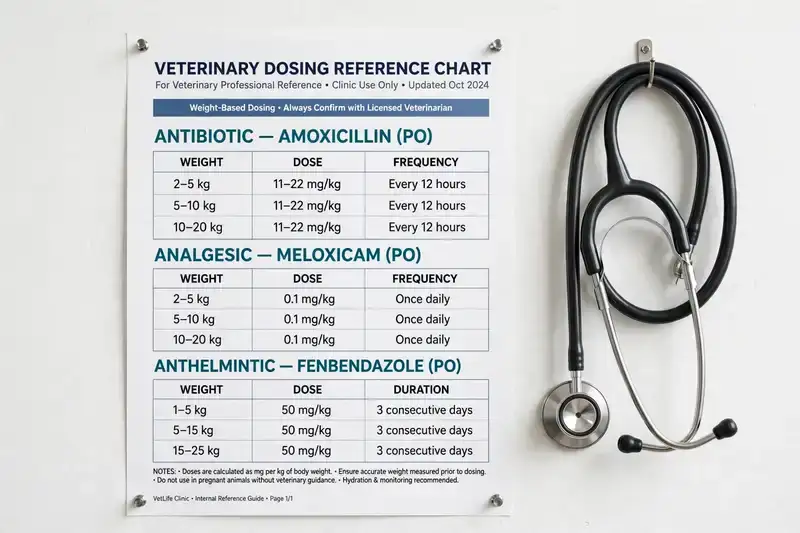
Including these numbers serves one purpose: showing that real dosing is precise, weight-based, and protocol-driven, which is the opposite of eyeballing a spoonful of powder. The sorbitol detail matters because it illustrates the expertise involved. Sorbitol speeds the toxin out, but repeated sorbitol doses cause diarrhea, dehydration, and dangerous sodium shifts, so vets use it once and switch to plain charcoal for repeats. Multi-dose protocols run for about 24 hours with monitoring. None of this translates to a home recipe. If a vet or poison control directs you to give charcoal at home, they will specify the product, the amount, and the timing for your dog. Follow those instructions exactly and get to the clinic as directed.
Risks and side effects
Charcoal’s risks include vomiting, constipation, and black stool, which is expected. The serious risks are aspiration pneumonia if the dog inhales it, and dehydration or electrolyte shifts with repeated cathartic doses. It also binds medications, so it can block absorption of drugs the dog needs. These risks are manageable in a clinic and unpredictable at home.

Black stool after charcoal is normal and not a concern by itself, though it can mask the black tarry stool of intestinal bleeding, the same masking issue as with bismuth products. Vomiting after dosing is common and counterproductive, since it may expel the charcoal before it works. Constipation can follow, especially with repeated doses. The medication-binding effect has a practical consequence: if your dog takes daily medication, charcoal can wipe out those doses, which the vet needs to know about. In the clinic, these risks are weighed against the poisoning’s severity and managed with monitoring, fluids, and airway protection. At home, there is no monitoring and no airway protection, which is why the risk-benefit math flips.
What to do instead when your dog eats something toxic
Act fast and in this order: secure the product and note what and how much was eaten and when, keep the packaging, call your veterinarian, the emergency clinic, or a poison control line immediately, and follow their instructions exactly. Do not induce vomiting or give anything unless specifically told to. Drive to the clinic if directed.

The packaging is evidence. Bring it. The ingredient list, the concentration, and the estimated amount missing let the vet calculate the toxic dose instead of guessing. Note the time, since it determines which decontamination options are still open. The phone numbers worth saving now, before you need them: the ASPCA Animal Poison Control Center at 888-426-4435 and the Pet Poison Helpline at 855-764-7661, both 24 hours (consultation fees may apply). Do not try to make the dog vomit on your own; our vomiting guide explains why that needs professional direction. For known toxin exposures, our guides on onions and grapes cover two of the most common ones. Speed plus information beats every home remedy.
Charcoal products: powder, capsules, suspension
Veterinary charcoal comes as bulk powder mixed into a slurry, pre-mixed suspensions with or without sorbitol, and granules. Human-market capsules and “detox” products are formulated for different purposes at far lower doses. None of these are for improvising at home. If your vet directs home use, they will name the exact product and dose.
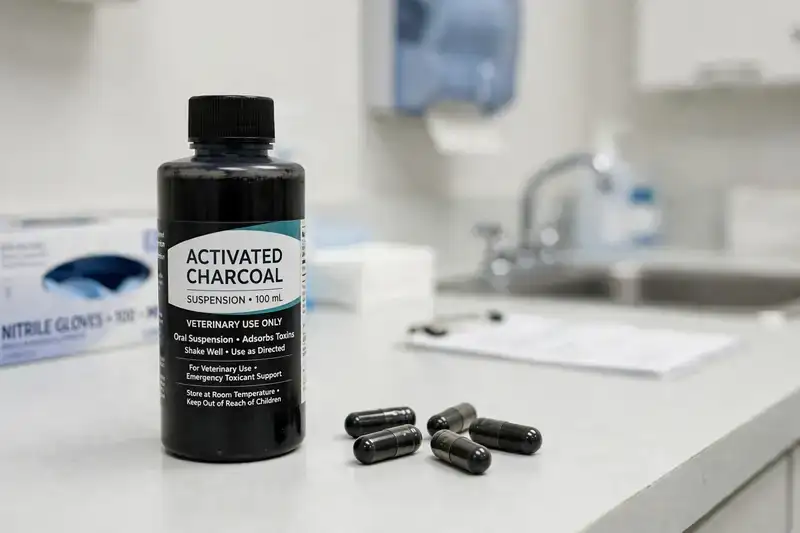
The product confusion is real. Health-food charcoal capsules, often marketed for bloating or “detox,” contain a fraction of a veterinary decontamination dose and are not interchangeable. Charcoal marketed for aquarium filters or art supplies is not pharmaceutical grade and may contain contaminants. Veterinary suspensions are standardized for adsorptive capacity, which is the property that actually matters. Some include sorbitol for the first dose, as discussed. If you keep anything at home for emergencies, keep the poison control numbers, not the charcoal. The numbers get used. The charcoal, used correctly, gets used by the vet after you call.
Activated charcoal is a genuine lifesaver in the right hands and a genuine hazard in the wrong ones. The right hands are your vet’s. When poisoning happens, the winning moves are fast recognition, good information, and a phone call, not a home pharmacy. Save the poison control numbers today: ASPCA Animal Poison Control at 888-426-4435 and Pet Poison Helpline at 855-764-7661. For the toxins dogs meet most often, our onion guide, grape guide, and human food guide are worth reading before you need them.
Frequently Asked Questions
Can I give my dog activated charcoal at home?
Only if a veterinarian or poison control specifically directs you to. Home dosing risks using it for a toxin it cannot bind, missing the effective time window, aspiration if the dog cannot protect its airway, and delaying professional care. Call first, dose only on instruction.
How much activated charcoal do dogs get?
Veterinary references describe roughly 1 to 2 grams per kilogram of body weight by mouth, with repeats at intervals for appropriate cases. This is context, not a home recipe. The correct product, amount, and timing depend on the toxin and the dog, and must come from your vet or poison control.
What poisons does activated charcoal not work for?
It does not appreciably bind xylitol or ethylene glycol (antifreeze), and it is ineffective against alcohols, heavy metals, corrosive acids and alkalis, and petroleum products. For caustic substances it can complicate treatment. Never assume it fits; ask the professional on the phone.
How fast does activated charcoal need to be given?
Benefit is greatest within about an hour of ingestion and declines sharply after that. By two hours, most of the toxin has absorbed into the bloodstream where charcoal cannot reach it. This is why poisoning response starts with noting the time and calling immediately.
Will activated charcoal make my dog’s stool black?
Yes, black stool is an expected and harmless effect of charcoal. Note that it can mask the black tarry appearance of intestinal bleeding, so report any other symptoms like vomiting, lethargy, or abdominal pain to your vet regardless.
Is activated charcoal the same as regular charcoal?
No. Activation creates a vast internal pore surface that traps chemicals; regular charcoal, including grill charcoal, lacks this property and may contain harmful additives. Only pharmaceutical-grade veterinary products are used for decontamination.
Can activated charcoal treat chocolate poisoning in dogs?
It is sometimes part of the veterinary protocol for significant chocolate ingestion, alongside induced vomiting and supportive care, depending on the theobromine dose and timing. It is not a standalone home treatment. Call your vet or poison control immediately for any chocolate ingestion.
This article is general information only and is not a substitute for veterinary advice. If your dog may have eaten something toxic, contact your veterinarian, an emergency clinic, or a poison control line immediately.


5 thoughts on “Activated Charcoal for Dogs: When It Helps and When It Doesn’t”