

No. Can dogs eat grapes? The answer is an absolute, no-exceptions no. Grapes and raisins are among the most dangerous human foods for dogs, they can trigger sudden kidney failure, and in some dogs even a single grape has caused life-threatening illness. There is no safe amount, no safe variety, and no way to predict which dog will react. If your dog has just eaten a grape, skip the rest of this guide for now and call your veterinarian immediately, then come back and read why.
Why grapes are so dangerous for dogs
Most food risks for dogs are about quantity, too much of a good thing. Grapes are different. The American Kennel Club states plainly that grapes and raisins are highly toxic to dogs and should never be considered a safe treat, warning that even a single grape can cause serious illness in some dogs, including kidney failure.
What makes grapes especially frightening is how unpredictable they are. Research and clinical experience have shown that grape toxicity can affect dogs of any age, breed, or size. Veterinarians have linked kidney failure to as little as one grape or raisin for every 10 pounds of body weight, but severe reactions have also occurred when a dog ate only a small amount. One dog can eat a handful and show nothing; another can eat two grapes and end up in intensive care. There is currently no test that predicts which dog will react.
For years, nobody knew exactly what in grapes caused the damage. The exact toxic compound is still not fully confirmed, though recent research points to tartaric acid and its salts as the likely culprits, the same substances found in cream of tartar, which has produced grape-like poisoning in dogs. What matters for you as an owner is simpler: washing the grapes, buying organic, removing seeds, or choosing seedless varieties does none of it make them safe. Red or green, seeded or seedless, homegrown or store-bought, all grapes carry the risk.
Which grape products are dangerous
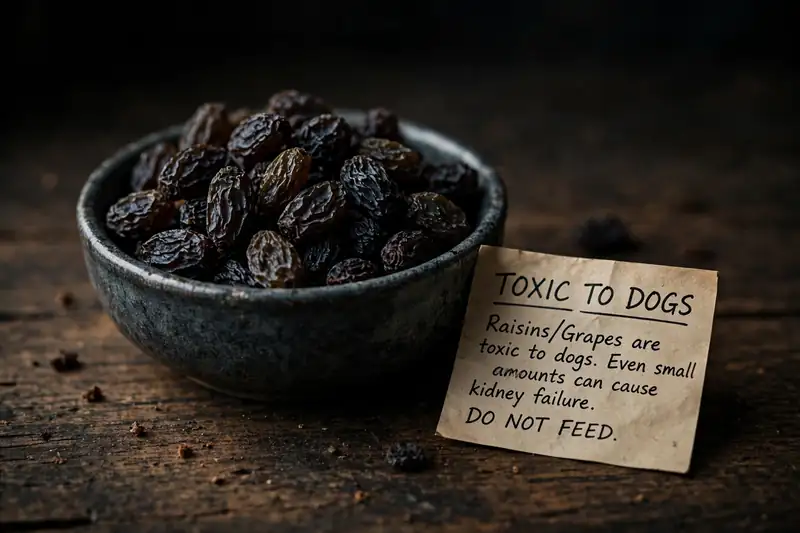
It is not just fresh grapes off the vine. The danger extends to everything made from them:
- Raisins and sultanas, dried grapes are just as toxic, and because they are smaller and sweeter, dogs can eat a dangerous quantity quickly. A small box of raisins is a genuine emergency.
- Currants, the dried Zante currants used in baking (related to grapes and raisins) can cause the same kidney injury. Note that fresh blackcurrants from the Ribes genus (related to gooseberries) are a different plant and are not linked to this toxicity, but when in doubt, keep all currants away from your dog.
- Foods containing grapes or raisins, trail mix, raisin bran cereal, granola bars with raisin paste, fruitcake, mince pies, some baked goods, chocolate assortments with raisin centers, and certain jams. Dogs routinely get poisoned at holidays by stealing these.
- Grape pressings, the leftover pulp from wineries has caused poisoning in dogs.
What does not appear to cause poisoning, according to veterinary sources including VCA Animal Hospitals: grape juice, wine, jellies made from grape juice concentrate, grape seed extract, and grape vine leaves. But this is no reason for complacency, the whole fruit in any fresh or dried form is the danger, and that is what dogs actually get into.
Signs of grape poisoning, and when they appear
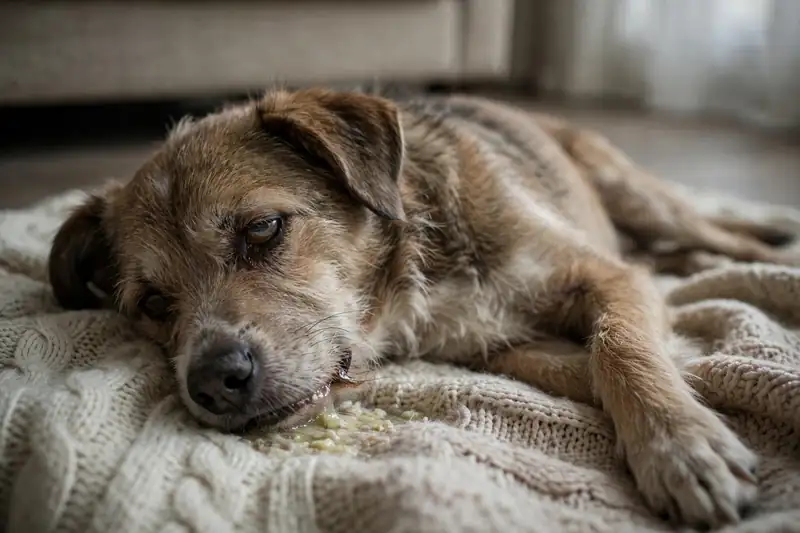
Grape poisoning damages the kidneys, reducing their ability to remove waste and regulate fluids, a sudden loss of function called acute kidney injury. The cruel part is the delay: symptoms may not appear immediately, which is why you must never “wait and see.”
Early signs, usually within 6-12 hours of eating grapes:
- Vomiting (often repeated) and loss of appetite
- Diarrhoea
- Lethargy, weakness, or unusual quietness
- Abdominal pain or tenderness
Later signs, as kidney injury progresses (12-48 hours and beyond):
- Drinking much more or much less water than normal, or not urinating
- Dehydration, dry gums, sunken eyes, loss of skin elasticity
- Bad breath with an ammonia-like smell
- Tremors or wobbliness
- Collapse
Not every dog shows every sign, and some dogs show almost nothing until the kidneys are already in trouble. That is exactly why the AKC advises treating any suspected grape ingestion as a veterinary emergency from the first minute, do not wait for symptoms to appear before calling.
My dog ate a grape, what to do RIGHT NOW

Do these things in order, without delay:
- Call your veterinarian immediately, or, if it is after hours, your nearest emergency vet clinic. In the US you can also call the Pet Poison Helpline on 855-764-7661 or the ASPCA Animal Poison Control Center on 888-426-4435. Do this first, before anything else.
- Note what was eaten and how much, grapes or raisins, roughly how many, and when. Note your dog’s weight too. Both help the vet judge the risk and choose treatment.
- Do NOT induce vomiting unless the vet tells you to, this is the current veterinary guidance. Improper vomiting induction can cause aspiration (food going into the lungs), which creates a second emergency.
- Bring the evidence, if there is packaging (a raisin box, a trail mix bag), bring it or a photo of it.
- Get to the clinic fast, early treatment, ideally within the first few hours, dramatically improves the outlook. The vet may induce vomiting safely, give activated charcoal to limit absorption, and start IV fluids to protect the kidneys, with bloodwork to monitor kidney values over the next 48-72 hours.
Time is the single biggest factor. A dog seen within an hour or two of eating grapes has a far better prognosis than one brought in the next day when symptoms have already started.
How vets treat grape toxicity
There is no antidote for grape poisoning, treatment is about limiting absorption and supporting the kidneys while the body clears the toxin. What to expect at the clinic:
- Decontamination, if ingestion was recent, the vet may induce vomiting under controlled conditions and administer activated charcoal, which binds remaining toxin in the gut.
- Aggressive IV fluid therapy, fluids support kidney perfusion and help flush waste, often continued for 48 hours or more.
- Blood monitoring, repeated bloodwork tracks kidney values (BUN, creatinine), electrolytes, and hydration. Rising values signal worsening injury.
- Hospitalization, moderate to severe cases stay in the clinic for monitoring, sometimes several days.
- Supportive care, anti-nausea medication, monitoring of urine output, and in severe cases, advanced interventions.
Most dogs treated early recover fully. Dogs treated late, or not at all, can develop irreversible kidney failure. This is why the “wait and see” approach is the most dangerous mistake an owner can make with grapes.
“But my dog ate grapes before and was fine”
You will hear this from other owners, and it is true, some dogs eat grapes repeatedly without apparent harm. Here is why that means nothing for your dog:
- Individual sensitivity varies enormously. As the AKC’s veterinary sources note, some dogs are sensitive to grapes while others eat them regularly without getting sick. There is no way to know which group your dog falls into until it is too late.
- Tartaric acid content varies. If tartaric acid is indeed the toxic principle, its concentration differs between grape varieties, growing conditions, and even individual batches, which helps explain why similar exposures produce very different outcomes.
- Damage can be cumulative and silent. A dog that seemed fine after grapes last year may react severely this time, and low-grade kidney stress may not show obvious symptoms.
“My dog was fine” is survivorship bias, not safety data. The veterinary consensus is unambiguous: keep grapes away from all dogs, every time.
Safe fruit alternatives your dog will actually like

The good news: plenty of fruits are safe, and dogs love many of them. All served plain, washed, cut appropriately, and within the 10% treat allowance:
- Blueberries, tiny, sweet, and packed with antioxidants; an ideal training treat.
- Strawberries, safe and most dogs love them; see our strawberry guide for portions.
- Watermelon, seedless flesh only, hydrating and low-calorie.
- Apples, slices without seeds or core (seeds contain cyanide compounds).
- Bananas, safe but sugary, so small amounts.
- Mango, flesh only, no pit; see our mango guide.
- Pineapple, small chunks of fresh pineapple are safe.
Every one of these beats a grape. When you want to share fruit, reach for this list, never the grape bowl.
How to prevent grape poisoning in your home
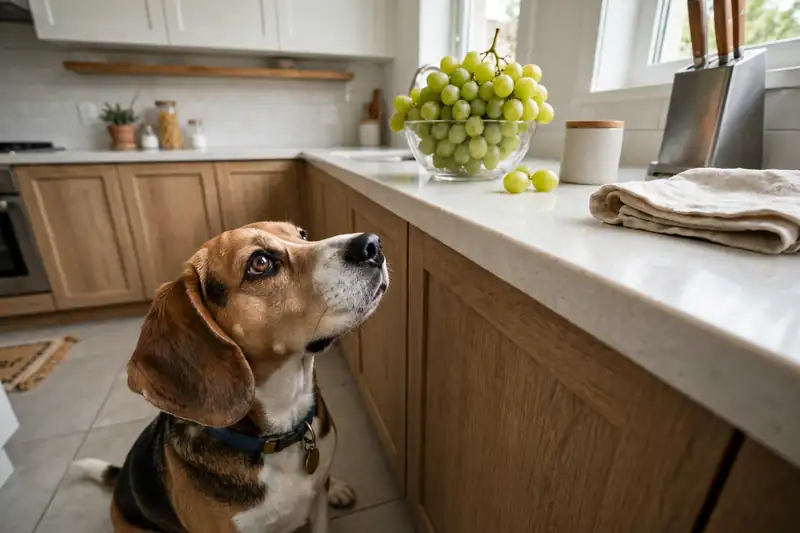
Most grape poisonings are accidents, and accidents are preventable:
- Fruit bowl discipline, never leave grapes, raisins, or raisin-containing snacks where a dog can reach: counters, coffee tables, children’s hands, open grocery bags.
- Holiday vigilance. Christmas, Thanksgiving, and Easter bring fruitcake, mince pies, raisin boxes, and trail mix into homes. These are peak seasons for grape poisoning. Brief guests and children.
- Lunchboxes and backpacks, raisin boxes in a child’s school bag, left on the floor, are a classic poisoning scenario.
- Compost and trash, secure bins; dogs raid them.
- Vineyards and gardens, if you grow grapes, fence the vines. Fallen fruit is just as dangerous.
- Teach “leave it”, a reliable leave-it cue is your last line of defense on walks, where dropped grapes and raisins are common near cafes and markets.
Dogs who counter-surf or raid trash need these rules enforced most strictly, and honestly, every dog benefits from them.
Dogs at higher risk
While any dog can be affected, a few factors raise the stakes:
- Small dogs, a single grape represents a much larger dose relative to body weight.
- Dogs with existing kidney disease, already-compromised kidneys have less reserve.
- Puppies and seniors, less physiological resilience.
- Dogs that eat fast or steal food, more likely to ingest a large quantity before anyone notices.
If your dog falls into any of these groups, your margin for error is essentially zero. Prevention is everything.
The honest summary: grapes and raisins are one of the few foods where the only safe amount is none. No variety is safe, no preparation makes them safe, and no dog is proven safe. The unpredictability is the danger, and the fix is simple. Keep them out of reach, know the emergency steps, and share one of the many safe fruits instead. Your dog will never miss what they never taste.
For the same plain-only, small-portion thinking across the foods dogs meet most often, see our wider guide to what human food dogs can eat. And for a fruit that is genuinely safe to share, our strawberry guide covers portions and prep.
Frequently Asked Questions
How many grapes are toxic to dogs?
There is no established safe number. Vets have linked kidney failure to as little as one grape or raisin per 10 pounds of body weight, and severe reactions have happened with even less. Treat any amount as an emergency.
Are raisins more dangerous than grapes?
They carry the same danger. Because raisins are smaller, dried, and sweeter, dogs tend to eat more of them at once, a small box of raisins can be a severe poisoning. Treat raisins exactly like grapes: never share, and call the vet if eaten.
Can dogs eat green grapes or seedless grapes?
No. All grape varieties, red, green, seeded, seedless, organic, homegrown, have caused poisoning. Seedless does not mean safe, and washing or peeling changes nothing.
What if my dog ate one grape an hour ago and seems fine?
Call your vet now anyway. Symptoms are often delayed 6-12 hours or more, and early treatment is what saves kidneys. “Seems fine” in the first hour means nothing with grape toxicity, do not wait for symptoms.
Can grape poisoning be cured?
There is no antidote, but early veterinary treatment, decontamination, activated charcoal, aggressive IV fluids, and monitoring, leads to full recovery in most dogs seen promptly. Late or untreated cases can develop irreversible kidney failure.
Are grape stems or vines dangerous?
The fruit is the documented danger. Grape vine leaves and grape seed extract have not been linked to poisoning, but there is no reason to let your dog chew vines, keep them away from grape plants entirely.
My dog ate trail mix with raisins, what should I do?
Treat it as a grape emergency: call your vet or the Pet Poison Helpline (855-764-7661) immediately, note how much was eaten and your dog’s weight, and get to a clinic. Trail mix often also contains chocolate and xylitol-sweetened items, which are separate emergencies, tell the vet everything in the mix.
This article is general information only and is not a substitute for veterinary advice. Grape ingestion is a veterinary emergency, if your dog has eaten grapes or raisins, contact your veterinarian immediately. If your dog has a health condition, is on a prescription diet, or you are unsure about any food, check with your veterinarian first.



12 thoughts on “Can Dogs Eat Grapes? No — Why Even One Is Dangerous”