Spent brewing hops once pushed a dog’s temperature past 107 degrees Fahrenheit, triggering seizures and organ damage. That case, documented in veterinary literature, is why beer deserves its own warning beyond the general alcohol rules. Dogs must never drink beer: the ethanol poisons them like any alcohol, and the hops add a second, separate toxicity that can kill through runaway overheating. Even non-alcoholic beer is unsafe. This guide covers both poisons, the doses that matter, and what to do when a dog gets into beer.
The short answer: can dogs drink beer?
Beer is off the menu for dogs entirely. It contains ethanol, which is toxic to dogs in any amount, plus hops, the brewing flowers that can trigger a life-threatening overheating reaction called malignant hyperthermia. Small dogs can reach dangerous ethanol doses from a single beer, and no beer is safe at any serving size.
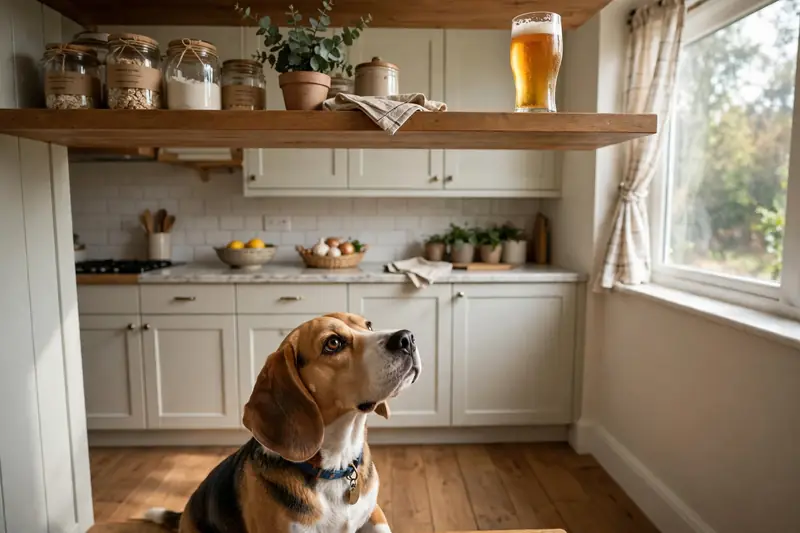
Beer looks milder than liquor, and by volume it is. That mildness misleads owners into treating a stolen lap as a joke. The ethanol in a standard 12-ounce beer, about 14 grams, is enough to seriously poison a small dog, and the hops add a risk that liquor does not carry at all. The Pet Poison Helpline lists ethanol as toxic to pets with rapid onset of stumbling, lethargy, and vomiting. Add hops to that picture and beer becomes the one common drink with two independent ways to harm a dog. Our alcohol guide covers ethanol poisoning across all drink types.
Ethanol: the first poison in the glass
Beer is typically 4 to 6 percent alcohol by volume, which sounds small until you scale it to a dog’s body. A 12-ounce beer at 5 percent holds about 14 grams of pure ethanol. For a 10-pound dog, that single beer delivers a dose well into the danger zone, and symptoms begin far below the lethal range.

Dogs absorb ethanol fast and break it down slowly, producing less of the liver enzyme that clears alcohol than people do. The result is rapid drunkenness: wobbliness and confusion within 30 to 60 minutes, progressing to vomiting, slowed breathing, dropping body temperature, and in severe cases seizures or coma. Light beers run slightly lower in alcohol but change nothing about the verdict. A “light” beer still carries roughly 11 grams of ethanol, still toxic, still worth an emergency call in a small dog. The percentage on the label is a human serving concept. Dogs do not get serving concepts.
Hops: the second poison
Hops are the flowers of Humulus lupulus, used to flavor and preserve beer. In some dogs they trigger malignant hyperthermia, a runaway rise in body temperature that becomes life-threatening fast. The Pet Poison Helpline describes rapid onset of dangerous fever with panting, racing heart, vomiting, seizures, and death.

Research published in the Journal of the American Veterinary Medical Association documented cases where dogs developed rectal temperatures above 107 degrees after eating hops, along with panting, seizures, and dark brown urine. Certain breeds appear more susceptible, including Greyhounds, Labrador Retrievers, Saint Bernards, Pointers, Dobermans, Border Collies, and American Cocker Spaniels, though any dog can be affected. The mechanism is still not fully understood, which means there is no antidote and no safe dose to aim for. Cooling and emergency veterinary care are the only answers. This is the risk that makes beer uniquely dangerous among common drinks: wine has grapes, but only beer brings hops.
Spent hops: the homebrewer’s hazard
Here is the honest complication. The worst documented hop poisonings involve spent hops, the soggy leftover flowers that homebrewers discard after brewing, or whole hop cones, not the trace amounts suspended in a finished beer. A homebrewer’s trash bag of spent hops is the highest-risk hops scenario in any house.
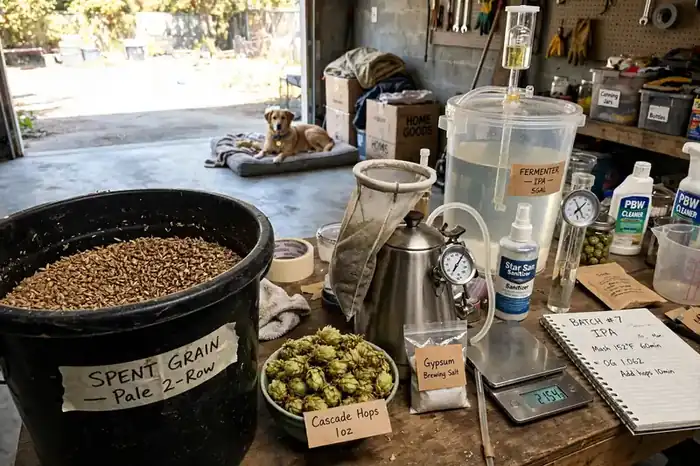
That does not make beer safe. Finished beer still contains hop compounds plus a full dose of ethanol, and the ethanol alone justifies the never-ever rule. But it does change where the hops vigilance belongs. If someone in your house brews beer, the spent hops need the same security as rat poison: sealed bag, lidded outdoor bin, compost pile fenced off. Dogs root through compost with enthusiasm, and a pile of spent hops smells interesting enough to eat. Commercial breweries discard tons of the stuff, so brewery-adjacent compost and farm piles deserve the same caution on walks.
What a sip vs a glass does
Dose decides the outcome, and size decides the dose. A large Labrador that laps a spilled saucer of beer will most likely show nothing worse than mild wobbliness, and many owners will never notice. The same saucer in a Chihuahua is a different event.

A full 12-ounce beer threatens small dogs seriously: vomiting, heavy sedation, dangerous chilling, and possible seizures. Medium dogs face real poisoning from a beer or two. Large dogs need more volume to reach the same blood levels, but they get there with a couple of cans, and the hops risk does not scale as neatly as the ethanol math. Puppies, seniors, and dogs with liver disease have the thinnest margins of all. The only safe generalization is that less is luckier, never that a small amount is safe. If the amount was more than a lick, or the dog is small, treat it as an emergency and call.
Non-alcoholic beer and “dog beer”
Non-alcoholic beer is not safe for dogs. It still contains trace amounts of ethanol, it still contains hop compounds, and some versions add artificial sweeteners. “Non-alcoholic” on the label means reduced alcohol for people, not safe for dogs.
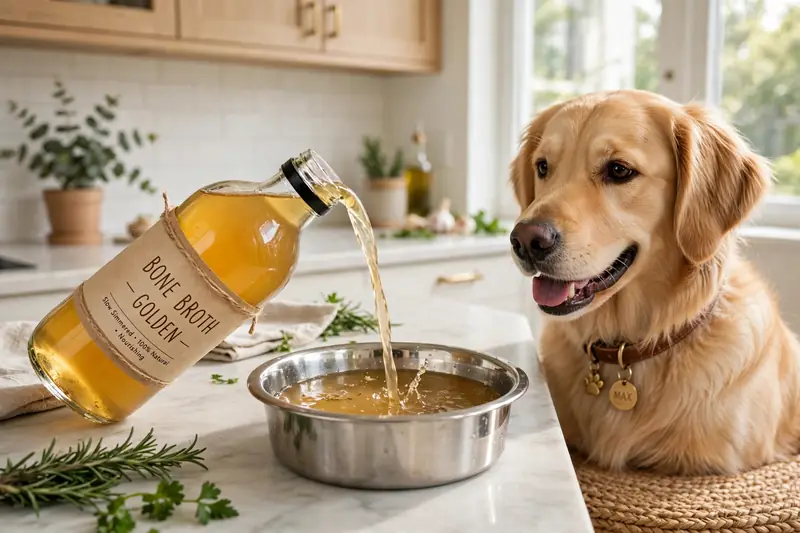
Real dog beer is a different product entirely. Several companies sell “dog beer” made from unsalted bone broth, sometimes with dog-safe flavorings, containing no alcohol and no hops. These are treats, not health drinks, but they are safe for the purpose they serve: letting the dog join the social moment. Check the ingredient list for onion, garlic, and excess salt before buying, since broth products vary. Homemade versions work too: plain low-sodium bone broth, served at room temperature in a bowl. The dog gets the ritual. Nobody gets poisoned.
Signs of beer poisoning
Beer poisoning shows two overlapping sign patterns, and telling them apart matters. Ethanol signs arrive first: wobbliness, stumbling, drooling, vomiting, unusual sleepiness, and a drop in body temperature that you can feel in the ears and paws.
Hops signs look like the opposite: dangerous overheating with frantic panting, a racing heart, restlessness escalating to agitation, then vomiting and seizures as the temperature climbs. A dog showing ethanol signs needs warmth, stillness, and a vet. A dog showing hops signs needs cooling and a vet immediately: move to shade, offer cool (not ice-cold) water, and get to emergency care without delay. Either pattern within an hour or two of beer exposure means the same thing. Do not wait to see which one it becomes.
What to do if your dog drinks beer
Act in this order. First, move the dog away from the beer and secure the rest of it. Second, call your vet or an emergency animal hospital right away, or a poison hotline if no vet is reachable. Report what the dog drank, how much, and when, plus your dog’s weight.

Third, follow instructions and nothing else. Do not induce vomiting unless specifically told to; alcohol absorbs too fast for it to help, and a wobbly dog can aspirate. Keep the dog warm if it seems chilled and drowsy, or start gentle cooling if it is panting hard and hot. Keep it away from stairs and sharp corners. At the clinic, treatment is supportive: IV fluids, temperature management in whichever direction it needs, monitoring of heart and breathing, and medication for seizures if they occur. Most dogs that get prompt care recover within a day. Our vomiting guide explains why the do-not-induce rule exists, and a bland diet helps the stomach settle afterward.
Keeping beer away from dogs
Parties are the peak risk. Guests set cans on low tables, dogs patrol at nose height, and spilled beer on a patio is a communal bowl. During gatherings, keep drinks on high surfaces or in closed coolers, clean spills at once, and consider keeping the dog in a separate space during the heaviest drinking hours.

Daily habits matter too. Never leave a beer on the coffee table “just for a minute.” Store cans and bottles where a counter-surfing dog cannot reach. Teach “leave it” for floor finds. And save the poison hotline number in your phone now. The ASPCA’s people-foods list and our toxic foods list cover the wider household dangers, while the VCA’s feeding guidelines keep the everyday diet on track. For the full picture of safe options, see what dogs can drink.
Beer deserves its own warning because it stacks two separate dangers. Ethanol depresses the nervous system the same way in every alcoholic drink, but brewing hops add a second threat: malignant hyperthermia, a runaway fever that can kill even after a small amount of spent hops. Light beer, non-alcoholic beer, and beer-battered food are not loopholes. The first still contains ethanol, the second still contains hops residue, and the third can concentrate both. Store cans and bottles where a counter-surfing dog cannot reach them, rinse recycling promptly, and treat any known ingestion as a call-the-vet event, not a wait-and-see one. A quick call costs nothing, and the vet would always rather hear about a scare that turns out fine than about an emergency that arrived too late.
Frequently asked questions about dogs and beer
Owners usually ask about small amounts, light beer, and food cooked with beer. The answers below cover the questions that come up most.
My dog lapped spilled beer. Should I worry?
A single lap in a medium or large dog is most likely fine with monitoring. Watch for wobbliness, vomiting, or unusual sleepiness over the next few hours. In a small dog or puppy, even a lap deserves a call to the vet.
Can dogs get drunk?
Yes, and it is not funny for them. Dogs experience the same central nervous system depression as people, but faster and at much lower doses. A “drunk” dog is a poisoned dog, and heavy sleepiness can slide into coma.
Is light beer safer for dogs?
Slightly lower in alcohol, still unsafe. A light beer carries roughly 11 grams of ethanol instead of 14, which changes nothing about the verdict. It also still contains hop compounds. The answer stays no.
What about food cooked with beer, like beer batter?
Cooking burns off some alcohol but not all of it, and the amount left depends on time and temperature. Beer-battered food also brings hops traces plus fat and salt. Do not share it deliberately. A stolen bite is unlikely to poison a dog, but it is not a treat to offer.
Are store-bought dog beers safe?
The reputable ones are. Look for products made from bone broth with no alcohol, no hops, no onion, and no garlic. Read the ingredient list, since “dog beer” is a marketing term with no legal definition.
How long does beer poisoning last in dogs?
With prompt veterinary care, most dogs recover within 12 to 24 hours. Mild cases from tiny ingestions may clear in a few hours of home monitoring. Hops reactions need emergency care regardless of how the dog looks at first, because the temperature can keep climbing.

Beer is the rare drink that poisons dogs twice: ethanol attacks the brain and body, hops can send the temperature into lethal territory. Neither has a home remedy. Keep every beer, from craft IPA to non-alcoholic, out of your dog’s reach, give homebrewing waste the security it deserves, and treat any real ingestion as an emergency from the first wobble. The dog beer in the novelty aisle exists for a reason. Buy that one instead.
Disclaimer: This article is for general information only and is not veterinary advice. Beer ingestion can be a medical emergency, especially with hops exposure. If your dog drinks beer or eats hops in any form, contact your veterinarian or a pet poison hotline immediately.