A bag of Smallbatch is sitting in your freezer, and you typed the brand name plus the word recall. Here is what the search results should have told you first: Smallbatch Pets has two verified recalls in its entire history, one in March 2016 and one in May 2017. Both involved raw frozen products, both were triggered by FDA routine testing, and no illnesses were reported in connection with either. Both recalls are closed, and neither affects any Smallbatch product made in the last several years.

The record is short, but one recall carries a wrinkle most summaries skip: the company’s own lab tests on the duck sliders came back negative. Two tests, two different answers. This guide covers both recalls with exact lot numbers, explains the testing disagreement plainly, and shows how to check your bag.
Has Smallbatch dog food been recalled?
Smallbatch Pets has two verified recalls on record. In March 2016, the company recalled one lot of frozen Duckbatch Sliders after FDA testing found salmonella and listeria. In May 2017, it recalled two lots of frozen Chicken Blend for dogs and cats after FDA testing found salmonella. No illnesses in people or pets were confirmed in connection with either recall.
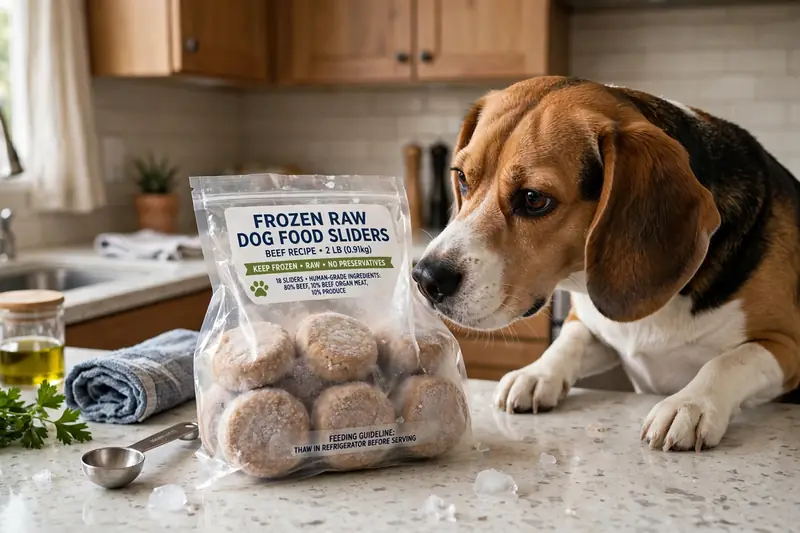
Smallbatch Pets Inc. is a Portland, Oregon company that makes raw frozen pet food sold through independent pet retailers. The brand’s whole catalog sits in the product category the FDA watches most closely: raw, frozen, no kill step. Both recalls followed the same script. The FDA collected a bag at a distributor during routine testing, the lab found bacteria, and the company issued a voluntary recall with the agency’s knowledge. A voluntary recall follows an FDA pathogen finding; the alternative is agency escalation. The FDA’s animal and veterinary recalls page holds the official record, and the FDA’s recalls and safety alerts page posts company announcements the day they go out.
March 2016: the Duckbatch Sliders recall (lot CO27)
Smallbatch Pets recalled one lot of frozen Duckbatch Sliders on March 28, 2016, after FDA testing found salmonella and Listeria monocytogenes. The recalled product was sold frozen in 3-pound bags: lot CO27, best-by date 01/27/17, UPC 713757339001. Eighty cases were affected. The bags were sold between February 23 and March 10, 2016, in California, Colorado, Oregon, and Washington.
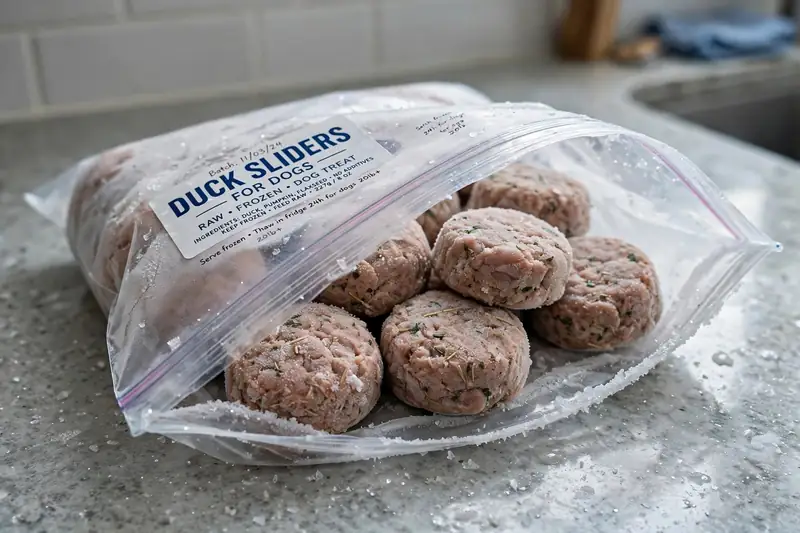
The product sold for about two and a half weeks before the recall, so the exposure window was narrow. FDA inspectors collected a 3-pound bag at a distributor, and the agency’s analysis found both pathogens. The company announced the recall the same week the results came in. Routine surveillance caught the problem, the lot got pulled, and the best-by date tells owners what to look for.
Listeria deserves its own note, because owners tend to fixate on salmonella. In dogs the risk concentrates in the very young, the very old, and the immunocompromised. The greater danger with a contaminated raw product is often the human side: the person portioning the sliders and washing the bowl. The AKC’s guide to food poisoning in dogs covers how both bacteria reach dogs and what symptoms look like when they do.
May 2017: the Chicken Blend recall (lots D032 and E058)
On May 5, 2017, Smallbatch Pets recalled two lots of frozen Chicken Blend for dogs and cats after FDA routine testing found salmonella. The affected product was sold frozen in 2-pound bags with UPC 705105970974: lot D032 with a best-by date of 2/1/2018, and lot E058 with a best-by date of 2/27/2018. Two hundred eighty-two cases sold between February 1 and May 5, 2017, in California, Colorado, Oregon, and Washington.
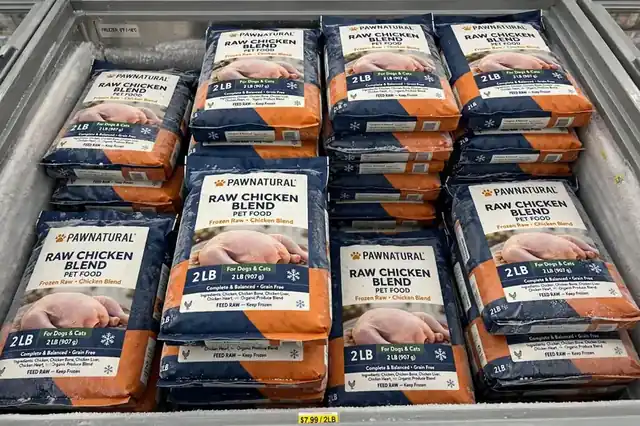
This recall was larger than the 2016 one in every dimension: more cases, a three-month sales window instead of two and a half weeks, and a product line that covered both dogs and cats. The trigger was identical, though. The FDA collected a 2-pound bag at a distributor, the lab found salmonella, and the company recalled with the agency’s knowledge. As with the duck sliders, no illnesses in people or pets were confirmed.
Raw poultry carries salmonella more often than most raw ingredients, which is why chicken-based raw pet foods appear in FDA recall announcements at a higher rate than beef or lamb formulas. The company’s own statement made the same point: raw poultry, like all raw meat, carries bacteria. That fact explains the background condition of the product category rather than excusing the recall, and it is why the handling section at the end of this article exists.
Where the recalled bags were sold
Both recalls stayed west of the Rockies, sold through retail pet food stores in California, Colorado, Oregon, and Washington, with no online, grocery, or big-box sales. If you bought Smallbatch outside those four states, your bag was not part of either recall.

The narrow distribution is typical of a regional raw brand sold through independent pet specialty retailers. Eighty cases in 2016 and 282 cases in 2017 are small by industry standards, where a kibble recall can run to thousands of tons. Small scale cuts both ways: fewer households exposed, but the news travels through retailer emails and social media rather than national headlines.
Your bag matches one of these lots: what to do right now
Stop feeding the product, even if your dog has eaten it for weeks with no trouble. Keep the bag with the lot number, best-by date, and UPC intact. Those three codes are your refund proof and your evidence if your dog develops symptoms. Return the unused portion to the place of purchase for a full refund, or dispose of it where children, pets, and wildlife cannot reach it.
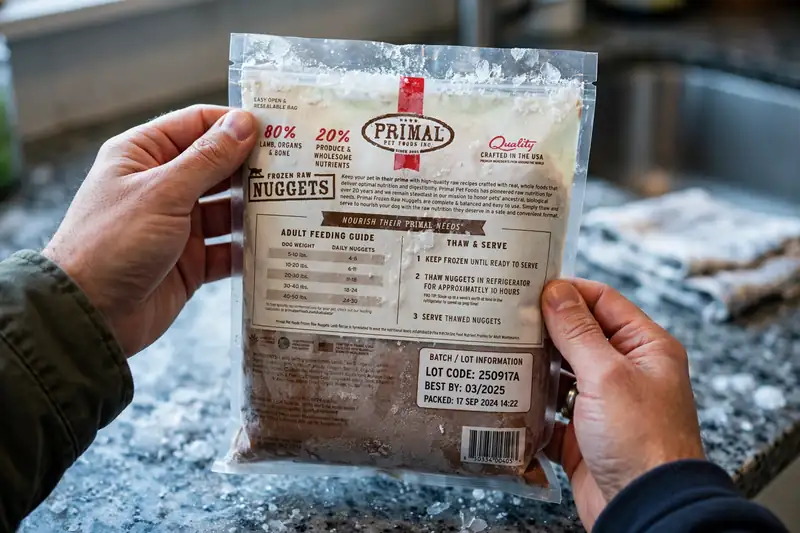
Then clean like the bacteria are still there, because they are. Wash your hands with soap, scrub the food bowl, and sanitize the freezer shelf, the scoop, and any countertop the product touched. Freezing preserves salmonella and listeria instead of killing them. Watch your dog for vomiting, diarrhea, loss of appetite, fever, or unusual tiredness over the next few days, and call your vet if any appear. Dogs can also carry salmonella without looking sick and shed it in their stool, so normal-looking does not mean all-clear. If your dog does get sick, tell the vet which product and lot you fed. That detail goes into the medical record and, if you file an FDA report, into the agency’s surveillance data.
The detail most reports skip: the company’s own tests came back negative
Here is the wrinkle. For the 2016 duck slider recall, Smallbatch’s own test-and-hold process had tested the lot in question before it shipped, and that test came back negative for both salmonella and listeria. The company ran a retest after the FDA notice, and that also came back negative. The FDA’s sample, collected at a distributor, came back positive for both. Two competent labs tested the same lot and got different answers, and the recall went ahead on the FDA’s result.
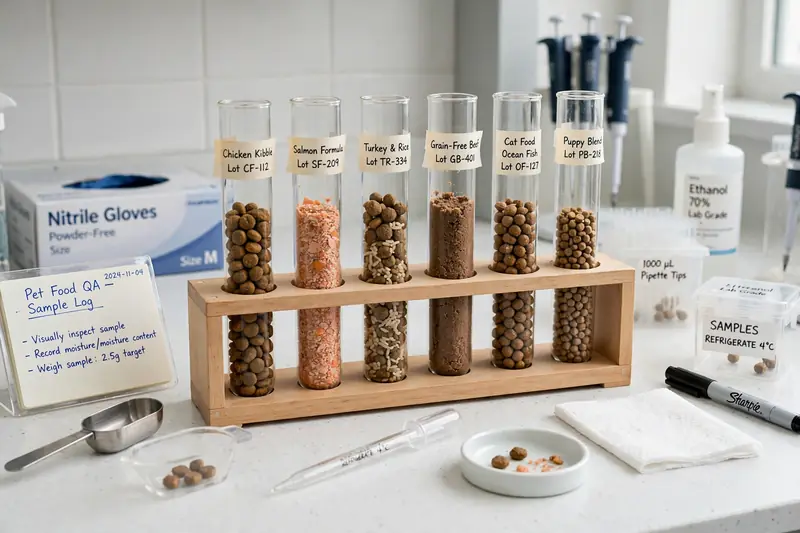
Bacteria do not distribute evenly through a batch of ground raw meat. One 3-pound bag can test clean while the bag next to it in the same case carries the pathogen, which is why regulators sample the way they do and why a single negative company test never settles the question. Neither result proves the other wrong. Contamination in raw ground product is patchy by nature, and the recall system treats a positive government test as decisive regardless of what the company’s tests showed.
A brand that test-and-holds every lot is doing more than many competitors, and the company’s process may have tested bags that were genuinely clean. But test-and-hold is a screen, not a guarantee. When you feed raw, you accept a residual risk that no testing program fully removes. That acceptance should be conscious, not assumed.
How to read lot codes and best-by dates on raw food bags
The lot code and best-by date are usually stamped or ink-jetted on the back of the bag, near the seal. On Smallbatch’s recalled products, the codes looked like this: lot CO27 with best-by 01/27/17, lot D032 with best-by 2/1/2018, lot E058 with best-by 2/27/2018. The UPC sits nearby. Photograph all three the day you open a new bag, before the ink smudges or the bag hits the trash.
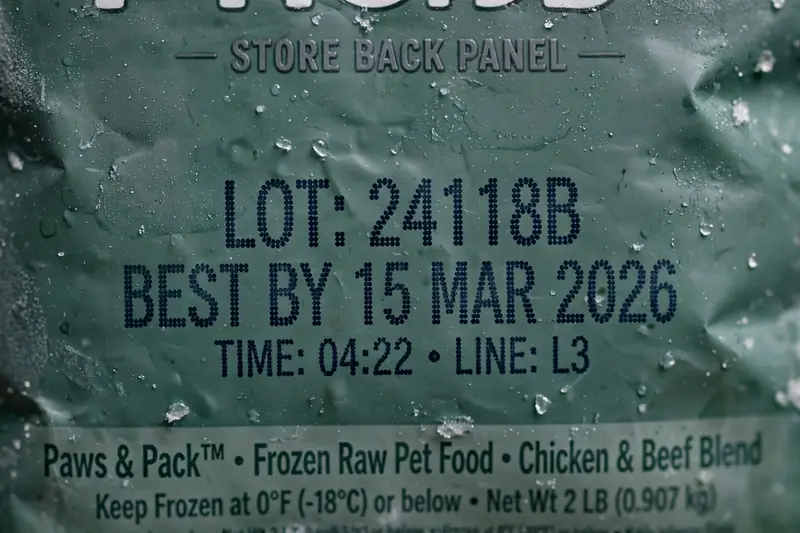
Ink-jetted codes on frozen packaging are fragile. Condensation smears them, freezer burn obscures them, and the bag usually gets thrown away long before anyone needs the information. A phone photo takes five seconds and survives all of that. When a recall drops months later, you will match the lot in seconds. This habit matters more for raw feeders, because raw recalls happen more often and the sales window can stretch for months.
How to watch for future Smallbatch recalls
The FDA posts company recall announcements on its recalls and safety alerts page the day they go out, and you can subscribe to email alerts filtered to animal and veterinary products. That subscription beats social media, retailer emails, and post-scare searching. Set the alert once and let the agency do the watching.

For brand-specific context, this site’s recall histories cover the names that come up most often alongside Smallbatch in raw-food searches: the FDA dog food recall guide explains the process, and the histories for Raaw Energy, frozen chicken dog food recalls, Purina, Nulo, and Indiana dog food company recalls round out the picture. When a new headline worries you, check the FDA page first and the lot code second. In that order, every time.
Why raw duck and chicken carry this risk
Raw poultry is the highest-risk common ingredient in raw pet food. Salmonella lives in the gut of healthy birds without making them sick, and grinding spreads a localized contamination through the whole batch. Duck carries the same profile. USDA data has shown salmonella prevalence in retail poultry in the double digits for years, so every raw chicken product starts with a real chance of contamination. Grinding is the step that turns a surface problem into a batch problem.

This is the structural reason both Smallbatch recalls involved raw ground products and both were caught by pathogen testing rather than by sick dogs. Most dogs that eat a contaminated raw meal never show symptoms. The risk concentrates in the humans doing the portioning, the immunocompromised dogs in the house, and the cross-contamination chain from bowl to counter to hand to mouth. The AKC’s raw, fresh, and kibble diet guide lays out the veterinary establishment’s position: raw diets demand meticulous handling, are not appropriate for every household, and owners should stay current on recalls for their brands.
A raw-feeding safety routine that actually works
Treat raw dog food like raw chicken from the grocery store, because microbiologically that is what it is. Thaw portions in the refrigerator, never on the counter. Portion with clean hands or disposable gloves, and wash with soap for 20 seconds afterward. Use dedicated bowls, scoops, and cutting boards, and run them through hot soapy water or the dishwasher after every meal. Discard anything your dog leaves uneaten after 30 minutes; never save it for later.
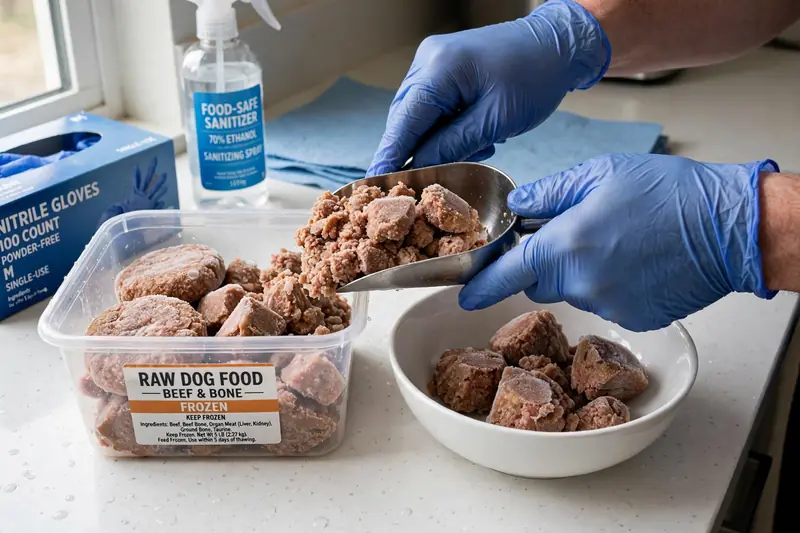
Keep raw pet food on the lowest freezer shelf, below any human food, so drips cannot contaminate what you eat. Do not let young children handle raw pet food, and keep immunocompromised family members away from the prep area entirely. Buy from companies that test and hold, ask retailers how they handle the cold chain, and keep your FDA alert subscription active. None of this makes raw feeding risk-free. The product category carries a documented contamination risk that cooked diets do not, and a disciplined routine is the difference between a calculated risk and a careless one.
Frequently asked questions about the small batch dog food recall
The answers below stick to the verified record.
Is Smallbatch still in business?
The company continues to operate and sell raw frozen pet food. Both recalls are closed historical events affecting specific lots from 2016 and 2017.
Did any dog get sick from the recalled food?
No illnesses in people or pets were confirmed in connection with either recall, according to the company announcements.
Were Smallbatch’s other products affected?
Each recall named specific lots of specific products. No other Smallbatch products or lots were implicated in either announcement.
Can I still get a refund for a recalled bag?
The recall notices directed owners to return the product to the place of purchase for a full refund. Given the age of these recalls, contact the retailer directly about their current policy.
How long do old recalls stay relevant?
The best-by dates on both recalls have long passed, so the recalled bags are no longer in freezers. The recalls stay relevant as a record of the brand’s history and as a reminder to keep checking lot codes on new purchases.
Does the negative company test mean the recall was wrong?
Bacteria distribute unevenly in ground raw meat, so one bag can test clean while another from the same lot carries pathogens. Regulators treat a positive government test as decisive.
The Smallbatch dog food recall record fits on an index card: lot CO27 in March 2016, lots D032 and E058 in May 2017, all raw frozen, all caught by FDA testing, no confirmed illnesses. Photograph your lot codes, keep the FDA alerts on, and handle every raw meal like the raw meat it is.
Disclaimer: This article is for general information only and is not veterinary advice. Recall information changes over time, so verify the current status on the FDA’s official recall pages. If your dog shows symptoms after eating a recalled product, contact your veterinarian promptly.