Dawn dish soap built its gentle reputation on wildlife rescue, not pet grooming. International Bird Rescue and similar groups have used Dawn for decades to clean oil off birds and sea otters after spills, because it cuts grease fast and rinses clean. That image followed the bottle into dog homes, where owners now reach for it as a dog shampoo. The question of whether Dawn dish soap is safe for dogs has a split answer: harmless in a pinch, wrong as a routine.

Is Dawn dish soap safe for dogs?
Dawn dish soap will not poison dogs, but it is not a dog shampoo and should not replace one. A one-time bath to strip grease, skunk oil, or a flea emergency is fine when you rinse thoroughly. Regular use dries out a dog’s skin and coat because Dawn’s pH and surfactants are built for dishes, not for the canine skin barrier.

Think of Dawn as first aid, not hygiene: the bottle in your kitchen handles emergencies, from the dog that rolled in motor oil to the puppy that found the paint tray to the flea-covered stray you just brought home. For every bath after that, a shampoo made for dogs does the job without the trade-offs.
Why wildlife rescuers use Dawn
Rescue groups use Dawn on oiled wildlife because it removes petroleum fast with minimal toxicity, not because it conditions skin. After an oil spill, an oiled bird or otter dies from cold and starvation when oil mats its feathers or fur. Dawn cuts the crude oil quickly so rescuers can wash and release the animals, because in that setting speed matters more than skin care.

This is where the myth starts. “Gentle enough for a baby duck” sounds like “gentle enough for my dog every week.” The two jobs differ completely. Wildlife gets washed once to survive, then returns to the wild. Your dog gets bathed repeatedly for years. A product that is safe for a single emergency wash can still be wrong for routine use, and Dawn sits exactly in that gap.
Dawn’s own formulation supports this reading. It contains no bleach, no harsh solvents, and nothing acutely toxic to mammals, which is why the ASPCA’s guide to household products treats dish soap as a low-concern item; low concern for a wash is not the same as ideal for the coat.
The flea question: what Dawn actually does
Dawn kills adult fleas on contact during the bath but offers zero residual protection, so it is not a flea treatment. The surfactants break the surface tension of water, which drowns the fleas currently on the dog. PetMD on using Dawn dish soap for fleas describes it as a reasonable emergency measure for a flea-covered pet, with the same limitation.
The catch is what Dawn leaves undone. Flea eggs and larvae in the coat, bedding, and carpet survive the bath. A dog bathed in Dawn for fleas and sent back into an infested house is infested again by evening. The bath buys you a clean starting point, nothing more.
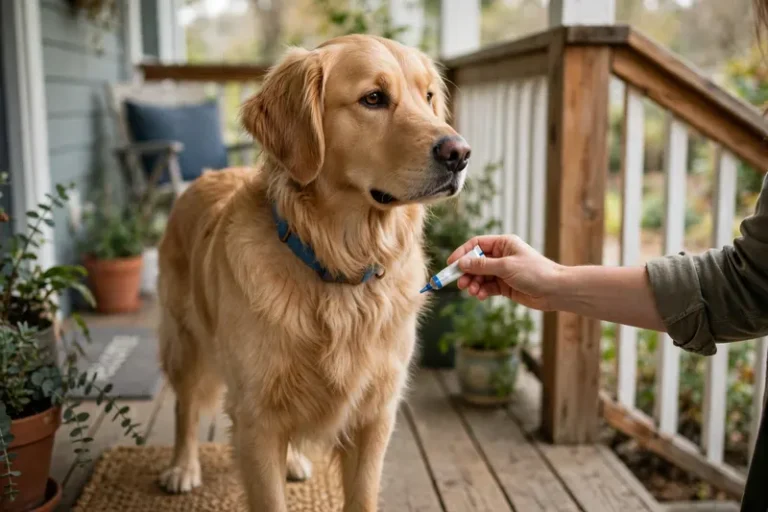
Real flea control pairs the emergency bath with actual prevention. The AKC’s flea removal guidance points owners toward veterinarian-recommended preventatives, and modern options like flea and tick medicine for dogs keep working for weeks after one dose. Wash the dog today, treat the environment, start prevention. The problem ends there.
pH and the skin barrier: why regular use backfires
Dog skin runs more alkaline than human skin, and Dawn’s strong surfactants strip the natural oils that protect it. Human skin sits around pH 5.5. Dog skin ranges roughly 6.2 to 7.5 depending on breed and body area. Dish soap is formulated to dissolve grease aggressively, which is exactly what you do not want on a barrier made of protective oils.

One bath barely registers. Repeated baths compound. Each wash lifts more of the lipid layer, and the skin responds with growing dryness and itch, then flaking. Owners then bathe the itchy dog more often, which dries the skin further, which increases the itch. The cycle is familiar to every vet dermatologist, and switching to a proper dog shampoo usually breaks it within weeks.
Dogs with existing dog skin allergies or dry skin pay the highest price. Their barrier is already compromised, so a harsh wash hits harder and recovers slower. For these dogs, Dawn is the fastest route to a flare-up.
When Dawn is the right call
Reach for Dawn when the dog is coated in grease, oil, paint, skunk spray residue, or a heavy flea load with no dog shampoo on hand. These are the scenarios where Dawn’s grease-cutting power is the point. Grease of all kinds, from motor oil to cooking grease to tree sap, washes out far better with dish soap than with any gentle pet shampoo.
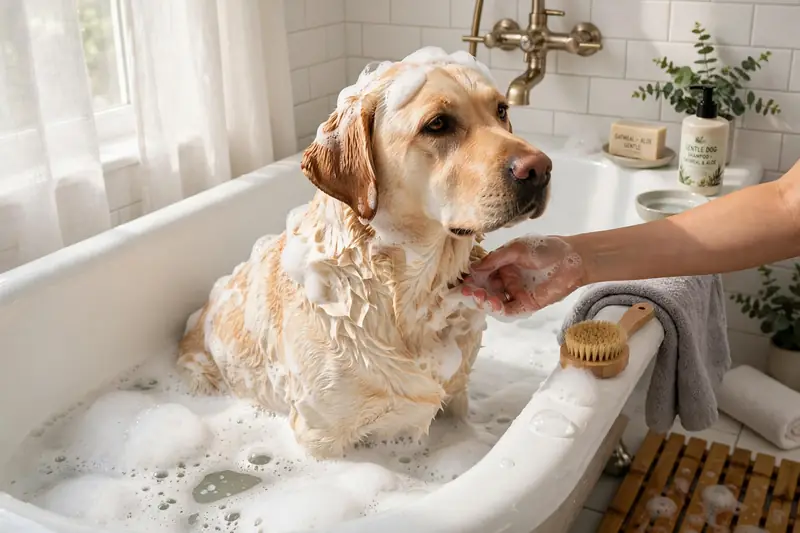
Dilute it first: a few drops in a basin of warm water beats a squirt straight from the bottle onto the coat. Work the lather in gently, keep it away from the eyes, and rinse far longer than feels necessary. Dish soap residue left in the coat irritates skin, so the rinse is half the job.
This is also the answer for the just-rescued stray. A flea-ridden dog from the shelter parking lot needs one thorough Dawn bath before it meets your house, followed by a vet visit for real prevention. PetMD on using human shampoos on dogs draws the same line: occasional emergency use is acceptable, routine use is not.
The safe Dawn bath method
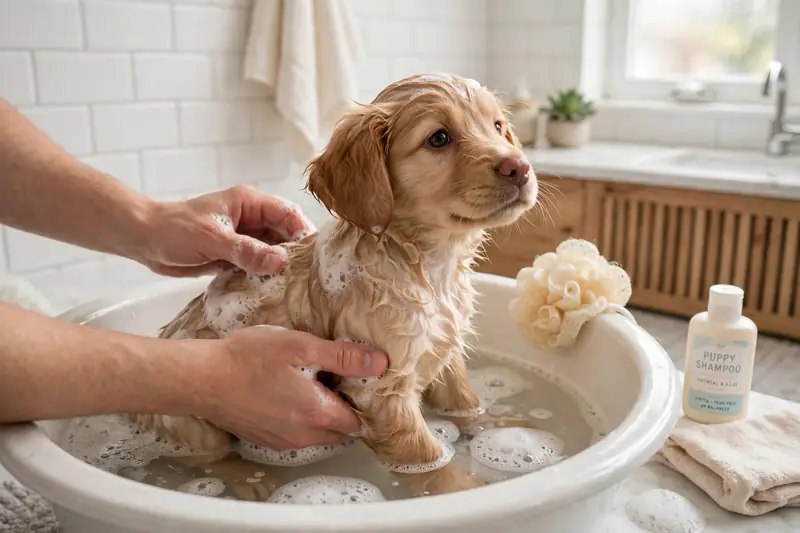
Dilute a few drops in warm water, lather gently, avoid the eyes and ears, and rinse twice as long as you lathered. The method turns an acceptable product into a safe one. Start by wetting the dog completely, since Dawn on dry fur concentrates the surfactants where they sit.

Work from the neck down. Fleas run for the head when water hits the body, so a soapy ring around the neck first traps them. Keep the lather away from eyes and inside ears. A damp washcloth handles the face better than any soap. Leave the lather on for about five minutes for flea drowning, less for grease removal.
The rinse decides everything: run clean water through the coat until it runs clear, then keep going another minute. Squeeze the coat and watch the water: any milkiness means soap remains. Towel dry, keep the dog warm, and skip a second wash the same day, since one thorough bath beats two rushed ones.
When puppies, seniors, or sensitive dogs need a bath
Puppies under eight weeks, seniors, or dogs with skin conditions need extra caution or a vet-approved product instead. Young puppies chill fast and their skin barrier is thin, so a harsh wash hits them harder. Bathe puppies only when clearly dirty, use lukewarm water, and dry them completely and quickly.

Senior dogs often have thinner and drier skin, with less patience for long baths. Keep the bath short, the water warm rather than hot, and the rinsing thorough. Arthritic dogs struggle standing in a tub, so a non-slip mat and a helper’s hands matter more than the soap choice.
For dogs already fighting skin trouble, ask the vet before reaching for Dawn. Medicated shampoos exist for bacterial, fungal, and allergic skin disease, and they treat while they clean. Dawn only cleans, and for a compromised barrier that is not enough. Your vet can name the right bottle in one visit.
What about Dawn ingestion?
A dog that licks Dawn off its paws or drinks soapy water usually gets mild stomach upset and nothing worse. Dish soap is a low-toxicity product for mammals. Expect drooling, maybe vomiting or loose stool, then recovery. Do not try to make your dog vomit after soap ingestion; bringing foam back up can send it into the lungs. Rinse the mouth with water and offer fresh water to drink.
Large amounts change the picture slightly. A dog that chews through a bottle and swallows concentrated soap can vomit repeatedly or develop diarrhea that needs a vet’s attention. Foaming products also carry a small aspiration risk if the dog vomits foam and inhales it. Call your vet if vomiting persists, the belly swells, or breathing looks off.
Prevention is simple storage. Keep the bottle on a high shelf or in a closed cabinet, the same as any household chemical. Curious chewers do not distinguish between a toy and a Dawn bottle, and easy access causes most household poisonings.
Better options for regular baths
A pH-balanced dog shampoo cleans without stripping, and specialty formulas handle the jobs Dawn cannot. The right shampoo matches the dog’s skin pH and cleans with gentler surfactants. Most healthy dogs need bathing only every one to three months, veterinary guidance on bathing frequency explains. Less frequent, gentler baths beat frequent harsh ones every time.

Match the formula to the problem: oatmeal shampoos soothe itchy, dry skin; an oatmeal bath works as a home soother between washes. Hypoallergenic formulas suit sensitive dogs. Medicated shampoos from the vet treat diagnosed skin disease. Coconut oil for dogs can help dry coats from the inside out when the diet supports it.
Keep one bottle of Dawn in the house anyway. Emergencies do not schedule themselves, and the right tool for a grease disaster is the one you already own. Just keep it in the emergency role. The dog shampoo handles the other 364 days.
The occasional Dawn bath for a genuine emergency is one thing. A routine is another. Dogs do best with a proper dog shampoo matched to their coat and skin, an oatmeal bath when itching flares, and a bathing schedule that fits their lifestyle rather than a weekly habit borrowed from dish commercials. Puppies, seniors, and dogs with skin conditions need the gentlest approach of all, and every bath should end with a full rinse and a dry, warm resting spot. When fleas are the reason for the wash, remember the bath only handles the adults on the dog. The eggs in the bedding and the yard need their own plan, and your vet can set one that actually breaks the cycle.
Dawn dish soap: quick answers
The same practical questions come up in every discussion of this topic.
Can I use Dawn to bathe my dog regularly?
Not as a routine. Occasional emergency use is fine, but regular Dawn baths dry out the skin and coat. Use a pH-balanced dog shampoo for routine bathing.
Which Dawn is safest for dogs?
Plain, original Dawn without added fragrances, antibacterial agents, or bleach alternatives is the mildest choice. Scented and specialty versions add irritants with no benefit.
Does Dawn kill flea eggs?
It does not. Dawn drowns adult fleas on the dog during the bath. Eggs and larvae in the coat, bedding, and carpet survive, so pair the bath with environmental treatment and a vet-recommended preventive.
How do I dilute Dawn for a dog bath?
Add a few drops to a basin or sink of warm water and mix before applying. Never squirt concentrated soap directly onto the coat.
My dog licked Dawn off its fur. Is that dangerous?
Usually not. Expect possible drooling or mild stomach upset. Rinse the mouth and offer water. Call your vet if vomiting persists or the dog seems distressed.
What should I use instead of Dawn for fleas?
A vet-recommended flea preventive that kills fleas for weeks, plus washing bedding in hot water and treating the home. The Dawn bath is the starting point, not the plan.
Dawn earned its place in the dog owner’s toolkit: it rescues wildlife, strips grease nothing else touches, and drowns fleas in an emergency. It never earned a place as a dog shampoo. Keep the bottle for the disasters, buy the dog shampoo for the routine, and your dog’s skin will never know the difference between a crisis and a Tuesday.
Disclaimer: This article is for general information only and is not veterinary advice. Ask your vet about the right shampoo and flea prevention for your dog, especially for puppies, seniors, or dogs with skin conditions.