

Read this first: if your dog just swallowed something dangerous, the single most important step is to call your veterinarian, an emergency clinic, or an animal poison control line before doing anything else. Inducing vomiting is not always the right move. For some substances and situations it can cause more harm than the poison itself. Keep these numbers where you can find them in a panic: your veterinarian or nearest emergency clinic, Pet Poison Helpline at 855-764-7661, and the ASPCA Animal Poison Control Center at 888-426-4435 (24/7).
Should you induce vomiting in your dog?
Sometimes, but only under the right conditions. Inducing vomiting helps when a dog recently swallowed something toxic or dangerous that will not cause extra damage on the way back up, and a professional has advised it. It is the wrong move for corrosive chemicals, petroleum products, sharp objects, or an unconscious dog. When in doubt, the phone call comes first.

Think of induced vomiting as a scalpel, not a hammer. Used on the right substance, at the right time, at the right dose, after a professional’s guidance, it can meaningfully reduce harm. Used on the wrong substance, or as a substitute for veterinary care, it can make a bad situation worse. The method vets recommend is 3% hydrogen peroxide, given orally at a specific dose. This guide explains that method fully, but it is not a substitute for professional guidance in the moment. Your job in an emergency is the fast, accurate phone call: what was swallowed, how much, when, and how big the dog is, and then following instructions precisely.
Step one: call before you act
This cannot be overstated. Poisoning situations are time-sensitive, and a professional can tell you in seconds whether vomiting will help or hurt. When you call, have five facts ready: what was swallowed (the product name, ideally the label), how much (your best estimate), when (how many minutes ago), your dog’s weight and any health conditions, and current symptoms.

If the professional says “induce vomiting,” they will walk you through it. If they say “bring the dog in now” or “do not induce,” follow that. The rest of this guide covers the situation where a vet or poison-control professional has advised induction, or you genuinely cannot reach one and the safe criteria below clearly apply. Write the poison-control numbers on the fridge today. In a real emergency, you will not be browsing. Pet Poison Helpline: 855-764-7661. ASPCA Animal Poison Control Center: 888-426-4435, available around the clock. Your own vet or nearest emergency clinic is also a first call.
When inducing vomiting is the right call
Vomiting helps when a dog recently swallowed something that is safer coming back up than staying down. Vets commonly advise it for certain medications swallowed within the last one to two hours, some recently eaten toxic foods like chocolate or grapes, and small non-sharp foreign objects.

Three conditions must all hold. It happened recently, generally within about two hours, before the stomach empties. The dog is fully conscious and alert. And the substance is not on the never-list in the next section. Time matters enormously. Peroxide given three hours after ingestion may produce vomiting with nothing in it, while the toxin has already moved on into the intestines. That is why the clock starts the moment you discover the exposure, and why the phone call should happen before you start measuring anything.
When you must NEVER induce vomiting
Do not induce vomiting for corrosive substances like acids, alkalis, bleach, drain cleaners, or strong detergents. They burn on the way down, and bringing them back up burns the throat a second time. Never induce for petroleum products like gasoline, kerosene, motor oil, or paint thinner, since aspiration into the lungs can be fatal.
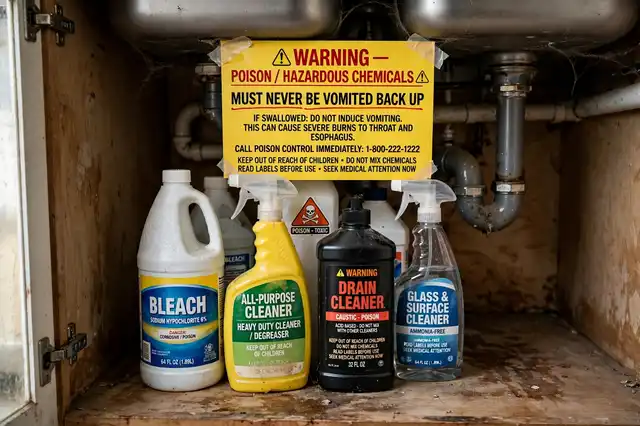
Do not induce if the object is sharp: needles, fishhooks, broken glass, or sharp bones can tear the esophagus on re-passage. Do not induce if the dog is unconscious, seizing, or having breathing difficulty, because the aspiration risk is extreme. Do not induce if the dog has already vomited repeatedly on its own. And if a professional told you not to, that overrides everything. When any of these apply, skip induction entirely and get to a vet or emergency clinic immediately. Some substances also have specific antidotes or treatments that matter more than vomiting, which is another reason the phone call comes first.
The method: 3% hydrogen peroxide
Use 3% hydrogen peroxide, the standard brown-bottle kind from the pharmacy, and nothing else. Not 10 percent, not industrial strength, not a substitute. The dose is 1 teaspoon (5 ml) per 5 pounds of body weight, given by mouth, with a maximum of 3 tablespoons total even for very large dogs.
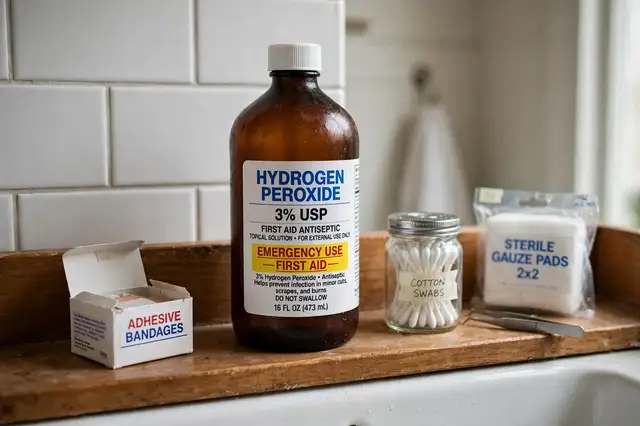
For quick reference: a 10-pound dog gets 2 teaspoons, a 20-pound dog gets 4 teaspoons (one tablespoon plus one teaspoon), a 40-pound dog gets 2 tablespoons plus 2 teaspoons, and any dog 60 pounds or more gets 3 tablespoons, the maximum. The easiest reliable way to give it is a syringe or turkey baster, squirting the liquid toward the back of the tongue so the dog swallows rather than spits. A dog that will drink it from a small bowl mixed with a little food works too, but do not force-feed or pour, since aspiration is the risk you are trying to avoid. Vomiting typically begins within 10 to 15 minutes, and a short walk or gentle movement can help it along. If nothing happens after 15 to 20 minutes, one repeat dose is permitted. If that fails, stop. Further doses risk harm, and it is time for the emergency clinic. Keep the dog calm in a contained, easy-to-clean area while you wait, and save a sample of the vomit in a bag if you can. It helps the vet confirm what came up.
What NOT to use
Never use salt, an old folk remedy that can cause salt poisoning and is dangerous and unreliable. Never use syrup of ipecac, once a human standard, now considered unsafe for dogs. Never put fingers or objects down the throat, which risks injury with unreliable results. Mustard, dish soap, and home mixtures are out too.
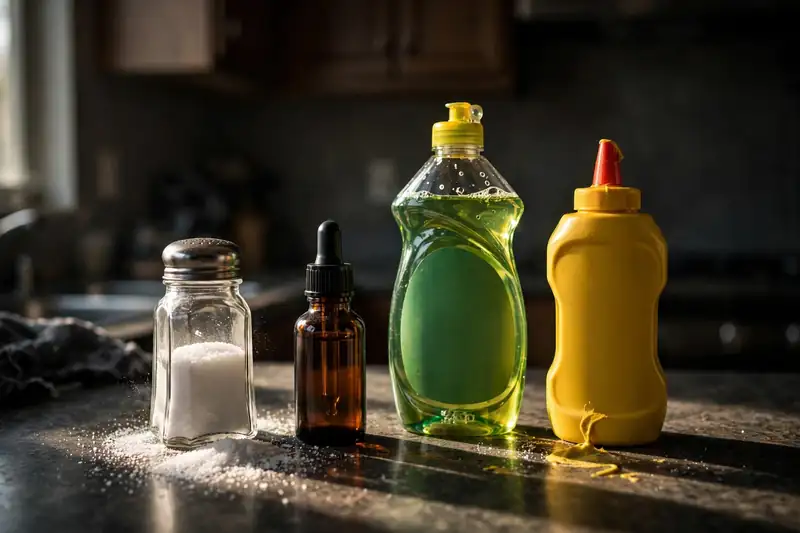
Do not use mustard, dish soap, or home mixtures, which are ineffective, and some are harmful in their own right. Do not use activated charcoal except under veterinary direction; it is useful in some cases, but the wrong dose or the wrong substance makes things worse. The list of safe emetics for home use has exactly one entry: 3% hydrogen peroxide, at the dose above, when appropriate. Everything else is either outdated, dangerous, or both. If someone suggests a home remedy you have not verified with a vet, ignore it. In a poisoning emergency, improvisation is how bad situations get worse.
After vomiting: the job is not done
A successful vomit feels like a resolution. It is not. Induced vomiting removes roughly 40 to 60 percent of stomach contents at best, and the rest is still being absorbed. Always follow up: call the vet back or go in, report what came up, and bring the product label and a vomit sample if you have one.
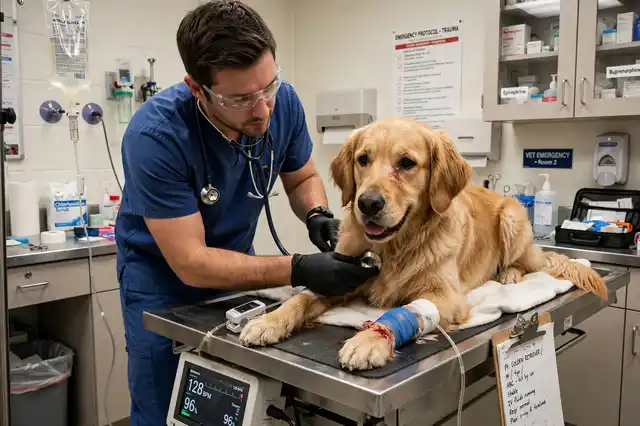
Watch for delayed symptoms over the next 24 to 48 hours: lethargy, appetite loss, repeated vomiting, diarrhea, and unusual behavior. Do not give home remedies afterward unless directed. No milk, no oil, no “settling” foods until the vet advises. Some toxins cause delayed organ damage to the liver or kidneys hours or days later, even when the dog seems fine. The follow-up visit is what catches that. Skipping it because “he threw it up and looks okay” is the most common mistake in these situations, and it is the one that turns a managed emergency into a tragedy days later.
If you cannot reach a vet
Sometimes the worst happens at 2 a.m. in a dead zone. If you truly cannot reach any professional, induce only if all safe criteria clearly apply: recent ingestion (under about two hours), a non-corrosive, non-sharp, non-petroleum substance, and a dog that is fully alert and breathing normally. Use the peroxide method exactly as described above, with one repeat dose maximum.

Then get to the nearest emergency clinic as soon as humanly possible, even if the vomiting worked. “When in doubt, go” remains the rule. An emergency vet visit for a false alarm costs money. A missed poisoning costs a dog. Do not let a successful vomit talk you out of the drive. You have removed, at best, a little over half of what was in the stomach, and only a professional can assess what remains and what it will do over the coming hours.
Prevention: the real emergency plan
The best poisoning emergency is the one that never happens. Medications are the number one cause of pet poisoning calls, so store every pill bottle in closed cabinets. For foods, know the danger list: chocolate, xylitol products, grapes and raisins, macadamia nuts, onion and garlic. Keep them all out of reach.
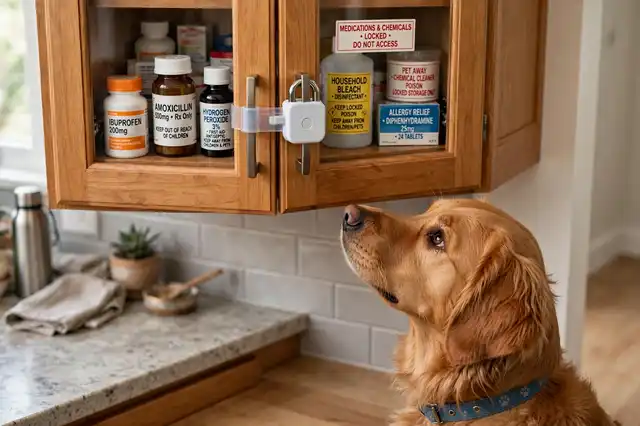
Household chemicals need the same treatment: antifreeze is sweet-tasting and lethal, and rat poison, cleaning products, and similar hazards belong locked away, with spills cleaned immediately. A locking lid on the kitchen bin eliminates an entire category of emergencies. And keep 3% hydrogen peroxide in the house specifically for this purpose, checking the expiry date yearly, since old peroxide loses strength. Tell everyone in the household where it is. Our wider guide to what human food dogs can eat covers the safe side of the food question, so the whole family learns both lists.
Three scenarios, three decisions
Here is how the decision plays out in three common situations, always after calling your vet or poison control. Scenario one: your dog ate a chocolate bar 20 minutes ago. Chocolate is a classic induce case: toxic, recently ingested, non-corrosive, non-sharp, dog alert and normal. Your vet will very likely advise peroxide at the weight-based dose.

Scenario two: your dog lapped up spilled cleaning product. Stop. Do not induce. Cleaners are corrosive or petroleum-based, and bringing them back up burns the throat a second time or risks fatal aspiration into the lungs. Rinse the mouth gently if the dog allows, keep the product label, and get to the emergency clinic immediately. This is a “go now” situation, not a “treat at home” one. Scenario three: your puppy swallowed a sock an hour ago. This is the gray zone where the phone call matters most. A sock is not toxic, but it can cause obstruction, and inducing vomiting for foreign objects is a judgment call that depends on the object’s size, the dog’s size, and the timing. Your vet may advise induction, monitoring, or imaging. Do not decide this one alone. The pattern across all three: the substance and the situation determine the answer, and a professional determines it fastest.
The honest summary: inducing vomiting in dogs is a real, vet-approved emergency tool, but it is a scalpel, not a hammer. Used on the right substance, at the right time, at the right dose, after a professional’s guidance, it can meaningfully reduce harm. Used on the wrong substance, or as a substitute for veterinary care, it can make a bad situation worse. Memorize the numbers, keep fresh peroxide on hand, dog-proof the house, and when something happens, call first, act second, and always follow up with the vet.
Frequently Asked Questions
How much hydrogen peroxide do I give my dog to induce vomiting?
1 teaspoon (5 ml) per 5 pounds of body weight, up to a maximum of 3 tablespoons, using 3% hydrogen peroxide only. One repeat dose is allowed after 15 to 20 minutes if the first does not work.
How long after eating something can I still induce vomiting?
Generally within about 2 hours, while the substance is likely still in the stomach. After that, vomiting is much less useful. Call your vet for the next step.
Can I use salt to make my dog vomit?
No. Salt can cause salt poisoning and is unreliable as an emetic. Use only 3% hydrogen peroxide, and only when appropriate.
What if my dog does not vomit after two doses?
Stop and go to an emergency vet immediately. Do not give more peroxide. Repeated doses can cause harm, and the situation needs professional treatment.
Should I induce vomiting if my dog ate chocolate?
Sometimes yes, but call your vet or poison control first. The answer depends on the type and amount of chocolate, the dog’s size, and the timing. They will advise the right move.
Is it safe to induce vomiting in puppies?
Puppies are more fragile and dehydrate faster, so always get professional guidance first rather than acting alone. The dose is weight-based, but the decision belongs to a vet.
What number do I call for dog poisoning?
Pet Poison Helpline: 855-764-7661. ASPCA Animal Poison Control Center: 888-426-4435 (24/7). Your own vet or nearest emergency clinic is also a first call.
This article is general information only and is not a substitute for veterinary advice. In any poisoning emergency, contact your veterinarian, an emergency clinic, or an animal poison control line immediately.



17 thoughts on “How to Induce Vomiting in Dogs: Vet-First Emergency Guide”