
No. Dogs should not eat acorns. They contain tannins that upset a dog’s stomach, and eating enough of them can damage the kidneys and liver. Whole acorns can also choke a dog or block the intestines. Autumn is the peak risk season, when acorns pile up in yards and parks. If your dog ate acorns, call your vet rather than waiting to see what happens.
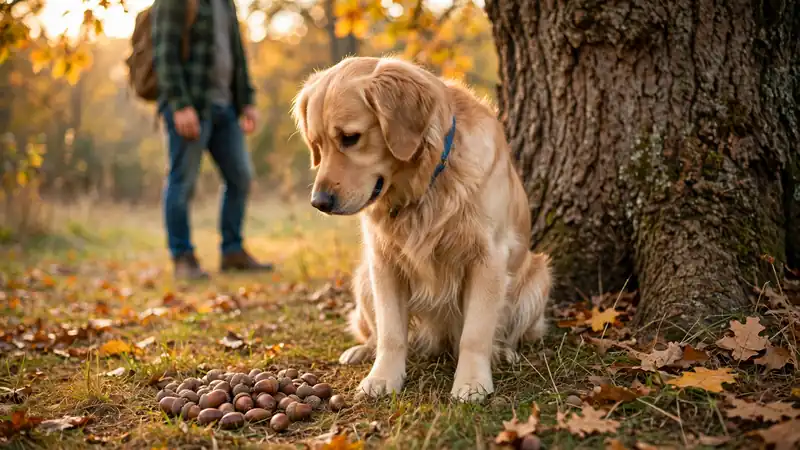
Can dogs eat acorns? The short answer
No, dogs should not eat acorns. Every acorn holds tannins that irritate a dog’s digestive tract, and larger amounts can injure the kidneys and liver. The hard nuts can also lodge in the throat or block the intestines. If your dog grabbed an acorn on a walk, call your vet for advice.
That call matters even when the dog looks fine. Tannin poisoning can start with a skipped meal and turn serious within a day or two. The AKC’s chief veterinary officer, Dr. Jerry Klein, advises calling your veterinarian right away, because delaying treatment can lead to permanent damage.
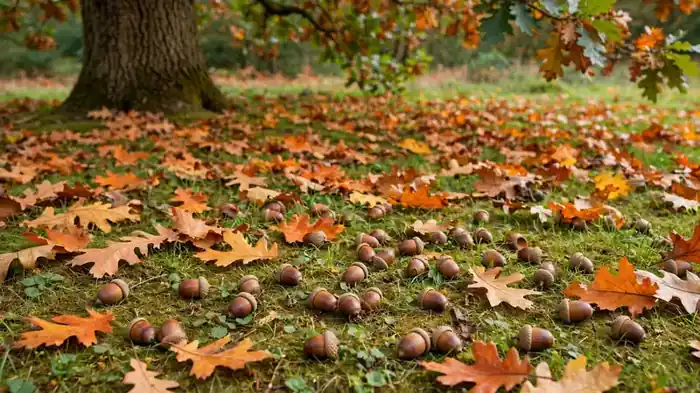
Why acorns are toxic to dogs
Acorns contain tannins, bitter plant compounds that include tannic acid and related gallotannins. They irritate the lining of a dog’s stomach and intestines and bind to protein in a way that interferes with digestion. In large amounts they can injure the kidneys and liver. Dogs react far more strongly than the wildlife that eats acorns regularly.
Tannins are the oak tree’s chemical defense: bitter and astringent, they discourage animals from eating the nuts. Squirrels and deer evolved alongside oaks and handle the load. Dogs did not, so a quantity that a deer shrugs off can make a dog genuinely sick. The AKC’s guide to acorns and tree nuts explains the tannin risk and quotes veterinary guidance on when to seek help.
Tannin levels vary. Green, unripe acorns hold more tannins than brown, ripened ones, which is why the AKC warns about dogs eating green acorns in autumn. Fallen acorns that sat in wet weather can ferment, adding more stomach trouble on top of the tannins. Ripeness changes the odds, but no acorn is safe enough to offer on purpose.
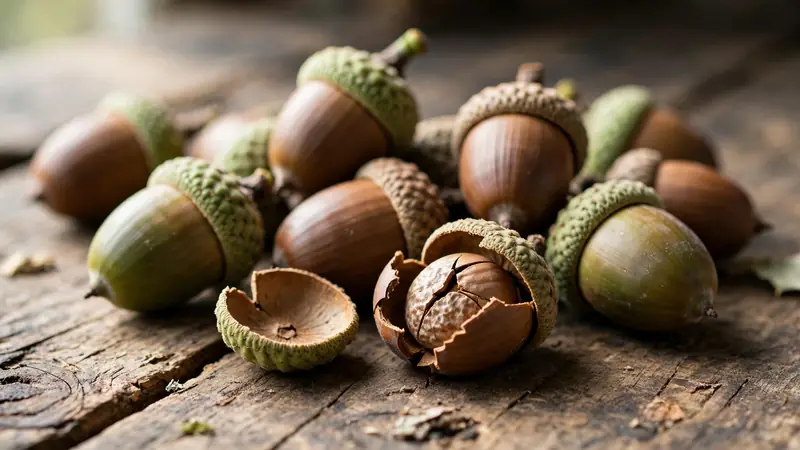
The chemistry is only half the story. An acorn is a hard, round object about the size of a large marble, and its cap has rough little edges. A dog that crunches one risks cracked teeth. A dog that swallows one whole risks choking. A dog that swallows several risks an intestinal blockage, which is a surgical emergency on its own.
How many acorns it takes to make a dog sick
There is no established toxic dose, because sensitivity depends on the dog’s size and the tannin load in a given batch of acorns. A large dog may pass one or two with only mild stomach upset. A small dog can reach a dangerous amount from just a few. Regular acorn eating over several days is worse than a single incident.
Veterinary sources describe this as a sliding scale rather than a cutoff. Cornell University’s veterinary college notes that a few acorns will not hurt a dog, but a large amount interferes with protein digestion and can cause gastrointestinal distress or worse. The Cornell poisonous plants FAQ on acorns gives the veterinary-school version of this answer.
Size changes the math dramatically. A 70-pound Labrador that crunches two acorns on a walk is in a very different situation from a 12-pound terrier that spent twenty minutes vacuuming them up in the yard. Puppies sit at the highest risk end of the scale: their small bodies reach a toxic load faster, and their organs handle it less well. Chewed acorns release more tannin than swallowed-whole ones, though the whole-acorn gulper trades chemical risk for blockage risk.
Treat any acorn eating as worth a vet call, and treat repeat acorn eating as an emergency. Nobody can draw a safe line for your dog, your yard, and this week’s acorns.

Signs of acorn poisoning to watch for
Watch for vomiting, diarrhea, drooling, loss of appetite, lethargy, and belly pain within a few hours of eating acorns. Blood in the vomit or stool, straining to pass stool, and swelling of the mouth or face point to a worse reaction. Repeated vomiting with a painful, swollen belly can signal an intestinal blockage, which needs emergency care.
The trouble usually starts in the gut: drooling and retching within an hour or two, then vomiting and diarrhea. Some dogs develop constipation followed by loose, sometimes bloody stool. Appetite and energy drop, and the belly feels tender. Our guide to gastroenteritis in dogs helps you describe symptoms to your vet.
Kidney and liver involvement looks different and arrives later: excessive thirst, frequent urination, or yellowing of the gums and the whites of the eyes. A published case report describes a 7-year-old Labrador that developed jaundice, liver injury, and acute kidney injury four days after eating acorns, needed six days of intensive hospital care, and made a full recovery. Delayed does not mean mild.
A dog with an acorn lodged in the intestines vomits repeatedly, refuses food and water, strains without producing stool, and grows painful around the belly. That is a surgical emergency, and it can happen without any tannin poisoning at all.

How fast symptoms show up and how long they last
Stomach upset usually starts within a few hours of eating acorns. Mild cases often settle within a day or two once the gut clears. Severe poisoning takes much longer, and kidney or liver injury may not show obvious signs for several days. That delay is why early vet care matters even when a dog looks normal at first.
Most owners see the first clues the same afternoon or evening: drooling or vomiting within hours of the walk. If that is the whole story and the dog bounces back by the next day, the outcome is usually good. The dogs that worry vets are the ones whose vomiting keeps going, whose energy never returns, or who seemed fine for two days and then went downhill. Organ damage follows that delayed pattern.
Recovery time tracks severity. Mild stomach upset resolves in 24 to 48 hours with rest and a gentle diet. A dog hospitalized for kidney or liver injury can take weeks to return to normal bloodwork, even after visible symptoms fade. The rare bad endings almost always trace back to waiting too long before calling the vet.

What to do right away if your dog ate acorns
Call your veterinarian or the ASPCA Animal Poison Control Center right away, even if your dog looks fine. Do not try to make your dog vomit unless the vet tells you to. Note how many acorns your dog ate, when it happened, and your dog’s weight, because the vet will ask for all three.
Start with the immediate scene. If your dog is still at the acorn pile, move the dog away first. Check the mouth and remove any pieces you can reach safely, but keep your fingers clear if the dog is guarding the find. Then do a quick count of what is left on the ground to estimate how many were eaten.
Then gather the facts before you call: your dog’s weight, the rough number of acorns, the time they were eaten, and whether they were green or brown. Note any symptoms already showing, even mild drooling. Keep your dog calm and hold off food for now.
Do not induce vomiting on your own. The AKC’s veterinary guidance is explicit: the right response depends on how many acorns were eaten, the dog’s size, and the severity of the reaction. A hard acorn coming back up can injure the throat, and vomiting does nothing about tannins already absorbed. Our article on how to induce vomiting in dogs explains when vets recommend it and when they forbid it. The ASPCA Animal Poison Control line is the backup when your clinic is closed. Save the number in your phone today.

How vets treat acorn poisoning
Treatment is supportive, because there is no antidote for tannin poisoning. Vets may induce vomiting if the acorns were eaten recently, give activated charcoal to limit absorption, provide IV fluids, and take X-rays to check for a blockage. Severe cases need hospitalization with bloodwork monitoring for kidney and liver injury.
Decontamination comes first when the timing allows. If the acorns went down within the last hour or two, the vet can induce vomiting under controlled conditions, which is far safer than a home attempt, and activated charcoal often follows. Read our guide to activated charcoal for dogs to understand what it does and why the dose and timing have to come from the vet.
From there, care targets whatever the acorns did. IV fluids flush the kidneys and correct dehydration. Anti-nausea medication settles the gut. X-rays or ultrasound answer the blockage question when the dog swallowed acorns whole. Bloodwork tracks kidney and liver values over the following days, catching the delayed injury owners cannot see at home. Dogs with mild signs may go home the same day; dogs with organ involvement stay in the hospital, sometimes for the better part of a week.
The published case report makes the value of that hospital care concrete: the Labrador with liver injury and acute kidney failure spent six days in intensive care and walked out fully recovered. You can read the published case report on acorn toxicity in a dog for the clinical details. Once the crisis passes and your vet clears normal food, a bland diet for dogs is the usual bridge back to regular meals.

Acorn caps, oak leaves, and bark: the parts people forget
The danger is not only the nut. Oak leaves, spring buds, bark, and acorn caps all carry the same tannins, and chewing them can cause the same poisoning. Spring buds and green autumn acorns hold the highest tannin levels of the year. Keep dogs from chewing fallen branches and stripping bark, especially bored dogs left alone in oak-heavy yards.
Oak poisoning is a well-known livestock problem, and the dog cases follow the same pattern: gut damage first, then kidney and liver injury. Dogs usually get there by chewing rather than grazing, which is why young, mouthy dogs and chronic chewers show up in these stories. If your yard has oaks, cleanup includes fallen branches and leaf piles, not just the nuts.
Watch the caps too. The little cap on each acorn separates easily and has rough edges that irritate the mouth and throat. None of this means you must cut down your oak trees. It means the trees need the same respect as any other yard hazard: regular cleanup and a dog that knows to leave the debris alone.

Autumn prevention: keeping acorns out of your dog’s reach
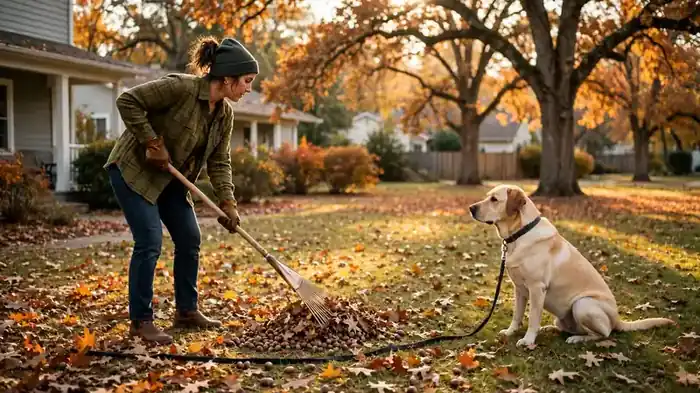
Rake or sweep acorns from your yard every few days during drop season, and keep your dog leashed in parks with heavy oak cover. Teach a solid “leave it” and “drop it” so you can stop a grab before the swallow. Check the yard again after windy days, when fresh acorns rain down overnight.
Yard cleanup is the single highest-value habit. Acorns drop over weeks, so one big October rake does not finish the job. A quick sweep every few days through the drop season keeps the ground count low. Pay special attention to your dog’s favorite spots: the sniffing corner, the sunny patch, the fence line where wind piles debris.
On walks, route choice does half the work. Dr. Klein’s prevention advice for acorn season is straightforward: walk the dog on a leash, avoid areas with heavy ground cover of tree nuts, and teach “leave it” and “drop it.” Practice them at home with boring objects first, then proof them outside where the distractions are real.
Acorns are not the only autumn drop to watch. Walnuts fall in the same season and go moldy fast, with their own toxins, so keep dogs off those too. Our guides to whether dogs can eat walnuts and whether dogs can eat pecans cover the other fallen nuts your dog will meet. For chronic scavengers, a basket muzzle on walks is a legitimate tool, and most dogs accept one quickly with treat-based training. As autumn slides into the holidays, remember the seasonal dangers keep coming: poinsettias arrive with the decorations.
Frequently asked questions about dogs and acorns
Owners ask most often about a single acorn, green acorns, puppies, and what to do when the dog seems fine. When in doubt, a quick vet call costs nothing and can catch the cases that turn serious.

Can one acorn kill a dog?
Death from a single acorn is extremely unlikely, but one acorn can still cause vomiting or diarrhea, and in a very small dog it can lodge in the throat or intestines. Treat any ingestion as worth a vet call, and watch the dog closely for the next 48 hours.
Are green acorns more dangerous than brown ones?
Yes. Green, unripe acorns contain higher levels of tannins than brown, ripened ones. The AKC specifically warns about dogs eating green acorns in autumn, and spring oak buds are similarly high in tannins. Brown acorns are still unsafe; ripeness is a matter of degree.
My dog ate an acorn but seems fine. Should I still call the vet?
Yes. Kidney and liver injury from tannins can take days to show obvious signs, and the published Labrador case developed serious organ damage four days after eating acorns. A quick call lets the vet decide whether your dog needs to come in or just needs watching at home.
Can puppies eat acorns?
No, and puppies face higher risk than adult dogs. Their small body weight means a few acorns reach a toxic load faster, and their developing kidneys and liver handle toxins less well. Puppies also explore the world with their mouths, so supervise them closely around oak trees.
Are oak leaves and bark dangerous too?
Yes. Oak leaves, buds, bark, and acorn caps all contain the same tannins as the nuts. Quercus poisoning, the veterinary name for oak poisoning, can follow from chewing leaves or bark without a single acorn involved. Clean up fallen branches as well as nuts.
Is there a difference between white oak and red oak acorns?
All oak species should be treated as potentially toxic, and veterinary guidance does not rank one oak type as safe. Tannin levels vary between species and even between trees, but that variation is not something an owner can judge by looking. Keep your dog away from every acorn.
How do I stop my dog from eating acorns on walks?
Walk on a leash through oak-heavy areas, steer around thick ground cover of fallen nuts, and train a reliable “leave it” and “drop it.” Reward the dog for ignoring acorns so the habit builds. For determined scavengers, a basket muzzle on walks prevents the grab entirely.
Acorns look like a harmless piece of autumn, and that is exactly what makes them dangerous. The nuts pile up where dogs sniff, the poisoning starts quietly, and the serious damage can arrive days later. A few minutes of yard cleanup, two trained commands, and a vet’s number in your contacts turn a real hazard into a managed one.


