Guava has been having a moment at grocery stores. The pink-fleshed fruit shows up in smoothies, juices, and fruit bowls, and sooner or later a dog owner wonders whether the four-legged beggar under the table can have some too. The short answer is yes: guava flesh is safe for dogs and brings a real dose of vitamin C and fiber. The parts that need care are the hard seeds and the natural sugar. Feed small, seed-free pieces as an occasional treat, and guava earns a place on the safe list.

Can dogs eat guava? The short answer
Yes, dogs can eat guava in small amounts. The soft flesh is not toxic to dogs, and it carries more vitamin C than most fruits along with useful fiber and potassium. Remove the hard seeds or choose a seedless variety, cut the fruit into small pieces, and keep guava within the 10 percent treat rule.
Guava is a tropical fruit with green skin and flesh that ranges from white to deep pink. It tastes sweet with a mild floral note that most dogs find interesting. Nutritionally it punches above its weight for a fruit: one serving delivers several times the vitamin C of an orange plus a solid helping of dietary fiber. The AKC guide to human foods dogs can and cannot eat treats fruit as an occasional snack category, and guava fits there comfortably.
Is guava toxic to dogs?
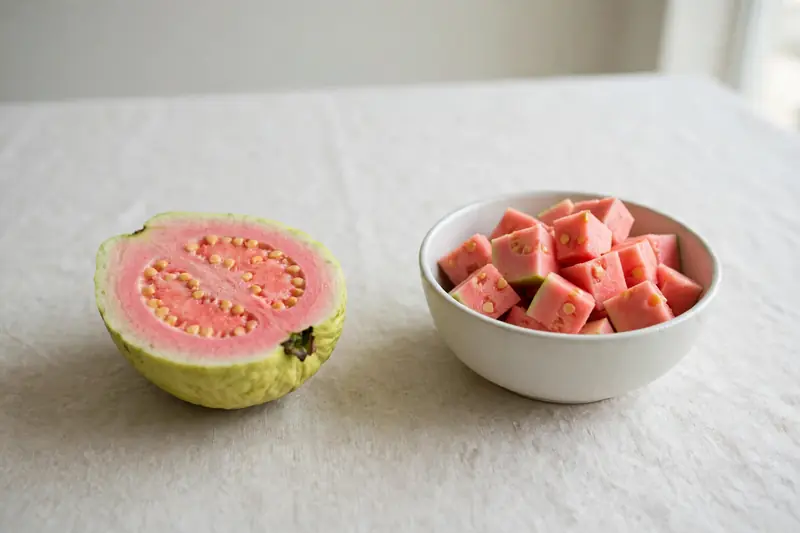
No, guava is not toxic to dogs. Neither the ASPCA nor any major veterinary authority lists guava as poisonous, and the flesh, skin, and seeds contain no cyanide compounds like the pits of cherries or apples. The only plant-related caution is practical rather than chemical: hard seeds can irritate the gut or become a choking risk.
This puts guava in the clear camp of fruits. Toxic fruits get their danger from specific compounds, like the persin in avocado or the cyanogenic glycosides in stone-fruit pits. Guava has none of that chemistry. What it does have is a seed load that can run into the hundreds per fruit, and those seeds are small, hard, and sharp-edged. They pass through most medium and large dogs without incident, but in a very small dog a big mouthful of seeds can cause trouble. Toxicity is not the worry here. Texture and quantity are.

What guava gives your dog nutritionally
Guava is rich in vitamin C, dietary fiber, potassium, and vitamin A, with pink varieties adding the antioxidant lycopene. A 100-gram serving holds about 68 calories and around 5 grams of fiber. For dogs, the fiber is the practical benefit; the vitamin C is a bonus since dogs make their own.
Dogs produce vitamin C in their livers, so they do not need it from food the way people do. That does not make guava’s vitamin C useless; it acts as an antioxidant either way. The fiber is the more functional part. Dogs on diets low in roughage can benefit from small fruit servings, and the fiber for dogs guide explains how soluble and insoluble fiber shape digestion. Guava carries both types.
Potassium supports normal muscle and nerve function, and guava’s potassium content is comparable to a banana’s. Pink guava also contains lycopene, the same antioxidant that gives tomatoes their color. Research on lycopene in dogs is limited, so treat it as a likely bonus rather than a proven benefit. None of this makes guava necessary. Dog food already covers every nutrient guava offers. Fruit is a snack, not a supplement.

Guava seeds: the one part to handle with care
Guava seeds are not toxic, but they are hard, numerous, and mildly abrasive. Large amounts can irritate a sensitive stomach or, in very small dogs, create a blockage risk. Scoop the seeds out before serving, or buy seedless varieties when you can find them.
A single guava can hold hundreds of seeds, which is why the seed question comes up constantly. For humans these seeds are simply crunchy; human digestion and chewing handle them without thought. Dogs chew less thoroughly and swallow faster, so the same seeds arrive in the stomach more intact. Most pass through without any sign of trouble, and many owners feed seeded guava for years with no issue. That said, the conservative move costs almost nothing: cut the fruit, scoop the center seed mass out with a spoon, and serve the flesh.
Small dogs under 20 pounds deserve the most caution. Their narrower intestines are where a mass of hard seeds is most likely to matter, and they also choke more easily on fruit chunks. Tiny dogs should get only seedless, well-diced guava. If your dog steals a whole guava and eats it seeds and all, watch for the usual signs of gut irritation rather than panic; the toxicity question below explains what actually earns a vet call.

How to serve guava to your dog
Wash the fruit, cut it open, scoop out the seeds, and dice the flesh into small pieces. Leave the skin on or peel it, whichever your dog prefers; the skin is edible but slightly bitter. Feed a few pieces by hand or mix them into the food bowl as a topper.
Preparation takes about a minute. Rinse the guava under running water the way you would any produce, since store fruit carries handling residue and sometimes a wax coating. Cut it in half and check ripeness: ripe guava gives slightly under finger pressure and smells sweet and floral. Unripe guava is rock hard and mouth-puckeringly astringent, and dogs should not get it.
Dice the flesh into pieces sized for your dog. Pea-size for small dogs, blueberry-size for medium dogs, and bite-size chunks for large dogs. The list of human foods dogs can eat is worth bookmarking if your dog regularly samples from your plate. Frozen guava chunks are fine too; they last longer and give teething puppies something to crunch. Skip guava paste, guava candy, and guava nectar entirely, since those carry added sugar that plain fruit never has.
Guava juice, dried guava, and guava paste: forms to skip
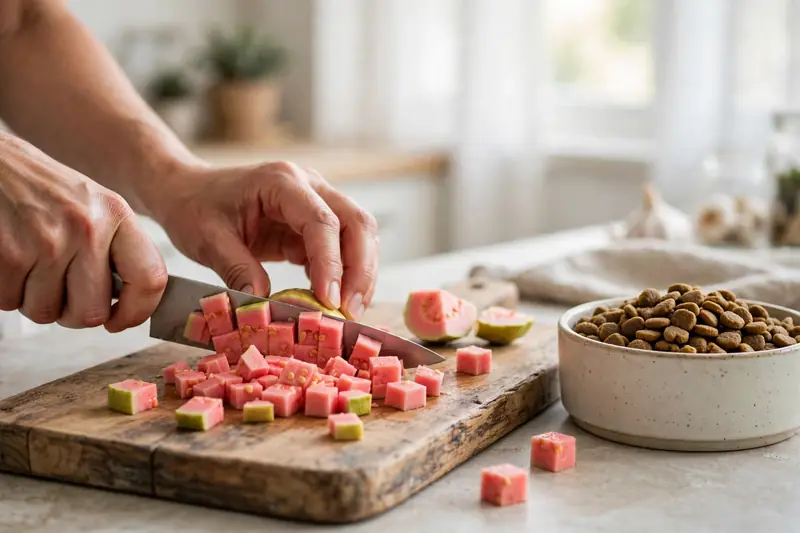
Skip guava juice, dried guava, and guava paste. Juice strips the fiber and concentrates the sugar; commercial versions add even more. Dried guava is chewy, sticky, and calorie-dense. Guava paste and guava candy are sugar products, not fruit, and belong nowhere near a dog.
Fresh whole guava is the only version worth feeding. A cup of guava juice can carry the sugar of several fruits with none of the fiber that slows absorption, which is the same reason nutritionists warn people off juice. Dried guava looks wholesome but packs roughly five times the calories per handful and sticks to teeth. Guava paste, the dense block sold for cheese boards, is essentially guava-flavored candy.
Homemade guava puree sits in the middle. Blending seeded-out ripe guava into a thin puree is fine as a food topper in small amounts. Just remember the seeds: blend them in and they turn into grit, so strain or scoop first. Frozen plain guava chunks with no added syrup are also fine. Read labels on anything packaged; if the ingredient list goes beyond guava, put it back.
How much guava is safe to feed
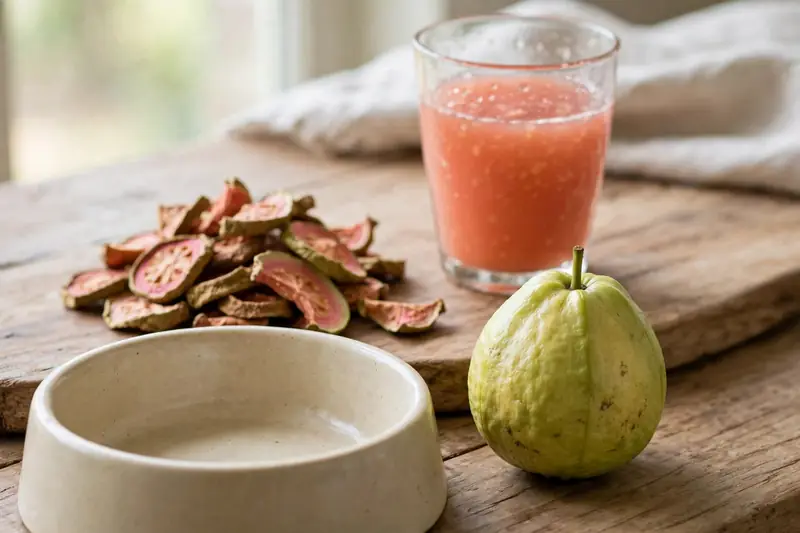
Keep guava under 10 percent of your dog’s daily calories and treat it as a sometimes snack. A small dog gets a few small cubes or a tablespoon or two of diced fruit. Medium dogs can have a few tablespoons, and large dogs up to a quarter of a guava a few times a week.
The 10 percent rule is the same one that governs all treats. Balanced dog food delivers complete nutrition in a day’s ration, and every fruit calorie displaces a kibble calorie. Small amounts trade fine. The sugar is the reason not to go bigger: guava carries about 9 grams of natural sugar per 100 grams, which is moderate for a fruit but still sugar. Dogs with diabetes should get guava only with their vet’s approval, and overweight dogs should count it in their daily treat budget.
| Dog size | Safe amount | Frequency |
|---|---|---|
| Small (under 20 lbs) | A tablespoon or two of diced, seedless flesh | A few times a week |
| Medium (20 to 50 lbs) | A few tablespoons of diced, seedless flesh | A few times a week |
| Large (over 50 lbs) | Up to a quarter guava, seeded and diced | A few times a week, not daily |
The first time, start with less than the chart. Two or three small cubes, then a full day of watching. Most dogs digest guava without a blip, but the fiber can loosen the stool of dogs unaccustomed to fruit. Your dog’s response sets the real portion.
Guava vs mango, pineapple, and banana
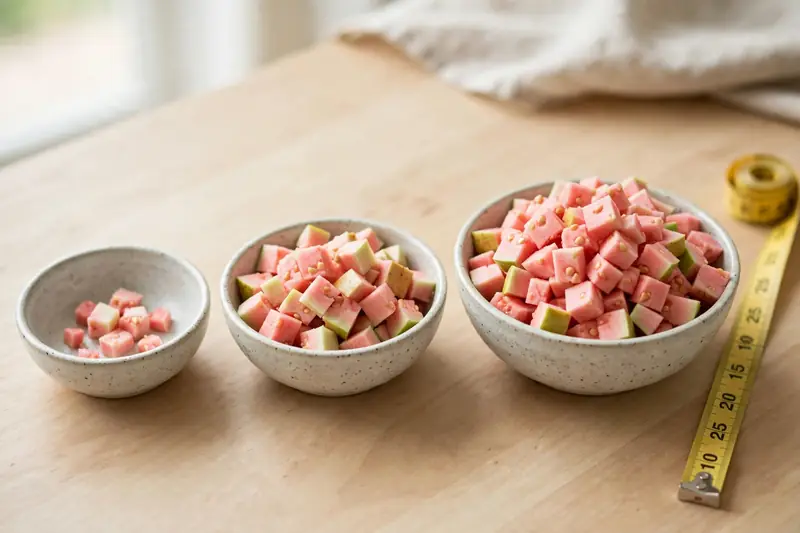
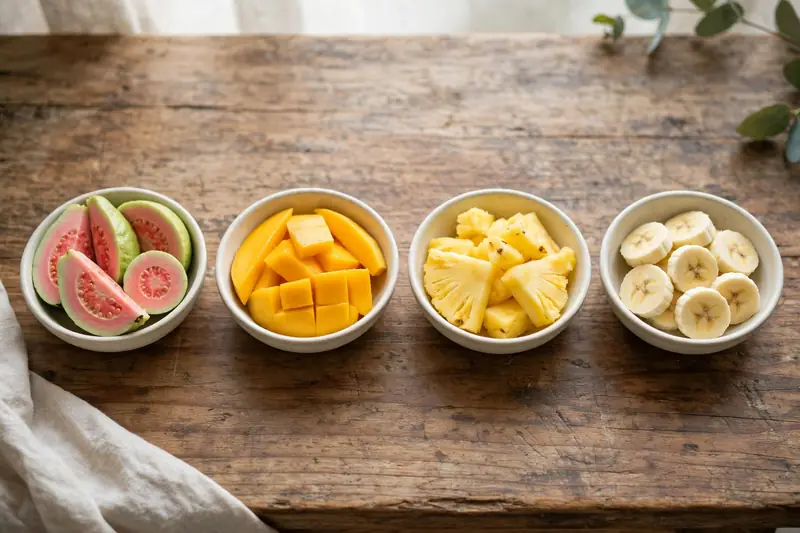
Guava beats mango and banana on fiber and vitamin C per serving, while pineapple edges it on sweetness and bromelain content. All four are safe for dogs in small amounts. The practical differences are the seeds in guava, the stringy pit in mango, and the sugar load in banana.
Owners often ask which tropical fruit to reach for first, so a side-by-side helps.
| Fruit | Vitamin C | Fiber per 100 g | Sugar per 100 g | Main watch-out |
|---|---|---|---|---|
| Guava | Very high | About 5 g | About 9 g | Hard seeds |
| Mango | High | About 1.6 g | About 14 g | Large flat pit, higher sugar |
| Pineapple | Moderate | About 1.4 g | About 10 g | Acidity, tough core |
| Banana | Low | About 2.6 g | About 12 g | High sugar for frequent feeding |
Mango flesh is safe once the pit is out, and the mango feeding guide covers the pit risk in detail. Pineapple is similarly safe in small chunks, with more acidity that can bother sensitive stomachs; the pineapple guide has the serving details. Bananas are the sweetest of the four and the easiest to overfeed, which the banana guide covers. If you want one tropical fruit in the rotation, guava’s fiber-to-sugar ratio makes it a strong pick.
Puppies, senior dogs, and dogs with health conditions
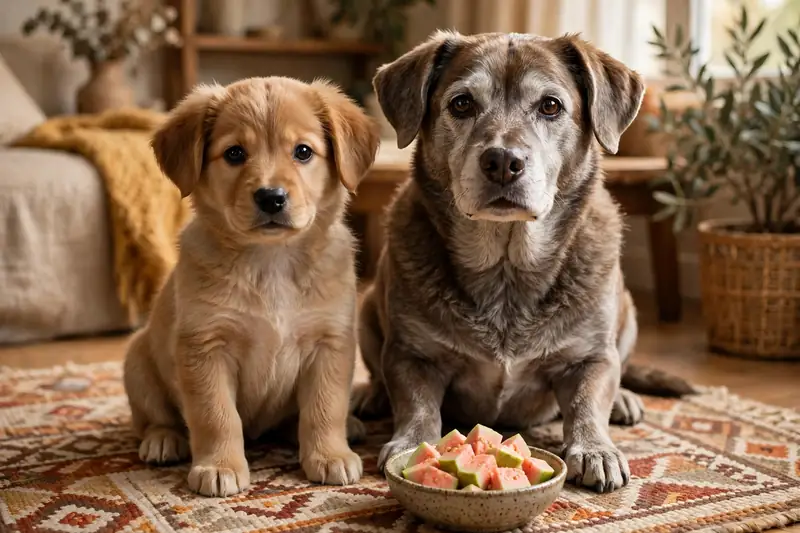
Healthy puppies over four months can have a few tiny pieces of seedless guava. Senior dogs follow the adult rules with smaller portions. Dogs with diabetes, kidney disease, or chronic digestive issues should only get guava if their vet approves, because of the sugar, potassium, and fiber.
Puppies digest new foods less predictably than adults, so keep the first serving to two or three pea-size pieces and wait a day. Guava is gentle as fruits go, and it rarely causes trouble, but a puppy’s smaller gut amplifies any reaction. Senior dogs on prescription diets need the vet’s word first; those diets are formulated precisely, and fruit can shift the nutrient balance their vet is managing.
Diabetic dogs need caution around any fruit sugar, even the moderate amount in guava. Dogs with kidney disease eat potassium-restricted diets, and guava’s potassium is not trivial, so the kidney disease in dogs guide is worth a read alongside your vet’s advice. Dogs with a history of gastroenteritis should reintroduce fruit slowly after an episode, since fiber can aggravate a healing gut. When in doubt, the vet who knows your dog’s chart outranks any feeding chart, and the VCA hospitals site has a finder for a second opinion if you need one.
When to call the vet
Call your vet if your dog eats a large amount of seeds, vomits or has diarrhea for more than 24 hours, or shows belly pain, lethargy, or repeated retching. Unripe guava can cause mouth irritation and stomach upset, which usually passes but deserves a call if it lingers.
Guava emergencies are uncommon, and that is worth saying plainly. The realistic scenarios are a small dog that swallows a whole seeded guava, a dog that raids the fruit bowl and eats several fruits at once, or a dog that gets into dried guava and its packaging. Watch for the signs of gastroenteritis: vomiting, diarrhea, appetite loss, and a tender belly. A bland diet for a day or two settles most mild cases, with your vet’s agreement.
Blockage signs earn a faster call. Repeated retching without producing anything, a swollen or painful abdomen, and refusal to eat after seed-eating point toward something stuck. These are rare with guava but worth knowing. For after-hours worries, the ASPCA Animal Poison Control line is the resource most vets recommend, and the Merck Veterinary Manual publishes the digestive-disorder reference vets themselves use.

Frequently asked questions about dogs and guava
Most owners ask about the skin, the seeds, pink versus white guava, and guava juice. The answers below cover the questions that come up most in vet clinics and search results. Your vet’s guidance wins for any dog with a medical condition.
Can dogs eat guava skin?
Yes. The skin is edible and non-toxic, though it can be slightly bitter and tough on underripe fruit. Wash it well before serving. If your dog turns up their nose at the skin, peel it; the flesh is the part worth feeding anyway.
Are guava seeds dangerous for dogs?
They are not poisonous, but they are hard and numerous. In most dogs they pass through without trouble. Very small dogs face the highest risk of gut irritation or blockage from a large seed load. Scooping the seeds out takes seconds and removes the question entirely.
Can dogs eat pink guava and white guava?
Yes, both are safe. Pink guava contains lycopene, an antioxidant also found in tomatoes. White guava is milder and slightly less fibrous. Ripeness matters more than color: only feed fully ripe, fragrant fruit either way.
Can guava give a dog diarrhea?
It can, mainly from the fiber. A dog unaccustomed to fruit can get loose stool from a generous serving, the same way any sudden fiber increase works. Start with a few small pieces and build up. Persistent diarrhea after tiny amounts means guava does not agree with that dog.
Is guava safe for diabetic dogs?
Only with your vet’s approval. Guava’s sugar is moderate for a fruit but real, and diabetic dogs need their carbohydrates predictable. Your vet may allow a cube or two as a treat within the meal plan, or may rule fruit out entirely.
Can dogs eat guava leaves?
Guava leaves are not listed as toxic, but they are not food either. They are tough, bitter, and offer a dog nothing the flesh does not give more pleasantly. Do not feed them on purpose, and do not worry if your dog chews one in the yard.
Can dogs drink guava juice?
Plain homemade guava juice in a small amount is unlikely to harm, but it is a poor way to serve the fruit. Juicing removes the fiber and concentrates the sugar. Commercial guava juice and nectar add more sugar on top. Diced fresh fruit is better in every way.
Guava earns its yes easily: non-toxic flesh, useful fiber, and a vitamin C load most fruits cannot touch. Scoop the seeds, dice the flesh, keep portions inside the treat budget, and leave the juice and candy versions on the shelf. Dogs that should skip it are the ones whose vets have ruled out fruit, usually for diabetes or kidney disease.