

A single unused tea bag holds enough concentrated caffeine to seriously poison a small dog. That fact surprises most owners, because a brewed cup of tea feels mild. The difference between the bag and the cup is the whole story: brewed tea is a diluted risk, tea bags and loose leaves are a concentrated one, and dogs process caffeine far more slowly than people do. Brewed caffeinated tea is unsafe as a drink for dogs, and tea bags are a genuine poisoning hazard. Herbal teas sit in a separate, calmer category with their own rules.
The short answer: can dogs drink tea?
Dogs should not drink caffeinated tea. Black, green, and white teas all contain caffeine, which overstimulates a dog’s nervous system and heart, and dogs clear it from their bodies much more slowly than humans do. A few licks of weak tea are unlikely to poison a healthy dog, but tea should never become a drink you offer. Caffeine-free herbal teas like chamomile or rooibos are the only teas worth discussing with your vet.

The honest shape of the risk is dose and concentration. Your morning cup is mostly water with a modest caffeine load, and a large dog that laps a spilled saucer will most likely be fine. The danger climbs with small dogs, strong brews, and especially tea bags, loose leaves, and matcha powder, where the caffeine is packed tight. The Pet Poison Helpline notes that one or two licks of tea are unlikely to cause poisoning in most pets, while tea bags can cause serious toxicity. Both halves of that sentence matter. Panic over a spilled cup wastes energy. Calm about a chewed tea bag wastes the dog.
What caffeine does inside a dog
Caffeine belongs to a chemical family called methylxanthines, and dogs are built to handle them poorly. People carry efficient liver pathways that break caffeine down in a few hours. Dogs clear it far more slowly, with a half-life around four and a half hours, which means the stimulation lingers and stacks if the dog gets more.

The effects scale with dose. Mild exposure brings restlessness, pacing, and a racing heart. Higher doses bring vomiting, tremors, elevated blood pressure, and in severe cases seizures or dangerous heart rhythm changes. Veterinary toxicology sources put the threshold for serious effects around 9 milligrams of caffeine per pound of body weight, with lethal doses estimated near 150 milligrams per kilogram. A small dog reaches those numbers faster than owners expect. A 10-pound dog hits the serious-effect zone at roughly 90 milligrams of caffeine, which is not far above what a strong large mug of black tea contains. Size is the multiplier on every caffeine calculation, which is why the same spilled cup means little to a Labrador and much more to a Chihuahua.
Black, green, white, and herbal: the caffeine ladder
Not all teas carry the same load. Black tea sits at the top, with a strong cup delivering the most caffeine. Green tea comes next at roughly half to two-thirds of black tea’s level. White tea, the least processed, generally carries less than green. Herbal teas like chamomile, peppermint, and rooibos are naturally caffeine-free, since they are not made from the tea plant at all.

Those rankings describe brewed cups, and brew strength moves the numbers around. A tea bag steeped for five minutes in a small mug delivers far more than a bag dunked briefly in a large pot. Iced teas add another wrinkle: bottled versions often contain added sugar, and some sugar-free varieties use xylitol, which the Pet Poison Helpline flags as highly toxic to dogs. The same stimulant hides in cola and other caffeinated sodas, another drink dogs should never get. The ASPCA’s people-foods list names caffeine among the substances to keep away from pets. Decaf deserves a plain note too: decaffeinated tea still contains small amounts of caffeine, so “decaf” is reduced risk, not zero risk.
The theobromine footnote
Tea contains a second stimulant that rarely gets mentioned: theobromine, the same compound behind chocolate poisoning in dogs. Tea carries far less theobromine than chocolate, so it is a footnote rather than a headline, but it adds to the total stimulant load in the cup.
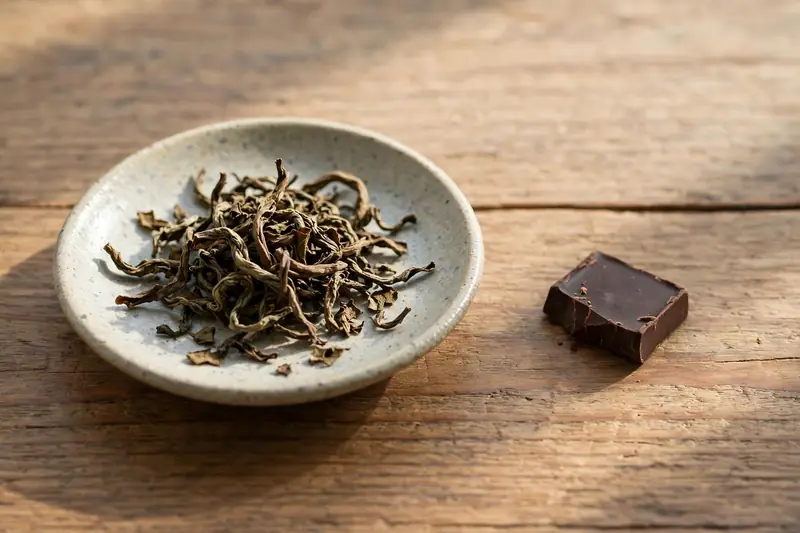
The pairing matters because the two chemicals amplify each other. Caffeine stimulates the nervous system while theobromine leans on the heart, and a dog gets both from a single cup. Neither reaches chocolate-level danger on its own in tea, which is why tea poisoning is rarer and milder than chocolate poisoning. But the combination is one more reason the answer stays no. Our guide on white chocolate and dogs shows how the same chemistry plays out at higher doses.
Tea bags, loose leaves, and matcha: the concentrated dangers
The brewed cup gets the attention, but the dry forms cause the emergencies. An unused tea bag concentrates the caffeine of a full cup into a small packet a dog can swallow whole. Used bags are weaker but still carry caffeine plus tannins, and dogs that raid trash bins do not stop at one.

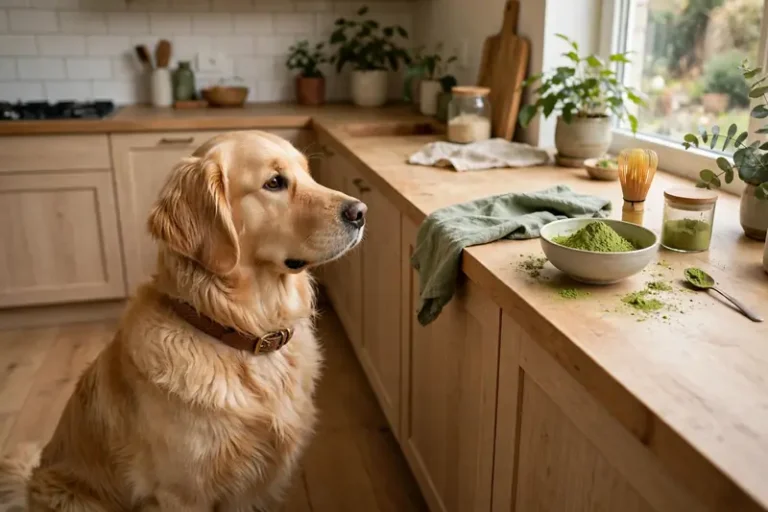
Matcha is the concentrated form most owners underestimate. Unlike steeped tea, where the leaves stay in the bag, matcha is powdered whole leaf that gets whisked into the drink and fully consumed. A serving of matcha delivers substantially more caffeine than the same volume of steeped green tea, along with everything else in the leaf. Read our matcha guide before assuming the green powder is gentler. Coffee grounds sit in the same danger zone and are worth the same trash-bin discipline. Keep all of them, tea bags included, in a bin with a lid or behind a cabinet door.
Herbal teas: the calmer category
Herbal teas are not tea in the botanical sense, and that is what makes them interesting. Chamomile, rooibos, and peppermint contain no caffeine, so they skip the stimulant problem entirely. Some owners offer cooled chamomile for mild stomach upset, and some calming products include it as an ingredient.

The rules still apply. Serve it plain, cooled to room temperature, and in small amounts. Check the ingredient list, because many “herbal” blends include black or green tea for flavor, which smuggles caffeine back in. Avoid blends with chocolate, citrus oils in quantity, or added sweeteners. And run it past your vet first, especially for pregnant dogs, puppies, or dogs on medication, since concentrated plant compounds can interact with drugs. Herbal tea is the one tea conversation worth having with a vet. Caffeinated tea is not a conversation at all.
Signs your dog drank too much tea
Caffeine symptoms usually appear within one to two hours. Early signs look like overexcitement: restlessness, pacing, panting, and a visibly fast heartbeat. The stomach often objects next, with vomiting or diarrhea.

Serious signs mean the dose was high: muscle tremors, an irregular or racing heartbeat you can feel, wobbliness, and in the worst cases seizures or collapse. Small dogs show symptoms at smaller amounts, and the timeline can stretch because dogs clear caffeine slowly. A dog that seems only mildly wired at hour one can look worse at hour three as absorption continues. Do not grade the situation on the first hour alone. Watch for at least four to six hours after any meaningful ingestion, and call the vet at the first sign beyond mild restlessness.
What to do if your dog drinks tea
Match your response to what was actually consumed. A few licks of weak brewed tea in a healthy medium or large dog calls for watching, not panic: keep the dog calm, offer fresh water, and monitor for several hours. A full cup, a strong brew, a chewed tea bag, or any amount in a small dog or puppy calls for a phone call to your vet or a poison hotline right away.

Have three facts ready: what kind of tea, how much, and when. An unused tea bag versus a half-finished weak cup changes the advice completely. For the wider household danger list, keep our toxic foods guide handy. Do not induce vomiting unless a professional specifically tells you to. With stimulant poisoning, vomiting on your own can complicate things, and rapid professional guidance beats home improvisation. If the vet wants the dog seen, go promptly. Caffeine poisoning is very treatable with prompt care, usually with monitoring, fluids, and medication to control heart rate and tremors. The VCA’s feeding guidelines are a useful reminder that treats and extras, tea included, should never displace balanced nutrition.
Better warm drinks for dogs
Dogs do not need a warm beverage the way people crave one, but owners still ask. Plain water at room temperature covers every hydration need. If you want to offer something with more appeal, a small amount of plain, low-sodium bone broth served lukewarm is the classic choice, and dogs find it far more exciting than any tea.

Keep the broth plain: no onion, no garlic, no heavy salt. A tablespoon or two as an occasional treat is plenty. Some owners warm the water bowl slightly in winter, which is harmless and costs nothing. Our guide to what dogs can drink ranks the full list, and the milk question comes up nearly as often as tea. The pattern across all of them is the same: water first, everything else a rare and careful exception.
Frequently asked questions about dogs and tea
Owners usually ask about specific tea types and what counts as dangerous. The answers below cover the questions that come up most.
Can dogs drink green tea?
No, not as a drink. Green tea contains less caffeine than black tea but still enough to overstimulate a dog, and some green tea products add flavorings or sweeteners. A lick of a spilled cup is unlikely to cause harm, but do not offer it deliberately.
Can dogs drink chamomile tea?
Cooled, plain chamomile tea in small amounts is the herbal option most often discussed with vets. It contains no caffeine. Check that the blend has no black or green tea mixed in, serve it at room temperature, and ask your vet first for puppies or medicated dogs.
Can dogs drink decaf tea?
Decaf is lower risk but not risk-free, since decaffeinated tea still contains small amounts of caffeine. It is a better accident than a full-strength cup, but it is not something to serve on purpose.
Can dogs drink iced tea?
Bottled iced tea adds sugar to the caffeine problem, and sugar-free versions may contain xylitol, which is highly toxic to dogs. Fresh-brewed unsweetened iced tea is just cold caffeinated tea, with the same rules as the hot kind.
How much tea is dangerous for a dog?
It depends on the tea’s strength and the dog’s size. Serious effects can start around 9 milligrams of caffeine per pound of body weight, so a small dog can reach trouble with a single strong cup while a large dog might only get restless. Tea bags and matcha lower the threshold sharply.
Can tea calm a dog down?
Caffeine is a stimulant, so tea does the opposite of calming a dog. The idea probably comes from chamomile’s reputation in people, but even chamomile should be a vet-approved choice, not a home remedy for an anxious dog.

Tea earns a firm no as a dog drink. The caffeine overstimulates the heart and nerves, dogs clear it slowly, and the concentrated forms like tea bags and matcha turn a mild risk into an emergency. Keep the kettle for yourself, the tea bags in a lidded bin, and the dog’s bowl filled with fresh water. If curiosity ever wins and your dog gets into tea, match your response to the dose and call the vet when the amount was real.
Disclaimer: This article is for general information only and is not veterinary advice. Every dog is different, and puppies, small breeds, and dogs with heart conditions face higher risk from caffeine. If your dog shows tremors, vomiting, or a racing heart after tea, contact your veterinarian promptly.


2 thoughts on “Can Dogs Drink Tea? Caffeine Content and Real Risks”