
Can dogs drink distilled water? Yes, a dog that laps up this water now and then faces no danger. Distilled water is safe for dogs in small, occasional amounts, but it should never become the only water your dog drinks. Distillation strips minerals out along with impurities. A dog that drinks nothing but the distilled kind for months can run short of the electrolytes its body expects from water. Regular tap water or simple filtered water remains the better everyday choice, poured fresh and refilled daily.

Grocery shelves full of water jugs make this question more common every year. Distilled water markets itself as the purest option, and plenty of owners assume purest means best for the dog too. That logic holds for about a week. After that, the missing minerals start to matter. Water is the one substance your dog consumes more of than food, which means the choice of what fills the bowl carries more weight than most owners ever stop to consider.
Is distilled water safe for dogs?
Owners asking this question usually want a yes or no, so here it is. Distilled water is not toxic to dogs and an occasional bowl causes no harm. The safety question only turns serious with exclusive long-term use, because distilled water lacks the calcium, magnesium, potassium, and sodium that regular water supplies. Balanced dog food covers most of that gap.
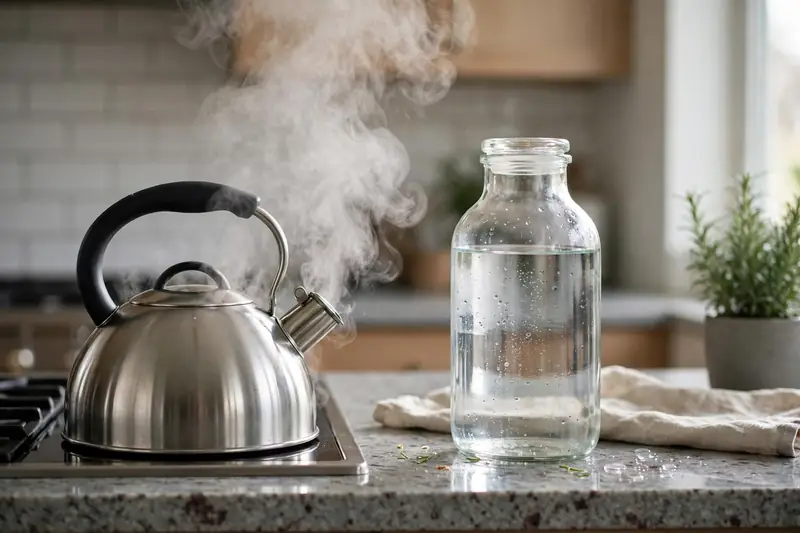
Vet-reviewed guides treat this water as harmless in itself. The compound contains nothing that attacks organs or blood cells. Dogs process it exactly like any other water, and the kidneys excrete what the body does not need. Short-term use raises no veterinary eyebrows, and no vet will scold an owner for filling the travel bowl from a distilled jug on a road trip. Travel jugs and a few days during a home water problem are fine, and the dog’s body will not register the difference over such a short stretch.
The VCA’s feeding guidelines frame the bigger picture well: complete nutrition comes from the diet, and water plays its supporting role quietly. This water performs that role fine for brief stretches. It only stumbles when asked to do it alone, day after day, for months.
What makes distilled water different from tap water
Distillers make distilled water by boiling water into steam and condensing the steam back into liquid. Distillation removes nearly all dissolved minerals and impurities, leaving practically pure H2O. Tap water keeps its natural mineral content along with treatment chemicals like chlorine, which is why the two taste different and behave differently in a dog’s diet.

The boiling step does the heavy lifting. Steam leaves dissolved solids behind in the boiler. Only the vapor travels on to become the final product. Heavy metals and bacteria stay behind, along with chlorine byproducts and farm runoff. That cleanup gives the distilled kind its reputation for purity. Tap water takes the opposite route. Municipal treatment kills pathogens but leaves most dissolved minerals in place, and those minerals give tap water the familiar taste most dogs recognize from puppyhood onward. Dogs notice the difference. Many drink it with less enthusiasm. That lukewarm reaction matters more than most owners expect.
Why distilled water is not toxic to dogs
Toxicity requires a poison, and distilled water contains none. Distilled water carries no chemical that can poison a dog, so vets treat it as safe for short-term or occasional drinking. Vet-reviewed guides describe it as harmless in itself. The entire debate sits on nutrition rather than poisoning, which makes for a calmer conversation than the word toxic usually signals.
Dogs and people handle pure water the same way. The gut absorbs it. The bloodstream distributes it. The kidneys filter the excess. Nothing in that chain breaks when minerals are absent from a single drink, because the body draws on its reserves for the occasional gap without complaint. A dog that steals a few laps from an open jug will not develop symptoms, and no emergency call follows. The ASPCA’s people foods to avoid list names dangerous items like xylitol and grapes. This water appears on no such list. It belongs in the nutrition discussion, not the poison one.
The missing minerals, and why they matter
Distilled water leaves behind calcium, magnesium, potassium, and sodium during the boiling process. Dogs use these dissolved minerals for muscle function, nerve signals, and fluid balance, and water normally supplies a small daily share. Food supplies most minerals, but water’s contribution arrives steadily and free, which is why vets dislike seeing it discarded for no reason.
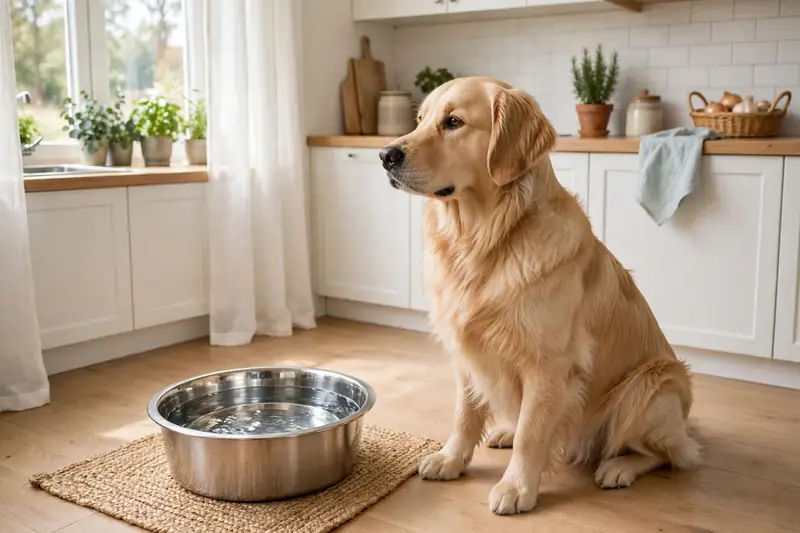
Think of drinking water as a quiet mineral supplement the dog never notices. Each lap of tap water delivers trace calcium for bones and magnesium for muscle relaxation, with sodium and potassium handling the electrical signals that run nerves. No single bowl carries much. The value compounds quietly over thousands of bowls across a lifetime, which is why nutritionists treat drinking water as a small but permanent part of the mineral budget. Balanced commercial dog food covers the bulk of mineral needs, which is the single fact that keeps short-term use safe for healthy dogs. That fact keeps short-term use safe. But food and water work as a pair. Removing water’s share permanently asks the food to carry the entire load, and nutritionists prefer not to run that experiment on a living dog.
What months of distilled-only drinking can do
A dog drinking only distilled water for months may develop electrolyte imbalances. Long-term exclusive use can lead to mineral shortfalls that show up as weakness, poor digestion, or irregular heartbeat, though balanced dog food prevents most real-world cases. The quieter risk is taste. Dogs often drink less of the flat-tasting water, and low intake dehydrates faster than any mineral issue.
Palatability deserves more attention than it gets. This water tastes flat to most mammals because the tongue expects dissolved solids. Some dogs adapt within days. Others cut their intake noticeably. A dog that drinks 20 percent less water every day will feel it. Dehydration shows up as dry gums and sunken eyes, plus skin that stays tented when pinched. It harms faster than a slow mineral shortfall ever could, which is why daily intake matters more than mineral content in any debate about water type. Owners who insist on the distilled kind should measure intake for a week. A marked drop ends the experiment.
The bladder-stone belief that backfires
Some owners choose distilled water to prevent bladder stones, but the logic is shaky. Veterinary answers warn that distilled water is not ideal for stone-prone dogs, because salts in regular water make dogs thirstier and produce more dilute urine. Dilute urine is what stone-prone dogs need. A vet should decide this one.

The confusion is understandable. Hard water contains minerals. Bladder stones contain minerals. Owners connect the two. The body’s plumbing disagrees. Minerals in drinking water encourage the dog to drink more, and higher intake flushes the bladder with dilute urine that discourages crystal formation. Distilled water removes that nudge. Dogs with a history of urinary crystals need a vet-designed plan, usually built around prescription diet and monitored water intake rather than an owner’s best guess in the pet store aisle. Not a jug swap made on guesswork. Owners dealing with stones should read the broader guide to safe drinks for dogs and talk to their vet before changing anything about water.
De-ionized water is a different, riskier drink
De-ionized water sounds like distilled water with a fancier name, and it is not. De-ionized water can leach minerals from the body and may still carry bacteria or viruses, so dogs should never drink it. Distillation kills microbes through boiling. De-ionization skips that step and can even corrode containers. Keep the two products far apart in your mind.

De-ionization strips ions through resin beds rather than heat. The result lacks minerals, but it never went through the sterilizing boil. Microbes can survive the process. Worse, the aggressive purity of de-ionized water lets it pull minerals out of whatever it touches, including living tissue. Laboratories and factories use it for equipment, not for drinking. Bottles sometimes carry explicit not-for-consumption labels. The similar names cause real mix-ups at stores. Check the label every time. Treat any jug marked de-ionized as a household chemical rather than a beverage.
What should actually go in your dog’s bowl
Fresh tap water wins for most households. Clean tap water or simple filtered water is the best daily drink for dogs. Dogs need about an ounce of water per pound of body weight each day, and the AKC uses that same figure. Refill the bowl daily and wash it, because a slimy bowl discourages drinking.

Tap water from a regulated municipal supply meets safety standards written for people, and those standards protect dogs too. Owners bothered by chlorine taste or old pipes can run tap water through a basic carbon filter. The filter removes off flavors and chlorine while keeping the beneficial minerals that make tap water worth drinking in the first place. Bottled spring water works as a backup for travel or for homes with well water of unknown quality, though the cost adds up fast for a large dog that drinks quarts every day. Sparkling water and fruit juice belong nowhere near the daily routine. Lake water carries bacteria and algae risks that make even the distilled kind look appealing. The AKC’s water intake guide gives the ounce-per-pound rule with puppy adjustments, which helps owners judge whether intake looks normal.
How to switch your dog to better water without fuss
Dogs notice water changes through taste, so switch gradually. Mixing the old and new water half and half for a few days lets most dogs accept the change without drinking less. Serve the new water at room temperature in a freshly washed bowl, and keep the timing and placement of the bowl exactly as the dog remembers them. Dogs that balk at change usually come around within a week.

Bowl hygiene matters as much as water type. Biofilm builds up on bowl surfaces within days, and dogs can taste and smell it. A quick daily wash with hot soapy water, rinsed well, keeps the bowl inviting. Stainless steel or ceramic bowls resist biofilm better than scratched plastic. Place the bowl away from food to reduce kibble debris. Keep a second bowl available during the transition week so the dog never faces an empty station. Owners worried about drinking too much water should know that sudden intake spikes can signal illness. That is a separate issue from water type.
When to call the vet about your dog’s drinking
Water problems show up as behavior changes first. Call your vet if your dog suddenly drinks far less or far more than usual, seems lethargic, vomits repeatedly, or strains to urinate. Drinking changes can signal kidney trouble, diabetes, or urinary blockage. The water type rarely matters in these cases. The change itself is the warning.

Keep the ASPCA Animal Poison Control number saved in your phone alongside your vet’s. Most water scares turn out harmless. A knocked-over bowl. A hot day. But urinary straining and complete refusal to drink deserve same-day attention. Puppies dehydrate faster than adults because of their small body reserves, so any change in a puppy’s drinking carries extra urgency and deserves a faster call. When in doubt, the call costs nothing and buys certainty.
Frequently asked questions about dogs and distilled water
The questions below cover puppies and kidneys first, then tear stains and taste.

Is distilled water better than tap water for dogs?
Tap water wins this comparison. It supplies the trace minerals this water lacks, and dogs generally prefer its taste. Distilled water only makes sense when the local tap water is unsafe for people, and even then filtered water beats distilled for daily use.
Can puppies drink distilled water?
An occasional bowl will not harm a puppy. Puppies need more water per pound than adults, so the priority is adequate intake of any safe water. Very young unweaned puppies get their hydration from mother’s milk. Once weaned, fresh tap or filtered water suits them best.
Does distilled water cause kidney problems in dogs?
No evidence links distilled water to kidney disease. Kidney problems in dogs come from age, genetics, infections, and toxins, none of which have any connection to the mineral content of drinking water. A dog already diagnosed with kidney disease should drink whatever water the vet recommends, since fluid management is part of the treatment plan.
Can dogs drink distilled water for tear stains?

One veterinary answer allows distilled water two or three times a week for tear stains, but calls bottled spring water the better choice. Tear stains are mostly cosmetic, and no water type erases them reliably. Persistent staining deserves a vet check for blocked tear ducts or infection.
Why does my dog refuse distilled water?
Taste. Distilled water lacks the dissolved minerals that give water its familiar flavor, and many dogs find it flat. A dog that drinks less is worse off than a dog drinking mineral-rich tap water. Switch back gradually rather than letting intake drop.
Can distilled water dehydrate a dog?
The water itself hydrates normally. Dehydration becomes a risk only when a dog dislikes the taste and cuts intake. Watch the bowl for a week after any water change. Steady intake means the choice works, whatever the label says.
This water earns a narrow, qualified yes. A bowl here and there does no harm, and it beats unsafe tap water in a pinch. As the daily drink, though, it gives up minerals for nothing in return. Regular tap or filtered water serves the dog better year after year. The broader roundup of safe drinks for dogs covers the rest of the beverage aisle, and the human foods that are safe for dogs list handles the food side of sharing.
Disclaimer: This article is general information, not veterinary advice. Dogs with urinary, kidney, or other health conditions need water guidance from their own veterinarian, not from a water jug label.


