
Your dog just watched you pour a glass of something cold and now wants in. Most of what is in your glass should stay in your glass. Beyond water, a short list of drinks is safe for dogs in moderation: plain bone broth, unsweetened coconut water in small amounts, vet-approved electrolyte drinks, and small quantities of lactose-free dairy.

The what can dogs drink question looks simple until you start listing. Owners ask about milk, juice, tea, Gatorade, coconut water, and a dozen more, usually while the dog stares at the cup. Strip away the options and dogs need nothing beyond water, and most alternatives are treats with strings attached. This guide sorts every common drink into four buckets: safe in moderation, okay with conditions, skip, and never. Each bucket comes with the reason, the portion, and the catch.
What can dogs drink besides water?
Dogs can drink plain bone broth with no onion, garlic, or added salt; small amounts of unsweetened coconut water; unflavored Pedialyte diluted with water, but only with veterinary approval; and small quantities of lactose-free milk or kefir. Caffeine-free herbal teas like chamomile are fine in small amounts. Everything else in the average kitchen, juice, soda, sports drinks, alcohol, coffee, and anything sweetened with xylitol, ranges from pointless to dangerous.
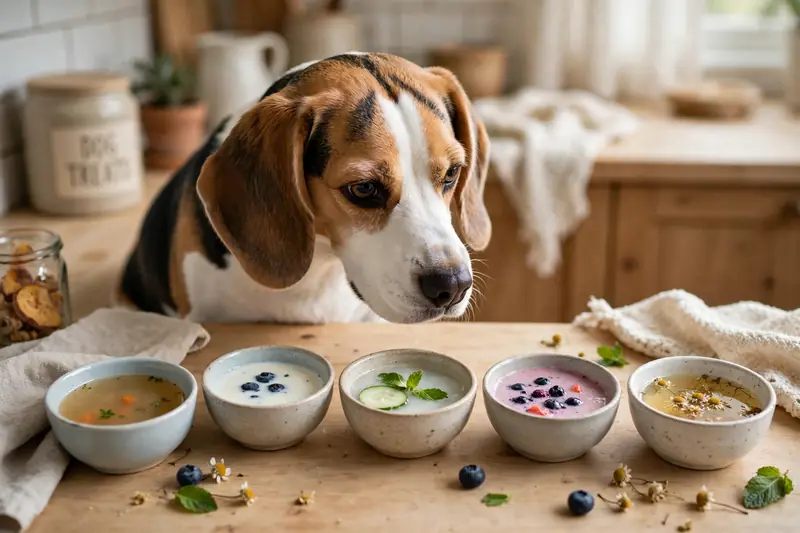
The four-bucket system below is the whole article in miniature. Safe in moderation means a healthy dog can have it as an occasional treat. Okay with conditions means check the conditions first, because the same drink that helps one dog harms another. Skip means a sip will not hurt a healthy dog, but there is no reason to offer it on purpose. Never means keep it away entirely. When in doubt about any drink, the ingredient panel decides: onion, garlic, xylitol, caffeine, alcohol, and grapes are the red flags that move a drink straight to the never bucket.
Water still wins: how much your dog actually needs
A healthy dog needs about 1 ounce of water per pound of body weight per day. A 20-pound dog needs roughly 20 ounces; a 60-pound dog needs roughly 60. Dogs that eat canned food drink less, because the food itself is mostly water, and hot weather, exercise, and nursing all raise the requirement. The VCA’s feeding guidelines cover how water needs fit into a dog’s overall daily nutrition. Fresh, clean water available at all times is the entire hydration strategy for a healthy dog.

Watch the intake for changes, because drinking habits are an early warning system. A sudden increase in thirst can signal kidney disease, diabetes, or Cushing’s disease, and it deserves a vet visit rather than a bigger bowl. Dehydration shows as dry or sticky gums, sunken eyes, and skin that stays tented when pinched. At the other extreme, a dog that drinks obsessively or plays in ways that force large water intake can develop water intoxication, a dangerous dilution of blood sodium. Normal drinking needs no management beyond a clean bowl. Abnormal drinking in either direction is information, and it belongs in a vet conversation.
Bone broth: the one alternative worth making
Plain bone broth is the most useful drink alternative a dog owner can keep on hand. Simmer bones in water with no onion, garlic, leeks, chives, or added salt, strain it, cool it, and skim the fat. The result carries amino acids, collagen, and glucosamine in a form most dogs find irresistible. Homemade, unsalted, fully strained bone broth is the gold standard of dog drinks after water.

Bone broth earns its place three ways. It tempts picky or nauseous dogs to take in fluids when plain water does not appeal. It softens kibble for seniors with dental trouble or puppies transitioning to solid food. And it delivers the hydration plus a little nutrition in one bowl. Store-bought broth is the trap: most commercial broths contain onion, garlic, or enough sodium to disqualify them, so read the label or make it yourself. Never give the cooked bones the broth was made from; cooking makes bones brittle and prone to splintering. A batch keeps about five days refrigerated, or freeze it in ice cube trays for portion-sized servings.
Coconut water: fine in sips, with one catch
Plain, unsweetened coconut water is safe for dogs as an occasional treat. It contains natural electrolytes and minerals, which makes it appealing on hot days when a dog has been panting heavily. A few ounces for a medium dog, less for a small one, is the right scale. The catch is potassium: coconut water runs high in it, so dogs with kidney or heart disease should skip it entirely.
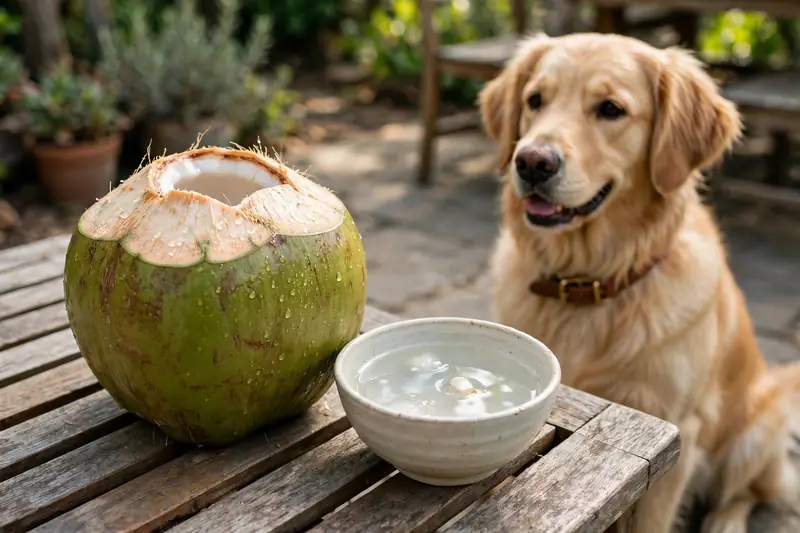
Dilute it half and half with water and treat it as a temporary offering, not a routine. The natural sugars add up, and a dog that fills up on coconut water may drink less plain water, which defeats the purpose. Check the label for added sugars, flavorings, or sweeteners before buying; the only acceptable ingredient list is coconut water, full stop. Our coconut water for dogs guide covers portions by size. For a dog that needs serious rehydration after illness, coconut water is not the tool; the vet-approved electrolyte drinks in the next section are.
Pedialyte and electrolyte drinks: vet permission only
Unflavored Pedialyte, diluted half and half with water, can help a mildly dehydrated dog, but only with your veterinarian’s approval. The use case is specific: a dog recovering from a brief bout of vomiting or diarrhea, still bright and drinking, that needs electrolyte support while the gut settles. Electrolyte drinks are a short-term medical aid, not a beverage.
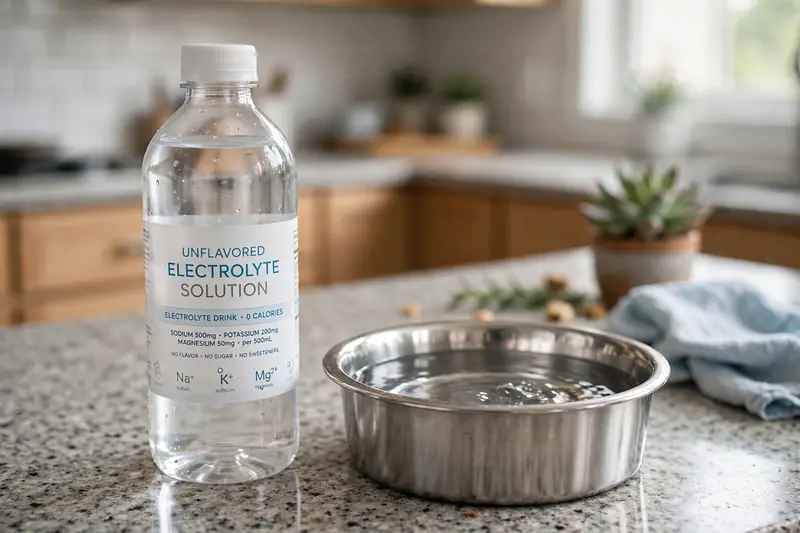
Gatorade is the common confusion here, and the answer is skip. Sports drinks are formulated for sweating humans, with sugar and sodium levels that do not match a dog’s needs. A sip will not harm a healthy dog, but there is no reason to offer it when Pedialyte exists and your vet can dose it properly. Never use electrolyte drinks to replace water for a dog that is vomiting repeatedly, lethargic, or refusing to drink; those signs need a vet visit, not a bottle. Our Pedialyte for dogs guide has the dilution and dosing details, and our Gatorade for dogs guide explains why the sports drink stays on the shelf.
Milk, lactose-free milk, and kefir
Most adult dogs are lactose intolerant to some degree, which makes regular cow’s milk a poor choice beyond a few tablespoons as an occasional treat. Lactose-free milk, with the lactase enzyme added during processing, removes the main problem and is the safest milk option. Kefir goes one better: fermentation digests much of the lactose before it reaches the bowl, and the live cultures add probiotic value. For dairy-loving dogs, the ranking is kefir first, lactose-free milk second, goat’s milk third, cow’s milk last.
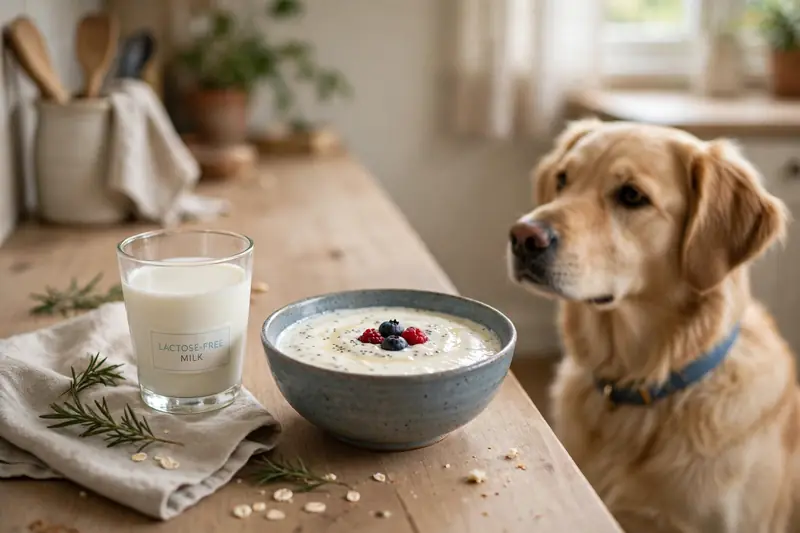
Puppies get a separate rule: mother’s milk or a vet-recommended replacer only, never cow’s milk. The portions stay at treat scale for adults, a few tablespoons a few times a week at most, and the milk always counts against the daily treat budget. Flavored milks, chocolate milk, and anything sweetened are out; chocolate is toxic to dogs and sweeteners add risk. Our milk for dogs guide covers the lactose science and exact portions, our lactose-free milk guide compares the gentlest options, and our kefir guide details the fermented choice.
Caffeine-free herbal teas
Chamomile and peppermint teas, brewed plain and cooled to room temperature, are safe for dogs in small amounts. Chamomile may mildly calm an anxious dog; peppermint can soothe a mildly upset stomach. The amounts are modest, a few tablespoons for a small dog up to half a cup for a large one, offered occasionally. Caffeine-free is the entire rule; any tea containing caffeine belongs in the never bucket.

Skip teas with added flavorings, sweeteners, or “energy” blends, and never offer tea hot. Some herbal ingredients that are fine for people have no safety data in dogs, so stick to the two well-tolerated classics rather than experimenting with the exotic shelf. Tea is a nice-to-have, not a need; no dog requires herbal tea, and a dog that will not touch it loses nothing. Our tea for dogs guide covers which varieties are safe and which to avoid.
The skip list: juice, soda, sports drinks, plant milks
Fruit juice offers sugar without the fiber that makes whole fruit worthwhile, and most commercial juices add sweeteners on top. A lick of apple juice will not harm a healthy dog, but juice has no place as a deliberate treat; offer a blueberry or an apple slice instead. Soda is worse: sugar or artificial sweeteners, sometimes caffeine, and carbonation that can cause gas and bloating. Sports drinks, juice, and soda share a trait: all cost, no benefit.

Plant milks sit in the same bucket with an asterisk. Unsweetened almond milk in a tiny amount is unlikely to harm a dog, but commercial versions often contain additives, and they offer negligible nutrition. Soy milk adds phytoestrogens to the question without adding value. Oat milk is mostly starch water. None of them hydrates better than water or nourishes better than food, so the rational move is to skip the experiment. Our juice for dogs guide details the fruit-specific concerns. Kombucha and aloe vera juice also land here: kombucha for its acidity, alcohol traces, and caffeine; aloe juice because the ASPCA lists the aloe plant as toxic and no veterinary source establishes a safe drinking amount.
The never list: alcohol, caffeine, xylitol
Alcohol is toxic to dogs at small doses. Dogs metabolize it far less efficiently than people, and even a little can cause vomiting, disorientation, dangerously low body temperature, and in severe cases respiratory failure. Hops, the brewing ingredient, are toxic too, which puts beer in double jeopardy. No amount of alcohol is a treat; it is a toxin with a festive label.

Caffeine works the same way: coffee, tea, energy drinks, and caffeine pills can trigger restlessness, rapid heart rate, tremors, and worse. A few laps of spilled coffee warrant a vet call, not a wait-and-see. Xylitol, also sold as birch sugar, is the most insidious of the three because it hides in “sugar-free” drinks, gums, and protein shakes. The AKC reports that xylitol poisoning cases run nearly 75 percent higher than in 2020, and as few as two pieces of certain sugarless gums can endanger a small dog. The AKC’s xylitol guide and the ASPCA’s people-foods list are the references to bookmark. If a dog ingests any of these three, call your vet or an emergency clinic immediately; with xylitol, minutes matter.
Getting a reluctant drinker to drink more
Some dogs do not drink enough, and the fixes are environmental before they are liquid. Wash the bowl daily; dogs avoid slimy bowls the way people avoid dirty glasses. Try a different bowl material, since some dogs dislike metal. Place water away from food, because many dogs prefer separation. A pet water fountain adds movement and oxygenation that tempts picky drinkers. Multiple fresh bowls in different rooms beat any single fancy solution.

For a dog that still will not drink enough, add water to the food rather than hunting for exotic drinks. Soak kibble, add warm water to make a gravy, or mix in a spoonful of bone broth. Wet food itself is a hydration strategy; dogs on canned diets drink noticeably less from the bowl because the food delivers it. Flavor the water lightly with a splash of low-sodium bone broth as a last resort, and change it frequently so it stays fresh. If a previously normal drinker suddenly drinks much more or much less, skip the tricks and call the vet. Appetite for water is a health signal, and changes in it are the dog’s way of filing a report.
Frequently asked questions about what dogs can drink
The short version of the whole guide, for quick reference.
Can dogs drink sparkling water?
Plain, unflavored sparkling water is generally safe, but the carbonation can cause gas and bloating. Still water is the better choice.
Can dogs drink coconut water every day?
Keep it an occasional treat in small amounts. Daily use adds unnecessary sugar and potassium, and it should never replace water.
Is Gatorade really bad for dogs?
A sip will not hurt a healthy dog, but Gatorade is formulated for humans and offers dogs nothing that vet-approved electrolytes do better. Skip it on purpose.
Can dogs drink tea with milk in it?
Caffeine-free herbal tea with a splash of lactose-free milk is fine in small amounts. Regular tea with caffeine, or regular milk for an intolerant dog, is not.
What should I do if my dog drank alcohol?
Call your veterinarian or an emergency clinic immediately. Note what was drunk and roughly how much. Do not wait for symptoms.
How can I tell if my dog is dehydrated?
Check for dry or sticky gums, sunken eyes, lethargy, and skin that stays tented when gently pinched. Any of these warrants a vet call.
What can dogs drink? Water, always. Bone broth, coconut water, vet-approved electrolytes, a little lactose-free dairy, and plain chamomile tea, sometimes. Everything else is either a worse version of water or a problem in a glass. Keep the bowl clean, keep it full, and let the fancy drinks stay yours.
Disclaimer: This article is for general information only and is not veterinary advice. Dogs with kidney disease, heart disease, diabetes, or other health conditions may have different fluid needs and restrictions. If your dog shows signs of dehydration or ingests something toxic, contact your veterinarian or an emergency clinic promptly.


6 thoughts on “What Can Dogs Drink Besides Water? The Complete Safe List”