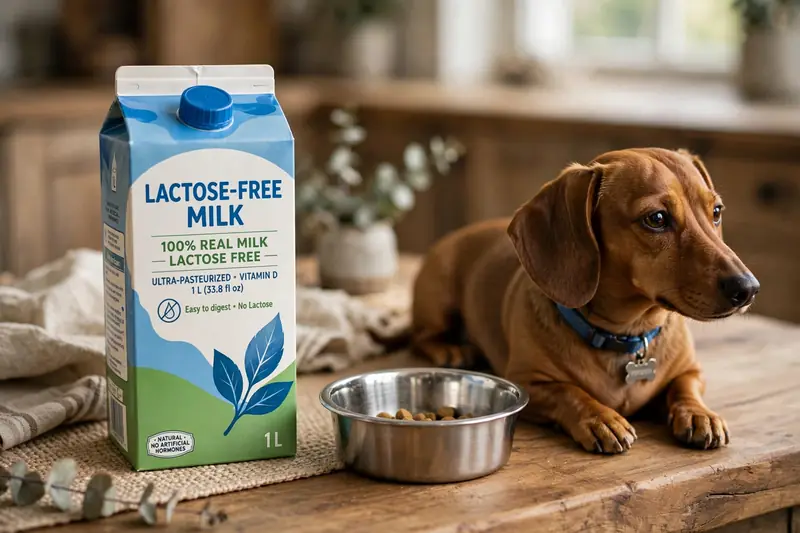
Lactose-free milk is safer than regular milk for most dogs, but only in small amounts. Many owners ask: can dogs drink lactose-free milk? Removing the lactose solves the most common reason milk upsets dogs. It does not solve the rest: the milk proteins that trigger dairy allergies, plus the fat and calories that add up fast, and the simple fact that dogs do not need milk at all. Think of it as regular milk with one problem removed, not a free pass to fill the bowl.
Can dogs drink lactose-free milk? The short answer
Dogs can drink lactose-free milk in small, occasional amounts if they do not have a dairy allergy. The lactase treatment removes the milk sugar that causes most milk-related diarrhea and gas. But lactose-free milk still contains milk proteins and fat, along with the same calories, so dairy-allergic dogs must avoid it entirely, and every dog should get only a few tablespoons at a time. It is a safer choice than regular milk, not a daily drink.
The distinction between intolerance and allergy decides everything here, and owners mix the two up constantly. Lactose intolerance is a digestive problem: the gut lacks the enzyme to break down milk sugar, so the sugar ferments and causes gas and diarrhea. A dairy allergy is an immune problem: the body attacks milk proteins, causing itching, ear infections, vomiting, or worse. Lactose-free milk fixes the first. It does nothing for the second, so identify which problem your dog has before pouring.

What lactose-free milk actually is
Lactose-free milk starts as ordinary cow’s milk. Manufacturers add lactase, the enzyme that breaks lactose into glucose and galactose, which are simpler sugars the gut absorbs easily. The result tastes slightly sweeter than regular milk. Glucose and galactose register as sweeter on the tongue than lactose does, even though the total sugar content is the same.
Everything else stays. The protein content is identical to regular milk. The fat content is identical, unless you buy a low-fat version. The calcium, the B vitamins, the calories, all unchanged. Ultrafiltered lactose-free milks like Fairlife take an extra step: more protein, less sugar, but the standard grocery carton is simply milk with its sugar pre-digested. Understanding this is the whole article: one ingredient changed, everything else exactly as it was.

Why most dogs handle it better than regular milk
Most adult dogs are lactose intolerant to some degree. Puppies produce plenty of lactase to digest their mother’s milk, but production drops after weaning, and by adulthood many dogs make very little. PetMD’s guide to milk for dogs explains the fallout: undigested lactose ferments in the gut, drawing in water and producing gas, which is why a saucer of milk so reliably ends in diarrhea. The guide’s bottom line is blunt: milk carries more risks than benefits for dogs, with vomiting, diarrhea, gas, bloating, abdominal pain, and appetite loss as the typical signs of trouble.
Lactose-free milk sidesteps that entire mechanism. With the lactose pre-broken, there is nothing left to ferment. Dogs that get gassy or loose from regular milk very often tolerate the lactose-free version without a flicker. The AKC’s milk guide still caps the serving at a few tablespoons as an occasional treat, even for milk dogs tolerate, because the remaining fat and calories have their own limits, and so do the proteins. Easier digestion is not the same as recommended nutrition.

What it does not fix: allergy, fat, or calories
A dairy allergy reacts to milk proteins like casein and whey. Lactose-free milk contains every gram of them. For an allergic dog, lactose-free milk is exactly as dangerous as regular milk. The symptoms look nothing like intolerance: itchy skin, red paws, chronic ear infections, hives, vomiting, or in rare cases anaphylaxis. If your dog has a diagnosed milk allergy, this product is off the table, full stop. When the diagnosis is uncertain, the vet can sort it out before any dairy experiments begin.
Fat is the next unchanged problem. Whole lactose-free milk carries the same fat load as whole regular milk, roughly 8 grams per cup, and that fat adds up in a body that did not evolve to drink another species’ milk. Rich, fatty foods can trigger pancreatitis in susceptible dogs, a painful inflammation that sometimes turns life-threatening. Low-fat lactose-free milk reduces this risk but does not erase it.
Calories follow the fat. A cup of whole milk runs about 150 calories, a meaningful chunk of a small dog’s daily budget. Treats of any kind should stay under 10 percent of daily calories, and milk counts as a treat. A few tablespoons fit easily inside that budget. A bowlful does not, lactose-free or otherwise.
The tolerance test: introduce it the safe way
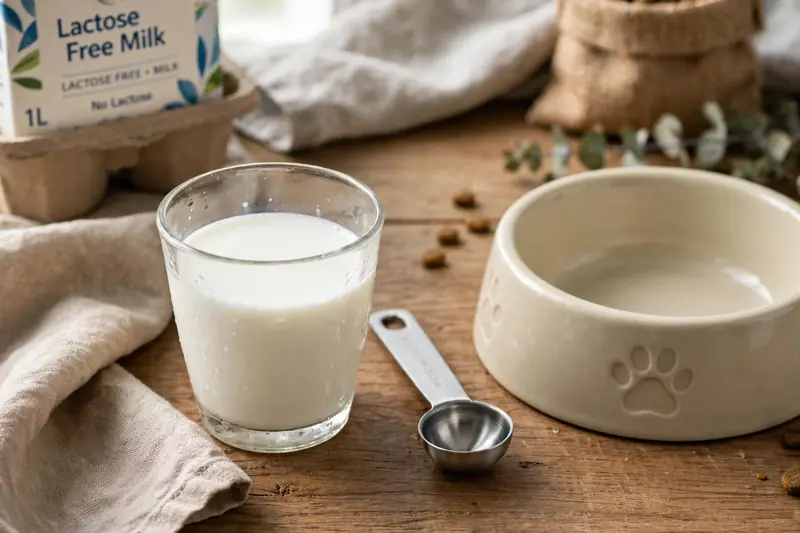
Never start with a bowl. Pour one to two tablespoons over the regular food or offer it from a spoon, then watch for 12 to 24 hours. You are watching for the intolerance signs: vomiting, diarrhea, gas, bloating, abdominal pain, or a sudden loss of appetite. The ASPCA’s people-foods guidance places milk products on the caution list for exactly these reactions, and a slow introduction is how careful owners stay on the right side of it.
One clean test is not a lifetime pass. Serve the same small amount two or three times over the next week before deciding it is a safe occasional treat. Some dogs tolerate a tablespoon fine and react to a quarter cup, which tells you the limit is portion size, not the product. If symptoms appear at any point and last beyond 12 hours, or if vomiting and diarrhea are severe, call your vet. Repeated failures mean this dog does not do dairy, and that verdict deserves respect.
Keep a simple log for the test week: date and amount, plus any reaction. It takes thirty seconds and it turns vague worry into actual data. Owners who “think it was fine last time” misremember constantly. The log does not.

Portions by dog size
For dogs that pass the test, the AKC’s few-tablespoons guidance is the ceiling for an occasional treat. Translate that by size: toy breeds get one to two tablespoons, medium dogs get up to a quarter cup, and large dogs can handle up to half a cup on occasion. “Occasion” means a few times a week at most, not daily.
Resist the urge to scale up because the dog loves it. Dogs love many things that are bad in quantity, and enthusiasm is not nutritional advice. Every extra ounce is fat and calories displacing balanced food, and the dog cannot tell you when the line is crossed. You are the portion control. Act like it.
Puppies get a special rule: none. Puppies under a year old need food formulated for growth, with precise calcium and calorie ratios that milk disrupts. Orphaned puppies need puppy milk replacer, never cow’s milk of any kind, lactose-free included. The replacer matches the protein and fat profile of dog’s milk. Cow’s milk does not, with or without lactose.

Lactose-free milk vs the other options
Plain water beats every milk for daily drinking. It hydrates with no calories, fat, or allergens. It costs nothing. No milk product competes with water as a beverage. Milk is a treat, and treats are optional by definition.
Against regular milk, lactose-free wins clearly for intolerant dogs and ties for allergic ones, since both are unsafe there. Against kefir, the fermented option has the edge: lower lactose still, plus live probiotic cultures, though kefir suits dogs that already tolerate dairy rather than replacing milk for sensitive ones. Against plant milks, the comparison gets murkier. AKC nutrition guidance notes that many plant milks carry added sugars and, in some products, xylitol, the sweetener that is acutely toxic to dogs. An unsweetened plain plant milk will not poison a dog, but it offers nothing that water and good food do not already provide.
The honest ranking for a dairy-tolerant dog: water daily, kefir or plain yogurt occasionally for the probiotic bonus, lactose-free milk occasionally as a simple treat, regular milk rarely if ever. For a dairy-allergic dog, the list has one entry: water.


When to skip it and call the vet instead
Skip lactose-free milk entirely for dogs with a diagnosed dairy allergy, puppies under one year, dogs with pancreatitis or chronic digestive disease, and dogs on elimination diets or strict veterinary nutrition plans. These are hard no’s, not “try a little and see” cases.
Call the vet if a test serving triggers vomiting or diarrhea that lasts more than 12 hours, if the dog shows signs of an allergic reaction such as facial swelling, hives, or intense itching, or if a large accidental drink leads to severe symptoms. Mention the amount and timing. And if your dog’s regular diet already causes soft stools or gas, fix the diet first. No milk product papers over a food problem.

Lactose-free milk solves one problem and leaves the rest alone. Removing the lactose takes away the most common cause of milk-related stomach upset, which is why many dogs handle it better than regular milk. It does nothing for dairy allergies, it still carries the fat and calories of milk, and it is still a treat rather than a drink. A few tablespoons for a medium dog, less for a small one, a few times a week at most. The at-home test from this guide tells you quickly whether your dog is in the group that benefits. Puppies, allergic dogs, and dogs watching their weight should skip it. And through all of it, fresh water stays the drink that actually matters. Milk of any kind is a sometimes food; water is the everyday one.
Frequently asked questions about lactose-free milk for dogs
Owners usually ask about daily serving and puppies, plus whether it helps allergies. The answers below cover the questions that come up most often.
Is lactose-free milk good for dogs?
It is safer than regular milk for dogs without a dairy allergy, but “safer” is not “good.” Water remains the best drink, and milk of any kind is an occasional treat in small amounts, not a dietary staple.
Can lactose-free milk help a dog with a dairy allergy?
The allergy targets milk proteins, which lactose-free milk still contains in full. Allergic dogs must avoid all cow’s milk products, lactose-free included.
How much lactose-free milk can I give my dog?
A few tablespoons for small dogs, up to a quarter cup for medium dogs, and up to half a cup for large dogs, a few times a week at most. Start with one to two tablespoons and watch for 24 hours.
Can puppies drink lactose-free milk?
Puppies need growth-formulated food, and orphaned puppies need puppy milk replacer. Cow’s milk of any kind, lactose-free included, does not match what puppies need.
Is lactose-free milk better than kefir for dogs?
For most dairy-tolerant dogs, kefir has the edge: less lactose and live probiotic cultures. Lactose-free milk is simpler and fine as an occasional treat, but it offers no probiotic benefit.
My dog drinks regular milk with no problems. Should I switch?
If regular milk has never bothered your dog in small amounts, there is no pressing reason to switch. Lactose-free milk is the better choice for dogs that get gassy or loose from regular milk.

Lactose-free milk is exactly what the label says: milk minus the lactose. That single change rescues it for the many dogs whose only dairy problem is the sugar, and it changes nothing for the dogs whose problem is the protein, the fat, or the calories. Test small, serve smaller, keep it occasional, and let water do the daily work. The carton in the fridge is a treat with one problem solved, not a health drink, and treating it that way keeps it safe.
*Disclaimer: This article is for general information only and is not veterinary advice. If your dog has a dairy allergy, digestive disease, or a sensitive stomach, ask your veterinarian before offering lactose-free milk or any new food.*