
Yes, plain unsweetened kefir is safe for most dogs in small amounts. Kefir is a fermented milk drink packed with live probiotic cultures, and its fermentation breaks down much of the lactose that bothers dogs in regular milk. A spoonful a day can support gut health and digestion, which feeds into the immune system. The rules are simple: plain only, modest portions, and no xylitol or sweeteners. Dogs with a dairy allergy skip it entirely.

Can dogs drink kefir? The short answer
Dogs can drink kefir if it is plain and unsweetened, free of xylitol and other sweeteners. Kefir contains live probiotic cultures and less lactose than regular milk, making it one of the more dog-friendly dairy options. Offer small amounts a few times a week, start with a tiny taste to check tolerance, and skip it entirely for dogs with a dairy allergy. Flavored, sweetened, or chocolate kefir is not safe.
Kefir sits in a sweet spot among dairy foods. Regular milk often upsets dogs because of its lactose, and cheese packs heavy calories and salt. Kefir keeps the probiotics and protein of fermented dairy while shedding most of the lactose. That makes it a reasonable occasional addition for dogs that tolerate dairy, not a health food every dog needs, and a poor choice for the ones that do not. The rest of this guide separates those two groups.

What kefir is, and why fermentation helps dogs
Kefir is milk fermented with kefir grains, clusters of bacteria and yeast that convert lactose into lactic acid, carbon dioxide, and a small amount of alcohol. The result is a tangy, slightly fizzy drink carrying 10 to 20 live bacterial and yeast strains. That diversity is the headline. Regular yogurt typically carries two to four strains, while kefir’s community is far broader.
Fermentation solves the lactose problem that plagues dairy for dogs. Most adult dogs produce little lactase, the enzyme that digests milk sugar, which is why a bowl of milk so often ends in diarrhea. In kefir, the cultures have already eaten much of the lactose before the dog ever tastes it, and the live bacteria keep working in the gut. Dogs that cannot handle milk often handle kefir fine, though “often” is not “always,” which is why the tolerance test below exists.
A word of caution keeps the picture honest. PetMD’s guide to probiotics for dogs notes that probiotic research in dogs is limited and sometimes contradictory, and that dog-specific probiotic products are generally preferable to human foods for targeted treatment. Kefir is a food, not a medicine. It supports gut health as part of a good diet. It does not replace veterinary probiotics for a dog with a diagnosed digestive disorder.

The real benefits: gut health, digestion, immunity
Fermented foods that support gut health earn their reputation through the microbiome: a balanced microbiome helps break down food, produces certain vitamins, and crowds out harmful bacteria. About 70 percent of the immune system lives in gut-associated tissue, so digestive health and immune health travel together. Kefir’s broad strain diversity gives it an edge over simpler fermented foods here.
For dogs with mildly sensitive stomachs, small amounts of kefir sometimes ease gas and soft stools by reinforcing the gut flora. Dogs recovering from a course of antibiotics may benefit too, since antibiotics knock back good bacteria along with the bad. The VCA’s probiotics overview advises separating probiotic foods from antibiotic doses by an hour or two, so the drug does not wipe out the cultures on contact, and urges extra caution with probiotics in sick, debilitated, or immunocompromised dogs. That caution applies to kefir as well.
Kefir also brings the standard dairy nutrients: protein for muscle maintenance, calcium for bones, and B vitamins including B12. None of these are unique to kefir, and a balanced dog food already covers them. Think of the nutrients as a bonus on top of the probiotic value, not the reason to start serving it.

Portions: how much kefir is safe
Start tiny. Offer a quarter to half a teaspoon for a first taste and watch for 24 hours. No vomiting, diarrhea, gas, or itching within 24 hours means the dog has passed the tolerance test. This step matters more than any portion chart, because individual sensitivity varies more than any chart can capture.

For dogs that pass, the working rule from veterinary nutritionists is about one tablespoon of kefir per ten pounds of body weight, a few times a week. A 10-pound dog gets a tablespoon. A 50-pound dog gets up to a quarter cup. These are ceilings for occasional serving, not daily targets. Treat kefir like a supplement to the diet, not a beverage. Dogs do not need to drink their calories, and every spoonful of kefir displaces a little of the balanced nutrition in their food.
Frequency matters as much as amount. Two or three servings a week is plenty for a healthy dog. Daily kefir in small amounts is safe for a dog that tolerates it, but the calories and fat add up without need, and some dogs develop loose stools from routine dairy even when the first taste went fine. If stools soften, cut back or stop.

Which kefir to buy: the label checklist
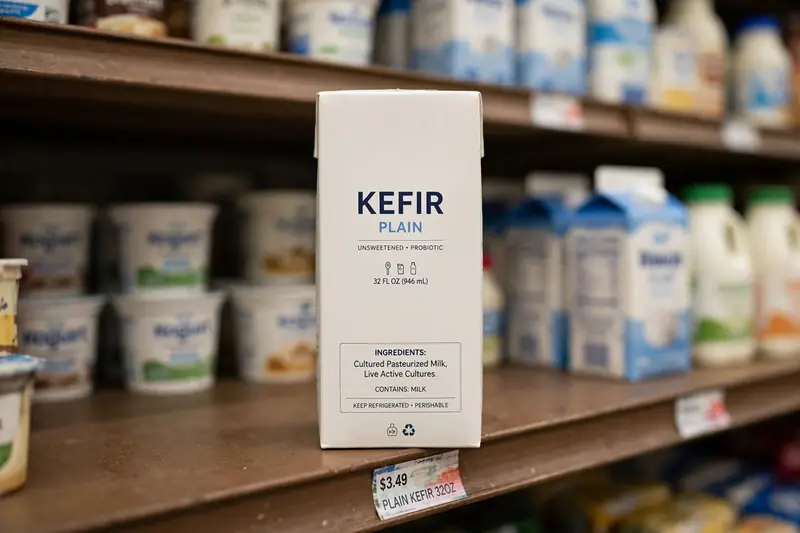
Buy plain, whole or low-fat, unsweetened kefir with the shortest ingredient list you can find. Milk and live cultures should be nearly the whole label. Goat’s milk kefir works the same way and suits some dogs slightly better, though the evidence for that is anecdotal rather than studied.
The ingredient to fear is xylitol. Some flavored and “light” kefir products use xylitol or birch sugar as a sweetener, and xylitol is acutely toxic to dogs, capable of causing fatal liver failure from small amounts. Read the label every time, even on a brand you have bought before, because manufacturers reformulate quietly. The ASPCA’s people-foods list reinforces the broader point: sweetened human foods hide dangers dogs cannot handle.
Avoid flavored kefir entirely. Fruit flavors add sugar, chocolate kefir adds theobromine, and “vanilla” usually means sweeteners of some kind. Avoid kefir with added fiber powders, protein boosts, or herbal blends, since dogs do not need the extras and some additives disagree with them. If the label reads like a chemistry experiment, pick a simpler brand.
When to skip kefir entirely
Dairy allergy means no kefir, ever. A true dairy allergy is an immune reaction to milk proteins, and fermentation does not remove the proteins. Dogs with a diagnosed milk allergy react to kefir the same way they react to milk: itching, ear infections, vomiting, or diarrhea. Lactose intolerance is different, it is a digestive issue, and many intolerant dogs handle kefir fine. Know which one your dog has. When in doubt, ask your vet before the first taste.
Puppies under a year old should skip it. Their nutrition needs are precise, their digestive systems are still maturing, and there is no benefit worth the risk of an upset. Dogs with pancreatitis or a history of it should avoid kefir’s fat content, and dogs on strict elimination diets should not get unapproved extras. Immunocompromised dogs need a vet’s word first, since live cultures behave differently in weakened immune systems.
Watch for the intolerance signs after any new dairy: vomiting, diarrhea, gas, bloating, abdominal pain, or appetite loss within 24 hours. Mild gas once may just be adjustment. Repeated symptoms mean kefir is not for this dog, and that verdict is final. No amount of “getting used to it” fixes a genuine intolerance.

Kefir vs yogurt: which is better for dogs
Both are fermented dairy with probiotic value, and both are safe for dairy-tolerant dogs in small amounts. Kefir wins on two counts: broader culture diversity and lower lactose. Yogurt wins on availability and on texture, since its thickness makes it easier to use as a food topper or a Kong filling.
In practice, the difference is smaller than kefir marketing suggests. A plain unsweetened yogurt with live cultures does most of what kefir does for a dog’s gut. If your dog already enjoys a spoonful of plain yogurt with no issues, switching to kefir is optional, not an upgrade you must make. If your dog is mildly lactose-sensitive, kefir’s lower lactose gives it a real edge. Choose whichever your dog tolerates. Buy plain and keep portions small either way.

How to serve kefir safely
Pour it over the regular meal as a topper, which is the easiest method and slows down the enthusiastic gulpers. Freeze small amounts in a Kong or a silicone mold for a summer enrichment treat. Mix a spoonful into a bland meal for a dog recovering from mild stomach upset, with your vet’s approval.
Do not use kefir as a vehicle for medications without asking your vet. Dairy can interfere with the absorption of certain antibiotics, which defeats the purpose of both. Do not mix kefir into the water bowl, since it spoils fast at room temperature and turns the bowl into a bacterial soup. Serve fresh, refrigerate the bottle, and discard any kefir left out for more than a couple of hours.

Kefir earns its reputation one spoonful at a time. The live cultures support gut health, the lower lactose suits many dogs better than milk, and most dogs love the tangy taste. Start small, stay plain and unsweetened, and give it a few days before judging the results. Skip flavored and sweetened versions, watch dogs with dairy allergies, and keep portions modest so the extra calories do not quietly add up. For dogs with ongoing digestive trouble, kefir is a support act, not the main treatment, and the vet visit still comes first. Used that way, it is one of the simplest healthy extras you can add to the bowl.
Frequently asked questions about dogs and kefir
Owners usually ask about daily serving and puppies, plus how kefir compares to yogurt. The answers below cover the questions that come up most often.
Can I give my dog kefir every day?
A dog that tolerates dairy well can handle small daily amounts, but a few times a week is plenty. Daily servings add calories and fat without need, and some dogs develop loose stools from routine dairy.
Is kefir good for dogs with diarrhea?
It can help mild digestive upset by supporting gut flora, but it is not a treatment for diarrhea. Withhold food briefly per your vet’s guidance, use a bland diet for recovery, and see the vet if diarrhea lasts more than a day or contains blood.
Can puppies drink kefir?
Puppies under a year old should stick to food formulated for growth. Their nutrition is too precise and their digestion too immature for dairy extras.
What kind of kefir is safest for dogs?
Plain, unsweetened kefir with a short ingredient list: milk and live cultures. Check the label for xylitol or birch sugar every time, and avoid flavored, sweetened, or chocolate varieties.
How is kefir different from yogurt for dogs?
Kefir carries a broader range of probiotic strains and less lactose than yogurt. Yogurt is thicker and easier to serve as a topper. Both are fine for dairy-tolerant dogs in small amounts.
My dog is lactose intolerant. Can it have kefir?
Often yes, because fermentation removes much of the lactose. Start with a quarter teaspoon and watch for 24 hours. But a true dairy allergy is different from intolerance, and allergic dogs must skip kefir entirely.

Kefir earns its place as one of the better dairy options for dogs, with real probiotic value, lower lactose than milk, and easy portions. The rules fit on an index card. Plain only, check for xylitol, start tiny, keep servings small and occasional, and skip it for allergic dogs and puppies. Follow those, and the spoonful in the bowl is doing quiet good work.
*Disclaimer: This article is for general information only and is not veterinary advice. If your dog has a dairy allergy, digestive disease, or takes medication, ask your veterinarian before adding kefir or any new food to the diet.*



1 thought on “Can Dogs Drink Kefir? A Vet-Checked Guide to Probiotic Milk”