
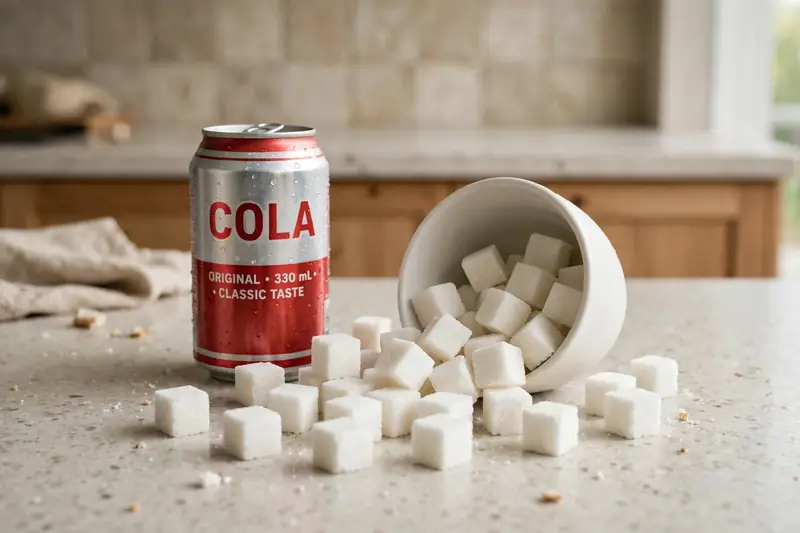
A 12-ounce can of cola carries about 39 grams of sugar and a real dose of caffeine. Dogs handle neither well. No, dogs should never drink soda. That answer covers every type: regular, diet, caffeine-free, and the energy drinks that share the same shelf. Caffeine overstimulates a dog’s nervous system, sugar delivers nothing but empty calories, and diet versions can hide xylitol, a sweetener that kills dogs in small amounts. Fresh water does everything a dog’s bowl needs to do.

Soda sits within licking range in most homes. Cans sweat on coffee tables, kids carry them room to room, and dogs investigate everything with their tongues. Most exposures are accidents, a knocked can or an unattended glass, rather than deliberate sharing. Knowing which ingredient makes which soda dangerous turns a panic into a plan, because the right response to spilled cola differs from the right response to spilled diet soda.
Can dogs drink soda? The direct answer
Dog owners ask this one hoping for a softer answer, and none exists. No, dogs should never drink soda, not even a small bowl as a treat. Caffeine overstimulates the canine nervous system, sugar piles on empty calories, and diet versions may hide xylitol, which can kill. Water remains the only drink a dog needs.
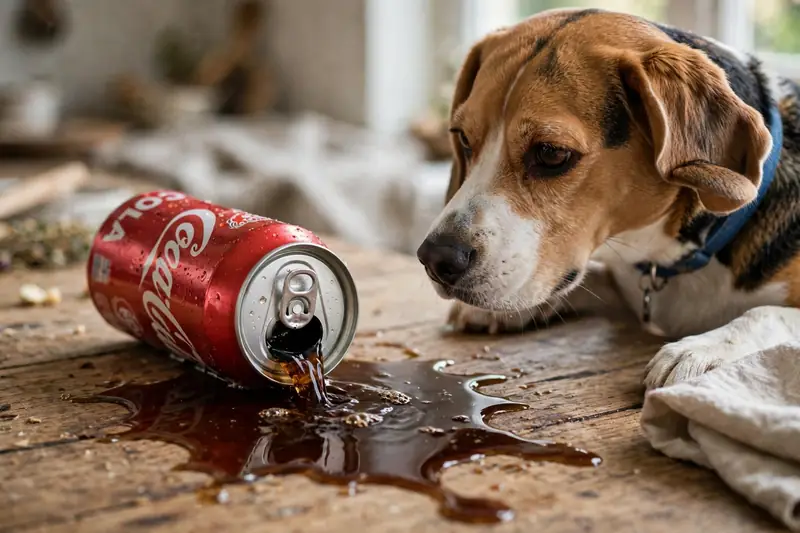
Veterinary sources agree without hedging. The ASPCA’s people foods to avoid list covers the dangerous ingredients soda contains, and vet-reviewed guides describe soft drinks as off-limits for dogs. A single lick rarely causes a crisis in a large dog, which is where the confusion starts. Owners see no reaction and assume the drink is fine. The danger is dose-dependent and ingredient-dependent, and the next section breaks down exactly which ingredient does what, so owners can judge a real spill instead of guessing.
Caffeine: the stimulant dogs cannot handle
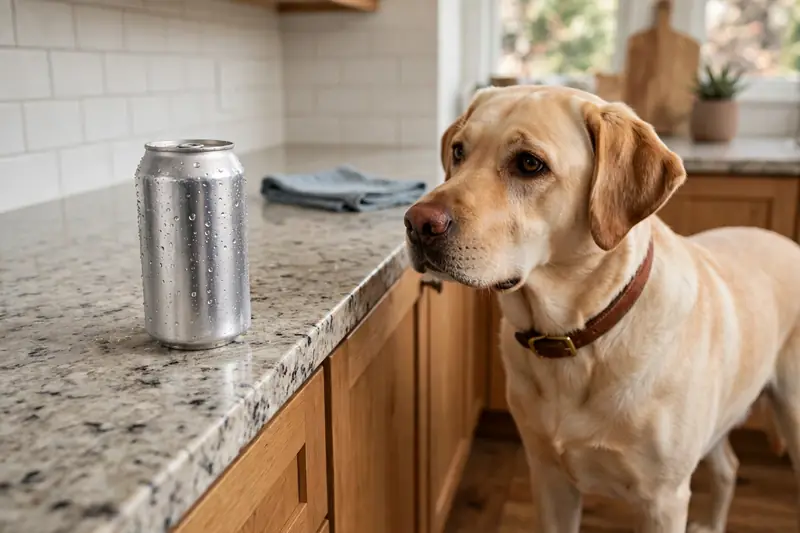
Caffeine hits dogs harder than people because canine livers clear it slowly. Caffeine is toxic to dogs, and poisoning can start at around 140 milligrams per kilogram of body weight. A cola’s caffeine adds up fast in a small dog. Restlessness, rapid heartbeat, vomiting, and tremors can appear within one to two hours of drinking.
Dogs metabolize caffeine at a fraction of the human rate, which lets the stimulant accumulate in the bloodstream, so the heart keeps racing and the body keeps heating long after a person would have come down. The heart races, body temperature climbs, and muscles twitch as the nervous system stays switched on. Tea carries the same risk through the same compound, and alcohol punishes dogs through a different pathway with equally serious results. Cola is not the strongest caffeine source in the house. Coffee and energy drinks hit harder per ounce. But cola is the one dogs encounter most often. It sits cold and sweet at nose height on the coffee table.
Xylitol: why diet soda is worse
Diet soda trades sugar for artificial sweeteners, and one of them is lethal to dogs. Xylitol, also sold as birch sugar, triggers a massive insulin release in dogs that crashes blood sugar within 30 minutes. Vomiting, weakness, seizures, and liver failure can follow. A few laps of diet soda can constitute an emergency.
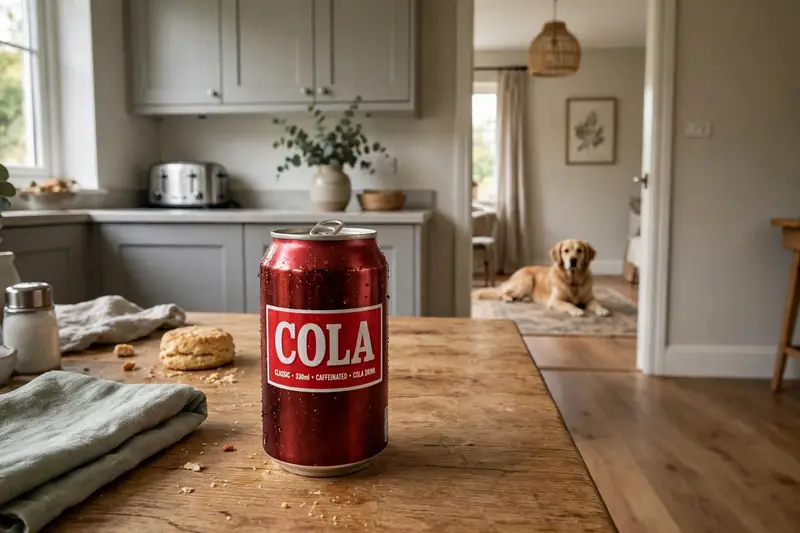
The mechanism is brutally fast. A dog’s pancreas mistakes xylitol for a huge sugar load and floods the blood with insulin. Blood sugar then collapses while the brain runs short of fuel, which is why a dog can go from wobbly to seizing in under an hour. PetMD’s xylitol poisoning guide notes that signs can start as early as 20 minutes after ingestion, and dogs that survive the initial crash still face liver damage over the following days. The Merck Veterinary Manual on xylitol documents the same progression in clinical terms. One or two pieces of xylitol-sweetened gum can poison a dog, which shows how little it takes. Diet soda is not a lighter choice. For dogs, it is the most dangerous can in the fridge.
How sugar and acidity wear dogs down
Regular soda attacks dogs through sugar and acidity even without caffeine. A 12-ounce can of cola carries about 39 grams of sugar, roughly 10 teaspoons, plus acids that erode tooth enamel. Carbonation adds bloating and gas. None of this poisons a dog outright, but the combination punishes the gut, the teeth, and the waistline.
Dogs have no nutritional need for sugar, and their bodies handle a sudden sugar flood poorly. Blood glucose spikes, the pancreas scrambles, and repeated exposure nudges dogs toward obesity and dental disease. Phosphoric and citric acids soften tooth enamel with every lap, and the carbonation ferments the problem into bloating and flatulence. These effects accumulate quietly. An owner who shares cola weekly will not see a crisis, just a heavier dog with worse teeth and a gassier gut. The damage is real even when it is slow, which is why “not poisonous” never meant “fine.”
Which sodas pose the biggest threat
Not every soda carries the same danger, and the differences matter in an emergency. Colas and energy drinks are the worst because they combine caffeine with sugar, while diet sodas add the xylitol risk on top. Caffeine-free lemon-lime sodas skip both poisons but still deliver a sugar flood no dog needs.

Coca-Cola sits at the top of the threat list: caffeine plus a full sugar load in every can. Pepsi and other colas match it closely. Energy drinks concentrate the caffeine further and add herbal stimulants, making them the most dangerous sip per ounce. Diet colas swap the sugar for sweeteners, and any brand using xylitol becomes an emergency in a can, because the dose that sweetens a drink for a person can poison a dog several times over. Lemon-lime sodas like Sprite contain neither caffeine nor xylitol, so they are not toxic in the poisoning sense, but their sugar content still rules them out as a treat. Plain sparkling water without sweeteners or flavorings is the only fizzy drink that does not harm dogs, and even it can cause gassiness.
Symptoms to watch after a dog drinks soda
The signs depend on which ingredient did the damage. Watch for restlessness, rapid breathing, vomiting, diarrhea, and tremors after caffeine, and for sudden weakness, wobbliness, or collapse after xylitol. Sugar-heavy sodas usually cause milder fallout: gassiness, loose stool, and a hyper spell followed by a crash.
Caffeine symptoms typically surface within one to two hours. The dog paces and pants, unable to settle, and the heart hammers under your hand. Severe cases progress to muscle tremors and seizures, with body temperature climbing to dangerous levels. Xylitol moves faster and quieter. Vomiting may be the only early sign before weakness and collapse arrive within the hour. Sugar-only exposures look almost boring by comparison: a gassy, bouncy dog with soft stool that resolves by the next day. Owners should note the time of exposure and the brand, because both details shape the vet’s advice. A symptom diary on the phone takes seconds and can change the treatment plan.
What to do right now if your dog drank soda
Speed matters more than panic. Read the label first for xylitol or birch sugar, then caffeine content, and call your vet with the brand name and the amount your dog drank. Do not induce vomiting unless the vet says so. For a xylitol-containing drink, treat it as an emergency and go now.
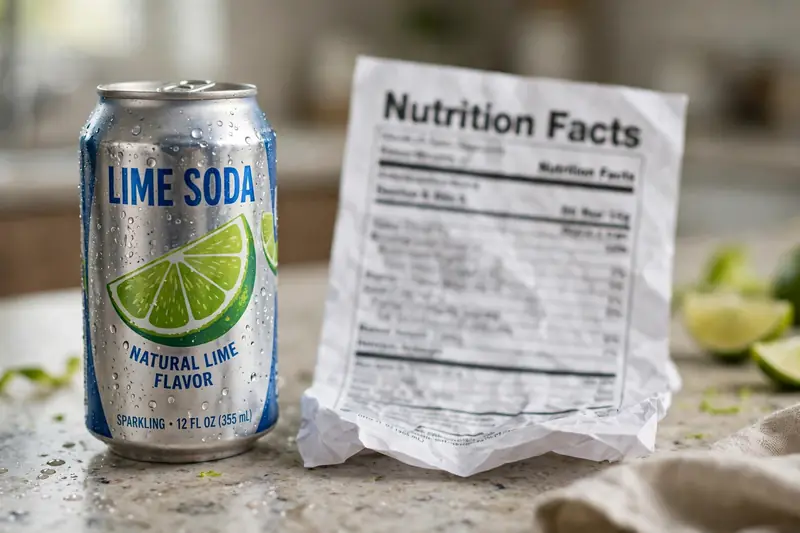
The label check comes first because it decides everything else. Xylitol hides under names like birch sugar, and some labels list it deep in the ingredients. Photograph the label if the print is small. Call the vet with three facts ready: the brand, the estimated amount, and the time of drinking. The vet may advise inducing vomiting at the clinic, administering activated charcoal, or starting IV fluids for caffeine cases, and each of those interventions works best when started before symptoms peak rather than after. For xylitol, expect instructions to come in immediately for blood sugar monitoring. Never induce vomiting at home on your own initiative. The wrong timing can cause more harm than the soda, especially if the dog is already wobbly or seizing.
Puppies and small dogs face higher risk
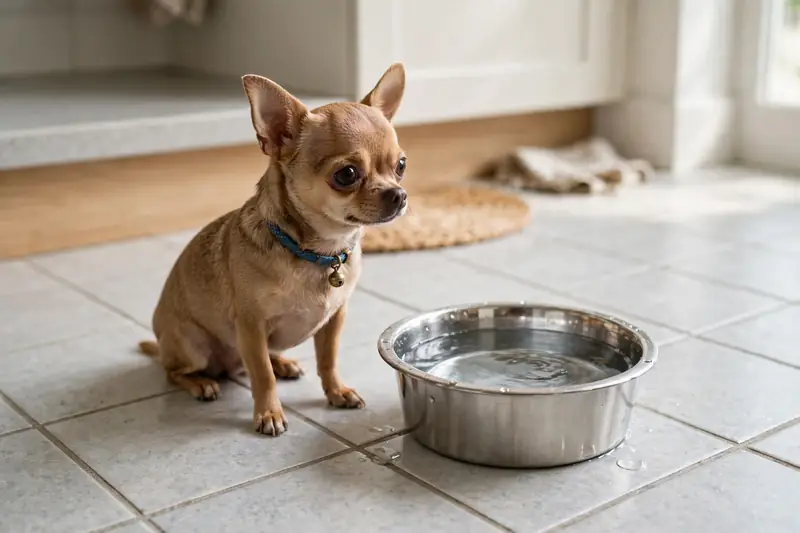
Body weight decides how dangerous a given sip becomes. A few laps of cola that a Labrador shrugs off can seriously harm a Chihuahua, because the caffeine dose per kilogram runs many times higher. Puppies add developing organs and faster dehydration to the equation. Small-dog owners should treat every soda spill as urgent.

The math is unforgiving. A 5-pound Chihuahua carries roughly one-fourteenth the body weight of a 70-pound Labrador, so the same three laps deliver fourteen times the caffeine per kilogram. Puppies under six months process toxins less efficiently than adults, and their small fluid reserves mean vomiting or diarrhea dehydrates them fast. Toy breeds also reach a dangerous xylitol dose from a smaller volume of diet soda. Owners of small dogs should keep the vet’s number and the poison control number on the fridge, because the margin between a scare and an emergency is thinnest for the littlest dogs.
Safe drinks to offer instead
Dogs do not need beverage variety, and most alternatives create new problems. Fresh water is the best and only daily drink a dog needs, with unflavored electrolyte drinks reserved for vet-guided rehydration. Coconut water and fruit juice add sugar or acidity, and flavored waters do the same without benefit. Keep the bowl simple.
The VCA’s feeding guidelines keep the message boring on purpose: fresh, clean water every day. Dogs that turn up their noses at plain water usually object to a dirty bowl rather than the water itself, and a bowl scrubbed with hot soapy water solves the refusal more often than any flavor additive. Wash the bowl daily and the problem often vanishes. For dogs recovering from vomiting or diarrhea, vets sometimes recommend small amounts of unflavored electrolyte solution, and the guide to safe drinks for dogs covers those situations in detail. Everything else in the beverage aisle, juice, flavored water, sports drinks, exists for people. The dog’s palate never asked for it.
When to call the vet
Some soda exposures can wait for observation, and some cannot. Call your vet immediately for any diet soda exposure, any tremors or seizures, repeated vomiting, or a small dog that drank a meaningful amount. A single lick of regular cola in a large dog usually needs only watching. When uncertain, the call is free and the regret is not.

Save two numbers before you need them: your vet’s clinic and the ASPCA poison control line. Diet soda exposures should never wait for symptoms, because xylitol damage progresses while the dog still looks normal. Caffeine cases need a call when the dog shows restlessness, rapid breathing, or tremors, or when a small dog drank more than a few laps. For mild sugar-only exposures, a bland diet for a day or two often settles the stomach. Document what happened while it is fresh. Those three details turn a worried call into an actionable one.
Frequently asked questions about dogs and soda
Owners usually ask about specific brands and small sips, plus caffeine-free options. The answers below cover the questions that come up most often.
Will one lick of soda hurt my dog?
A single lick of regular soda rarely harms a healthy large dog. The dose is too small to matter. The exception is diet soda with xylitol, where even a small amount deserves a vet call. Watch the dog for a few hours regardless.
Can dogs drink Sprite?
Sprite contains no caffeine and no xylitol, unlike cola. The sugar load still makes it a poor choice, and it offers the dog nothing. Water beats it in every way that matters.
Can dogs drink Coca-Cola?
Coca-Cola is one of the worst sodas a dog can get. It combines caffeine with about 39 grams of sugar per can. A dog that drinks a meaningful amount needs monitoring for caffeine symptoms, and a small dog needs a vet call.
How much soda is dangerous for a dog?
The answer depends on the dog’s weight and the soda’s ingredients. A large dog may tolerate a few laps of regular cola, while a few laps of diet soda with xylitol can endanger any dog. Caffeine poisoning starts around 140 milligrams per kilogram, so small dogs reach danger fast.
Can dogs drink caffeine-free soda?
Caffeine-free soda removes the stimulant risk but keeps the sugar and acids, along with the carbonation. It will not poison a dog outright, but it still upsets the stomach and rots teeth. Diet caffeine-free versions may contain xylitol, which brings back the emergency.
Is plain soda water safe for dogs?
Plain carbonated water with no sweeteners, flavorings, or caffeine is harmless to dogs, though the bubbles can cause gas. Seltzer is a different product from soda. The full breakdown lives in the sparkling water guide linked above.
Soda earns the clearest no in the beverage aisle. Caffeine punishes the nervous system, sugar rots teeth and packs on weight, and diet versions hide a sweetener that can kill. None of it belongs in a dog’s bowl, not as a treat and not as a joke. Fresh water covers every legitimate thirst a dog will ever have, and the safe drinks for dogs guide lists the few vet-approved exceptions for special situations.
Disclaimer: This article is general information, not veterinary advice. If your dog drinks soda containing xylitol or shows tremors, seizures, or collapse, contact your veterinarian or an emergency clinic immediately.



1 thought on “Can Dogs Drink Soda? Caffeine, Xylitol, and Real Risks”