A typical batch of homemade hummus contains one to three cloves of garlic. That is the whole verdict in one number, because garlic damages a dog’s red blood cells at doses far smaller than most owners expect. Dogs should not eat hummus, since virtually every recipe, homemade or store-bought, contains garlic. The chickpeas are innocent. Everything around them is not.

Can dogs eat hummus? The short answer
Hummus fails on its recipe, not its main ingredient. Dogs should not eat hummus because the garlic in it can damage their red blood cells, and no standard recipe leaves the garlic out. Even the tubs labeled plain or original contain garlic or garlic powder. There is no safe commercial version to hunt for.
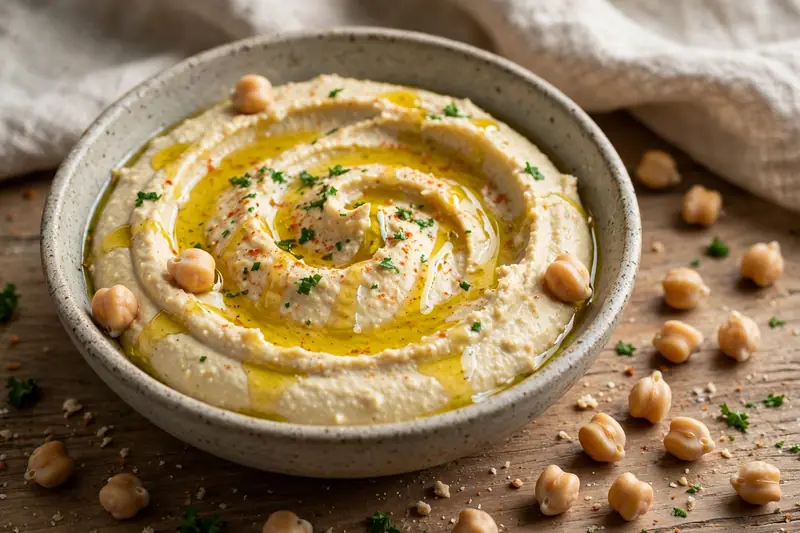
The confusion is natural. Chickpeas are safe for dogs, hummus is mostly chickpeas, so hummus should be safe.
The logic breaks on the remaining ingredients. Tahini and olive oil load the fat.
Lemon juice adds acid and salt adds sodium. Garlic is the toxin. PetMD’s guide to chickpeas for dogs draws the same line: plain cooked chickpeas are a fine treat, and hummus is not.
Keep the human foods that are safe for dogs list handy for dip situations. The safe dips for dogs are a short list, and it starts with mashed plain chickpeas, which is where this article ends up too.
Garlic: the smallest ingredient, the biggest problem
Garlic is the reason hummus is a no. Garlic damages a dog’s red blood cells through oxidative injury, and the damage can lead to hemolytic anemia days after the meal. All forms count. Raw and cooked both harm, and powdered garlic is the most concentrated.

The toxic threshold is lower than owners think. Veterinary toxicology puts the Heinz body anemia threshold around 5 grams of fresh garlic per kilogram of body weight, but individual sensitivity varies, and repeated small exposures add up. A tablespoon of hummus can deliver a meaningful fraction of that threshold in a small dog. Powdered garlic is more concentrated than fresh, which makes commercial hummus worse than the homemade kind on a per-spoon basis.
The delayed fuse is what makes garlic treacherous. Red blood cell damage takes days to show, with pale gums and weakness arriving first and dark urine following later.
The ASPCA’s garlic toxicity listing classifies it as toxic to dogs, and the garlic guide on this site covers the full picture. Onion travels with garlic in the same toxic family, and some hummus recipes include onion powder too. Veterinary toxicologists emphasize that the damage is cumulative, which means a dog that steals hummus from the counter twice a week can be in more danger than a dog that eats a single larger spoonful once, because the red blood cell injury stacks across exposures. Check how much onion is toxic if the label lists it.
Lemon juice and salt: the rest of the recipe
Garlic is the toxin, but the supporting cast is not innocent. Lemon juice upsets the stomach with citric acid. Salt strains the system with excess sodium. Tahini loads fat. None of them is safe in hummus quantities.
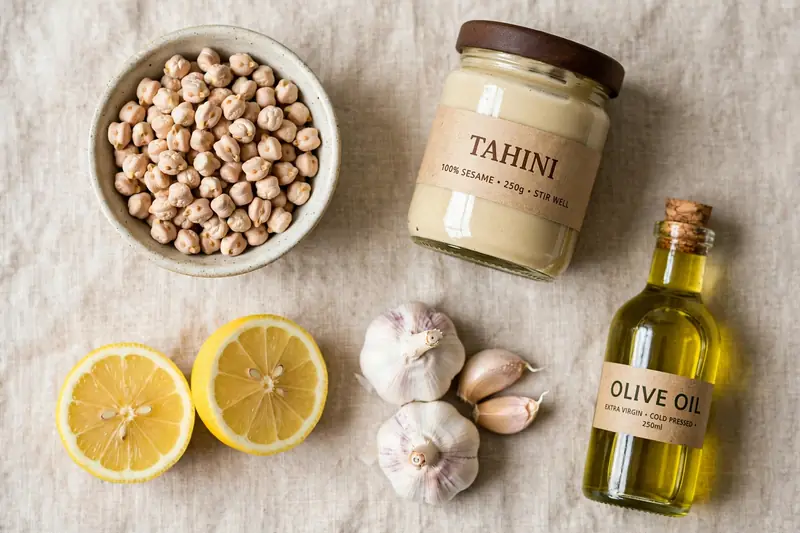
Lemon juice brings citric acid, which irritates a dog’s stomach lining and commonly causes vomiting or diarrhea.
Dogs do not need citrus, and the concentrated juice in hummus is far more than the trace in a stolen fruit slice. Salt is the quiet overload. Commercial hummus is a salty food by design, and the sodium in a few tablespoons is far beyond what a dog’s treat should carry. Small dogs are the most vulnerable, since the same spoonful is a larger dose per pound.
Tahini is sesame paste, and it is mostly fat.
A little fat is fine in a dog’s diet, but the tahini plus olive oil in hummus makes it a rich food that can trigger stomach upset or pancreatitis in sensitive dogs. Sesame allergy exists in dogs too, though it is uncommon. Olive oil on its own is not the villain here. The total fat load is.
Chickpeas are innocent: the ingredient that confuses everyone
Here is the twist the whole article turns on. Plain cooked chickpeas are safe and nutritious for dogs, and the hummus verdict has nothing to do with them. The chickpea is the only part of the recipe your dog can have.
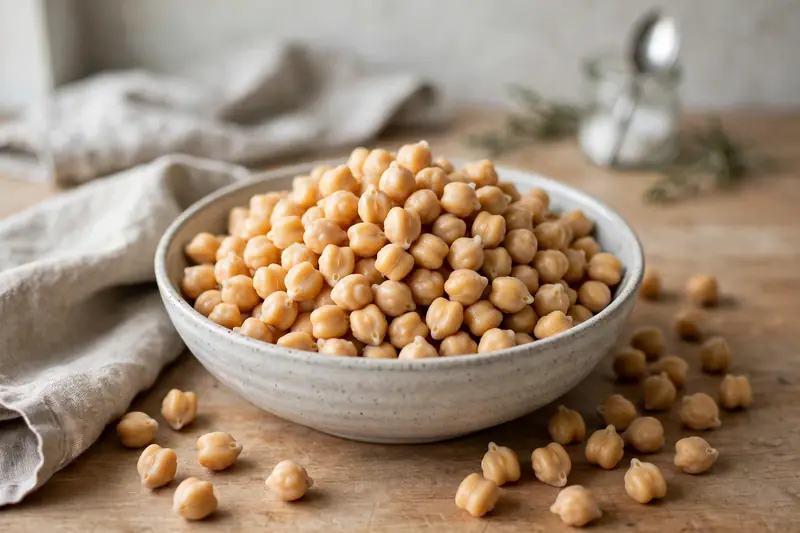
Cooked chickpeas bring plant protein and fiber plus iron and folate in a package most dogs digest well. A 100-gram serving of cooked chickpeas carries about 164 calories, 8.9 grams of protein, and 7.6 grams of fiber, which makes them more calorie-dense than most vegetable treats but still reasonable in small portions. The fiber supports digestion, though the fermentable kind in chickpeas also explains the gas.
Raw chickpeas are a different matter. Raw legumes contain lectins and trypsin inhibitors that interfere with digestion, and both are destroyed by thorough cooking. Never feed dried or undercooked chickpeas.
Canned chickpeas are already cooked, but they swim in salty liquid, so rinse them well or buy no-salt-added. The rule is simple: cooked plain, or not at all.
The FDA and legumes: what the DCM investigation actually says
Chickpeas carry baggage from a federal investigation, and it needs context. The FDA’s investigation linked grain-free diets heavy in legumes to heart disease in dogs, but the signal is about diets, not occasional chickpea treats. Conflating the two causes unnecessary fear.
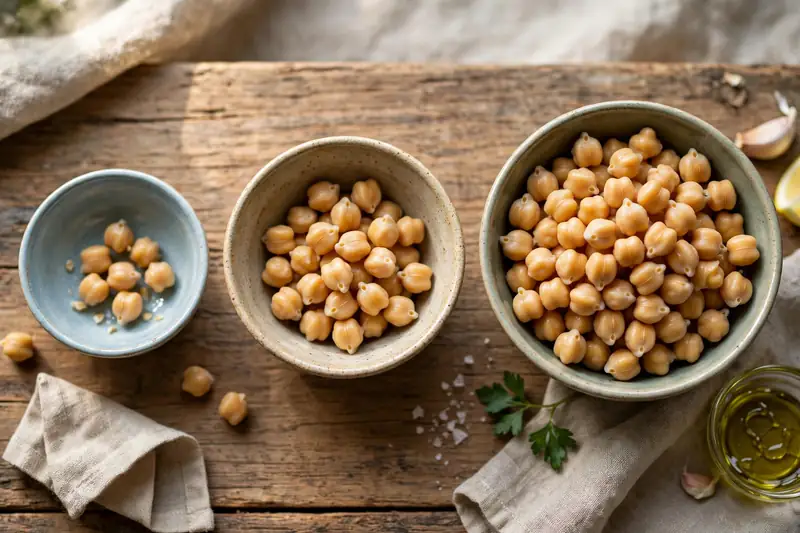
The timeline: in 2018 the FDA began investigating reports of dilated cardiomyopathy, a serious heart condition, in dogs eating grain-free diets. By mid-2019 the agency had logged over 500 cases, many in breeds not typically prone to DCM, like Golden Retrievers and Labradors. The common thread was diets where peas, lentils, chickpeas, or potatoes replaced grains as primary ingredients. The FDA’s investigation into grain-free diets and heart disease is still the reference document, and no definitive mechanism has been established.
The distinction matters. A diet built on chickpeas as a staple ingredient is the risk category the FDA flagged. A spoonful of plain cooked chickpeas as an occasional treat is not. Proposed mechanisms involve taurine pathways and mineral absorption, both of which operate at dietary scale, not treat scale.
If your dog’s main food is grain-free and legume-heavy, that conversation belongs with your vet. The treat bowl is not the problem.
How to serve plain chickpeas safely
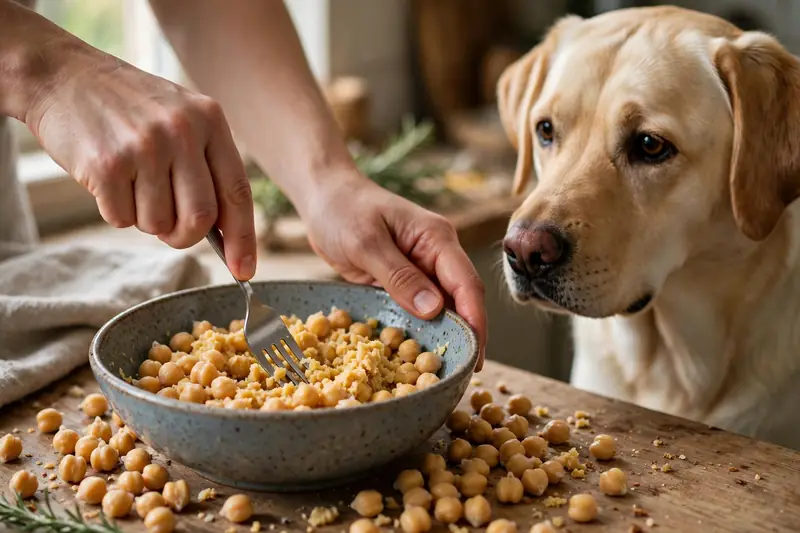
The safe swap is almost embarrassingly simple. Mash a spoonful of plain cooked chickpeas with a fork, and you have a dog-safe version of hummus with none of the risks. No garlic, no lemon, no salt, no oil. Just chickpeas.

Start with 5 to 10 chickpeas for any size dog and watch for 24 hours. Chickpea fiber ferments in the gut and produces gas in most dogs at first, and the gas usually eases as the gut adjusts over repeated small exposures. Introduce gradually, the same as any new food.
| Dog size | Safe amount | Frequency |
|---|---|---|
| Small (under 20 lbs) | 5 to 10 chickpeas | Once or twice a week |
| Medium (20 to 50 lbs) | 10 to 20 chickpeas | Twice a week at most |
| Large (over 50 lbs) | 20 to 40 chickpeas | Twice a week at most |
Mashing helps small dogs and gulpy eaters, since whole chickpeas are round and slippery. For canned chickpeas, rinse under running water for a good 30 seconds to wash off surface sodium, and check the label for garlic, onion, or spices before serving. Pumpkin puree mixed with mashed chickpeas makes a fiber-rich combo that most dogs find irresistible.
Spicy and flavored hummus: worse in every direction
If plain hummus is a no, the flavored versions are a harder no. Roasted red pepper and jalapeno versions add chili heat and extra spices on top of the garlic every hummus already contains. The base recipe does not change. The extras only add problems.
Chili peppers irritate the mouth and stomach lining, and a dog that eats spicy hummus gets a burning mouth and drooling, often followed by vomiting. Some varieties add onion powder alongside the garlic, doubling the allium load. Others add extra salt or preserved lemon, pushing the sodium higher. The “Mediterranean” or “za’atar” versions add herb blends whose individual ingredients are rarely listed in full, which means you cannot even assess the risk.
Chocolate dessert hummus deserves its own warning. It exists, it is marketed to people, and it combines the garlic-free base with cocoa, which brings theobromine back into the picture. A dog that eats chocolate hummus needs the chocolate protocol, not the garlic one. Read every label as if the flavor name is a warning, because it is.
What to do if your dog ate hummus
Stay calm and read the label. If your dog ate hummus, check the ingredient list for garlic and onion, note how much was eaten, and call your vet the same day. Garlic damage is delayed, so waiting for symptoms wastes the treatment window.

A single lick of hummus in a large dog is the lowest-concern scenario, and most vets will advise watching rather than rushing in. A few tablespoons in a small dog is a different conversation. Tell the vet the brand and flavor, with the approximate amount, since garlic content varies between recipes. Do not induce vomiting unless the vet tells you to.
Watch for the delayed signs over the following week: pale gums and weakness with lethargy and dark or reddish urine. These point to red blood cell damage and need prompt veterinary care. For the stomach upset that lemon and salt can cause within hours, a bland diet for a day or two usually settles things. The ASPCA’s people-foods guidance lists the ingredients that should never reach a dog’s bowl.
Puppies and dogs with heart conditions
Two groups deserve stricter rules. Puppies should never get hummus, and dogs with heart conditions should keep even plain chickpeas to a minimum unless the vet approves. The reasons differ, but the caution is the same. Both groups have less room for dietary experiments.

Puppies have developing digestive systems and smaller bodies,
which means the garlic dose per pound runs higher and the stomach handles rich food worse. A puppy’s complete food covers every need, and there is no nutritional argument for hummus at any age, let alone during growth. The mashed chickpea swap can wait until the dog is older.
Dogs with heart conditions sit under the FDA’s shadow. The DCM investigation never proved chickpeas cause heart disease, but a dog already managing a cardiac condition should not get extra legumes without veterinary input.
The vet knows the dog’s diet and the medications, plus the taurine status. A treat decision that is trivial for a healthy dog deserves a professional opinion for a cardiac one. When in doubt, the call costs nothing.
When to call the vet
Call your vet the same day if your dog ate hummus with garlic, especially a small dog or a large amount. Garlic poisoning has a delayed fuse, so the call happens now even though the symptoms arrive later. Early treatment beats late treatment by a wide margin.

The signs to watch over the following days: pale or yellowish gums, unusual tiredness and rapid breathing with dark urine. These indicate red blood cell damage and need prompt care. Do not try to treat suspected garlic poisoning at home. There is no home remedy for oxidative red blood cell injury.
Keep the hummus container for the vet visit. The ingredient list and the flavor name help the vet estimate the garlic load. And keep your vet’s number in your phone before the next party platter arrives, not during it.
Frequently asked questions about dogs and hummus
Owners usually ask about plain chickpeas and homemade versions, plus whether a lick matters. The answers below cover the questions that come up most.
Can dogs eat chickpeas?
Yes, plain cooked chickpeas are safe for dogs in moderation. They bring protein and fiber, with minerals alongside, and no toxic compounds. Rinse canned chickpeas well, skip raw ones, and keep portions small.
Can dogs eat homemade hummus without garlic?
A homemade chickpea mash without garlic, onion, lemon, salt, or oil is just mashed chickpeas, and that is safe. But that is not hummus anymore. Any recipe that still tastes like hummus contains the problem ingredients.
Can dogs eat tahini?
Tahini is not toxic, but it is very high in fat and offers nothing a dog needs. A tiny lick will not harm a dog, but there is no reason to serve it. Skip it.
Can dogs eat falafel?
No, falafel is unsafe. It is made from chickpeas but deep-fried and heavily seasoned with garlic and onion. Cumin and salt complete the problem.
Can dogs eat roasted chickpea snacks?
Only if they are plain and unsalted, with nothing else added, which store-bought versions rarely are. Most contain garlic powder, onion powder, or heavy salt. Check the label carefully, or roast your own plain at home.
My dog licked garlic hummus once. Should I worry?
A single lick in a medium or large dog is unlikely to cause harm. Watch for stomach upset over the next day and for pale gums or lethargy over the next week. Call your vet if your dog is small or if the lick was more of a scoop.
Hummus is the perfect example of a food that fails on everything except its main ingredient. The chickpeas are safe and nutritious, and easy to serve plain, and every other ingredient in the tub exists to make it tasty for people and risky for dogs. Mash the chickpeas, skip the garlic, and the dog gets the only part of hummus that was ever meant for sharing. The tub stays on your table, where it belongs.
Disclaimer: This article is for general information only and is not veterinary advice. Every dog is different, and dogs with health conditions or with puppies and nursing dogs may need different guidance. If your dog shows symptoms after eating hummus, contact your veterinarian.