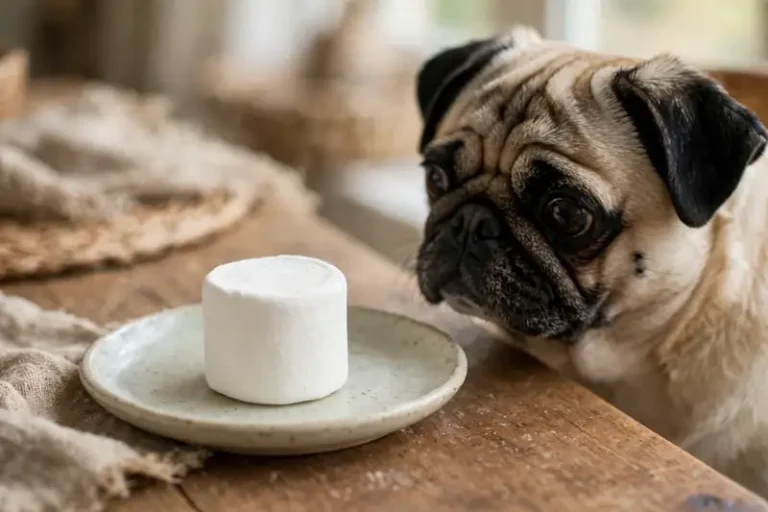
No, dogs should not eat ketchup. The tomato is the least of it. A standard squeeze carries onion and garlic powder that damage red blood cells, enough salt and sugar to strain a small body, and in sugar-free bottles, possibly xylitol, which can kill. A single lick off a fry rarely causes more than a thirsty hour, but ketchup earns no place as a shared snack.
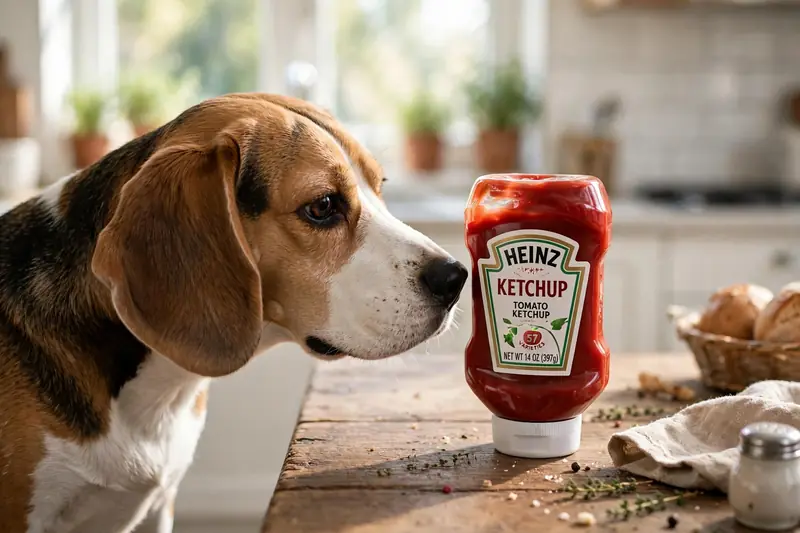
Can dogs eat ketchup?
Dogs should not eat ketchup. Most brands mix onion and garlic powder with heavy salt and sugar, a combination that offers dogs nothing and risks real harm in quantity. Sugar-free versions add the worst ingredient of all: xylitol, which can crash a dog’s blood sugar within an hour.
A lick is rarely an emergency, but sharing is never a good idea.

The confusion comes from the tomato. Ripe tomatoes are safe for dogs in small amounts, so owners reason that tomato-based ketchup must be fine too. The reasoning skips the manufacturing. Ketchup is more than blended tomatoes. It is a concentrated condiment built from tomato paste, vinegar, sweeteners, salt, and a spice blend, and the spice blend is where the danger lives.
Most ketchup incidents are anticlimactic. A dog licks a plate, drinks extra water, and moves on with its day. The dogs that get hurt are the ones that lap up a spilled puddle, the small ones that get a big squeeze, and any dog that finds a sugar-free bottle. The human foods dogs can eat list keeps condiments off for exactly this reason.
What is in a squeeze of ketchup
A standard ketchup lists tomato concentrate, distilled vinegar, high fructose corn syrup or sugar, salt, plus a proprietary spice blend. That last phrase does quiet heavy lifting. “Spices” or “natural flavors” on a label can legally include onion powder and garlic powder, and most major brands use one or both. The label will not always spell it out.

Tomato concentrate is the honest part. It is cooked-down ripe tomatoes, and on its own it would be a fine dog treat. Vinegar adds tang in amounts too small to matter. Then come the problems: sweeteners for the addictive sweet-sour balance, salt for preservation and punch, plus the spice blend for savory depth. Each addition serves human craving, and the dog pays for all of them.
Serving size puts it in perspective. A tablespoon of ketchup, one solid squeeze, carries around 150 to 190 milligrams of sodium and about 4 grams of sugar. For a 200-pound human those numbers vanish into the day. For a 15-pound dog, that single squeeze delivers a noticeable fraction of its daily sodium in ten seconds. Condiments are concentrated by design, which is why even small servings hit small dogs hard.
Onion and garlic powder: the biggest risk
Onion and garlic belong to the allium family, and all alliums are toxic to dogs. The toxic compounds, including thiosulfate, oxidize hemoglobin and destroy red blood cells, causing hemolytic anemia. Powdered forms are more concentrated than fresh, so the small amounts in a spice blend carry more weight than owners assume.
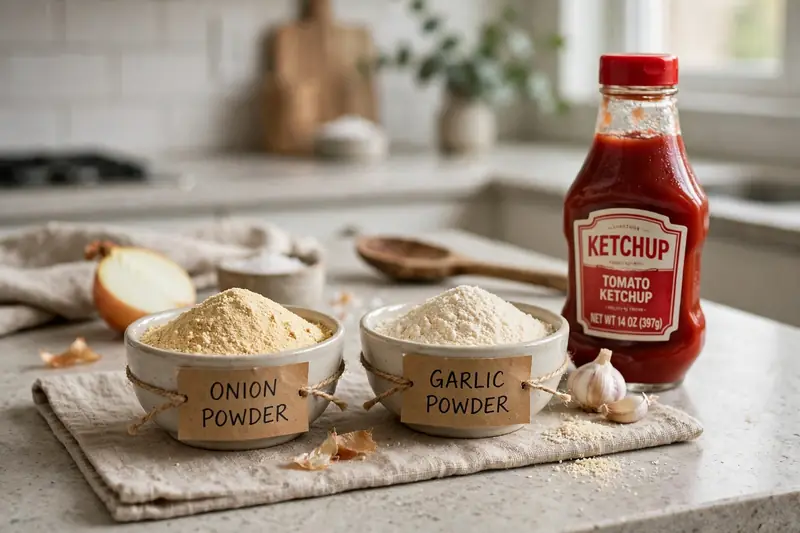
Anemia does not arrive all at once. A single lick of ketchup will not turn a dog’s gums pale by dinner. The damage accumulates with repetition, which makes ketchup a stealth contributor for dogs that regularly get seasoned table scraps. Onions damage canine red blood cells even in powdered form, and garlic carries the same toxicity at smaller doses than most owners realize. The ASPCA’s list of people foods to avoid names both.
Watch for the slow signs if your dog gets seasoned scraps often. Pale gums, unusual tiredness, rapid breathing after light exercise, and dark urine all point to red blood cell trouble. Owners tend to blame age or summer heat, and vets hear that story weekly. A dog that begs at every barbecue and scores ketchup regularly is dosing itself with small hematologic insults all season long.
Sugar, salt, and vinegar in every squeeze
Sugar is ketchup’s open secret. High fructose corn syrup usually sits near the top of the ingredient list, and a regular user can easily squeeze several teaspoons of sugar onto a plate without thinking. Dogs have no dietary need for added sugar, and regular doses push weight up, dental health down, and blood sugar around.
Diabetic dogs feel the swings hardest.
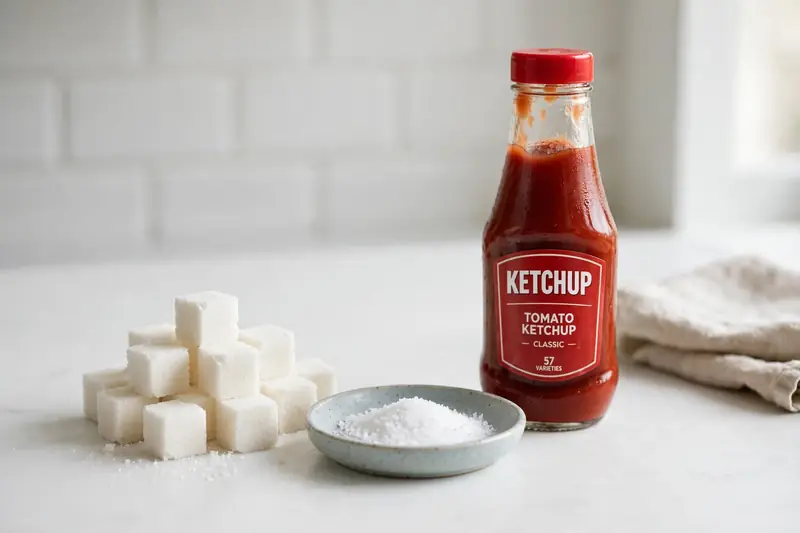
Salt runs second. Ketchup’s sodium load is moderate per squeeze but meaningful for small dogs, and it stacks with every other salty scrap of the day. A dog that gets ketchup, plus a corner of pizza crust, plus a training treat, can end the day far past its sodium budget without any single item looking guilty. The VCA’s general feeding guidelines keep treats near 10 percent of daily calories, a budget that condiment calories quietly raid.
Vinegar deserves a brief, honest note: distilled vinegar in ketchup amounts does not harm dogs, and some owners even use diluted apple cider vinegar for coat care. It is the one ingredient in the bottle that needs no warning. Mentioning it only to clear it: the tang is innocent, the company it keeps is not.
The xylitol trap in sugar-free ketchup
Sugar-free ketchup swaps the corn syrup for artificial sweeteners, and some brands reach for xylitol. That swap turns a mediocre condiment into a potential killer. Xylitol triggers a massive insulin release in dogs, crashing blood sugar within 10 to 60 minutes, and higher doses can cause liver failure over the following days.
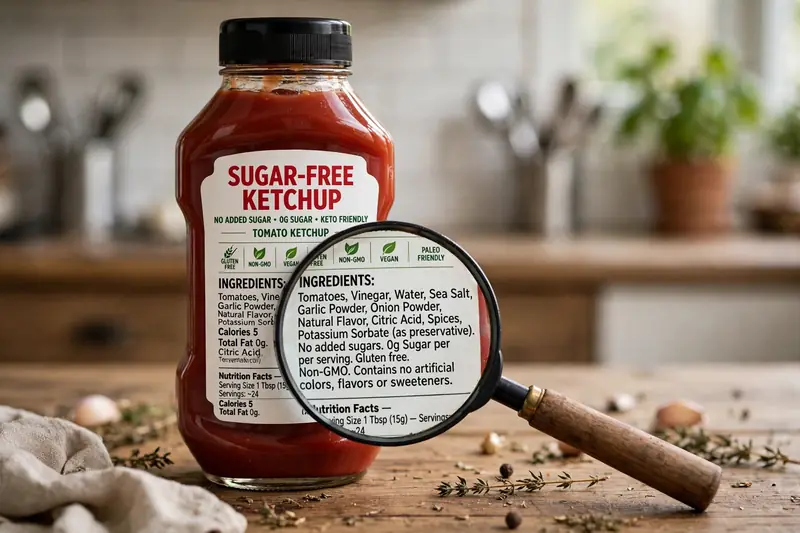
The dose math is unforgiving. Hypoglycemia can begin around 0.1 grams of xylitol per kilogram of body weight. A 10-pound dog crosses into danger territory with less than half a gram, an amount easily hiding in a few enthusiastic licks of a sweetened condiment. PetMD’s xylitol poisoning guide lists vomiting first, then weakness, stumbling, tremors, and seizures as blood sugar falls.
Label reading is the only defense, and it needs care. Xylitol also appears as birch sugar, wood sugar, or birch bark extract. “Sugar-free,” “no sugar added,” and “diet” on the front of the bottle are your cues to flip it over and read the fine print. If xylitol appears anywhere in the list, the bottle belongs on a high shelf or out of the house, not in the door of a fridge a counter-surfing dog can nose open.
What about the tomatoes themselves?
Ripe tomatoes are safe for dogs in small amounts, and this is the complicating fact that confuses owners. The fruit itself carries vitamins A and C, plus the antioxidant lycopene, with no canine toxicity. A cherry tomato stolen from a salad bowl is a non-event. Ketchup’s problem was never the tomato.

The green parts tell a different story. Tomato plants belong to the nightshade family. Their green parts contain solanine and tomatine, compounds toxic to dogs in quantity: stems, leaves, or unripe fruit. A dog that raids a vegetable garden and chews vines can develop drooling and stomach upset, with weakness in larger ingestions; very large amounts can disturb heart rhythm. Ketchup uses fully ripe fruit, so the bottle skips this risk. Garden owners should still know it.

The AKC’s fruit and vegetable guide draws the same line: ripe tomato flesh in moderation is fine; the green parts fail the test. That distinction also settles the homemade question. Plain tomato puree, cooked from ripe tomatoes with no salt, sugar, onion, or garlic, is a perfectly safe dog treat. The commercial bottle is what ruins a good fruit.
How much ketchup causes trouble
For regular ketchup, small amounts rarely cause acute harm. A lick or two off a plate is a watch-and-wait situation. The risk scales with amount and shrinks with dog size: a tablespoon matters little to an 80-pound lab and matters a lot to an 8-pound terrier.
Repetition is the real enemy, since the onion and garlic, plus the salt and sugar, accumulate their effects over weeks of shared fries.
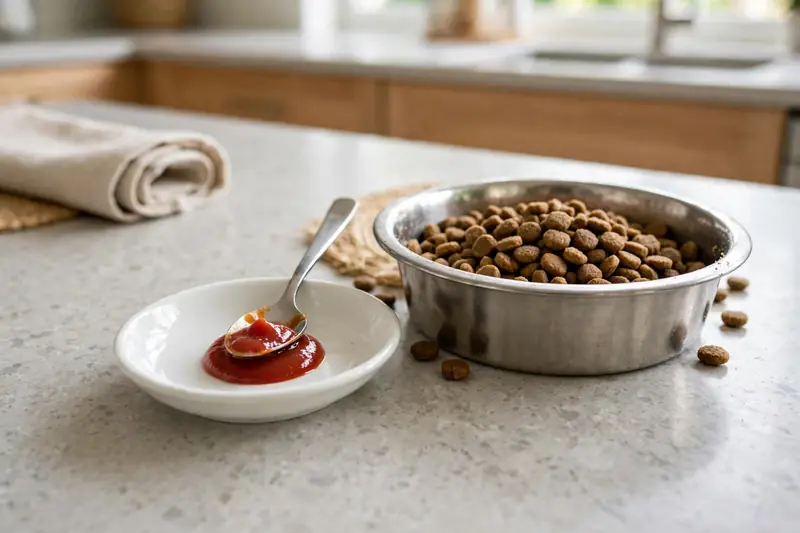
Sugar-free ketchup follows emergency rules instead: any confirmed xylitol ingestion means a vet call immediately, regardless of amount, because the toxic threshold is tiny and the clock is fast. Do not wait for symptoms. By the time weakness or stumbling appears, blood sugar has already crashed.
| Scenario | Risk level | Action |
|---|---|---|
| Lick of regular ketchup | Low | Watch, offer water |
| Tablespoon of regular ketchup | Low to moderate | Watch closely, more so for small dogs |
| Repeated sharing | Moderate | Stop the habit, watch for anemia signs |
| Any sugar-free with xylitol | Emergency | Vet or emergency clinic at once |
Dogs with existing conditions sit in a higher risk tier for even regular ketchup. Diabetic dogs react to the sugar load, dogs with kidney disease to the sodium, and dogs with any anemia to the allium powders. For these dogs, the “just a lick” calculus changes, and the vet’s guidance overrides general rules.
What to do if your dog gets into ketchup
Identify the bottle first. Regular or sugar-free is the question that decides everything, and the ingredient list answers it in seconds. Photograph the label. Note how much is missing and when the dog ate it. For xylitol cases, those facts let the vet estimate the dose and start treatment without delay.
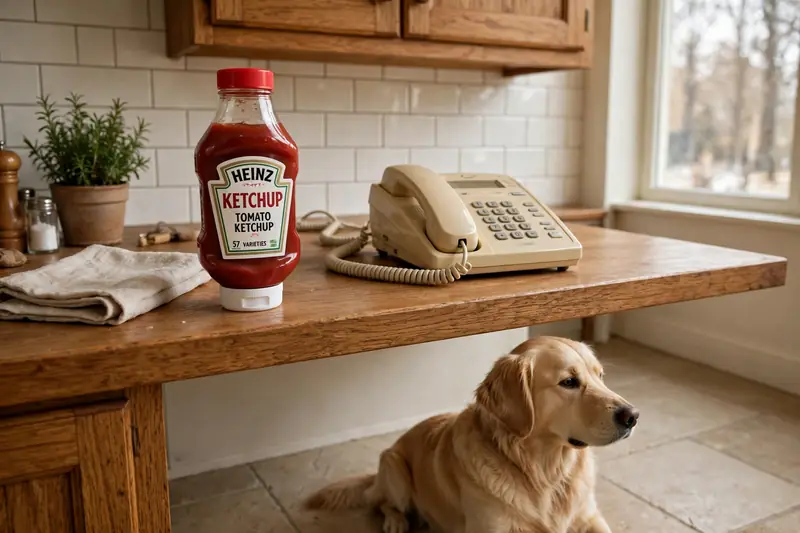
For regular ketchup, the home protocol is calm observation. Offer fresh water, keep the routine normal, and watch for vomiting or diarrhea over the next few hours. A bland diet for a day settles most mild stomach upsets. Call the vet if vomiting repeats, if the dog refuses water, or if a large amount disappeared into a small dog.
For sugar-free ketchup with xylitol, skip observation entirely. Call your veterinarian or an emergency clinic at once, even if the dog looks perfectly fine. Do not try to induce vomiting at home unless the vet specifically directs it. Bring the bottle so the clinic can work from the actual ingredient list rather than your memory of it.
Safe tomato alternatives worth trying
Plain tomato puree is the simplest swap. Cook ripe tomatoes down with nothing added: no salt, no sugar, no onion, no garlic. You get a dog-safe red sauce with real lycopene behind it. A spoonful over kibble adds aroma and moisture that picky eaters notice.
It keeps in the fridge for four to five days in a sealed container.

Fresh tomato pieces work too. A few cherry tomatoes, halved for small dogs, make a hydrating summer treat with almost no calories. Some dogs love the juicy pop; others sniff and walk away, which is a normal reaction to a new food, not a verdict. Offer once, and try again another day before deciding.
For the savory depth ketchup provides, low-sodium bone broth made without onion or garlic does the job better. A spoonful over food adds the umami aroma dogs actually crave, since dogs experience flavor mostly through smell. Pumpkin puree is another easy win: fiber and mild sweetness in a texture most dogs accept instantly. The tomato guide covers which tomato forms are safe in more detail.
Frequently asked questions about ketchup and dogs
Owners ask about licks, fries, sugar-free bottles, and homemade versions. The six answers below cover the questions that come up most often, with practical steps for each situation. Start with the lick question, since that is the one most owners actually face.
My dog licked ketchup off my plate. Is that bad?
A single lick of regular ketchup is rarely a problem. Offer water and watch for mild stomach upset over the next few hours. Make it a habit, though, and the salt and sugar, plus the allium load, start adding up.
Can dogs eat french fries with ketchup?
Neither part is a good idea. Fries add deep-fried fat and salt to ketchup’s own problems. A stolen fry will not ruin a healthy dog, but fries with ketchup should never be a shared snack.
Is sugar-free ketchup safe for dogs?
Sugar-free ketchup is the riskiest kind. Some brands contain xylitol, which is extremely toxic to dogs even in small amounts. Check the ingredient list for xylitol, birch sugar, or wood sugar, and call your vet immediately if your dog ate any.
Can dogs eat homemade ketchup?
It depends on the recipe. Ketchup made from ripe tomatoes with no onion, garlic, added salt, or sweeteners is safe in small amounts. Most homemade recipes still include onion or sugar, so check before sharing.
Can dogs eat tomato sauce or pizza sauce?
Plain tomato sauce with no onion or garlic is fine in small amounts. Commercial pizza and pasta sauces almost always contain onion, garlic, or both, plus heavy salt. Read the label or skip it.
What should I do if my dog ate a lot of ketchup?
Estimate the amount and check whether it was sugar-free. For a large amount of regular ketchup in a small dog, call your vet for guidance. For any amount of xylitol-containing ketchup, go to the vet or emergency clinic immediately.
Ketchup stays a people condiment. The onion and garlic powders, the salt and sugar load, and the xylitol risk in sugar-free bottles stack into a squeeze with no upside for dogs. Share a cherry tomato instead, or a spoonful of plain puree, and keep the bottle for the humans.
Disclaimer: This article is for general information only and is not veterinary advice. Every dog is different, and dogs with health conditions, puppies, and nursing dogs may need different guidance. If your dog shows symptoms after eating ketchup, contact your veterinarian promptly.