Your dog is staring at the wobbling red cup in your hand. The direct answer comes in two parts, because jello and gelatin are not the same thing. Unflavored gelatin is safe for dogs in small amounts. Store-bought Jell-O, the sweetened kind, is not something to share, and the sugar-free versions can turn deadly. The difference between the two decides everything.

Can dogs eat jello?
Dogs should not eat store-bought Jell-O, though plain gelatin is safe. Regular Jell-O packs sugar and artificial colors with no benefit for dogs. Sugar-free versions are the real hazard, since many contain xylitol, a sweetener that can crash a dog’s blood sugar within an hour. Plain unflavored gelatin, by contrast, is just protein.

The confusion is understandable. Jello looks like hospital food: simple and gentle. For dogs, though, the cup is mostly sugar water held together by a little protein, plus a chemistry set of additives. A single lick of the regular kind rarely causes more than mild stomach upset. The sugar-free cup is where a casual share turns into an emergency vet visit, so labels matter more than the wobble.
If your dog already tasted a regular cup, watch for soft stool or mild vomiting. If it came from a sugar-free cup, check the ingredient list for xylitol immediately and call your vet. The human foods dogs can eat list sticks to whole foods for exactly this reason: packaged desserts hide too many surprises.
What sits inside a cup of Jell-O
A standard cup of prepared Jell-O contains gelatin, sugar, adipic acid, artificial flavors, and artificial colors like Red 40. Gelatin is the smallest concern on that list: a protein made from animal collagen, the same structural protein in skin and bones, which dogs digest without trouble. Everything around the gelatin is the problem.
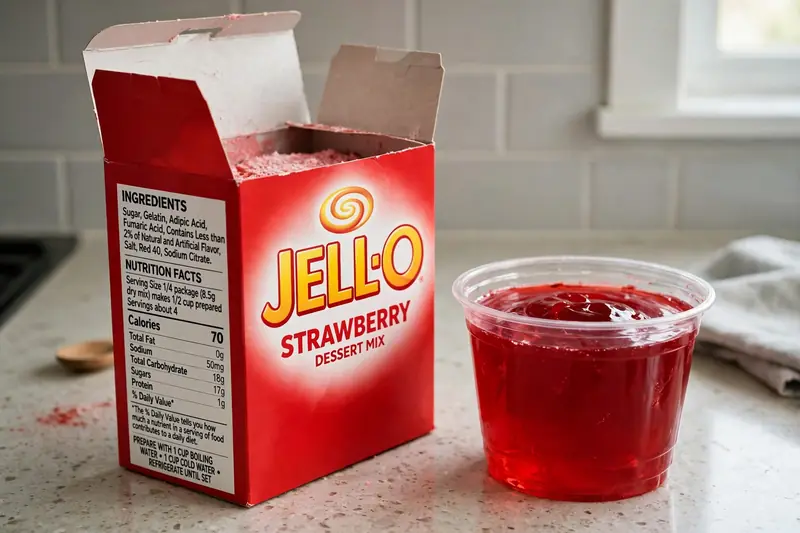
Sugar leads the concerns for the regular version: a prepared cup carries roughly 15 grams of sugar per 100 grams, a heavy load for an animal with no dietary need for added sugar. Occasional sugar will not poison a dog the way xylitol does. It still feeds weight gain and dental decay, plus blood sugar swings in sensitive dogs. Dogs with diabetes or weight problems feel those effects fastest.
The colors and flavorings earn their own mention. Artificial dyes like Red 40 and Yellow 5 exist to make the cup look like fruit, and they offer nothing a dog’s body can use. Some dogs with sensitivities react to artificial colors with itchy skin or digestive upset, though reactions vary widely. Citric and adipic acids add tartness. In lick-sized amounts they rarely cause trouble, but they underline the point: this cup was engineered for human taste buds, not canine stomachs.
The xylitol danger hiding in sugar-free cups
Xylitol is the ingredient that turns jello from a poor treat into a potential killer. Manufacturers use it in sugar-free and “diet” gelatin desserts because it tastes sweet with fewer calories. Dogs process it catastrophically differently, and that difference is what makes it deadly. In humans, xylitol barely nudges insulin.
In dogs, it triggers a massive insulin release that drags blood sugar down to life-threatening levels, sometimes within 30 minutes.

The dose numbers are sobering. Hypoglycemia can begin at around 0.1 grams per kilogram, putting a 10-pound dog in danger from less than half a gram, and PetMD notes that one or two pieces of sugar-free gum can be enough to poison a dog. The FDA’s Center for Veterinary Medicine has received multiple reports of dogs poisoned by xylitol, many involving sugar-free gum discovered in purses and bags. Liver injury appears at higher doses, around 0.5 grams per kilogram, and liver failure can develop over several days even in dogs that survive the initial crash. A single sugar-free cup can easily clear those thresholds for a small dog.
Xylitol hides under alias names. Birch sugar, wood sugar, and birch bark extract are all xylitol, which is why label reading needs real care.

The FDA’s “Paws Off Xylitol” guide warns that the sweetener appears in sugar-free foods, dental products, and even some peanut butters. The FDA’s xylitol warning for dog owners puts the timeline plainly: signs can start within 10 to 60 minutes, and some dogs need hospital monitoring for a full day.
Sugar, dyes, and the slow harm of regular Jell-O
Regular Jell-O will not send a healthy dog to the emergency clinic, but it earns its place off the menu through slower damage. Sugar is the main offender. Dogs did not evolve eating concentrated sweets, and regular sugary treats push weight up and dental health down.
A dog that gets sweet table scraps often tends to beg more, eat its balanced food less eagerly, and gain weight around the middle where it strains joints.

Dental decay deserves a callout because owners underestimate it. Sugar feeds plaque-forming bacteria, and dogs cannot brush after dessert. Veterinary dentists pull rotten teeth from dogs every day, and sugary human treats contribute. A wobbling cup of sugar hardly looks like a dental hazard. The sugar does its damage regardless of shape.
Artificial colors round out the case against the regular cup: Red 40, the dye behind that cherry glow, has no nutritional role and some dogs react to it. Evidence for dye sensitivity in dogs is thin on both sides, so treat that claim cautiously. What is certain is that the colors add risk without adding anything useful, which is enough reason to skip them when plain alternatives exist.
Plain gelatin is a different food entirely
Strip away the sugar, dyes, and flavorings and the remaining gelatin is safe for dogs, full stop. Gelatin is cooked collagen, a simple animal protein. Dogs digest it easily, and it carries none of the hazards of the flavored cup. This is the complicating fact that most quick answers miss: the wobble itself was never the problem.

Pet supplement makers have noticed. Collagen and gelatin powders marketed for dogs promise joint, skin, and coat support, trading on the amino acids glycine and proline that collagen provides. The honest version of that claim is modest. Gelatin is a protein with a reasonable amino acid profile, not a joint drug. It is no joint treatment. Gelatin will not rebuild cartilage, but as a small part of a balanced diet it is harmless and mildly useful. Keep expectations at the level of a decent protein snack, not a therapy.
Preparation is simple. Dissolve plain, unflavored gelatin in warm water or low-sodium bone broth, let it set in the fridge, and cut it into small cubes. Skip every additive: no sugar, no honey, no artificial sweetener, no food coloring. The result looks like Jell-O, wobbles like Jell-O, and contains nothing a dog should avoid. Mixed into regular food, a spoonful of plain gelatin disappears without a fuss.
How much Jell-O spells trouble
The answer depends entirely on which cup the dog reached. A lick or two of regular sugary Jell-O is a watch-and-wait situation for a healthy adult dog. Expect possible mild vomiting or loose stool within a few hours. Offer water and skip the next treat.
The sugar load of a full cup is a bigger deal for small dogs and diabetic dogs, who can show real blood sugar swings from the same amount a large dog shrugs off.
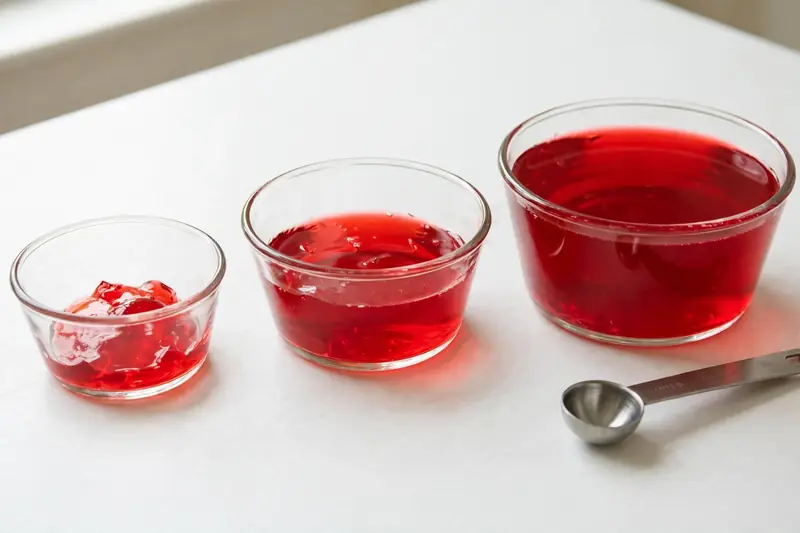
Sugar-free Jell-O follows different rules. Any amount deserves a label check first and a vet call second, because xylitol acts fast and the safe dose is tiny. Do not wait for symptoms to decide. By the time a dog shows weakness or stumbling, blood sugar has already crashed, and treatment gets harder with every passing minute. The Pet Poison Helpline’s xylitol page is the reference vets reach for in these cases.
| Scenario | Risk level | Action |
|---|---|---|
| Lick of regular Jell-O | Low | Watch for mild stomach upset |
| Full cup of regular Jell-O | Moderate | Watch closely, call vet for small or diabetic dogs |
| Any sugar-free Jell-O | High | Check label for xylitol, call vet immediately |
| Xylitol confirmed | Emergency | Vet or emergency clinic at once |
Plain gelatin has no such drama. A spoonful of the homemade kind mixed into food is safe for most dogs. The 10 percent treat rule still applies, since calories are calories, but there is no toxicity curve to worry about.
What to do if your dog eats Jell-O
Start with the package. Regular or sugar-free is the first question, and the ingredient list answers it. Photograph the label, since the exact product name and sweetener list help the vet judge risk in seconds. Note how much is missing and when the dog ate it.
Xylitol cases are time-critical, and owners who call with facts get faster treatment plans than owners who call with panic.

For regular Jell-O, the home protocol is calm watching. Offer water, keep the dog’s routine normal, and expect possible vomiting or diarrhea within a few hours. A bland diet for a day settles most mild stomach upsets. Call the vet if vomiting repeats, if the dog refuses water, or if a diabetic dog ate a full cup.
For sugar-free Jell-O, skip the watching phase. Call your veterinarian or an emergency clinic immediately, even if the dog looks fine. PetMD’s guide to xylitol poisoning in dogs notes that signs can begin as early as 20 minutes, with vomiting usually first, followed by weakness, tremors, and seizures as blood sugar falls. Do not induce vomiting at home unless the vet directs it. Bring the package so the clinic can estimate the xylitol dose from the ingredient list.
Safe homemade gelatin treats your dog can enjoy
Homemade gelatin treats give dogs the wobble without the risk. Start with plain, unflavored gelatin powder and dissolve it in warm low-sodium bone broth instead of water. The broth adds a meaty aroma dogs find irresistible, and the finished cubes double as a hydrating summer snack.
Pour into silicone molds or a shallow dish, refrigerate until set, and cut into bite-size pieces.

Dog-safe fruit mix-ins give the treats real nutrition. Blueberries dogs can eat bring antioxidants in a package most dogs love, and small apple pieces add crunch, with seeds and core removed. Freeze the cubes for a longer-lasting chew on hot days, since a frozen cube melts slowly and keeps a bored dog occupied far longer than a room-temperature treat.
Know the fruit blacklist before experimenting. Grapes can cause kidney failure in dogs and should never go near homemade treats, gelatin or otherwise. The ASPCA’s list of people foods to avoid covers the broader list of kitchen hazards worth checking before any recipe. Keep finished treats in a sealed container in the fridge for up to five days, and discard anything that smells off, the same standard as your own leftovers.
Puppies, seniors, and diabetic dogs
Puppies handle gelatin the way they handle most new foods: cautiously and in tiny amounts. Plain gelatin cubes are safe for puppies past weaning, but keep pieces pea-size, since young dogs gulp. Skip flavored Jell-O entirely for puppies, whose small bodies concentrate both sugar and hidden xylitol.
Blood sugar regulation is also less stable in young dogs than in adults, which raises the stakes of any sugary or xylitol-containing cup.

Diabetic dogs sit in the highest risk group for regular Jell-O. A sugary cup can spike blood glucose sharply, and the resulting swing complicates insulin management for days. Owners of diabetic dogs should treat all flavored gelatin as off-limits and stick to plain gelatin made with water or broth. When in doubt, the vet managing the diabetes gets a call before any new treat, not after.
Senior dogs usually do fine with plain gelatin and may even enjoy the soft texture if dental problems make chewing hard. The caution for seniors is the sugar-free trap: older dogs often live with owners who buy sugar-free products for their own health, which puts xylitol-laden cups within nose reach. Store sugar-free desserts out of a counter-surfing senior’s reach, like medications.
Frequently asked questions about jello and dogs
Owners ask about sugar-free cups, plain gelatin powder, and what to do after a stolen taste. The six answers below cover the questions that come up most often, with clear action steps. Start with the sugar-free question, since that one is time-critical.
Can dogs eat sugar-free jello?
Sugar-free jello is the most dangerous kind. It often contains xylitol, which can cause life-threatening low blood sugar and liver failure in dogs. Even a small amount can be an emergency. Check the label and call your vet immediately if xylitol is listed.
Is plain gelatin powder safe for dogs?
Yes, in small amounts. Plain, unflavored gelatin is a simple animal protein with no toxic ingredients. Dissolve it in water or low-sodium broth and serve it set, with no added sweeteners or colors.
My dog licked regular Jell-O. Should I worry?
A lick or two of regular sugary Jell-O rarely causes more than mild stomach upset in a healthy dog. Watch for vomiting or loose stool over the next few hours. Call your vet if symptoms repeat or your dog is diabetic.
Can dogs eat jello with fruit in it?
It depends on the fruit. Plain gelatin with blueberries or apple pieces is fine. Never use grapes or raisins, which can cause kidney failure, and skip canned fruit in heavy syrup.
Does jello help a dog’s joints?
Plain gelatin provides collagen protein, but it is no joint treatment. It will not rebuild cartilage or replace joint supplements. Think of it as a mildly useful protein snack and keep expectations modest.
What are the signs of xylitol poisoning?
Vomiting usually comes first, sometimes within 20 to 30 minutes. Weakness, stumbling, tremors, and seizures follow as blood sugar crashes. Later signs can include jaundice and bleeding as the liver fails. Any of these signs after a sugar-free product means an emergency clinic visit, since blood sugar can fall again after initial treatment and the liver needs days of monitoring. If your dog seems dehydrated during recovery, ask your vet about electrolytes for dogs rather than improvising.
Store-bought Jell-O stays off the menu, and sugar-free cups stay out of reach. Plain gelatin is the safe version of the wobble: same fun texture, none of the risk. A batch made with broth and blueberries beats the cup for any dog.
Disclaimer: This article is for general information only and is not veterinary advice. Every dog is different, and dogs with health conditions, puppies, and nursing dogs may need different guidance. If your dog shows symptoms after eating jello, contact your veterinarian promptly.