Candy corn shows up twice a year in most houses, at Halloween and again at Thanksgiving, and both times it lands within nose range of curious dogs. The kernels look like tiny harmless treats. They are not treats at all. Candy corn is almost pure sugar and corn syrup with artificial colors, and while one piece will not poison a dog, the candy earns its no through stomach upset, pancreatitis risk in big binges, dangerous wrappers, and one variant that can kill: the sugar-free kind.

Is candy corn safe for dogs? The direct answer
No, dogs should not eat candy corn. Unlike chocolate, standard candy corn is not poisonous, but its sugar load causes vomiting, gas, bloating, and diarrhea, and a large binge can trigger pancreatitis. Sugar-free versions may contain xylitol, which can kill a dog. No type belongs in a dog’s diet, on Halloween, Thanksgiving, or any other day.
The Pet Poison Helpline’s candy corn guide draws the same line: standard candy corn brings stomach trouble, sugar-free versions bring a poisoning emergency. If your dog got into the candy bowl, the first job is checking the label, which is covered step by step below.
What candy corn is actually made of
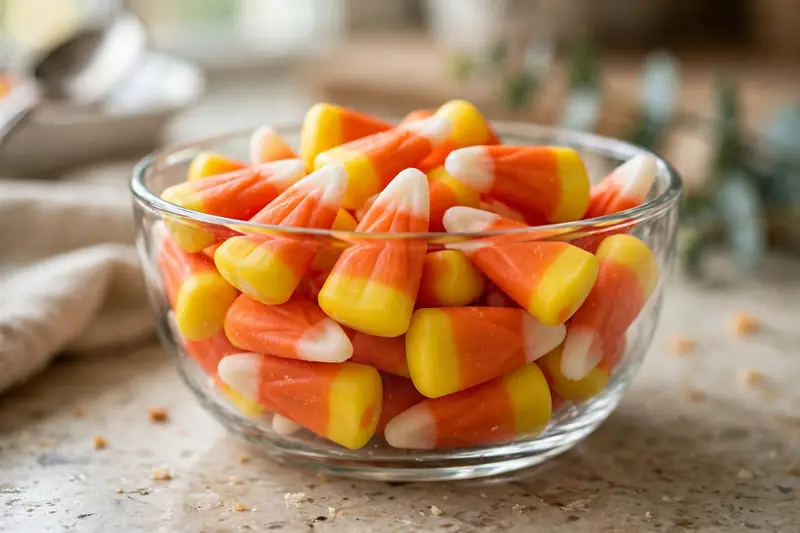
Classic candy corn contains sugar, corn syrup, confectioner’s glaze, artificial flavoring, and food coloring. That is the whole recipe: no chocolate, no nuts, no fruit, no nutrition. Each kernel is a concentrated packet of fast sugar with dye, which is why the effects on dogs are metabolic: blood sugar spikes, gut fermentation, gas, and loose stool.

Dogs did not evolve to process refined sugar, and their gut bacteria react to a sugar flood the way yours would after an entire candy bowl: badly. The PetMD’s guide to dangerous Halloween candies notes that high-sugar treats can severely disrupt a dog’s digestive tract, with significant abdominal discomfort, gas, bloating, and diarrhea. In sensitive dogs, that intestinal inflammation can spread to the pancreas, which is where a sugar binge turns into a medical emergency.
Sugar-free candy corn: the xylitol emergency
Sugar-free candy corn may contain xylitol, a sweetener that is extremely toxic to dogs. Xylitol triggers a massive insulin release that can crash a dog’s blood sugar within 10 to 15 minutes, and it can also cause acute liver failure. Even small amounts can be deadly. Symptoms demand an immediate vet visit, not watchful waiting.

Read the Pet Poison Helpline’s xylitol page and memorize the aliases, because xylitol hides under several names on labels. Standard candy corn from major brands does not contain xylitol, which is the good news. The bad news is that “sugar-free,” “low-sugar,” and “diet” versions exist, and a dog cannot tell the difference. If your dog ate candy corn and you cannot find the bag, treat it as a possible xylitol exposure and call for help immediately.
At the clinic, xylitol treatment moves fast. The vet may induce vomiting if the ingestion was very recent, then monitor blood sugar closely and give IV dextrose to counter the insulin surge. Liver values get checked over the next 24 to 72 hours, since liver damage can develop after the blood sugar stabilizes. Dogs that reach care quickly have far better odds, which is why the call matters more than anything you do at home. Do not try to treat xylitol exposure with food or rest. It needs a vet, and it needs one now.
How much candy corn is a real problem
A single fallen kernel is unlikely to cause a medical crisis in a medium or large dog. PetMD notes that less than 2 teaspoons of high-sugar candy is likely safe for a medium to large breed. Those numbers describe stomach upset risk, not safety. They do not make candy corn a treat.
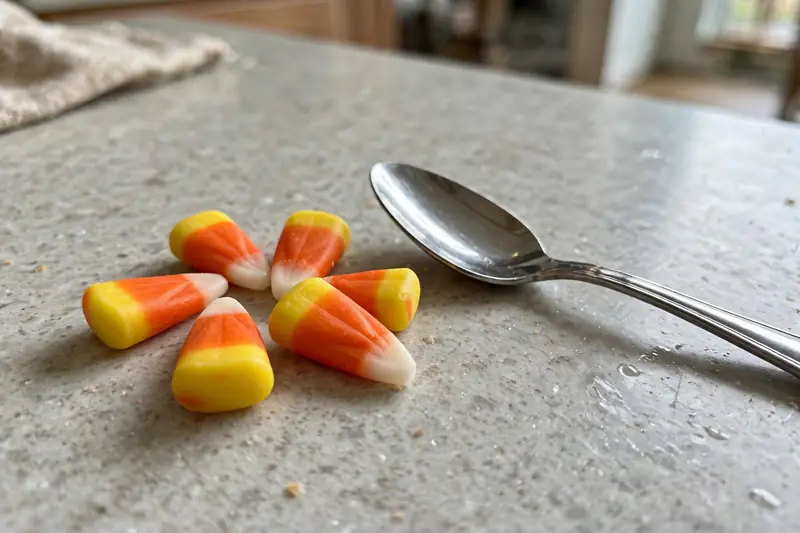
The math changes fast with body weight. A Labrador that steals five pieces faces a different outcome than a Chihuahua that eats the same five. It also changes with the dog: diabetic dogs, dogs with pancreatitis history, and dogs with sensitive stomachs react to smaller amounts.
One practical threshold comes from veterinary emergency sources: around half an ounce of high-sugar candy can upset a small dog’s stomach, while medium and large dogs tolerate a couple of teaspoons before trouble starts. These are upset-stomach numbers, not permission slips. And xylitol rewrites the math completely. With sugar-free candy, there is no safe amount, and the question is not how much but how fast you can reach a vet.
Chocolate candy corn and seasonal variants
Candy corn comes in more flavors than the classic tri-color kernel. Chocolate, caramel, pumpkin spice, and “Indian corn” variants share the same sugar base with different flavorings. Chocolate versions deserve extra caution because real chocolate contains theobromine. They sit closer to white chocolate than to baking chocolate, but coated varieties approach the real thing.
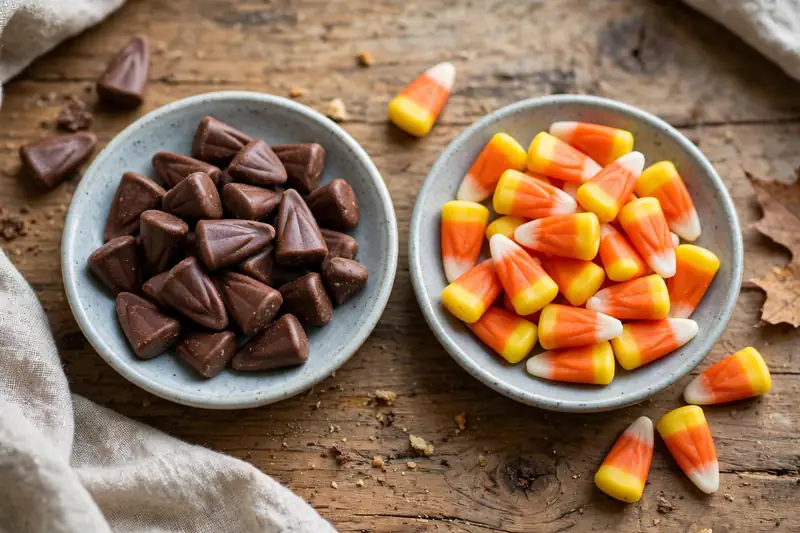
None of the variants are safer than the original. “Pumpkin spice” candy corn contains no real pumpkin and no meaningful spice. The base stays the same: refined sugar and artificial binders. If a guest offers your dog a “fancy” piece, the answer is the same no you would give for the classic kind. Dogs do not grade candy on flavor.
Wrappers: the overlooked danger
Dogs rarely eat candy corn neatly. They eat the bag, the twist ties, and the individual wrappers along with it. Plastic wrappers do not digest, and they can cause choking or an intestinal blockage. A blockage brings repeated vomiting, appetite loss, straining, and a swollen belly, sometimes a day or two after the candy is gone.

Foil wrappers add sharp edges to the blockage risk. If your dog ate candy with the wrappers on, tell the vet, because the treatment plan changes when foreign material is involved. This is also why the candy bowl belongs on a high shelf during the holidays, not on the coffee table. The ASPCA’s list of people foods to avoid covers the food side, but the packaging side is on the owner.
My dog ate candy corn: what to do step by step
Step one is the label. Find the bag or look up the product and check for xylitol, birch sugar, or any sugar alcohol. If xylitol is present or you cannot confirm it is absent, call your vet or Pet Poison Helpline at (855) 764-7661 immediately. Xylitol poisoning moves in minutes, and early treatment saves lives.
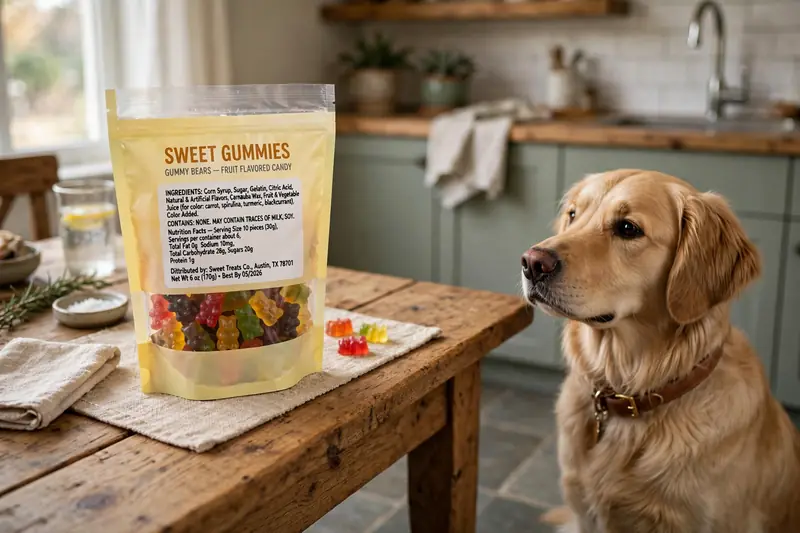
If the candy was standard sugar candy corn, estimate how much went down and watch the dog for 24 to 48 hours. Expect possible vomiting, gas, bloating, or diarrhea. Call the vet if vomiting repeats, the belly looks painful or swollen, or the dog turns lethargic. Do not try inducing vomiting on your own unless the vet directs it. Withhold the next meal for a few hours if the stomach is upset, then return to normal food. Keep the wrapper count in mind too, since missing wrappers mean a blockage watch.
The pancreatitis risk in big sugar binges
Pancreatitis deserves its own section because owners underestimate it. A dog that raids a full candy bowl takes in an enormous sugar load at once. PetMD warns that in sensitive dogs, intestinal inflammation from high-sugar candy can involve the pancreas, causing pancreatitis, which needs veterinary treatment. Signs include repeated vomiting, a hunched painful belly, restlessness, and lethargy.

Some dogs seem to recover from a candy binge and then get sick again a day later, which PetMD specifically flags with candy corn. That rebound is why the watch period runs a full 48 hours. A dog that looks fine at bedtime is not cleared. Keep water available, keep food light for a day, and keep the vet’s number where you can find it without searching.
Keeping the candy bowl dog-proof through the holidays
Candy corn season runs from Halloween straight through Thanksgiving, which gives dogs two full months of opportunity. The ASPCA’s top piece of holiday advice is simple: stash the treats. Candy belongs in sealed containers on high shelves or behind closed pantry doors, never in open bowls on low tables during parties.

Brief your guests, because visitors are the weakest link. A well-meaning relative handing the dog “just one piece” is how most holiday candy incidents start. Give guests a dog-safe alternative to offer instead: a piece of plain popcorn, a dab of xylitol-free peanut butter, or a small training treat from your pocket. For the full picture of what the dog can and cannot have, keep the human foods that are safe for dogs list handy through the season.
Trick-or-treat night deserves its own plan. Keep the dog in a back room or crate while the doorbell rings, because every opening is a chance for a dash toward the candy bowl or the street. Hand out candy from a spot the dog cannot reach, and do a wrapper patrol after the last trick-or-treater leaves. Dogs find dropped candy in the dark that owners miss in the light. A two-minute sweep with a flashlight beats a midnight vet call. Stash a bag of the dog’s own treats by the door so guests have something safe to hand out instead of candy. A little planning keeps the night fun for the kids, the dog, and your wallet. Keep the candy bowl high and the dog treats handy.
Frequently asked questions about candy corn and dogs
Owners ask about single pieces, specific brands, sugar-free versions, and wrappers more than anything else. The answers below cover the candy corn questions vets hear every fall, from Halloween night through the Thanksgiving leftovers, plus the safe treats that keep dogs happy instead.
Is one piece of candy corn okay for my dog?
One piece of standard candy corn is unlikely to harm a medium or large dog, but it is still not something to offer on purpose. One piece of sugar-free candy corn is a potential emergency because of xylitol.
Is candy corn poisonous to dogs?
It lacks the outright poison of chocolate or xylitol, but it can still make dogs sick through sugar overload. Sugar-free candy corn may be poisonous if it contains xylitol.
What if the candy corn was sugar-free?
Call your vet or Pet Poison Helpline immediately. Check the label for xylitol or birch sugar first. Do not wait for symptoms, since xylitol can crash blood sugar within minutes.
Can dogs eat candy corn pumpkins (the mellowcreme pumpkins)?
No. Those are the same sugar candy in a pumpkin shape, with the same risks. Seasonal shapes do not change the ingredients.
My dog ate the wrappers too. What now?
Tell your vet about the wrappers specifically. Watch for vomiting, appetite loss, straining, or a swollen belly over the next 48 hours, since those signs can mean a blockage.
Is Brach’s candy corn safe for dogs?
No. Major-brand classic candy corn is still pure sugar with dyes, and it is not made for dogs. The brand does not change the answer, so keep every brand out of reach.
What can I give my dog instead of Halloween candy?
Small dog treats, a spoonful of plain pumpkin puree, a few pieces of plain popcorn, or a tiny taste of ice cream all work. The dog wants to be included, not to taste sugar.
Candy corn looks like a joke-sized treat and acts like a sugar bomb. Standard kernels bring stomach upset and a pancreatitis risk in binges, wrappers bring blockage risk, and sugar-free versions bring a xylitol emergency that moves in minutes. Keep the candy stashed, brief the guests, and give the dog something actually made for dogs. The holidays have enough real emergencies without adding a preventable one.

A Kong stuffed with peanut butter and frozen overnight keeps most dogs happily busy while the candy bowl makes its rounds, and it costs less than a single emergency vet visit.
Disclaimer: This article is for general information only and is not veterinary advice. If your dog eats sugar-free candy corn or shows repeated vomiting, belly pain, or lethargy after eating candy, contact your veterinarian or Pet Poison Helpline promptly.