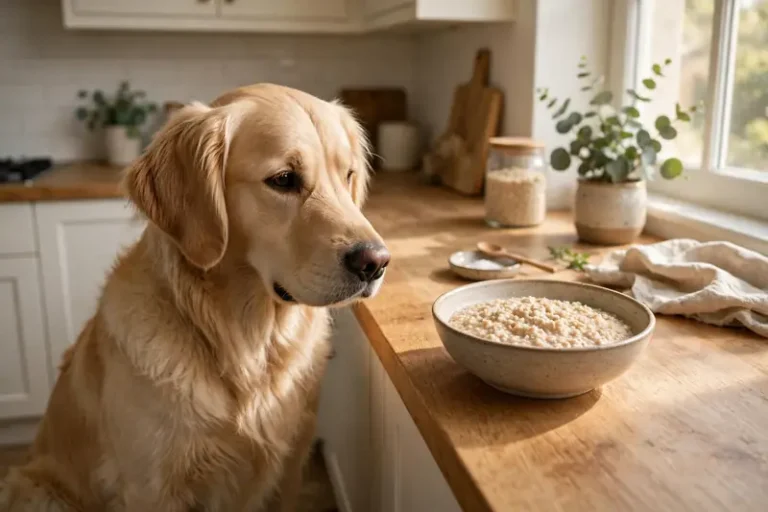
The dog is staring at the pumpkin pie, and the pie smells like every good part of fall. Sharing feels natural, because pumpkin itself is one of the best foods a dog can eat. The pie is not the pumpkin, though. A traditional pumpkin pie wraps a little pumpkin in a buttery crust with sugar, eggs, evaporated milk, and a spice blend built around nutmeg. Each of those additions takes the dish further from the safe, plain pumpkin your dog’s stomach would thank you for.

Can dogs eat pumpkin pie? The direct answer
No, dogs should not eat pumpkin pie. The filling carries too much sugar and fat, the spices include nutmeg which is toxic to dogs, and sugar-free versions may contain xylitol, which can be deadly. A small lick is unlikely to be an emergency. Plain cooked pumpkin is the safe way to share the flavor.

The PetMD’s guide to pumpkin for dogs draws the line exactly there: plain pumpkin yes, pie no. If you want the full rundown on the safe version, read why plain pumpkin is good for dogs before the holidays arrive.
What is actually inside a pumpkin pie
A traditional pumpkin pie has three parts, and dogs should avoid all three. The crust is flour, butter or shortening, salt, and sugar. The filling is pumpkin puree mixed with sugar, eggs, and condensed milk or cream. The spice blend is cinnamon, nutmeg, ginger, and cloves. Every part adds something a dog does not need.

The sugar load is the most obvious problem. A single slice can carry more sugar than a dog should get in a week, and sugar brings stomach upset, blood sugar spikes, and extra calories with zero nutrition. The dairy adds lactose, which most adult dogs digest poorly, plus fat. The spices add nutmeg, the one ingredient in the pie that is toxic rather than merely unhealthy.
The filling: sugar, fat, nutmeg, and sometimes xylitol
The filling deserves the closest look because it looks the most like plain pumpkin. It is not. Canned pie filling is pre-sweetened and pre-spiced, and homemade filling adds the sugar and spice during baking. Nutmeg contains myristicin, which is toxic to dogs, and the PetMD’s nutmeg guide puts the danger threshold at about a teaspoon of ground nutmeg.
Here is the honest nuance. The nutmeg in one slice of pie is usually far below the toxic dose, so a stolen bite is more of a sugar-and-fat problem than a poisoning. The exception is sugar-free pie. Some sugar-free recipes and products use xylitol, and xylitol can cause a lethal blood sugar crash and liver failure in dogs. The Pet Poison Helpline’s xylitol page explains why any sugar-free dessert near a dog is an emergency until proven otherwise. If your dog ate pie and you do not know the recipe, check for the sugar-free label first.
Canned pumpkin versus pie filling: the label trap
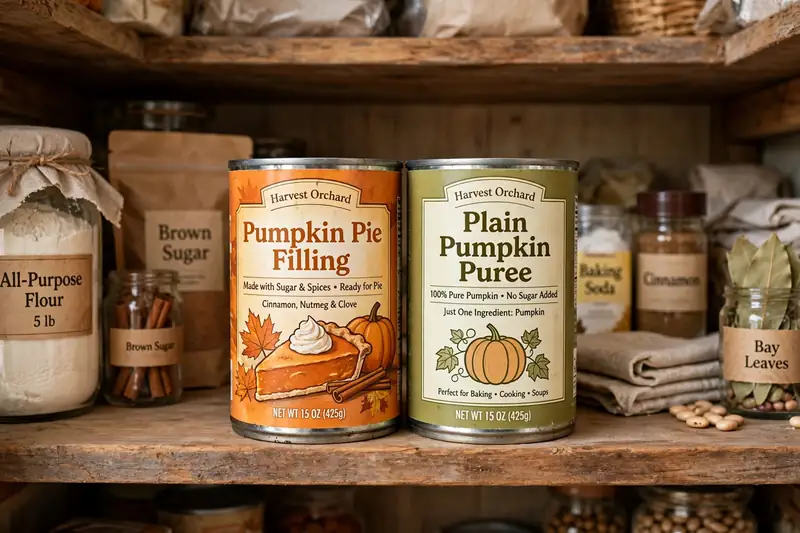
Grocery shelves set this trap every fall. Cans of 100 percent pure pumpkin sit next to cans of pumpkin pie filling, and the labels look similar at a glance. Pure pumpkin contains one ingredient: pumpkin. Pie filling contains pumpkin plus sugar, spices, and sometimes other additives. Dogs can have the first. Dogs should never have the second.
Read the ingredient panel every time, even on a brand you have bought before. Manufacturers change formulations, and “pumpkin” in big letters does not guarantee purity. The safe can says “100% pumpkin” and lists nothing else. Anything with sugar, spice, or “filling” in the name goes back on the shelf. This single label check prevents more holiday stomach upsets than any other habit in this article.
One more label trap: “pumpkin pie mix” and “pumpkin pie filling” are the same sweetened product under two names, and both sit right next to the plain cans during the holidays, which is exactly when hurried shoppers grab the wrong one. Slow down in that aisle. The five seconds it takes to read the ingredient panel is the cheapest insurance your dog’s stomach will get all season.
Mini pies, tarts, and hand pies follow the same rules as the full-size version. A smaller pie is not a safer pie. The filling-to-crust ratio often runs higher in minis, which means more sugar and spice per bite, and the buttery crust is just as fatty in miniature. Party platters of bite-size desserts are especially risky because dogs can eat several before anyone notices. Count the minis the way you would count slices: none for the dog.
The crust: a butter delivery system
The crust is the part owners forget, because it looks like plain pastry. It is not plain. Pie crust is built on butter or shortening, which makes it a concentrated fat delivery system. A dog that eats the crust edge off everyone’s plate can take in enough fat to trigger pancreatitis, especially in small dogs.
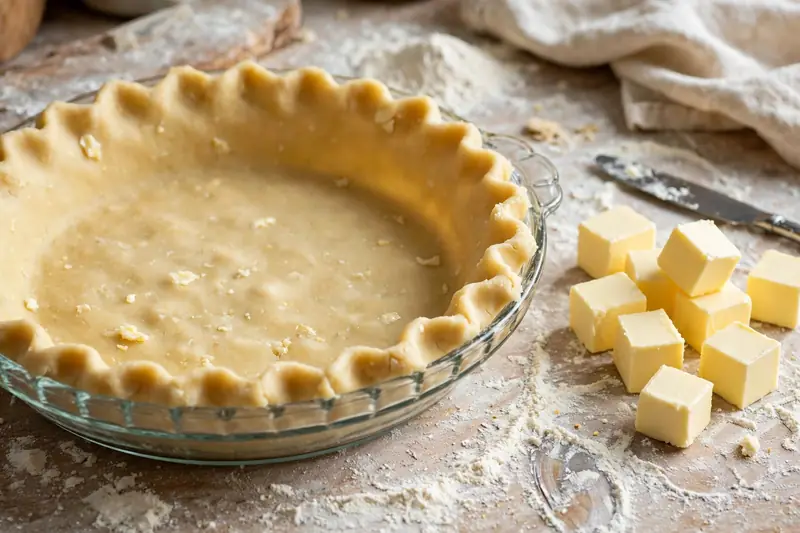
Dogs beg hardest for the crust because fat smells incredible to them. Do not mistake enthusiasm for suitability. The flaky texture that people love is exactly what makes it dangerous: layer after layer of fat. If a dog steals crust, watch for vomiting, belly pain, and appetite loss over the next day or two, and call the vet if those signs repeat or intensify.
Whipped cream on top adds its own problem. Most whipped toppings are heavy cream plus sugar, which means more lactose and more fat on an already rich slice. A dollop looks small and acts large in a small dog. Dogs that handle a spoonful of plain yogurt fine can still react to sweetened whipped cream, because the sugar and fat arrive together. Pie a la mode is the same story with ice cream: more dairy, more sugar, more reason to keep the whole slice on the table.
Plain pumpkin: the safe swap done right
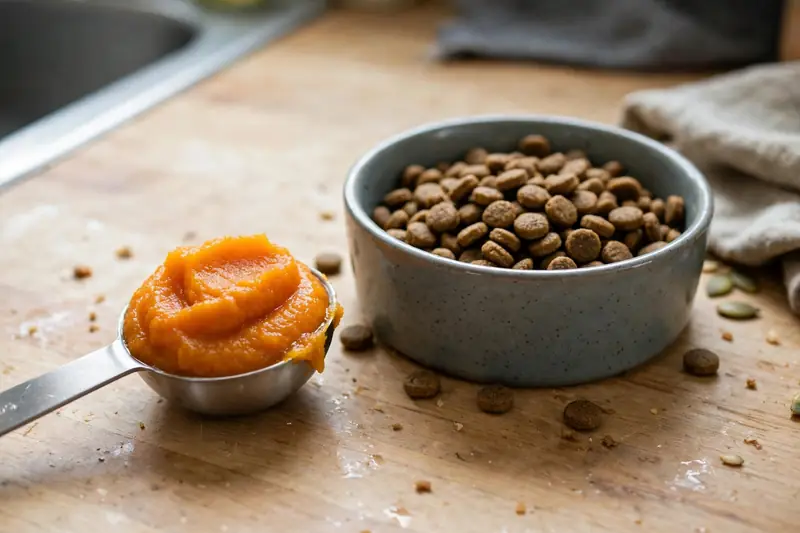
Plain pumpkin is one of the great foods for dogs. Plain pumpkin is good for dogs because its soluble fiber steadies digestion, firms loose stool, and helps dogs feel full. The safe forms are plain cooked fresh pumpkin and 100 percent pure canned pumpkin, served without salt, sugar, or spices.
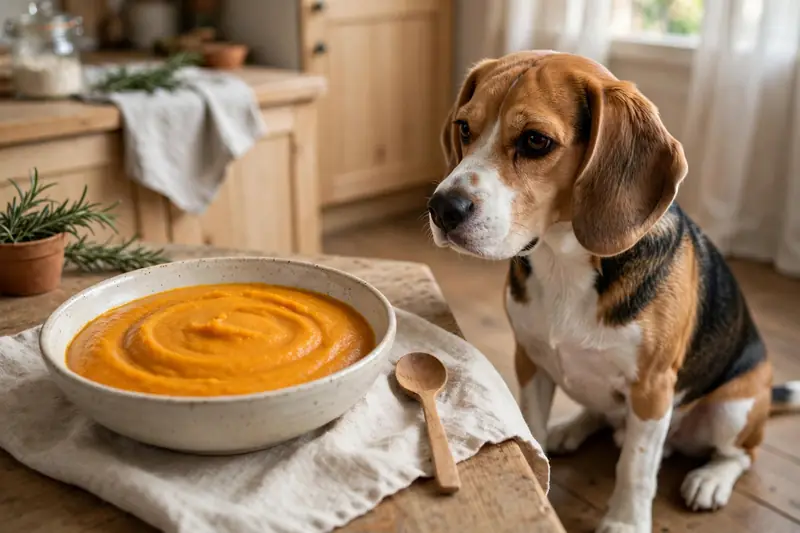
One veterinary guideline puts the serving at about one teaspoon of plain pumpkin per 10 pounds of body weight per day. A 40-pound dog gets roughly four teaspoons. That is a supplement, not a meal, and more is not better: too much fiber causes the same loose stool it is supposed to fix. Plain pumpkin seeds are also safe in small amounts when shelled and unsalted, but the pie gets none of this credit.
My dog ate pumpkin pie: what to do
First, check whether the pie was sugar-free. Xylitol turns a stomach-ache situation into a poisoning emergency, so confirm the recipe or the label before anything else. If xylitol is possible, call your vet or Pet Poison Helpline immediately. Do not wait for symptoms.
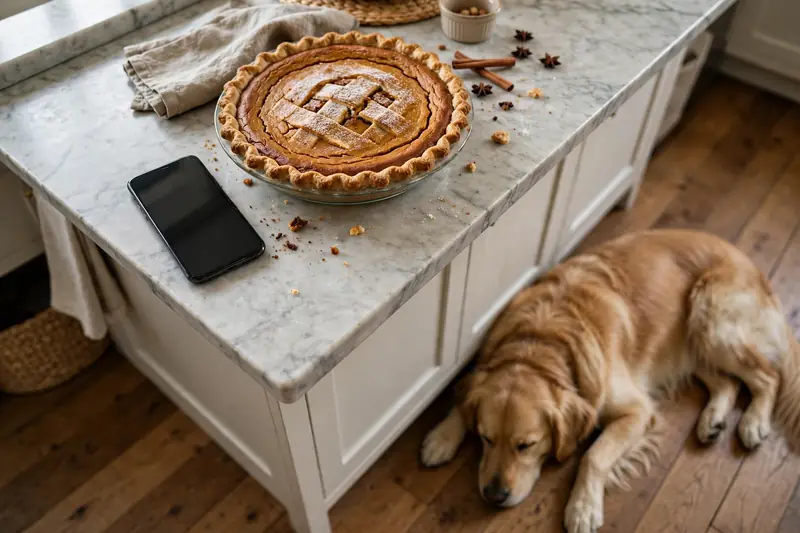
For standard pie, estimate the amount. A lick or a single bite in a healthy dog usually means watching, not panicking. Expect possible soft stool, gas, or mild vomiting within a day. A large amount, a small dog, or a dog with diabetes or pancreatitis history deserves a vet call. Keep the dog’s next meal light, keep water available, and watch for repeated vomiting, a painful belly, or unusual lethargy over 24 to 48 hours. The ASPCA’s list of people foods to avoid is a useful reference while you wait.
Vets treat pie ingestion based on what was in it. Sugar and fat mean monitoring and possibly a bland diet for a day or two. Xylitol means emergency decontamination and blood sugar monitoring. Nutmeg in a whole pie means watching for neurological signs over 48 hours. Your job is to deliver the facts: what pie, how much, when, and the dog’s weight. The vet decides the rest. Guessing at home wastes the window where treatment works best.
A dog-safe pumpkin pie for the holidays
Dogs do not have to miss out on the season. Mix a few tablespoons of plain pumpkin puree with a spoonful of plain unsweetened yogurt and a pinch of cinnamon, and serve it in the dog’s bowl. It looks festive, smells like fall, and contains nothing a dog cannot handle. No crust, no sugar, no nutmeg.

For a firmer treat, spread the mixture into a silicone mold and freeze it. Frozen pumpkin bites double as a slow, enriching snack on a busy holiday. Keep the portion within the treat allowance, about 10 percent of daily calories, and skip the recipe entirely for dogs with dairy sensitivity by using pumpkin alone. The dog gets its own pie. The people keep theirs.
Batch the treats ahead of the holiday rush. Frozen pumpkin bites keep for weeks in a sealed bag, and plain pumpkin puree keeps in the fridge for five to seven days once opened. Freeze leftover canned pumpkin in an ice cube tray so none goes to waste. When guests arrive with dessert, you already have the dog’s version ready, which removes the temptation to share from your own plate.
Puppies, seniors, and dogs with health conditions
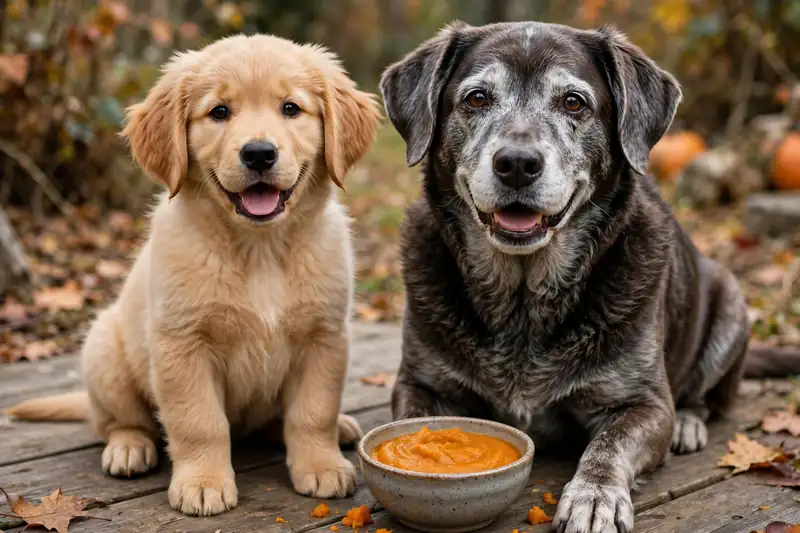
Puppies should stick to plain pumpkin only, and only after they are eating solid food well. Rich pie filling hits young stomachs hard, and puppies dehydrate faster when vomiting or diarrhea starts. Senior dogs often have the exact vulnerabilities pie exploits: weaker digestion, blood sugar issues, and touchy pancreases.
Diabetic dogs must avoid pie entirely because of the sugar load, and dogs with pancreatitis history must avoid the fatty crust. For these dogs, even the “small bite” exceptions other owners use do not apply. Plain pumpkin in measured amounts is the only pumpkin product they should get, and the amount is worth confirming with the vet.
Frequently asked questions about pumpkin pie and dogs
Owners ask about the filling, the crust, whipped cream, and single bites more than anything else. The answers below cover the pumpkin pie questions that come up every fall, from the dessert table to the leftovers, and how to share pumpkin the safe way.
Can dogs eat pumpkin pie filling from a can?
No. Canned pie filling is pre-sweetened and pre-spiced, and it is not the same as pure pumpkin. Only 100 percent pure canned pumpkin is safe for dogs.
My dog licked my pumpkin pie. Should I worry?
A single lick is unlikely to harm a healthy dog. Watch for mild stomach upset over the next day. If the pie was sugar-free, check for xylitol and call your vet.
Can dogs eat pumpkin spice?
No. Pumpkin spice blends contain nutmeg, which is toxic to dogs. Use plain pumpkin with a pinch of cinnamon instead.
Can dogs eat just the crust?
No. The crust is mostly butter or shortening, and the fat load can trigger pancreatitis. It is the riskiest part of the pie for many dogs.
Is Libby’s canned pumpkin safe for dogs?
Libby’s 100% Pure Pumpkin is safe because it contains only pumpkin. Libby’s pumpkin pie filling is not safe. Read the can every time.
Can pumpkin pie help my dog’s diarrhea?
Plain pumpkin can help mild digestive upset, but pie cannot. The sugar and fat in pie make diarrhea worse, not better. Use plain puree only.
How much plain pumpkin can I give my dog?
About one teaspoon per 10 pounds of body weight per day is the common veterinary guideline. More fiber than that can cause loose stool.
Pumpkin pie is the holiday dessert that confuses owners most, because the star ingredient is good for dogs. Everything around it is not. Sugar, butter, dairy, nutmeg, and sometimes xylitol turn a healthy squash into a risky dessert. Serve the pie to the people, scoop plain pumpkin into the dog’s bowl, and check the human foods that are safe for dogs list before any other holiday dish crosses the table.

Disclaimer: This article is for general information only and is not veterinary advice. If your dog eats sugar-free pie or shows repeated vomiting, belly pain, or lethargy after eating pie, contact your veterinarian promptly.