Olives sit in nearly every kitchen, and a dropped olive rarely stays on the floor for long when a dog is around. The answer is reassuring but narrow. Plain, pitted olives are safe for dogs in small amounts. The risks are the pit, the salt, and whatever the olive is stuffed or marinated with. Two or three plain olives now and then are a fine treat. A bowl of salty marinated olives with the pits still in is not.

Can dogs eat olives? The short answer
Yes, dogs can eat plain, pitted olives in small amounts. Black and green olives are both fine once the pit is out. Keep servings tiny, skip salted and marinated olives, and never feed olives stuffed with garlic, onion, or blue cheese.
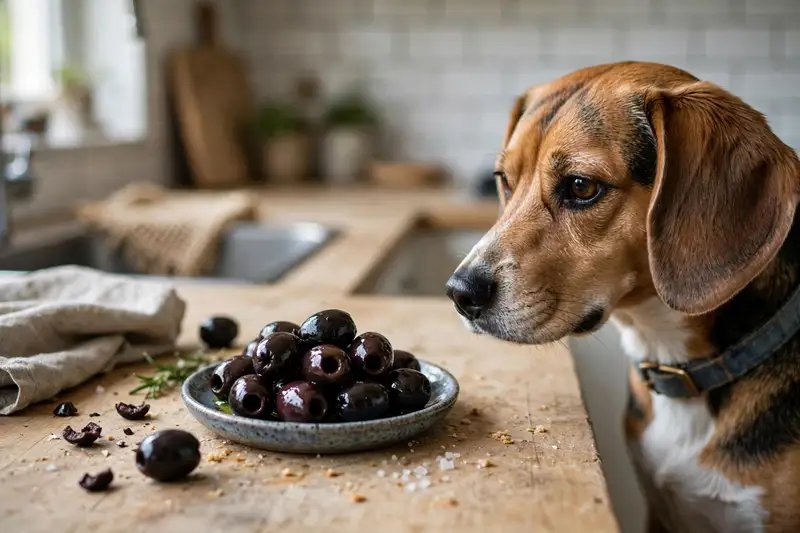
Olives are not a necessary food, and your dog gains nothing essential from them that its regular diet does not already provide. Think of them as an occasional novelty treat rather than a menu item. If your dog hoovers up dropped food often, the list of human foods dogs can eat is worth keeping handy.
Most olive encounters happen by accident: a dropped olive, an unattended appetizer plate, a dog that counter surfs during a party. The occasional stolen olive is rarely an emergency, which is reassuring, but parties are exactly when the risky versions appear. Garlic stuffed and martini olives cluster at gatherings, so the holiday season deserves extra vigilance.
What olives offer nutritionally
Olives bring monounsaturated fats, vitamin E, and small amounts of iron and copper. A couple of olives add a little healthy fat to the day, though the sodium in most jarred olives cancels much of the goodwill.

The fat profile is the best thing about olives. Monounsaturated fats are the same fats that make olive oil a staple of human diets, and a small amount does a dog no harm. Vitamin E supports skin and coat health. The Merck Veterinary Manual is a reliable reference if you want the full picture on fats in canine nutrition. The honest counterweight is sodium. Most olives sit in brine for weeks, and a single olive can carry a surprising amount of salt for a small dog. Rinsing pitted olives under running water washes off a good share of the surface salt, and it takes ten seconds.
Rinsing is the single most useful olive habit. Hold pitted olives under running water for ten seconds and pat them dry, and you wash away a meaningful share of the surface brine. It does not make olives low sodium, but it takes the edge off. Low sodium jarred olives exist too, and they are the better buy if you share with your dog regularly.
The pit problem: why pitted only
Olive pits are the real danger in this fruit. They are hard enough to crack teeth, the right size to lodge in a throat, and indigestible enough to block intestines. Every olive your dog gets should be pitted first.

A large dog that swallows one pit will usually pass it without trouble, but that is luck, not safety. Small dogs face the worst odds, since a pit that is merely large to a labrador is an obstruction to a chihuahua. Cracked teeth are the other common injury, and a slab fracture from a pit is a painful and expensive lesson. Buy pitted olives, and if you only have whole ones, press each olive with the flat of a knife and pop the pit out before the dog sees it. Our guide to foods that are toxic to dogs covers pits and stones more broadly, since the same warning applies to several fruits.
Teeth deserve a second mention because slab fractures are easy to underestimate. A cracked tooth often shows no obvious sign at first, just a dog that chews a little more carefully on one side. By the time the owner notices, the tooth may need extraction. Hard pits, bones, and antlers all carry this risk, and pits are the most common culprit in snack foods.
Salt: the quiet risk in every jar
Most jarred olives are salt bombs. Brine curing leaves olives carrying far more sodium than a dog needs, and too much salt brings thirst, vomiting, and in extreme cases sodium poisoning.

A couple of rinsed olives will not harm a healthy dog. A handful of brine soaked olives is a different matter, especially for a small dog or one with heart or kidney disease. The VCA’s general feeding guidelines remind owners that treats should stay a small fraction of daily calories, and salty treats deserve an even smaller share. Rinse the olives, keep the count low, and offer fresh water after. Dogs with any heart or kidney diagnosis should skip olives unless their vet says otherwise.
Dogs with heart murmurs, kidney disease, or high blood pressure live under stricter sodium rules than healthy dogs, and olives should simply not be on their menu. The same goes for dogs on prescription low sodium diets. When the vet has set a dietary restriction, treats come from the approved list only, no matter how small the portion looks.
Plain vs stuffed and marinated olives
Plain olives are the only ones worth sharing. Garlic stuffed, onion stuffed, and blue cheese stuffed olives each add an ingredient dogs should not have, and marinated olives swim in seasoned oil.

Garlic stuffing is the worst offender. Garlic damages red blood cells in dogs, and our article on whether dogs can have garlic explains the dose problem in detail. Blue cheese stuffing brings mold cultures and salt that sensitive stomachs do not need, and while plain cheese is safe for most dogs in small amounts, cheese stuffed olives are still too salty to share. Marinated olives pick up garlic, chili, and herbs from their oil bath. Read the jar. If the ingredient list reads like a spice rack, the olives stay on your plate.
Olive bars at grocery stores are a minefield of seasoned varieties, and the labels are not always clear. Marinated, smoked, and herb crusted olives sit side by side with plain ones, and shared serving utensils spread the seasoning around. Buy sealed jars of plain pitted olives and you always know what you have.
Green vs black olives
Green and black olives are the same fruit at different ripeness, and the safety picture is identical. Both are fine pitted and plain, and both carry the same pit and salt warnings.

Green olives are picked unripe and tend to be firmer and slightly more bitter. Black olives are fully ripe and milder. Dogs do not care about the difference, and neither should you beyond the same rules. Kalamata, Castelvetrano, and other fancy varieties follow the same script: pitted, plain, rinsed, and few. The variety name on the jar changes nothing about the pit or the brine.
Cured olives like Kalamata spend longer in brine than standard black olives and carry more salt per olive. If you eat cured varieties yourself, do not share those with the dog. Keep a jar of plain mild black olives as the dog safe option and enjoy the fancy ones yourself.
How many olives are safe
Two or three small olives are plenty for most dogs, offered occasionally rather than daily. Large dogs can handle three or four. Small dogs should get one or two at most.
| Dog size | Safe amount | Frequency |
|---|---|---|
| Small (under 20 lbs) | One or two olives, pitted | Occasionally |
| Medium (20 to 50 lbs) | Two or three olives, pitted | Occasionally |
| Large (over 50 lbs) | Three or four olives, pitted | Occasionally |
Olives are calorie dense for their size, and the fat adds up fast in a small dog. There is no nutritional reason to push the amount. A taste satisfies the curiosity, and the dog will not miss what it never had.
Because olives are so calorie dense, they work better as a rare novelty than as a training treat. Training needs dozens of repetitions, and dozens of olives would be far too much fat and salt. Save olives for the occasional surprise and use low calorie vegetables or commercial training treats for the repetitive work.
Olives vs macadamia nuts: a critical contrast
Olives are safe in small amounts. Macadamia nuts are genuinely toxic to dogs. The two get confused because both are small, round, salty snacks, so the contrast is worth stating plainly.

A few macadamia nuts can cause weakness, vomiting, tremors, and fever in dogs, as our article on macadamia nuts and dogs explains. Olives cause no such reaction. The practical rule: olives from your antipasti plate are a maybe, macadamia nuts are a never. Keep mixed nut bowls and mixed snack plates away from dogs entirely, since the dog cannot tell which is which.
Mixed snack plates are the classic holiday hazard. Olives, macadamia nuts, cheese cubes, and chocolate covered items share one plate, and a counter surfing dog does not sort before swallowing. During parties, keep all snack plates above surfing height and never leave the room with food unattended.
Puppies and senior dogs
Puppies and seniors can have the occasional plain pitted olive, but the margin is thinner. One olive is enough for a puppy, and seniors with heart, kidney, or dental issues should skip olives unless the vet approves.

Puppies are still learning what food is, and rich salty novelties are not the lesson to start with. A single rinsed olive as a rare taste is the limit. Senior dogs with worn teeth should never get anything with a pit, and the sodium question matters more for older dogs, who are likelier to carry heart or kidney disease. When the health picture is complicated, the vet decides.
Puppies explore the world with their mouths, and olives roll in interesting ways that trigger chase instincts. A rolling olive is a toy first and food second to a puppy, which is all the more reason to pit them. The chase usually ends with a crunch, and you want that crunch to be pit free.
When to call the vet
Call your vet if your dog swallows olives with pits, eats a large number of salty olives, or shows repeated vomiting, extreme thirst, lethargy, or belly pain. A couple of plain pitted olives need no action at all.

A swallowed pit deserves a call even if the dog looks fine, since obstructions can take a day to declare themselves. Watch for straining, appetite loss, and vomiting over the next 48 hours. For heavy salt intake, offer fresh water and watch for excessive thirst and vomiting. The ASPCA Animal Poison Control Center runs around the clock for urgent questions, and the ASPCA’s people foods list is a good bookmark for the next dropped snack. For mild stomach upset only, a bland diet for a day or two usually settles things.
After any pit scare, watch the stool as well as the behavior. A passed pit often shows up in the stool within a day or two, which is reassuring confirmation. If 48 hours pass with no pit and no symptoms, most vets consider the incident resolved, though your own vet’s guidance for your dog always comes first.
Frequently asked questions about dogs and olives
Owners ask about pits, olive oil, green versus black, and stuffed olives most. The answers below cover the usual round.
Can dogs eat olives with pits?
No. Pits can crack teeth, cause choking, and block intestines. Always remove the pit before sharing an olive, and buy pitted olives to skip the step entirely.
Can dogs have olive oil?
A small amount of plain olive oil is safe for most dogs and is sometimes used to help dry skin or constipation. It is calorie dense, so keep it to a teaspoon or less for small dogs and a tablespoon at most for large ones.
Are green olives or black olives safer for dogs?
Neither is safer. They are the same fruit at different ripeness stages. The rules are identical: pitted, plain, rinsed, and few.
Can dogs eat garlic stuffed olives?
No. Garlic damages red blood cells in dogs, and the stuffing puts it right in the bite. Keep all garlic stuffed olives, and garlic in general, away from your dog.
Can dogs eat olives from a martini?
No. Those olives have soaked in alcohol, which is toxic to dogs even in small amounts. The olive is the least of the problems in that glass.
My dog swallowed an olive pit. What should I do?
Call your vet. One pit often passes without trouble, especially in a large dog, but pits can obstruct or injure on the way through. Watch for vomiting, appetite loss, straining, and lethargy over the next 48 hours, and do not try to induce vomiting on your own.
Olives are a fine occasional treat when they are plain, pitted, rinsed, and few. The pit is the danger, the salt is the limit, and the stuffing decides everything else. Keep those three straight and there is nothing to fear in the olive bowl.
Disclaimer: This article is for general information only and is not veterinary advice. Every dog is different, and dogs with health conditions, puppies, and nursing dogs may need different guidance. If you are unsure, or if your dog shows symptoms after eating olives, contact your veterinarian.