Most “toxic foods for dogs and cats” lists treat the two species as interchangeable, and that shortcut is exactly how multi-pet households get into trouble. Chocolate, onions, and caffeine threaten both. Xylitol can kill a dog and barely bothers a cat. True lilies can shut down a cat’s kidneys while a dog walks away fine. This guide maps which dangers are shared, which are species-specific, and how to set up a kitchen where neither animal eats the wrong thing.

The shared danger list: chocolate, alliums, caffeine, alcohol
Chocolate, onions, garlic, caffeine, and alcohol poison dogs and cats alike, so every multi-pet home needs these five on one shared list. Theobromine in chocolate overstimulates the heart and nervous system of both species. The chocolate type guide breaks down theobromine levels from white to baking chocolate. Allium vegetables (onion, garlic, leeks, chives) destroy red blood cells in both, and cats are the more sensitive of the two. The onion safety guide explains the mechanism. Caffeine from coffee grounds, tea bags, and energy drinks hits both. Alcohol depresses the central nervous system in both, and dogs and cats are both far more sensitive to ethanol than people are.
Raw yeast dough belongs on the shared list too. It expands in the warm stomach and ferments into alcohol, delivering bloat and alcohol poisoning at once. Banfield’s pet poison guide flags dough as dangerous for both species, and holiday baking season is when exposures spike. Keep rising dough behind a closed oven door, not on a counter a cat can reach.
Dose still matters, and size works against cats. A cat’s small body weight means a smaller amount of chocolate or onion causes harm, and cats hide illness longer than dogs do. Shared list, shared vigilance, but watch the cat harder.
Xylitol: a dog killer that barely bothers cats
Xylitol can kill a dog within hours and is not considered toxic to cats, the sharpest species split on any kitchen shelf. In dogs, the sweetener triggers a massive insulin release that crashes blood sugar in 10 to 60 minutes, with liver injury following at higher doses. The FDA’s xylitol warning is written about dogs specifically, because dogs are the species that dies from it.
Cats appear unaffected by xylitol toxicity in the reported literature. Still, nobody should hand a cat sugar-free gum on purpose, and the dog remains the animal at real risk. Multi-pet homes should still keep sugar-free products sealed and out of reach, because the dog is the one at risk and dogs are the ones that counter-surf.
The practical trap is the label. Xylitol now appears as “birch sugar,” which reads like a natural ingredient. It hides in sugar-free gum, mints, some peanut butters, protein bars, chewable vitamins, and toothpaste. One ingredient check on every sugar-free product that enters the house protects the dog, and the habit costs nothing.
Grapes: a dog emergency, a cat question mark
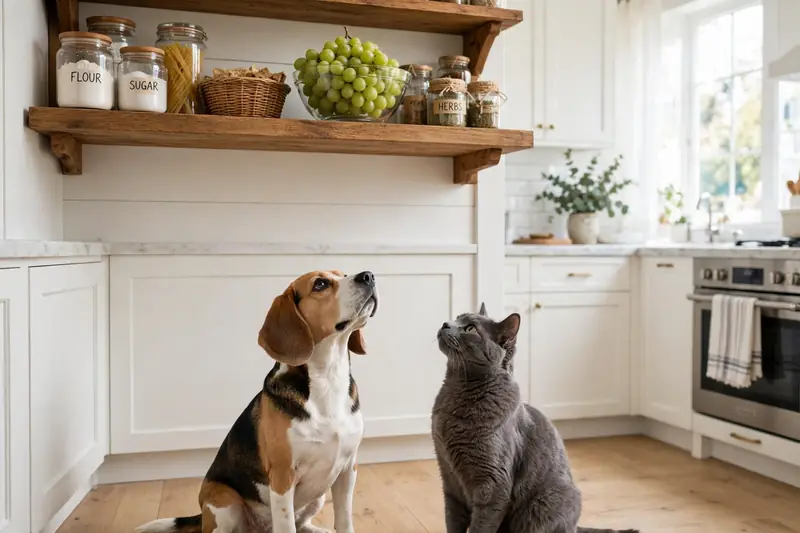
Grapes and raisins are a confirmed dog emergency and a suspected-but-unproven risk for cats. Dogs develop acute kidney failure from grapes with no identified safe dose; current research points to tartaric acid as the likely culprit. Documented cat cases are far fewer, but the mechanism is not understood well enough to call grapes cat-safe, and no vet would.
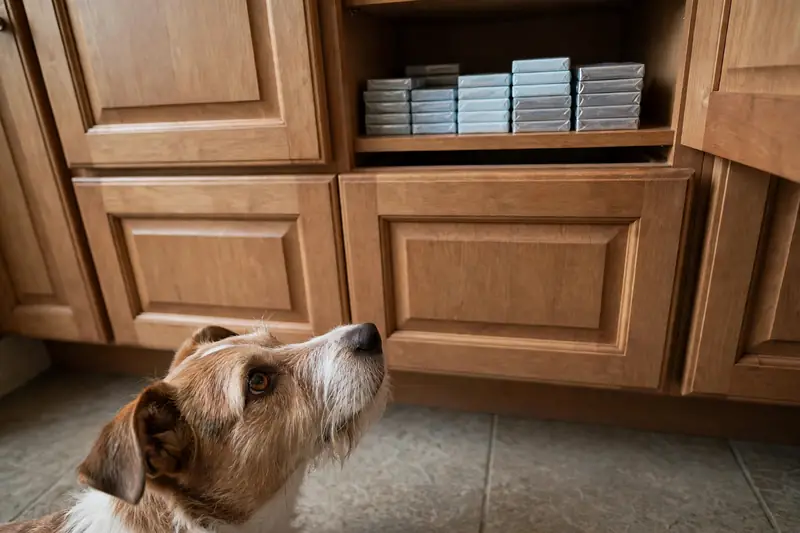
Treat every grape exposure in either species as a call-the-vet event. Kidney signs lag 24 to 72 hours, which is the same delay that kills dogs whose owners decide to wait and see. The shared rule is simple: grapes, raisins, currants, and sultanas stay out of both animals’ reach, full stop. The grape danger guide for dogs covers the kidney failure timeline. Trail mix and fruitcake count.
The deeper lesson is about evidence gaps. “No reported cat cases” is not the same as “safe for cats.” Cats eat less indiscriminately than dogs, so exposure is rarer and reporting thinner. Until research says otherwise, the cautious household treats unproven as dangerous.
Lilies: the cat killer dogs barely notice
True lilies (Easter, tiger, daylilies) can cause fatal kidney failure in cats from a few bites of petal, licked pollen, or even vase water, while dogs face far milder risk. Every part of the plant is dangerous to cats. The ASPCA lists lilies as toxic to cats, and emergency vets treat lily exposure in cats as a race against the kidneys.

This is the mirror image of the xylitol split, and it catches dog owners who add a cat. A household that dog-proofed for chocolate and grapes can still kill its cat with a Mother’s Day bouquet. Cat owners learn the lily rule early; dog owners becoming cat owners often do not.
The fix is absolute. No true lilies in a cat household, not on a high shelf, not in a closed room the cat “never enters.” Cats enter every room eventually. Lilies go to the office or to a friend without cats. The lily guide for dogs covers the dog side, but the cat side is the one that kills.
Medications: where the species divide turns deadly
Acetaminophen (Tylenol) is extremely toxic to cats and dangerous to dogs at high doses, and it is the most common medication mistake in multi-pet homes. Cats lack a liver enzyme (glucuronyl transferase) that processes the drug, so a single regular-strength tablet can destroy their red blood cells and liver. Dogs tolerate it better but still suffer liver damage at high doses. The rule for both: human painkillers never go into a pet without a vet’s explicit dose.
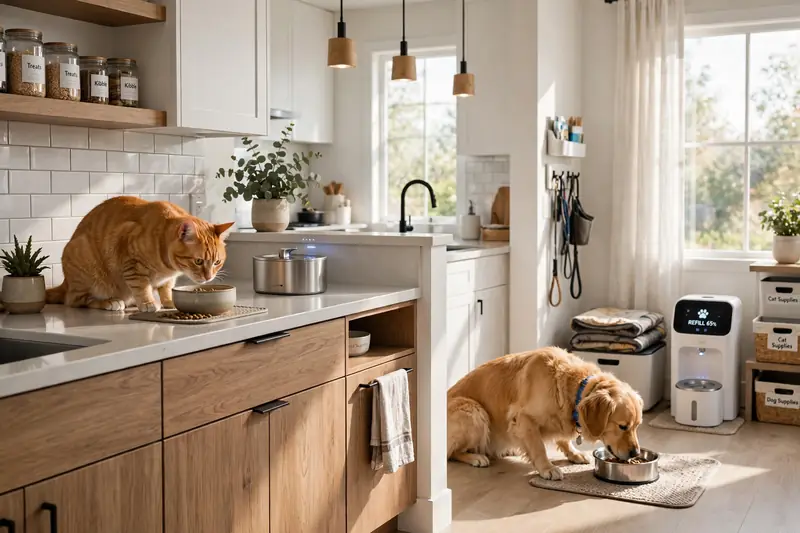
Ibuprofen is the dog-side mirror. Dogs are the species that most often eats dropped ibuprofen tablets, and it causes stomach ulcers and kidney failure. Cats are even more sensitive per milligram. NSAIDs made for people are not made for pets, and “a small piece” is not a safe dose for either species.
The household system is physical, not mental. Medications live in a latched cabinet, never on a nightstand or counter. Pill organizers are cat toys with poison inside. Anyone in the house who takes daily medication needs the same habit, because the dropped pill is the exposure, not the bottle.
The bowl-swap problem: dog food for cats, cat food for dogs
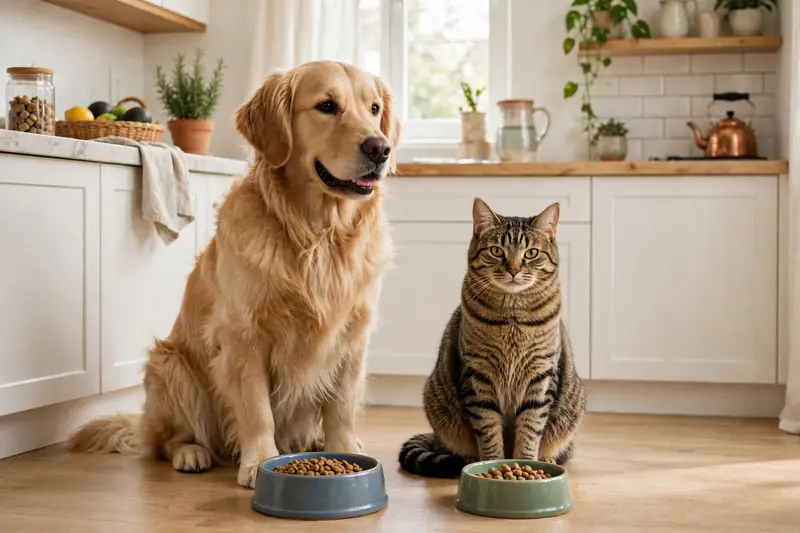
Dogs that eat cat food get stomach upset and extra calories; cats that eat dog food risk taurine deficiency and malnutrition. The cat food guide for dogs details why the swap harms both directions. Cat food is richer in protein and fat because cats are obligate carnivores. A dog that snacks from the cat’s bowl gets diarrhea and weight gain over time. Dog food lacks the taurine and arachidonic acid cats must get from meat, so a cat living on dog food develops heart and eye problems.
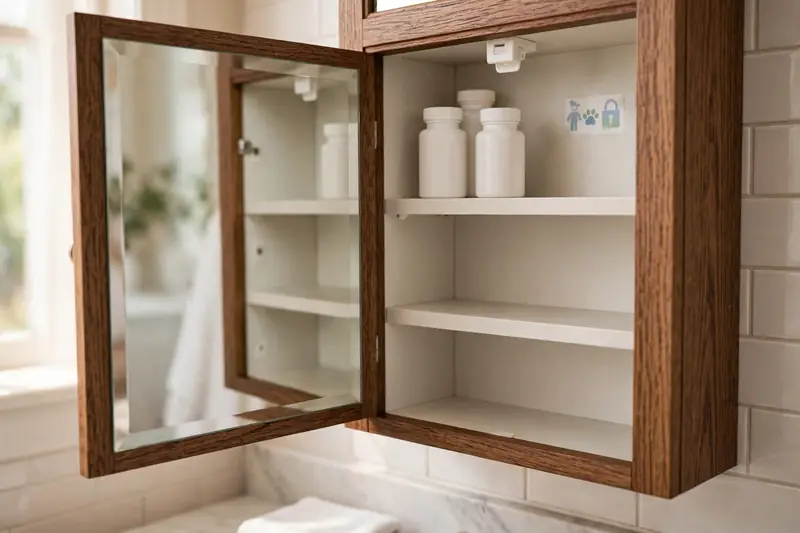
This is the daily version of the toxicity problem. Nobody calls poison control over bowl-swapping, but months of it cause real harm, especially to the cat. The fix is architectural: feed the cat on an elevated surface or behind a baby gate the dog cannot cross, and pick up the dog’s bowl between meals so the cat cannot graze. Separate rooms at mealtimes solve most of it.
Treats cross the same line. Dog treats are not formulated for cats, and cat treats are not formulated for dogs. Sharing a treat now and then will not poison anyone, but the regular habit unbalances both diets. Keep each species’ treats in labeled containers and hand them to the right animal.
Running a two-species kitchen safely
A safe multi-pet kitchen runs on placement, not memory: cat food up high, dog food picked up, trash locked, and toxins behind closed doors. Cats climb, so “high shelf” means inside a cabinet, not on top of the fridge. Dogs nose through trash, so the bin gets a locking lid. Sugar-free gum, medications, and baking chocolate live behind closed cabinet doors, not on counters.

Feeding stations deserve their own design. The cat eats on a counter, a washing machine, or a wall-mounted shelf the dog cannot reach. The dog eats in a corner or a crate, and the bowl comes up after fifteen minutes. Water can be shared; food cannot. This setup also ends the 6 a.m. bowl raids that wake the whole house.

Guests and sitters need the briefing, not the lecture. One sentence covers it: the cat eats up there, the dog eats down here, nothing from the table goes to either. Write the vet’s number and the poison control number on the fridge. Sitters follow written instructions; they improvise from memory.
Your one-page multi-pet safety checklist
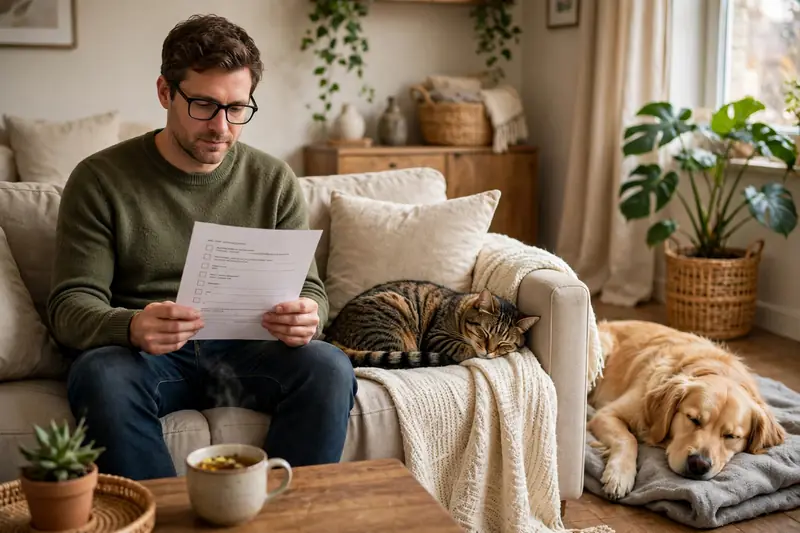
One printed page with three columns (both species, dogs only, cats only) covers the whole household. Tape it inside the cabinet where the pet food lives. The columns keep the species differences visible instead of buried in paragraphs nobody re-reads.
| Both species | Dogs especially | Cats especially |
|---|---|---|
| Chocolate, cocoa | Xylitol / birch sugar | True lilies (all parts, vase water) |
| Onion, garlic, leeks, chives | Grapes, raisins, currants | Acetaminophen (Tylenol) |
| Caffeine (coffee, tea, energy drinks) | Macadamia nuts | Essential oils (tea tree, eucalyptus) |
| Alcohol | Fatty table scraps (pancreatitis) | Dog food as a steady diet (taurine lack) |
| Raw yeast dough | ||
| Human painkillers |
Essential oils earn their cat-column spot because diffusers are everywhere now. Tea tree, eucalyptus, and peppermint oils cause drooling, trembling, and breathing trouble in cats even from passive diffuser exposure. Dogs tolerate most diffused oils better, but concentrated oils are risky for both. The checklist reminds the household that “natural” is not a safety rating.
Review the page once a year. Products reformulate, research advances, and new risks (like the birch-sugar alias) appear without announcement. A dated checklist at the top keeps everyone honest about whether the information is current.
Frequently asked questions about toxic foods for dogs and cats
Multi-pet owners usually ask about shared treats, emergency numbers, and whether one list can cover both animals. The answers below handle the questions that come up most.

Can dogs and cats share the same treats?
Occasionally, in small amounts, yes, but not as a habit. Dog treats lack the taurine cats need, and rich cat treats upset dog stomachs. Keep species-specific treats and hand each animal its own. The safe foods guide for dogs lists options formulated for canine digestion.
Which is more dangerous: my dog eating cat food or my cat eating dog food?
The cat eating dog food is the bigger long-term risk. Dog food lacks taurine and other nutrients cats cannot make themselves, so a steady diet of it causes heart disease and vision problems. A dog eating cat food gets excess protein and fat, which means stomach upset and weight gain. Both directions need fixing, but the cat’s direction is more urgent.
Is xylitol really safe for cats?
Current veterinary literature does not list xylitol as toxic to cats the way it is to dogs. That is an absence of evidence, not proof of safety, and cats should not be fed xylitol deliberately. Keep sugar-free products away from both animals; the dog is the one in real danger.
What number do I call for a poisoning emergency?
The ASPCA Animal Poison Control Center at (888) 426-4435 covers both species, 24 hours a day, for a consultation fee. The Pet Poison Helpline is another 24/7 option with species-specific guidance. Your own vet comes first during office hours. Write both numbers on the printed checklist before you need them.
Are essential oil diffusers safe around dogs and cats?
Passive diffusers are lower risk for dogs but still risky for cats, especially with tea tree, eucalyptus, and peppermint oils. Never apply concentrated oils directly to either animal. If a cat drools, trembles, or breathes oddly near a diffuser, ventilate the room and call the vet.
My dog ate the cat’s food once. Should I worry?
One meal is a stomach-upset risk, not a poisoning. Watch for vomiting or diarrhea over the next day and feed normally otherwise. Worry starts when it becomes a habit, or when the situation reverses and the cat lives on dog food. Fix the feeding stations and the problem ends.
Dogs and cats share a home, not a physiology. One shared danger list plus two short species columns covers everything that matters, and the kitchen setup does the rest of the work. Print the checklist, fix the feeding stations, and the multi-pet household runs itself.
Disclaimer: This article is for general information only and is not veterinary advice. If any pet eats something potentially toxic, contact your veterinarian or the ASPCA Animal Poison Control Center at (888) 426-4435 immediately.