
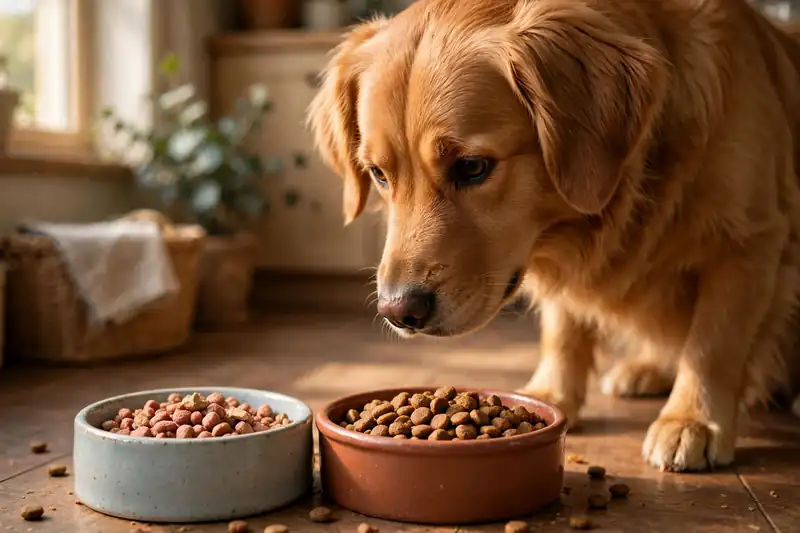
If your dog has ever shouldered the cat aside to hoover up the contents of the cat bowl, here is the short answer: an occasional mouthful of cat food will not poison your dog, but cat food should never become a regular part of a dog’s diet. According to PetMD, while a small amount of cat food eaten now and then is unlikely to harm most healthy dogs, it is not recommended as a habit, because cat food is formulated for a completely different animal, one with higher protein and fat needs than your dog. The occasional stolen bite is a training problem, not an emergency. A steady diet of cat food, on the other hand, is a nutrition problem, and over time it can lead to stomach upset, weight gain, and in some dogs, a painful inflammation of the pancreas.
Why Dogs Are Obsessed With the Cat Bowl
Dogs do not raid the cat bowl out of spite. To your dog’s nose, cat food simply smells and tastes better than their own dinner. Pet food manufacturers formulate cat food with higher levels of protein and fat than dog food, because cats, as obligate carnivores, require a richer diet. That extra richness is exactly what makes cat food so appealing to dogs. Fat carries flavor, and a bowl of food that is higher in fat and protein reads to a dog’s brain as a higher-value prize than their own balanced kibble.
There is also a behavioral layer. In multi-pet households, food that belongs to someone else often carries extra appeal. Dogs are opportunistic eaters by nature, and a bowl of food sitting at floor level (or even on a low counter) in another room is, to them, simply food that has not been claimed yet. Many owners report that their dog ignores their own full bowl and sprints to the cat’s bowl the moment it is set down. That is not a sign that the dog food is bad, it is a sign that the cat food is more exciting.
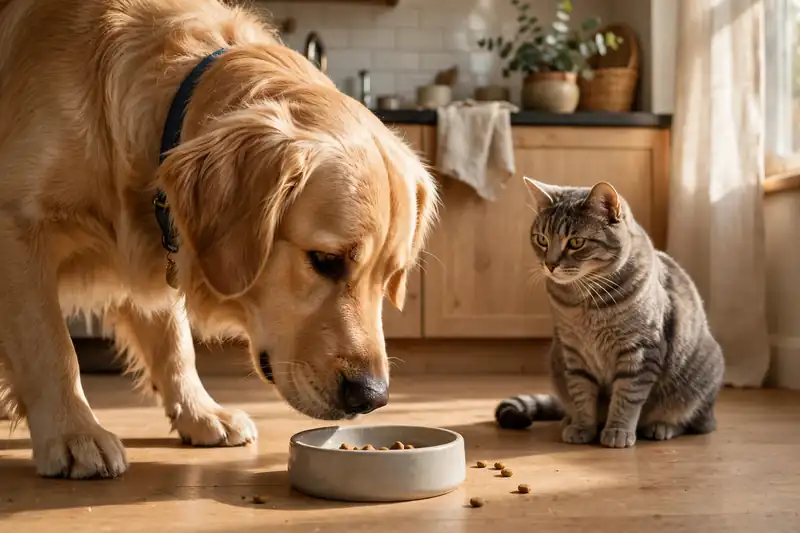
Cat Food vs. Dog Food: What’s Actually Different
It is easy to assume that pet food is pet food, but dog food and cat food are built on different nutritional blueprints. Dogs are omnivores. Their food is formulated with a balance of protein, fats, carbohydrates, fiber, vitamins, and minerals matched to a dog’s metabolism. Cats are obligate carnivores, and their food reflects that: higher minimum protein, higher fat, and a different micronutrient profile tuned to feline needs.
The practical differences that matter for your dog:
- More protein and fat. PetMD notes that cat food is higher in both protein and fat than dog food. A dog’s digestive system can handle protein and fat, but the levels in cat food exceed what a dog needs, which is why the calories add up fast.
- Different vitamin and mineral balance. Nutrients like vitamin A, calcium, and certain amino acids are balanced for cats, not dogs. Eating cat food once in a while will not create a deficiency, but replacing dog food with cat food over weeks or months creates a real risk of nutritional imbalance.
- Missing dog-specific formulation. Dog food includes fiber levels and nutrient ratios designed for canine digestion and long-term health. Cat food simply was not designed to keep a dog healthy over a lifetime.
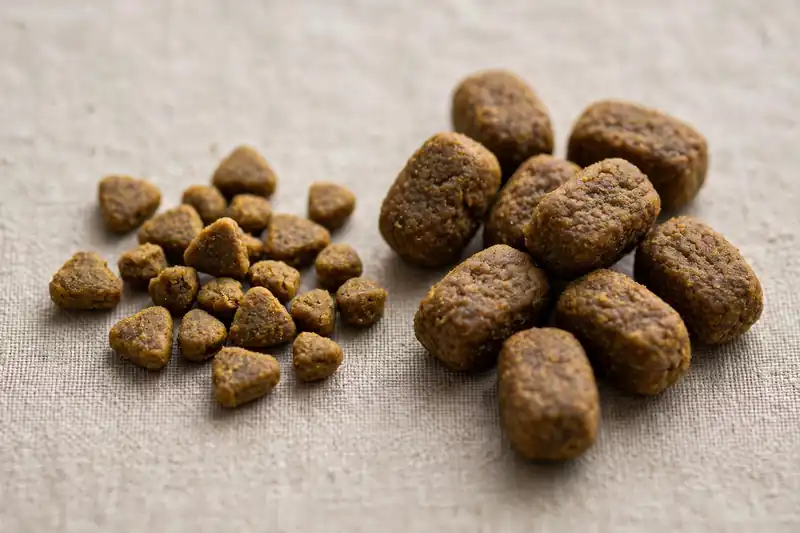
Think of it the way a vet would: the occasional bite is like a person eating a rich dessert, not ideal, but not dangerous. Eating dessert for every meal is where the trouble starts.
What Happens If Your Dog Eats Cat Food Once
For most healthy adult dogs, a single raid on the cat bowl ends with nothing worse than a very satisfied dog. PetMD is clear on this point: a small amount of cat food is unlikely to harm most dogs. You might see no symptoms at all, or possibly a bout of mild digestive upset, soft stool or a single episode of vomiting, as the gut reacts to food that is richer than usual.
There is no need to induce vomiting, no need to rush to the emergency vet, and no need to panic if you catch your dog mid-raid. Just take the bowl away, note roughly how much was eaten, and watch your dog for the rest of the day. If your dog seems completely normal, eating, drinking, playing, normal stool, you have your answer: no harm done.
The one exception is dogs with known health conditions. If your dog has a history of pancreatitis, kidney disease, liver disease, or is on a prescription diet, even a single rich meal is worth a call to your vet. These dogs have less margin for dietary indiscretions, and your vet may want to monitor them or adjust their next meal.
The Real Risks of Cat Food as a Habit
The problems begin when cat food stops being an occasional theft and starts being a regular supplement, or worse, a replacement, for dog food. Here is what veterinary sources warn about:
Gastrointestinal upset. The most common and most immediate problem. Rich, high-fat food is harder for a dog’s gut to process, especially in large amounts. Recurring vomiting, diarrhea, and gassiness are the typical signs that the cat food habit is catching up with your dog.
Weight gain and obesity. Because cat food is calorie-dense, a dog that regularly tops up on it is taking in far more calories than their daily needs. Those extra calories convert to extra pounds, and obesity in dogs is linked to joint problems, reduced lifespan, and a higher risk of conditions like diabetes.
Pancreatitis. This is the serious one. A sudden load of very fatty food can trigger pancreatitis, a painful, potentially dangerous inflammation of the pancreas. Signs include repeated vomiting, abdominal pain (your dog may hunch or adopt a “prayer position”), loss of appetite, and lethargy. Pancreatitis can require hospitalization, and dogs that have had it once are more prone to it again. Any dog with a history of pancreatitis should be kept strictly away from cat food.
Nutritional imbalance. Cat food does not contain the nutrient profile a dog needs for long-term health. A dog living partly or mostly on cat food can develop imbalances over time, too much of some nutrients, too little of others, while missing out on the balanced nutrition their own food provides.
Dogs That Should Never Eat Cat Food
While most healthy dogs can survive the occasional bite, some dogs should be kept away from cat food entirely:
- Dogs with a history of pancreatitis. Even a small amount of rich, fatty food can trigger a flare-up.
- Dogs with kidney or liver disease. These organs process protein and fat, and a rich meal adds strain they cannot afford.
- Dogs on prescription diets. A prescription diet is prescribed for a reason. Cat food undermines it.
- Puppies. Growing puppies need precisely balanced nutrition for proper development. Filling up on cat food displaces the nutrients they need.
- Overweight or obese dogs. The extra calories from cat food work directly against any weight-loss plan.
If your dog falls into any of these groups and manages to eat cat food, call your vet for guidance rather than waiting to see what happens.
How to Stop Your Dog From Eating the Cat’s Food
This is ultimately a management problem, and it is very solvable. The goal is to make the cat’s food physically inaccessible to the dog while keeping it comfortable for the cat:
Feed in separate spaces. The simplest fix. Feed the cat in a room with a door you can close, a baby gate the cat can jump but the dog cannot, or on an elevated surface the dog cannot reach. Many owners feed cats on a sturdy counter, a cat tree platform, or a dedicated shelf.
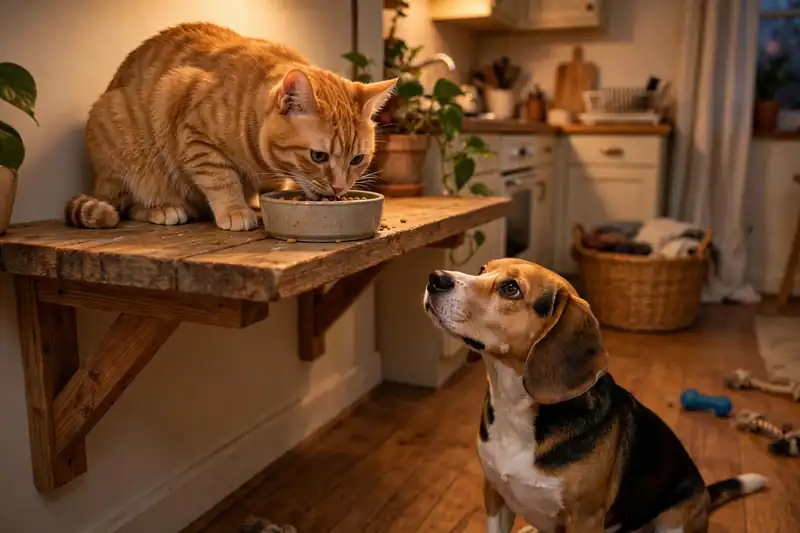
Stop free-feeding the cat. If the cat’s bowl sits full all day, it is a 24-hour temptation. Switch the cat to scheduled meals, put the food down, give the cat 20-30 minutes, then pick the bowl up. This alone solves the problem in many households.
Use a microchip-activated feeder. These feeders open only for the registered pet’s microchip or collar tag. They cost more than a regular bowl, but for persistent food thieves they are extremely effective.
Supervise and redirect. When you cannot change the setup, manage the moment. Feed the cat while the dog is crated, outside, or in another room, and return the dog only after the cat’s bowl is put away.
Train a solid “leave it.” A reliable leave-it cue is useful for a hundred situations beyond the cat bowl. Practice with low-value items first and build up. It will not replace physical barriers for a determined dog, but it gives you a tool in the moment.

What to Do After a Big Cat Food Raid
If your dog manages to eat a large amount of cat food, an entire bowl or more, take these steps:
- Estimate how much was eaten and what kind (wet or dry, wet cat food is richer and more likely to cause upset).
- Watch for symptoms over the next 24-48 hours: vomiting, diarrhea, loss of appetite, abdominal tenderness, or unusual lethargy.
- Feed a bland next meal if your dog’s stomach seems unsettled, plain boiled chicken and rice is the classic veterinary recommendation, then transition back to normal food.
- Call your vet promptly if vomiting is repeated, if there is blood in vomit or stool, if your dog seems painful or refuses food for more than a day, or if your dog has any of the at-risk conditions listed above.
Do not try to make your dog vomit at home unless your vet specifically instructs you to. For a food that is not toxic, monitoring is almost always the right call.

The Honest Bottom Line
Cat food is not toxic to dogs, and the occasional stolen bite is not a crisis, it is one of the most common multi-pet household annoyances there is. But “not toxic” is not the same as “fine.” Cat food is richer, fattier, and nutritionally wrong for dogs, and a regular habit leads to stomach trouble, weight gain, and in unlucky cases, pancreatitis. The fix is not better dog food or a scolding, it is management. Separate the feeding stations, pick up the cat’s bowl, and the problem disappears. Your dog will forgive you. The cat, frankly, will be relieved.
If you want to understand what a balanced canine diet actually looks like, start with our guide to what human food dogs can eat, it lays out the framework vets use for safe extras. And if your dog prefers stealing treats to earning them, swap the cat bowl raids for something genuinely appropriate, like the crunchy, low-calorie option in our article on whether dogs can eat carrots.
Frequently Asked Questions
Is cat food toxic to dogs?
No. Cat food is not toxic to dogs, and a small amount will not poison them. The concern is nutritional, not toxicological: cat food is too rich and improperly balanced for dogs, so the risks are digestive upset, weight gain, and pancreatitis with repeated exposure, not poisoning.
Will cat food make my dog sick?
A single small amount usually will not. A large amount, or regular access, commonly causes vomiting, diarrhea, or gassiness because of the higher fat content. Dogs with sensitive stomachs or a history of pancreatitis are more likely to react even to small amounts.
Can dogs eat wet cat food?
The same rules apply as dry cat food: an occasional taste is unlikely to cause harm, but it should not be a habit. Wet cat food tends to be even richer than dry, so it is more likely to trigger stomach upset in dogs that eat a lot of it.
Can puppies eat cat food?
Puppies should not eat cat food, even occasionally if it can be avoided. Growing puppies need precisely balanced nutrition, and filling up on food formulated for cats displaces the nutrients they need for healthy development. Keep the cat’s bowl out of the puppy’s reach from day one.
Why does my dog like cat food more than dog food?
Because it is richer. Cat food contains more protein and fat than dog food, and fat carries flavor. To your dog’s nose and palate, the cat’s dinner is simply the more exciting option, the same reason most people would pick dessert over a balanced meal if given the choice.
How do I stop my dog from eating the cat’s food?
Feed the cat in a separate room or on an elevated surface, switch the cat to scheduled meals instead of free-feeding, pick up the bowl after 20-30 minutes, or use a microchip-activated feeder that only opens for the cat. Physical barriers work far better than scolding.
Is cat food higher in protein than dog food?
Yes. Cat food is formulated with higher minimum protein and fat levels than dog food, because cats are obligate carnivores with higher requirements for both. That richness is exactly why dogs find it so appealing, and why it is too much for them as a regular diet.
Can cat food cause pancreatitis in dogs?
It can contribute to it. Pancreatitis is often triggered by a sudden intake of very fatty food, and cat food qualifies. Dogs that gorge on cat food, especially dogs with a previous episode of pancreatitis, are at real risk. Repeated vomiting, abdominal pain, and lethargy after a cat food raid warrant a prompt vet visit.
This article is for informational purposes only and is not a substitute for professional veterinary advice. If your dog eats something unusual and shows signs of illness, repeated vomiting, diarrhea, lethargy, or loss of appetite, contact your veterinarian promptly.


1 thought on “Can Dogs Eat Cat Food? Why the Occasional Bite Is Fine but Dinner Is Not”