
Cooked potato already appears in many commercial dog foods, which tells you most of what the safety debate gets wrong. Dogs can eat cooked potatoes in small amounts, as long as every serving is peeled, boiled or baked with nothing added, and served cool enough to eat comfortably. The danger was never the cooked flesh. Never. It was the raw potato, the green potato, the skin, and everything owners pile on top. Get the preparation right. The potato becomes one of the least controversial treats in the kitchen.

The potato’s bad reputation comes from guilt by association. Raw potatoes carry solanine, green potatoes can poison, and loaded mashed potatoes bring fat and garlic. None of those describe a peeled, boiled potato served plain.
This guide draws the line precisely: what cooking changes, the only safe preparation, every common form ranked, exact portions, and the dogs that should skip potatoes anyway. Keep the list of human foods dogs can eat nearby for the rest of the pantry.
Can dogs eat cooked potatoes? The direct answer
Yes, dogs can eat cooked potatoes when they are peeled, fully cooked, and served plain. Boiled is the best preparation, and plain baked flesh works the same, as long as the serving carries no butter, no salt, no oil, no garlic, no onion, and no skin whatsoever. Green or sprouted potatoes stay off the menu even after cooking.

Cooked potato is a treat, not a health food. It offers mostly starch with modest potassium and vitamin C, and it displaces balanced nutrition if overfed. That is why portions stay small and servings stay occasional.
A spoonful of plain boiled potato a few times a week is a harmless snack. A daily bowl of it is a diet problem that shows up as dull coat, soft stool, and weight gain before anyone connects it to the potato. The AKC’s potato guidance draws the same boundary: plain and cooked is fine, raw and loaded is not. Our complete potato guide covers every form beyond cooking.
One honest note: not every vet is enthusiastic about potatoes. Some consider them empty calories compared with vegetables like sweet potatoes or green beans, and a few feeding guides suggest skipping white potatoes in favor of more nutritious options. That is a fair nutritional opinion, not a safety warning.
Plain cooked potato is safe. Whether it is the best use of the treat budget is a separate question, and this guide answers both.
What cooking changes: starch and solanine
Cooking transforms the potato in the two ways that matter. Heat converts raw starch into digestible form, ending the fermentation, gas, and cramping that raw potato causes in a dog’s gut. Peeling plus cooking drops solanine to low levels in normal, non-green potatoes. The combination is the whole safety story: digestible energy with the toxin load removed.

Peeling does more work than cooking here.
Solanine concentrates just under the skin, so a thorough peel removes most of it before heat ever enters the picture. Discarding any green patches removes most of the rest. Cooking then lowers what remains and makes the starch digestible, which matters just as much. PetMD’s reviewers note that potato skins concentrate solanine even after cooking, which is why the safe serving is always peeled flesh.
What cooking cannot do is rescue a green potato.
Solanine survives heat well enough that green or sprouted potatoes remain unsafe after boiling or baking. The green rule from our raw potato guide holds here too: green means gone, cooked or not. Preparation makes a normal potato safe. It cannot make a bad potato good, no matter how long it boils.
The only safe preparation
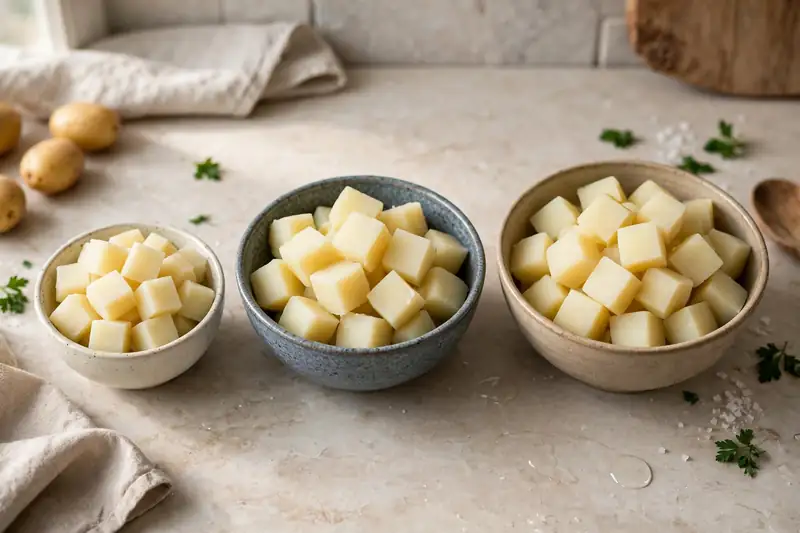
Peel the potato completely, removing all skin and any eyes or blemishes. Cut it into chunks and boil in plain water until fork-tender, usually 15 to 20 minutes. Drain, cool to room temperature, and cut into bite-size pieces.

That is the entire recipe. Nothing gets added. Ever. Nothing gets added at any step.
Baking works as a second option. Bake the potato plain, scoop the flesh from the skin, and discard the skin. The flesh of a plain baked potato is the same safe food as a boiled one.
Steaming is acceptable too, though it softens the potato a little less evenly. Whatever method you choose, the tests are the same: fully cooked through, completely plain, fully cooled.
Cooling is a safety step. Not a suggestion, a requirement, because dogs do not test temperature the way people do. Hot potato burns mouths, and dogs do not test temperature the way people do.
Spread the pieces on a plate for a few minutes after cooking. Cut them small while you wait. Pea-size for little dogs. Thumbnail-size for large ones. A cooled, small piece is the finished treat, and it took nothing but a pot and patience to make.
Every potato form, ranked from safest to never
Not all cooked potatoes are equal, because most cooked potatoes arrive loaded with extras. This ranking covers the forms dogs actually encounter, from the best choice to the ones that stay with the humans.

| Potato form | Verdict | Why |
|---|---|---|
| Boiled, peeled, unsalted | Best choice | Bland, soft, easy to portion |
| Baked, plain flesh only | Safe | Same as boiled once skin and toppings are gone |
| Steamed, peeled, plain | Safe | Slightly less even texture, same safety |
| Mashed, verified plain | OK in tiny amounts | Usually hides butter, milk, or salt; verify first |
| Roasted with oil or seasoning | Avoid | Fat and seasonings undo the safety |
| Fries, chips, wedges, hash browns | Never | Heavy fat and salt, often garlic or onion seasoning |
| Loaded mashed or baked | Never | Butter, sour cream, cheese, bacon, garlic |
The pattern is obvious once you see it: the plainer the potato, the safer the dog. Restaurant potatoes almost always fail, since they arrive cooked in oil with salt and seasoning, and homemade mashed potatoes fail more often than owners admit, because the butter and milk go in by habit before anyone thinks about the dog. When the form is uncertain, the answer is no.
A spoonful of verified plain boiled potato beats a hopeful guess about the casserole dish every time.
The green rule survives cooking
Green potatoes stay dangerous after cooking, and this is the rule owners violate most. The green color signals solanine production, and heat does not reliably destroy the high levels in green tissue. A boiled green potato is still a green potato. Cut away small green spots generously, and discard the whole potato when greening runs deep or sprouts are growing.
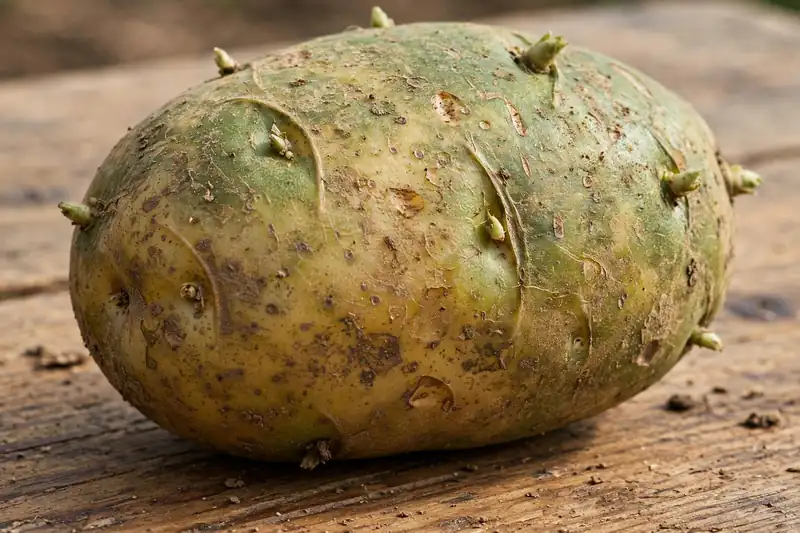
Sprouts deserve the same absolute verdict. Potato eyes grow into sprouts in a dark pantry, and the sprouts concentrate solanine at the highest levels in the plant. Snapping sprouts off is not enough. A sprouting potato goes in the trash, not in the pot, because the remaining eyes keep producing solanine as long as the tuber sits in the pantry. Check stored potatoes every week or two, and store them in a cool, dark, closed pantry where dogs cannot reach.
The ASPCA’s potato listing names solanine as the toxic principle across the plant’s green parts. That listing covers the leaves, stems, and green tubers, not the peeled cooked flesh on your counter. Knowing which part of the plant each rule targets keeps the fear proportional: respect the green, enjoy the plain.
How much cooked potato can dogs eat
Portions stay small and follow body weight. One feeding guide suggests about 20 grams of plain cooked potato for a 10-pound dog and about 65 grams for a 50-pound dog per serving. In kitchen terms, that is roughly one to two tablespoons for a small dog, two to four for a medium dog, and up to a quarter cup for a large dog. Keep every serving inside the 10 percent treat allowance.
| Dog size | Safe amount | Frequency |
|---|---|---|
| Small (under 20 lbs) | 1 to 2 tablespoons | Once or twice a week |
| Medium (20 to 50 lbs) | 2 to 4 tablespoons | Once or twice a week |
| Large (over 50 lbs) | Up to 1/4 cup | Once or twice a week |
The VCA’s feeding guidelines set the 10 percent ceiling that these portions sit inside.
Frequency matters as much as amount. Potato is mostly starch, and a daily potato habit displaces the balanced nutrition in the dog’s food without adding much. Once or twice a week keeps it a treat. Daily makes it a dietary pattern, and not a good one.
Weigh the first servings if you are unsure. Twenty grams is less than most owners guess, and the visual of a proper portion recalibrates the habit.
After a few measured servings, eyeballing becomes reliable. Measured spoonfuls keep dogs out of potato trouble. Platefuls cause it. Every time.
Potato vs sweet potato: which deserves the bowl
Sweet potatoes win the nutritional comparison by a wide margin. They carry no solanine at all, which removes the entire toxin question. They bring beta-carotene, more fiber, and a lower glycemic impact than white potatoes. For owners choosing one potato for regular sharing, the sweet potato is the calmer, more nutritious pick.

Our guide to sweet potatoes for dogs covers their preparation, which follows the same plain-and-cooked rules.
White potatoes keep two advantages: familiarity and price. They are already in the kitchen, they cook fast, and dogs like them. As an occasional treat, those are legitimate points. The honest ranking is that sweet potato is the better regular choice and white potato is the fine occasional one, with both served plain and both kept small.
The comparison extends across the nightshade family. Eggplant and tomatoes follow the same cooked-and-plain logic as white potatoes, with their own green-parts rules. Learn the pattern once and it transfers: peel or trim the risky parts, cook thoroughly, serve plain, portion small.
The vegetables change. The method does not.
Dogs that should skip potatoes
Diabetic dogs should skip white potatoes or get them only on the vet’s word. Cooked potato has a high glycemic index, meaning it raises blood sugar quickly, which complicates diabetes management. Sweet potatoes are the gentler option here too, but even they belong in the vet’s diet plan rather than the owner’s judgment.

Overweight dogs face no potato ban, but starch calories add up quietly, and a “small” serving creeps upward over weeks. For a dog on a weight-loss plan, lower-calorie vegetables like green beans or cucumber stretch the treat budget further. Potato remains allowed for the overweight dog, though it is rarely the best choice.
Dogs with a history of pancreatitis should avoid rich potato dishes entirely and keep even plain potato portions conservative. The plain boiled flesh is low in fat, so it rarely troubles the pancreas by itself. Dogs with pancreatic history still do best with the blandest possible additions. When the pancreas is already a medical project, every new food goes through the vet first.
Potatoes in commercial dog food
Potatoes appear as an ingredient in many commercial dog foods, usually as a carbohydrate source alongside better-known options like rice or barley. That fact surprises owners who absorbed the message that potatoes are dangerous, but there is no contradiction. Pet food manufacturers use peeled, cooked potato flesh, the same safe form this guide describes, processed under controlled conditions. The ingredient on the label and the safe treat in this guide are the same food.
The grain-free debate touches potatoes too. When the FDA investigated a potential link between certain grain-free diets and heart disease, potatoes appeared among the named ingredients alongside legumes like peas and lentils. No proof emerged against potatoes specifically, and the investigation concerned diets built heavily on those ingredients, not occasional treats. A spoonful of boiled potato is not the exposure the FDA was studying.
Read the dog food label with the same eye this guide teaches. Potato listed as one carbohydrate among several in a complete food is normal. A diet built predominantly on potatoes and legumes, rather than the balanced formula your dog already eats, is a question for your vet, not for a treat guide. The treat guidance and the diet guidance rhyme: small amounts fine, large amounts a conversation.
When to call the vet
Call your vet if your dog eats green or sprouted potato, a large amount of fried or seasoned potato, or shows repeated vomiting, weakness, tremors, or lethargy. Do not wait for symptoms with green potato ingestions, since early guidance changes the outcome. Note roughly how much was eaten and when, and save any remaining potato for the vet to see.

For mild stomach upset after a small rich bite, withhold food for a few hours, then offer a bland diet and watch. Signs that mean a visit rather than home watching include blood in vomit or stool, extreme tiredness, repeated retching, or a swollen belly. Most plain-potato incidents need nothing more than observation, but the call costs nothing and buys certainty.
Frequently asked questions about dogs and cooked potatoes
Can dogs eat mashed potatoes?
Only if verified plain: no butter, milk, salt, garlic, or gravy. Most mashed potatoes fail that test. A teaspoon of verified plain mash is fine; the family bowl is not.
Can dogs eat baked potato skin?
Skip the skin. Skins concentrate solanine even after cooking. Scoop the flesh out and discard the skin every time.
Can dogs eat French fries?
Skip fries. Fries add heavy fat and salt, and the seasonings often include garlic or onion powder. They offer nothing a dog needs. A spoonful of plain boiled potato is the treat instead.
Are potatoes good for dogs?
They are a safe treat, not a health food. Potatoes provide starch, some potassium, and vitamin C, but little else a dog needs. Sweet potatoes and green vegetables offer more nutrition per bite.
Can puppies eat cooked potato?
Older puppies can have tiny amounts of plain boiled potato. Keep portions smaller than an adult’s, and skip potatoes for very young puppies or any puppy with digestive trouble unless your vet agrees.
My dog ate buttery mashed potatoes. What should I do?
Watch for vomiting, diarrhea, or belly pain over the next day. A small stolen bite usually means mild upset. A large fatty portion, especially with garlic, warrants a vet call. Note how much was eaten and what was in it before you call.
Cooked potatoes earn their quiet yes. Peel them, boil them plain, cool them down, and keep the portions honest, and the most feared vegetable in the dog-food debate becomes one of the simplest treats you make. Respect the green rule, skip the loaded forms, and let the humble boiled potato do what it does: fill a few bites without any drama at all.
Disclaimer: This article is for general information only and is not veterinary advice. Every dog is different, and dogs with diabetes, pancreatitis, or other health conditions may need different guidance. If your dog shows symptoms after eating potatoes, contact your veterinarian.

1 thought on “Can Dogs Eat Cooked Potatoes? Safe Prep and Portions”