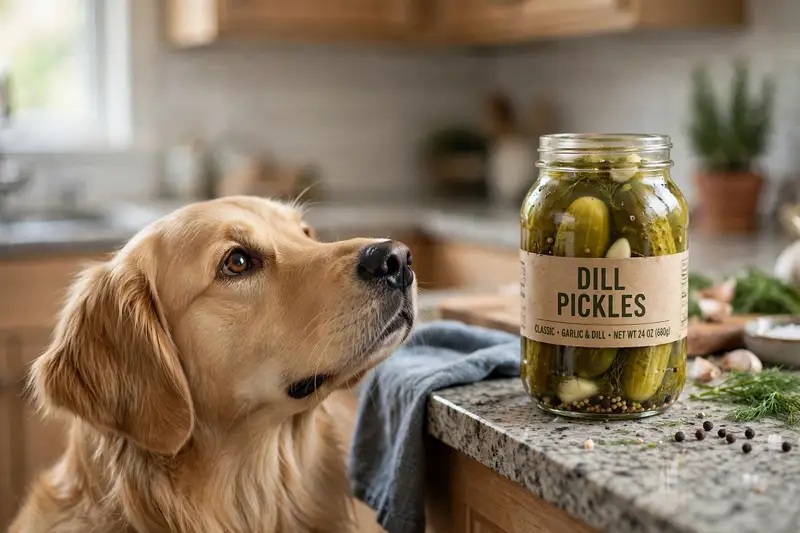
Pickles are crunchy, sour, and everywhere, from burger joints to your own fridge door. When a pickle chip hits the floor, most dogs are on it before you can blink. The answer is not a hard no, but it is close. Pickles are not toxic to dogs, yet the sodium, vinegar, and the garlic and onion hiding in most brines make them a poor treat. A tiny lick of pickle juice will not harm a healthy dog. A whole spear is too much salt for any dog.
Can dogs eat pickles? The short answer
Pickles are not toxic to dogs, but they make a bad treat. The sodium load is far too high, the vinegar can upset stomachs, and most commercial brines contain garlic or onion. Offer a fresh cucumber instead and skip the pickle jar.
This is one of those foods where “not poisonous” gets mistaken for “fine to share.” The two are not the same. A food can be free of toxins and still be a bad idea, and pickles are the textbook example. If your dog regularly scores dropped snacks, the list of human foods dogs can eat will save you guessing next time.
Dogs steal pickles because they are there, not because dogs crave them. The strong smell triggers investigation, the crunch rewards it, and the sour taste usually ends the experiment. Most dogs that try a pickle once do not beg for a second, which makes this one of the easier foods to keep off the menu.
What is actually in a pickle
A pickle is a cucumber soaked in brine, and the brine is the problem. Typical commercial brine contains water, vinegar, salt, garlic, dill, and spices, and some recipes add onion, sugar, or artificial sweeteners.

Read any pickle jar label and the pattern is obvious. Salt is always near the top of the ingredient list. Garlic shows up in most dill recipes, and onion appears in bread and butter styles. Both damage red blood cells in dogs, which is why our guides on garlic and onions both end with the same warning. Dill itself is harmless, and the cucumber at the center is perfectly safe. It is everything the cucumber soaked in that causes the trouble.
Bread and butter pickles deserve special attention because they look harmless. The sweetness suggests they are milder, but the sugar adds empty calories and the onion that flavors many recipes adds real risk. Sweet does not mean safe, and in the sugar free versions the xylitol risk makes them the most dangerous pickle of all.
Sodium: the main reason to say no
A single dill pickle spear can carry several hundred milligrams of sodium. Dogs need very little salt, and that one spear can deliver a large share of a small dog’s entire daily limit.

Too much salt brings excessive thirst, vomiting, and diarrhea, and in extreme cases it can cause sodium ion poisoning, with tremors and seizures. A healthy large dog that steals one pickle chip will most likely just drink a lot of water. A small dog that eats a whole spear faces a much bigger load relative to its body weight. The VCA’s general feeding guidelines keep treats at a small fraction of daily intake, and salty foods deserve the smallest share of all. Dogs with heart or kidney disease should not get pickles at all.
Dogs evolved eating almost no salt, and their kidneys are built for a low sodium diet. Commercial dog food is carefully balanced for this, which is why salty human foods hit dogs harder than they hit people. A pickle that tastes pleasantly salty to you is intensely salty to a dog, and small bodies feel it more.
Vinegar, spices, and the sour stomach
Vinegar is not toxic to dogs, but it is acidic enough to irritate an empty or sensitive stomach. The strong sour taste also puts most dogs off, which is nature doing you a favor.
A dog that laps a little pickle juice usually walks away on its own. One that eats several pickles may vomit simply from the acidity and salt hitting together. Spicy pickles add another layer, since chili and hot pepper irritate the mouth and gut. There is no benefit to offset any of this. Unlike vegetables that bring fiber or vitamins, a pickle brings nothing a dog needs that the plain cucumber did not already have.
Hot and spicy pickles cause a different kind of misery. Capsaicin irritates the mouth, throat, and stomach lining, and dogs cannot reach for milk the way people do. A dog that eats a spicy pickle may drool, paw at its mouth, and vomit. The episode passes, but it is distressing to watch and easy to prevent.
Sugar free pickles and the xylitol trap
Some “sugar free” or “light” pickles use xylitol as the sweetener, and xylitol is extremely toxic to dogs. Even small amounts can cause a dangerous drop in blood sugar and liver failure.
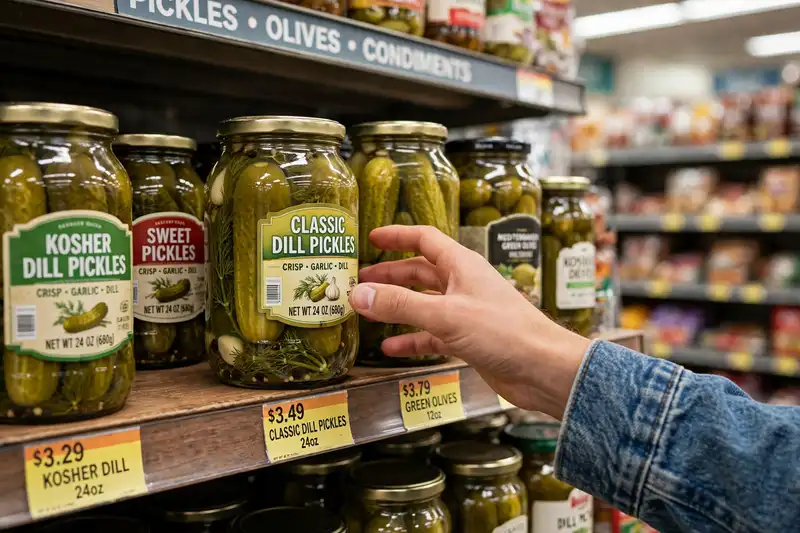
This is the one pickle scenario that turns urgent. Most pickles do not contain xylitol, but the sugar free niche is exactly where it hides, along with sugar free gum, candy, and peanut butter. Our guide to xylitol poisoning in dogs covers the symptoms and the timeline, and the ASPCA’s people foods list is a good bookmark for the next dropped snack. Check the label on any sugar free product in your kitchen, pickles included. If your dog eats a xylitol sweetened pickle, call your vet immediately.
The xylitol check should become a reflex for every sugar free product that enters your kitchen, not just pickles. Gum, mints, peanut butter, yogurt, and baked goods all hide it. Get in the habit of scanning ingredient labels before the product goes in the pantry, and keep a short list of xylitol containing brands on the fridge.
Cucumber vs pickle: the easy swap
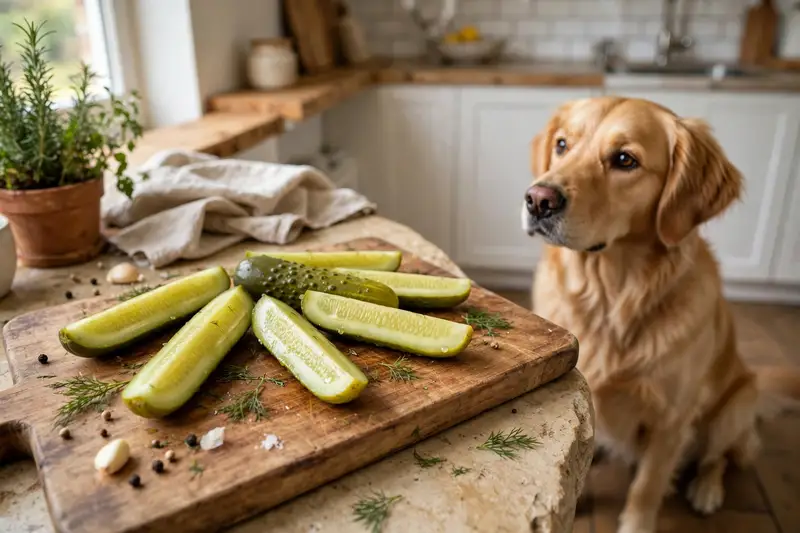
A fresh cucumber is everything a pickle is not: hydrating, low calorie, low sodium, and safe. If your dog likes the crunch of pickles, cucumber slices scratch the same itch with none of the risk.

Our guide to cucumbers for dogs covers portions and prep, and the short version is simple: wash, slice, serve. Cucumbers are mostly water, which makes them one of the best low calorie treats in the produce drawer. The swap works because the dog usually wants the crunch and the attention, not the vinegar. Give the dog the cucumber and keep the pickle for your own sandwich.
Pickled vegetables beyond cucumbers follow the same rules. Pickled beets, pickled onions, and pickled peppers all bring brine, salt, and seasonings, and pickled onions add the onion toxicity problem on top. The whole pickle family stays off the dog’s menu, while the fresh versions of each vegetable get judged on their own merits.
How much pickle is too much
There is no recommended serving of pickles for dogs, because pickles are not a recommended food. A lick of juice or a crumb of pickle is harmless. Anything beyond a taste is too much salt for no benefit.
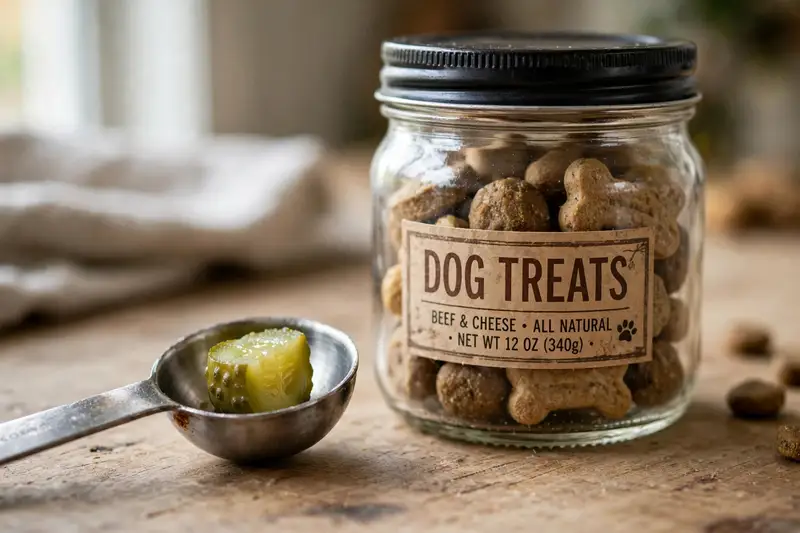
Think of it as an accident scale rather than a portion chart. A stolen pickle chip: offer water and watch. Half a spear: expect thirst and possible vomiting, and watch closely. A whole spear or several pickles, especially in a small dog: call your vet. The Merck Veterinary Manual is a solid reference on salt toxicity signs if you want the clinical detail behind the warning.
Children are the most common pickle suppliers to dogs. A toddler dropping a pickle spear for an eager dog is a scene every parent recognizes. Teach kids early that dogs get dog treats, and keep a jar of dog safe treats where children can reach them so the generosity has a safe outlet.
Signs your dog ate too many pickles
Watch for excessive thirst, vomiting, diarrhea, and lethargy in the hours after a pickle incident. Most cases are mild and pass with water and rest, but the signs below mean a vet visit.

Heavy drooling, repeated vomiting, muscle tremors, wobbliness, or extreme tiredness point to serious salt intake and need prompt veterinary care. These signs are rare from pickles alone and usually involve a small dog and a large amount, but they are the reason the “just one pickle” habit is worth breaking. For comparison, our guide to foods that are toxic to dogs lists the items where even a small amount is an emergency. Pickles sit one tier below that, in the “unwise but usually survivable” category.
Dehydration is the quiet companion of salt overload. A dog that ate too many pickles may drink heavily and then need frequent outdoor trips through the night. Make sure fresh water is always available and the dog can get outside easily. Restricting water after salt intake is dangerous, so never do it.
Safer crunchy swaps
Cucumber is the obvious swap, and it is not the only one. Carrot sticks, apple slices without seeds, and blueberries all give dogs the satisfying crunch without the brine.

The pattern behind every good swap is the same: plain, fresh, and low in salt. Keep a bag of baby carrots or a sliced cucumber in the fridge and the pickle problem solves itself. Your dog gets the crunch it wanted, and you stop doing sodium math at midnight.
The best treat strategy is replacement, not just refusal. A dog that gets a cucumber slice every time the family has pickles learns that the crunch comes in a safe form. Consistency matters more than the specific vegetable. Pick one or two safe swaps and stick with them until they become habit.
When to call the vet
Call your vet if your dog eats several pickles, any sugar free pickles, or shows repeated vomiting, tremors, extreme thirst that will not quit, or lethargy. A single stolen chip needs only water and watching.

Xylitol is the true emergency here. If the pickles were sugar free and xylitol is on the label, do not wait for symptoms. Call your vet or the ASPCA Animal Poison Control Center at once, since xylitol acts fast. For a plain pickle overdose with mild signs, offer plenty of fresh water and monitor. When in doubt, the call costs nothing and buys certainty.
Save your vet’s emergency number and the poison control number in your phone now, before any incident. Pickle emergencies are rare, but xylitol works fast when it is involved, and the minutes spent searching for a number are minutes lost. A note on the fridge covers pet sitters and family members too.
Frequently asked questions about dogs and pickles
Owners ask about pickle juice, dill pickles versus sweet, and what to do after a stolen spear. The answers below cover the usual round.
Can dogs drink pickle juice?
A lap or two will not harm a healthy dog, but do not offer it on purpose. Pickle juice is concentrated salt and vinegar, and some brands add garlic. Fresh water is always the better drink.
Are dill pickles safer than sweet pickles?
Dill pickles usually contain garlic, while sweet pickles contain more sugar and sometimes xylitol in sugar free versions. Neither is safe as a treat. The risks just come in different flavors.
Can dogs eat fried pickles?
No. Fried pickles add hot oil and breading to all the existing problems of salt, vinegar, and garlic. They are firmly in the never category.
Can dogs eat homemade pickles?
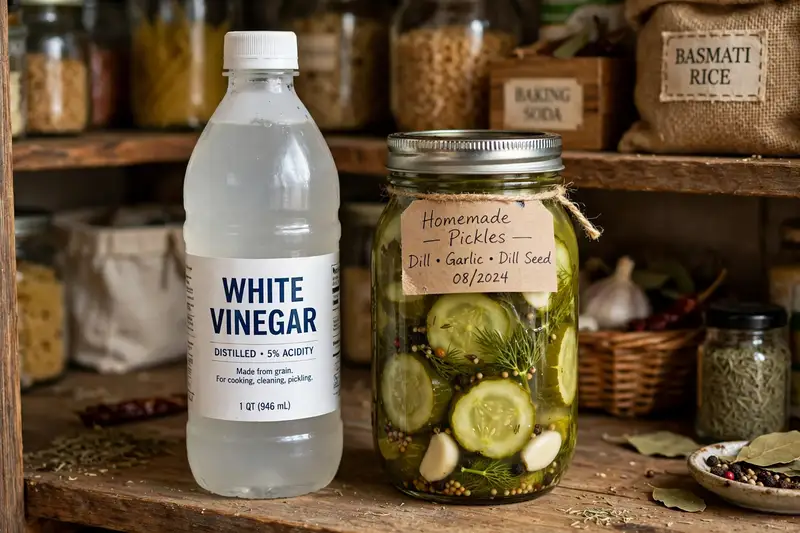
Homemade pickles are only safer if you control the recipe, and most home recipes still use plenty of salt and garlic. A cucumber quick pickled in plain water with dill is essentially a cucumber. Anything brined is a pickle with the same warnings.
My dog ate a whole dill spear. What should I do?
Offer fresh water and watch for vomiting, diarrhea, and extreme thirst over the next few hours. Check the jar for garlic and onion in the ingredients. Call your vet if vomiting repeats, your dog seems lethargic, or the dog is small.
Why does my dog love pickles so much?
Dogs are drawn to strong smells and novel flavors, and the salt triggers the same appetite response it does in people. Liking something is not the same as it being good for them, which is exactly why the cucumber swap exists.
Pickles are not toxic, but they are a bad deal for dogs in every other way. Too much salt, too much vinegar, and too often garlic or onion in the brine. The cucumber underneath is the part worth sharing, so share that instead and leave the jar on the shelf.
Disclaimer: This article is for general information only and is not veterinary advice. Every dog is different, and dogs with health conditions, puppies, and nursing dogs may need different guidance. If you are unsure, or if your dog shows symptoms after eating pickles, contact your veterinarian.