Can Dogs Eat Ginger? Benefits, Safe Doses, and Risks Explained
Your dog is drooling before a car ride, or you are cooking with ginger and wondering if a fallen piece is a problem. Either way, the answer is good news. Plain ginger is safe for dogs in small amounts, and it genuinely helps some dogs with nausea and motion sickness. The reason this topic needs a full article instead of a one-line yes is dose. Ginger is one of those foods where a pinch helps and a handful hurts. This guide covers how much is safe for your dog’s size, which forms to buy, which ginger products to keep away from dogs, and the health situations where you should skip ginger entirely and call your vet first.

Quick answer: is ginger safe for dogs?
Yes. Plain ginger in small amounts is safe for dogs, according to the AKC. It can settle nausea and calm motion sickness, and small dogs do fine with a tiny pinch of it. The catch is dose. Too much causes stomach upset, and dogs with certain health issues should skip it entirely. Read the dosing section before you serve any.

Most human foods land in a gray zone, but ginger is one of the clearer cases. Plain ginger in small amounts is safe for dogs and may even benefit them. It carries antioxidants, works as a mild anti-inflammatory, and has a long history of use against nausea. Fresh, powdered, and juiced ginger are all fine, as long as nothing else has been added to them.
That “nothing else added” part is doing a lot of work. The ginger products on store shelves often bring company: sugar in candied ginger, salt and vinegar in pickled ginger, spice blends in ginger seasoning packets. The root itself is not the problem. The add-ons are. Stick to plain fresh or plain powdered ginger and you avoid the issue entirely.
One more thing worth knowing up front: ginger is not an everyday essential like proper food. Think of it as an occasional helper for specific situations, like travel days or mild stomach grumpiness. Dogs with great diets do perfectly well never tasting ginger.
How ginger helps with nausea and motion sickness
Ginger calms the stomach. It has been used for motion sickness in people for years, and vets report it can help dogs the same way. It also settles post-meal gas and bloating. The evidence in dogs is thinner than in people, so treat it as a gentle helper rather than a cure.

Motion sickness is where ginger earns its reputation. Dogs, like people, can feel sick from the movement of a car, and some dogs start drooling or even vomiting on short trips. Ginger’s active compounds calm the digestive tract, and it is widely used for nausea from motion sickness and even from chemotherapy. The research in dogs is thinner than the research in people, but the results owners report line up with what the compound does in the body.
Ginger helps in a few smaller ways too. It reduces gas and bloating after meals, and its anti-inflammatory properties may support dogs with stiff joints. Owners of arthritic dogs sometimes rotate ginger with other gentle options like turmeric. If your dog’s stomach is upset for reasons beyond a car ride, serve the ginger over a bland diet rather than rich food, which gives the gut less to handle while it settles.
Timing matters for travel. Give ginger about 30 to 45 minutes before you leave so the compounds reach the stomach before the motion starts. Ginger is not a replacement for a vet-prescribed anti-nausea drug if your dog vomits every trip, but for mild cases many owners find a pinch of ginger does the job.
How much ginger is safe for dogs
The rule of thumb is no more than one-sixteenth of a teaspoon per pound of body weight per day. In practice that means about one-quarter teaspoon for small dogs and three-quarters for large breeds. Start with less than you think you need and watch how your dog reacts.

Veterinary guidance from PetMD agrees that small amounts are safe but stresses moderation. Start well under the ceiling, especially the first time. A dog’s stomach reacts to ginger like a person’s does: a little settles, a lot irritates. If the first dose helps and causes no gas or loose stool, you have found your amount. If you see any gurgling or discomfort, scale back.
Weigh your dog or use the last vet record. Guessing a dog’s weight is where dosing goes wrong, because the difference between a 15-pound and a 25-pound dog nearly doubles the safe amount. Kitchen measuring spoons work fine. Ginger powder is easier to measure precisely than fresh mince, which is one reason many owners choose powder for dosing.
Fresh ginger vs powdered ginger
Both work. Fresh ginger is the least processed option and easy to grate over food, while powder is easier to measure and stores well. Ginger juice is fine too. What matters is plain ginger with no added sugar, salt, or spice blends mixed in.

Fresh ginger is the root you find in the produce aisle, and it is the least processed form. It grates easily over food and carries the full set of active compounds. Peel it first, because the skin is tough and fibrous, and mince or grate it fine so your dog actually eats it instead of picking around it.
Powdered ginger is just dried, ground root, and it is the easiest form to dose. A pinch on food disappears into the meal. Store it like any spice, away from moisture, and check the label to make sure it is 100 percent ginger with no added anti-caking agents or flavor blends. For most owners the powder wins on convenience, and vets accept both forms.
Fresh ginger juice works too, and some owners prefer it for dogs that refuse powder on their food. Squeeze or press peeled ginger and drizzle a few drops over the meal. One form to skip outright: anything candied, sugared, or pickled. Those add sugar, salt, and vinegar that undo the benefit and can cause their own problems.
How to prepare and serve ginger
Peel fresh ginger, then mince or grate it very fine so it mixes into food instead of sitting in chunks. Sprinkle the powder or mince over your dog’s regular meal. For a road trip, serve it about half an hour before you leave so it has time to settle.

Preparation takes about a minute. Peel a small piece of fresh ginger with a spoon, then grate or mince it into pieces your dog cannot pick out. Tossing a chunk in the bowl usually ends with the chunk on the floor. Mixed into wet food or plain rice it goes down without a fight.
Powder is simpler still. Measure the dose with a measuring spoon and stir it through the meal. For dogs that turn their nose up at new smells, mix the ginger into something familiar first. Some owners add a dab of honey to make the flavor more appealing, which is fine in tiny amounts for most adult dogs.
Serve ginger with food, not on an empty stomach. Ginger on an empty stomach can irritate the lining and cause the very nausea you are trying to prevent. Mixing it into a meal also slows absorption and keeps the effect gentle. If your dog is a picky eater, introduce the ginger smell gradually over two or three meals before serving the full dose.
Safe portion sizes by dog size
Small dogs get up to one-quarter teaspoon, medium dogs up to one-half, and large dogs up to three-quarters of a teaspoon per day. These are ceilings, not targets. Most dogs need far less to get the nausea benefit.
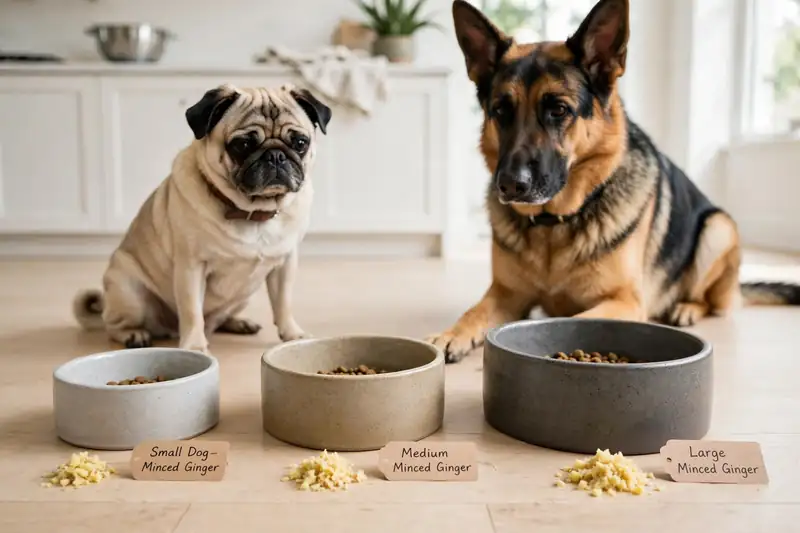
| Dog size | Weight range | Max ginger per day |
|---|---|---|
| Small | Up to 25 lb | 1/4 teaspoon |
| Medium | 26 to 50 lb | 1/2 teaspoon |
| Large | Over 50 lb | 3/4 teaspoon |
Use the table as a daily ceiling, not a target. Most dogs need half of these amounts or less to get the nausea benefit. If your dog weighs between categories, use the lower one. And if your dog takes any medication, check with your vet before using these amounts at all.
The per-pound formula behind the table is one-sixteenth of a teaspoon per pound of body weight, which keeps giant breeds in a sensible range. A 100-pound dog lands near one teaspoon by that math, and that is plenty. More ginger does not mean more benefit. Past the ceiling you get side effects, not extra relief.
In grams, a quarter teaspoon of ground ginger is roughly half a gram, and three-quarters is about a gram and a half. The numbers sound tiny because the safe doses are tiny. That is normal for potent plant compounds.
What happens if your dog eats too much ginger
Too much ginger flips the benefit. The same root that settles a stomach can cause heartburn, gas, nausea, and diarrhea when the dose is too high. Ginger also thins the blood, which becomes a real problem for dogs on certain medications or heading into surgery.

The first sign of too much ginger is usually gas, followed by nausea, heartburn-style discomfort, and loose stool or diarrhea. These symptoms show up within a few hours of the dose. Most cases resolve on their own once the ginger passes, but watch your dog closely for anything worse.
Ginger also acts as a mild blood thinner. That matters for dogs taking NSAIDs or other blood-thinning medication, dogs with bleeding disorders, and dogs scheduled for surgery. In those cases ginger can increase bleeding risk, so it should be skipped entirely. Ginger can also lower blood pressure and blood sugar, which is a concern for diabetic dogs and dogs with heart conditions.
If your dog ate a large amount of ginger or ginger products, call your vet before doing anything else. Do not try to induce vomiting in dogs on your own, since that carries its own risks and is only appropriate in specific situations. The vet will want to know how much was eaten, what form it was in, and your dog’s weight.
Puppies, senior dogs, and pregnant dogs
Be extra careful here. Very young puppies, older dogs on medication, and pregnant or nursing dogs should get ginger only after a vet says yes. Their bodies handle supplements differently, and the safety data for pregnancy in dogs simply is not there.

Puppies under six months should get ginger only with a vet’s okay. Their digestive systems are still developing, and their tiny body weight makes dosing errors more likely. A dose that is safe for an adult small dog can be too much for a four-pound puppy. If a puppy has car sickness, ask the vet about the right approach before reaching for the spice jar.
Senior dogs deserve the same caution, for a different reason. Older dogs often take daily medication, and ginger’s blood-thinning effect and blood pressure effects can interact with those drugs. A vet who knows the medication list can say yes or no in seconds, and that quick check prevents real problems.
Pregnant and nursing dogs should skip ginger unless a vet approves it. The AKC notes that safety in pregnancy has not been established for dogs, and that is not a gap worth gambling on. There are safer ways to handle nausea in a pregnant dog, and your vet can point you to them.
Ginger to avoid and when to call the vet
Skip pickled, candied, and sugared ginger. The vinegar, salt, and sugar they carry cause problems on their own, and some brands hide xylitol in the mix. Call your vet if your dog eats a large amount of any ginger or shows vomiting, diarrhea, or lethargy.

Pickled ginger, the pink slices that come with sushi, is the form most likely to cause trouble. The vinegar and citric acid upset most dogs’ stomachs, the salt adds sodium they do not need, and some brands contain xylitol, the artificial sweetener that is toxic to dogs. The Merck Veterinary Manual lists xylitol among the food hazards dog owners should know, which is reason enough to keep pickled ginger off the menu.
Candied and sugared ginger bring a different problem: concentrated sugar that can upset the stomach and spike blood sugar. Ginger snaps, gingerbread, and ginger cookies add fat and spices on top of the sugar, and chocolate-coated versions add theobromine risk. None of these are worth the gamble when plain ginger costs almost nothing.
Call your vet if your dog eats a large amount of any ginger product, or if you see vomiting, bloody diarrhea, or unusual lethargy after ginger. Bring the packaging if the ginger came from a product, so the vet can check for xylitol and other additives. The ASPCA’s list of people foods to avoid feeding pets is a good reference for what else to keep away from curious dogs.
Can dogs eat raw ginger?
Yes. Raw, fresh ginger is fine as long as you peel it and mince it finely. The raw root is actually the purest form, with no processing or additives. Serve a small amount mixed into food rather than as a chunk, since many dogs will spit out a raw piece. Wash the root first, just as you would for yourself.
Is ginger powder safe for dogs?
Yes, and it is the easiest form to dose. Use plain ginger powder with no added spices or flavorings. Measure with a real measuring spoon, not a dinner spoon, because the amounts are small. Stir it into wet food so your dog cannot inhale the dry powder, which can make them sneeze.
Can dogs eat pickled ginger from sushi?
No. Pickled ginger contains vinegar and salt that upset a dog’s stomach, and some brands use xylitol, which is toxic to dogs. A tiny accidental taste is unlikely to cause harm, but it should never be given on purpose. If your dog steals a few slices, watch for vomiting and call your vet if anything looks off.
How much ginger can I give my dog for car sickness?
Follow the dosing table above: up to one-quarter teaspoon for small dogs, one-half for medium, and three-quarters for large dogs per day. Serve it 30 to 45 minutes before the trip, mixed into a light meal. If your dog vomits on every car ride despite ginger, ask your vet about prescription options.
Can ginger upset a dog’s stomach?
Yes, when the dose is too high. Ginger is a stomach settler at small doses and a stomach irritant at large ones, causing gas, heartburn, nausea, and diarrhea. This is the most common ginger problem in dogs, and it comes from owners assuming more is better. Stick to the ceiling amounts and your dog should be fine.
Conclusion

Ginger is one of the safer human foods you can share with a dog, as long as you respect the dose. A pinch of plain fresh or powdered ginger can settle travel nausea and mild stomach upset. Keep the amounts small, skip the sugared and pickled versions, and check with your vet if your dog is a puppy, pregnant, on medication, or scheduled for surgery. Ginger belongs on the list of human foods dogs can eat, in the small-doses column.
Vet disclaimer
This article is for information only and is not veterinary advice. Every dog is different, and health conditions and medications change what is safe. Talk to your veterinarian before adding ginger or any supplement to your dog’s diet, especially if your dog is very young, pregnant, on medication, or has a chronic condition.