Can dogs eat beets? Benefits, oxalate risks and portions
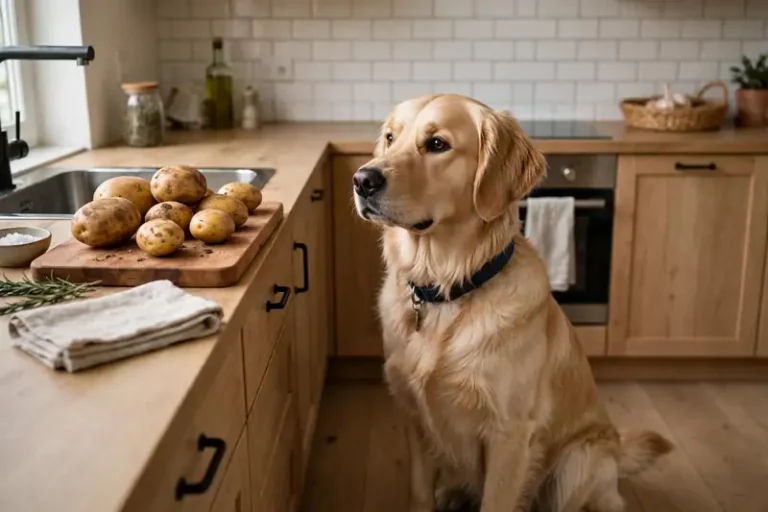
Beets stain everything they touch, so it is fair to ask whether that deep red root belongs anywhere near your dog’s bowl. The answer is yes, in small amounts. Cooked beets are safe for dogs and bring fiber, folate, and potassium. But beets carry one real caution: they are high in oxalates, which matters for dogs prone to bladder stones. A few plain cubes now and then suit a healthy dog. Dogs with urinary or kidney trouble should skip them.
Can dogs eat beets? The short answer
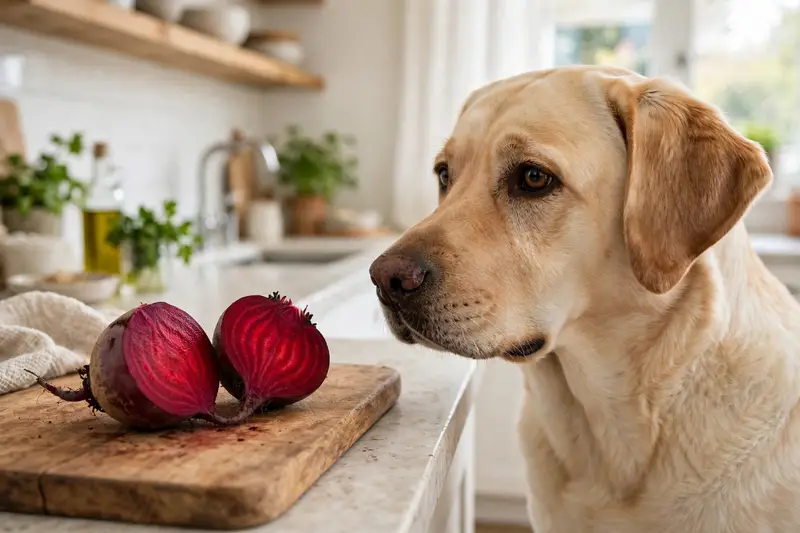
Yes, dogs can eat beets in moderation. The root is not toxic, and cooked beets offer fiber, folate, vitamin C, potassium, and manganese. Serve them plain, cooked, and cut small. Skip pickled beets, heavily salted canned beets, and large servings. Dogs with a history of bladder stones or kidney disease should avoid beets because of their oxalate content.
The AKC confirms that beets are safe for dogs in small amounts, with the usual reminder that treats should stay a small part of the diet. Beets are not a required food. A complete dog food already covers your dog’s nutrition. What beets offer is a colorful, fibrous extra for healthy dogs, plus one quirk worth knowing: they can turn your dog’s urine and stool reddish, which looks alarming but is harmless.
What beets offer nutritionally
A beet brings fiber, folate, vitamin C, potassium, manganese, and betalains, the pigments behind its color that act as antioxidants. A medium beet holds around 35 to 40 calories and roughly 7 grams of natural sugar, with a good amount of water.
Fiber is the main practical benefit. It feeds healthy gut bacteria and helps stool hold its shape, and a few beet cubes add a gentle fiber bump without much calorie cost. Folate supports cell growth and repair, which matters for puppies and pregnant dogs, though the amounts in a treat-size serving are modest. Potassium helps muscles and nerves work normally.
The betalains deserve an honest note. They are studied as antioxidants in human nutrition, and they do no harm in dogs, but no veterinary body credits them with a proven health effect in canines. Treat the antioxidant talk as a bonus, not a reason to feed beets. The fiber and the low calorie cost are the real reasons a few cubes earn a place as an occasional treat.

Oxalates and bladder stones: the main risk
Beets are high in oxalates, natural compounds that can bind with calcium and form crystals. In dogs prone to calcium oxalate bladder stones, a high-oxalate diet raises the risk of new stones. This is the one firm reason some dogs should not eat beets at all.
Healthy dogs handle dietary oxalates without trouble. The problem is specific to dogs with a history of bladder stones, especially the calcium oxalate type, and dogs managing kidney disease. For these dogs, vets usually recommend a low-oxalate diet, and beets do not fit in it. Spinach is the other common vegetable in this category, so a dog already avoiding spinach for oxalates should avoid beets too.
If your dog has never had urinary trouble, a few beet cubes will not create it. Stones form over time from diet, genetics, and urine chemistry together, not from one snack. But if your vet has ever mentioned crystals in your dog’s urine or put your dog on a urinary diet, ask before offering beets. That one conversation decides it.

Red urine and stool after beets: normal or not
Beets can turn your dog’s urine pink or red and tint the stool reddish. This is called beeturia, and it is harmless. The betalain pigments pass through the body without being fully broken down, and they color what comes out.
The scare comes from the resemblance to blood. Red urine after a beet snack is pigment, not bleeding, and it fades within a day as the beet clears the system. The difference that matters is timing. Pigment from beets shows up within hours of eating them and disappears just as fast. Blood in urine has no connection to a meal and keeps appearing.
Do not guess when you are unsure. If your dog did not eat beets and the urine is red, or if red urine lasts more than a day after the beets are gone, call your vet. Straining to urinate, frequent small trips outside, or crying while peeing also mean a vet visit regardless of diet. Beeturia explains a one-time color change after beets. It never explains ongoing symptoms.

Raw, cooked, pickled, and canned beets
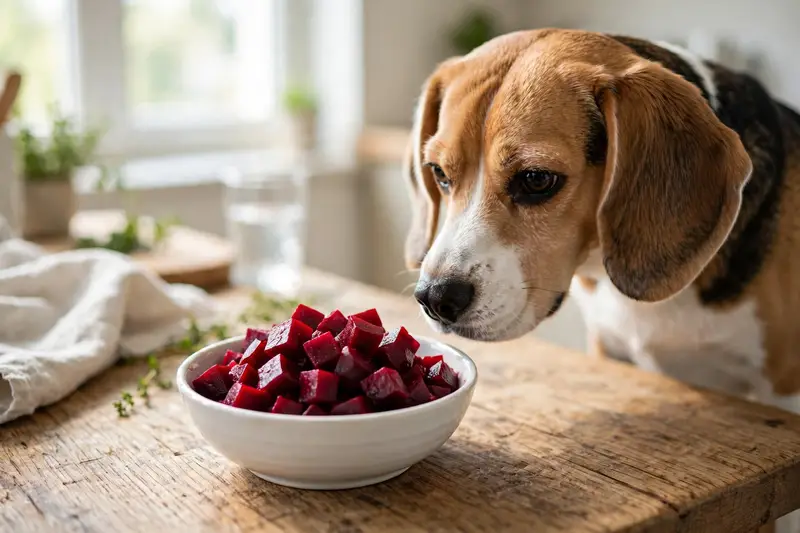
Cooked beets are the right choice. Boil or steam them plain, with no salt, butter, or seasoning, then dice them small. Cooking softens the dense flesh so it digests well and removes the choking risk of hard raw chunks.
Raw beets are not toxic, but they are hard and fibrous, which makes them tough on digestion and a choking hazard for dogs that gulp. Grated raw beet in tiny amounts is the only raw form worth considering, and even then cooked is simpler and safer. Pickled beets are out. The vinegar brine, salt, and spices irritate a dog’s stomach, and some pickling spice blends include onion or garlic.
Canned beets need a label check. Many cans add salt, and some add sugar. A no-salt-added can, rinsed well, is acceptable in a pinch, but fresh cooked beets cost little more effort. Beet juice and beet powder concentrates are not dog treats either. The juice packs the sugar of several beets into one serving, and powders are made for human supplement routines, not canine portions.

How much beet is safe to feed
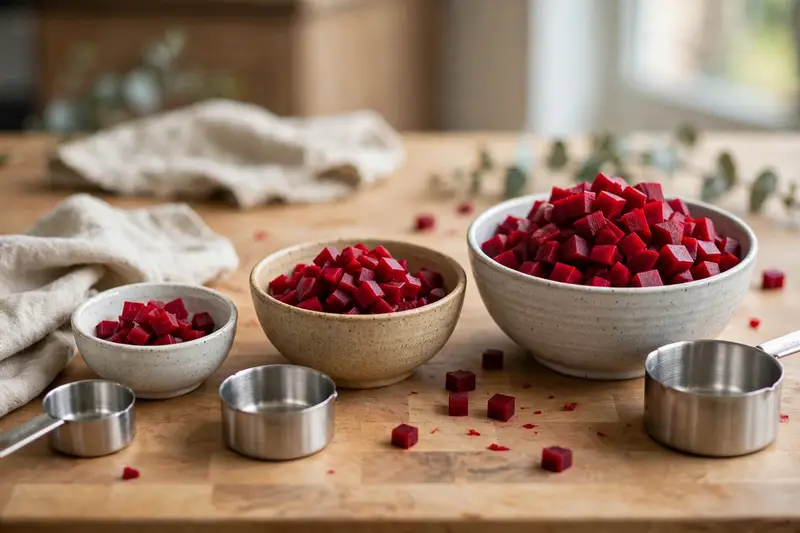
Keep beets at treat size: a few small cubes a few times a week, inside the 10 percent treat rule. A small dog gets two or three pea-size cubes. A medium dog gets a tablespoon of diced beet. A large dog can handle two tablespoons, occasionally.
The 10 percent rule exists because every treat bite replaces a bite of balanced food. Beets bring fiber and a little sugar without the protein and fat a dog runs on, so the trade stays harmless only in small amounts. More beet also means more oxalate load, which is another reason portions stay small even for healthy dogs.
| Dog size | Safe amount | Frequency |
|---|---|---|
| Small (under 20 lbs) | Two or three pea-size cubes | Once or twice a week |
| Medium (20 to 50 lbs) | One tablespoon diced | Once or twice a week |
| Large (over 50 lbs) | Two tablespoons diced | A few times a week |
Start with less than the chart on the first try. One small piece, then watch for a day. Most dogs digest beets without any complaint, but a sensitive stomach can answer with gas or loose stool, and your dog’s reaction sets the real limit.
Sugar, calories, and diabetic dogs
Beets are a sweet root. A medium beet carries around 7 grams of natural sugar, which is modest next to fruit but real next to celery or green beans. Healthy dogs handle that fine in treat-size pieces.
Diabetic dogs need more care. Root vegetables raise blood sugar faster than leafy greens, so a diabetic dog should only get beets if the vet approves, and many vets will suggest a lower-sugar vegetable instead. The same thinking applies to overweight dogs. Beets are not high calorie, but their sugar adds up inside a tight treat budget, and there are leaner options.
Watch the quiet sugar stack across the day. A dog that gets beets, training treats, and a dental chew can end up with more sugar than the owner planned. On beet days, keep the rest of the treats light. If weight is a concern, measure the cubes instead of eyeballing them.

Beets vs carrots, sweet potatoes, and other root vegetables
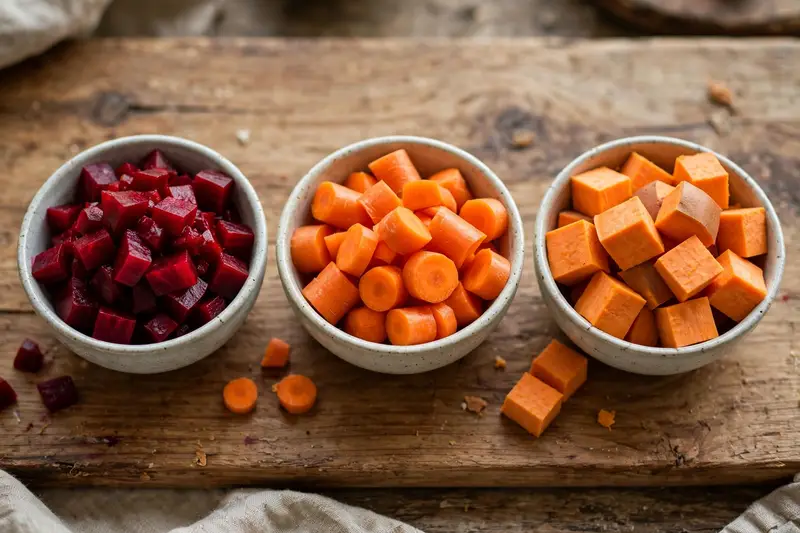
Carrots are the easier root vegetable. They are lower in oxalates, lower in sugar, and safe for nearly every dog, including stone-prone ones. If your dog is on a urinary diet, carrots replace beets with no argument.
Sweet potatoes sit between the two. They are nutritious and most dogs love them, but they also contain oxalates, so the same stone-prone caution applies in smaller measure. Beets bring the strongest color and the most dramatic pigment effect, which is fun but nutritionally irrelevant. For a healthy dog, rotating among carrots, sweet potatoes, and beets keeps any single compound small.
The comparison that matters is oxalate load. Carrots are low, sweet potatoes moderate, beets and spinach high. A dog with no urinary history can eat from the whole list. A dog with a stone history sticks to the low end. Your vet knows which list your dog is on.
Can puppies and senior dogs eat beets
Puppies can eat beets in tiny amounts once they are on solid food. Use soft, well-cooked pieces cut very small, and introduce them the same way as any new food: one small piece, then a day of watching. A puppy’s gut is still settling, and new foods arrive one at a time.
Senior dogs handle beets the same as adults, with one extra consideration. Older dogs are more likely to carry kidney disease or a history of bladder stones, and either condition takes beets off the menu. A senior with clean bloodwork and no urinary history gets the same treat-size rule as an adult. A senior on a prescription urinary or kidney diet gets no beets unless the vet signs off.
For both ages, the preparation rules do not relax. Cooked, plain, diced small. Puppies swallow without chewing more than adults do, which makes small pieces a safety issue, not just a preference.

When to call the vet
Most beet incidents need nothing more than watching. Call your vet if your dog shows repeated vomiting or diarrhea, refuses food for more than a day, strains to urinate, passes red urine unrelated to a recent beet snack, or seems to be in belly pain.
Urinary signs are the ones to take seriously. Straining, frequent small urinations, crying while peeing, or blood-tinged urine that has no beet explanation can point to stones or infection, and these do not wait. An upset stomach from too many beets usually settles within a day; urinary symptoms never get the wait-and-see treatment.
For a dog with known bladder stones or kidney disease that ate beets, call your vet for guidance even if the dog looks fine. The vet may want to adjust the diet plan or check a urine sample. When in doubt, the call costs nothing and buys certainty.

Frequently asked questions about dogs and beets
Owners usually ask about beet greens, pickled beets, and the red urine scare. The answers below cover the questions that come up most.
Can dogs eat beet greens?
Yes, in small amounts. The leafy tops are safe and nutritious, but like the root they contain oxalates, so the same stone-prone caution applies. Wash them well, chop them fine, and serve them cooked. A few leaves mixed into food now and then suit a healthy dog.
Can dogs eat pickled beets?
No. The vinegar brine, salt, and pickling spices irritate a dog’s stomach, and some blends include onion or garlic, which are toxic to dogs. The ASPCA’s list of people foods to avoid names onion and garlic among the items to keep away from dogs. Stick to plain cooked beets.
Can dogs eat canned beets?
They can if the can has no added salt or sugar and you rinse them well. Fresh cooked beets are the better choice, since you control everything that goes in. Check the label every time, because recipes change.
Are beets safe for dogs with kidney disease?
Usually not without vet approval. The oxalate load and potassium content both matter for kidney patients, and most kidney diets restrict both. Ask your vet before offering beets to a dog with any kidney diagnosis.
How often can dogs eat beets?
Once or twice a week in treat-size portions is plenty. Beets work as an occasional extra, not a daily vegetable. Daily feeding raises the oxalate load for no added benefit.
Is red urine after beets the same as blood in urine?
No. Beet pigment colors the urine for a day and fades on its own. Blood in urine has no link to a meal, keeps appearing, and often comes with straining or frequent urination. PetMD’s guide to beets for dogs notes the pigment effect as harmless. If red urine appears without beets in the diet, or lasts beyond a day, see your vet.
Can diabetic dogs eat beets?
Only with vet approval. Beets carry more sugar than most vegetables, and diabetic dogs need steady blood sugar. Many vets will point you to a lower-sugar vegetable instead. The Merck Veterinary Manual covers food hazards in general terms worth a read if you manage a diabetic dog’s diet.
Beets earn their place as an occasional treat for healthy dogs: colorful, fibrous, and safe in small cooked portions. The oxalate warning is the part to respect. Dogs with bladder stone or kidney history skip beets, everyone else enjoys a few cubes now and then. Serve them plain and cooked, keep portions small, and let the red tint in the bowl remind you that pigment is not blood.
*Disclaimer: This article is for general information only and is not veterinary advice. Every dog is different, and dogs with urinary, kidney, or metabolic conditions may need different guidance. If you are unsure, or if your dog shows symptoms after eating beets, contact your veterinarian.*