
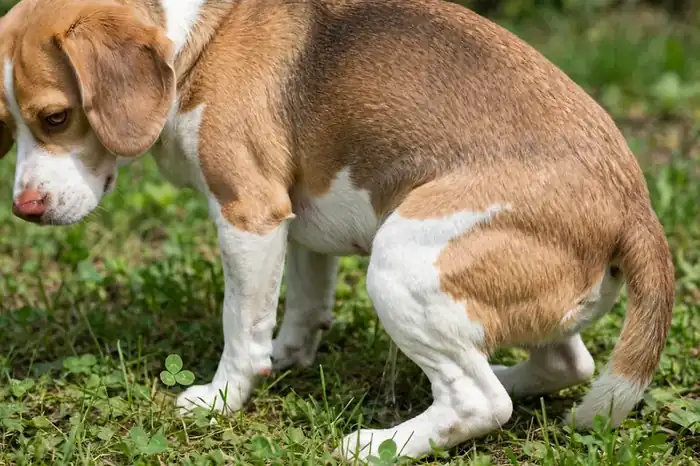
Bladder stones in dogs are exactly what they sound like: mineral formations that grow inside the bladder, ranging from sand-like grit to stones the size of marbles. They cause painful urination, bloody urine, and accidents in house-trained dogs, and they can block the urethra entirely, which is an emergency. Some types dissolve with a prescription diet. Others need surgery. This guide covers the signs, the stone types, how vets diagnose and treat them, and how to prevent a repeat.
What bladder stones are
Bladder stones, called uroliths, are solid mineral masses that form in the urinary bladder when urine becomes oversaturated with crystal-forming minerals. The two most common types in dogs are struvite and calcium oxalate. Stones irritate the bladder lining, cause inflammation and bleeding, and can block urine flow.

Formation starts small. Minerals like magnesium, ammonium, phosphate, calcium, or urate crystallize out of the urine and clump together over weeks or months. A dog can carry a bladder full of grit with mild symptoms, or a single large stone that blocks everything. Struvite stones form in alkaline urine, often alongside bacterial urinary tract infections, and they are the type most likely to dissolve with diet. Calcium oxalate stones form in acidic to neutral urine, cannot be dissolved, and must be removed physically. Less common types include urate, cystine, and silica stones, each with its own cause and breed links. Size and number vary enormously. Vets have removed dozens of small stones from one bladder and single stones larger than golf balls from another. The bladder lining suffers either way, becoming inflamed, thickened, and prone to bleeding.
Signs and symptoms to watch for
The classic signs are straining to urinate, frequent attempts producing little urine, blood in the urine, cloudy or foul-smelling urine, and accidents in a house-trained dog. Some dogs lick their genital area excessively. A dog that strains repeatedly with no urine output needs emergency care immediately.
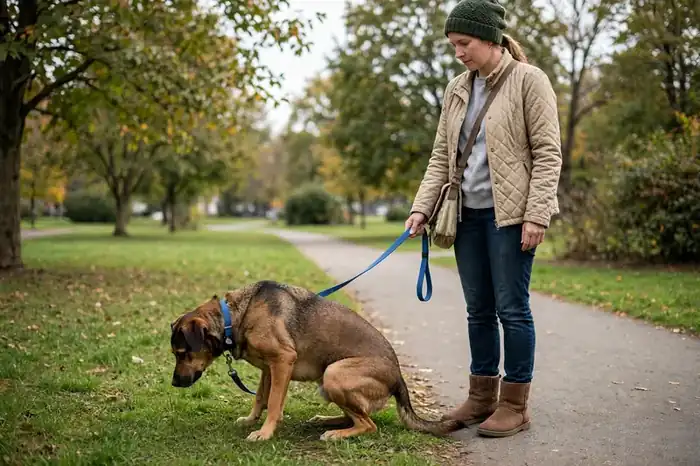
Owners often mistake the early signs for a simple urinary tract infection, and the two frequently occur together. The difference is persistence. An infection usually responds to antibiotics within days. Stones keep the symptoms going or bring them back. Blood in the urine ranges from a pink tinge to visibly red, and it understandably alarms owners. Pain shows as whimpering during urination, a hunched posture, or reluctance to go outside. Accidents happen because the irritated bladder cannot hold a normal volume, not because the dog forgot its training. Never punish these accidents. Male dogs face the highest stakes. Their urethra is long and narrow, so a stone that a female dog might pass can lodge and block a male completely. A blocked dog cannot urinate, toxins build up, and the bladder can rupture. That is a race-the-clock emergency.
What causes bladder stones
Stones form when urine chemistry favors crystallization: excess minerals, abnormal pH, concentrated urine, and sometimes bacterial infection. Diet plays a role, particularly foods high in the minerals that form the dog’s stone type. Genetics matter too, with certain breeds prone to specific stones. Dehydration and infrequent urination concentrate the urine and raise the risk.
Struvite stones illustrate the infection link clearly. Certain bacteria produce an enzyme that makes urine more alkaline, and struvite thrives in alkaline urine. Treat the infection and change the urine chemistry, and struvite often dissolves. Calcium oxalate stones follow a different path, tied to calcium metabolism, acidic urine, and sometimes excess dietary calcium or vitamin D. Urate stones trace to liver metabolism problems, famously in Dalmatians, whose breed-wide metabolic quirk raises uric acid. Cystine stones come from a genetic defect in amino acid handling. Diet is a contributor, not the whole story. A dog eating a normal diet can still form stones if genetics or infection sets the stage. But diet is the lever owners control, which is why prescription urinary diets are central to both treatment and prevention. Holding urine too long matters as well. Dogs that wait all day while owners are at work give crystals more time to settle and grow.
How veterinarians diagnose them
Diagnosis starts with a urinalysis to check pH, crystals, blood, and bacteria, plus imaging, usually X-ray or ultrasound, to see the stones themselves. Struvite and calcium oxalate show on X-ray; urate stones often need ultrasound or contrast studies. A urine culture identifies infection. Removed stones are sent to a lab to confirm the exact mineral type.

The urinalysis tells the vet which direction to look. Crystals in the urine suggest the stone type but do not prove it; some dogs have crystals without stones, and stones can exist with a clean-looking sample. X-rays catch most stones because struvite and oxalate are radiodense, meaning they block X-rays and show up white. Urate and cystine stones are radiolucent and hide from X-ray, which is why ultrasound matters. Ultrasound also shows bladder wall thickening and smaller stones the X-ray misses. The urine culture is non-negotiable when struvite is suspected, since the treatment plan depends on clearing the infection. After removal, lab analysis of the actual stone is the gold standard. Vets need the true composition because treatment and prevention differ completely by type. Guessing wrong means prescribing the wrong diet.
Treatment options by stone type
Struvite stones can often be dissolved with a prescription diet that acidifies the urine and restricts key minerals, a process taking weeks to months. Calcium oxalate, urate, and cystine stones cannot be dissolved and must be removed, usually by surgery. Small stones in female dogs can sometimes be flushed out through the urethra under anesthesia.
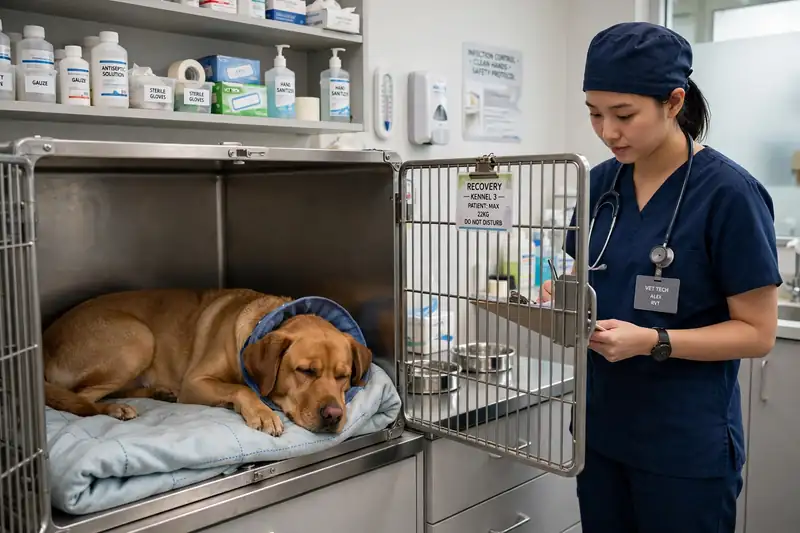
Dissolution sounds appealing, and for struvite it works well, but it demands patience and strict compliance. The dog eats only the prescription food, no treats, no table scraps, for the full course. Most struvite stones dissolve within two to three months. Antibiotics run alongside if infection is present. Surgery, called cystotomy, opens the bladder and removes the stones directly. It is routine but still real surgery, with anesthesia, a hospital stay, and restricted activity during healing. For small stones, vets have less invasive options: urohydropropulsion flushes stones out through the urethra in anesthetized female dogs, and laser lithotripsy breaks stones apart in some referral centers. The choice depends on stone type, size, number, the dog’s sex, and overall health. Your vet will lay out the options with costs and recovery times so you can decide together.
Diet and long-term prevention
Prevention centers on the prescription urinary diet matched to the dog’s stone type, fed exclusively and for life in many cases. These diets control mineral levels and urine pH to make stone formation unlikely. Regular vet rechecks with urinalysis catch recurrence early. Do not substitute over-the-counter “urinary health” foods without veterinary guidance.

Recurrence is the hard truth of bladder stones. Without prevention, many dogs form new stones within a year or two. The prescription diet is the single most effective preventive, and “exclusively” means exclusively. A handful of regular treats can undo the urine chemistry the diet creates. That strictness surprises owners, but the diet only works when it fully controls intake. Your vet will schedule recheck urinalyses, typically every few months at first, then less often. These visits catch crystal formation before it becomes stone formation. Some dogs also stay on medications that adjust urine pH or block specific minerals. Supplements marketed for urinary health are not substitutes for the prescription plan. And keep the dog lean. Overweight dogs urinate less frequently and have more concentrated urine, both of which favor stones.
The hydration factor
Dilute urine forms fewer stones, so water intake is a genuine preventive tool. Encourage drinking with fresh water in multiple locations, a pet water fountain, and wet food mixed into the diet. Dogs that drink more urinate more, flushing crystals before they can grow. This helps every stone type.
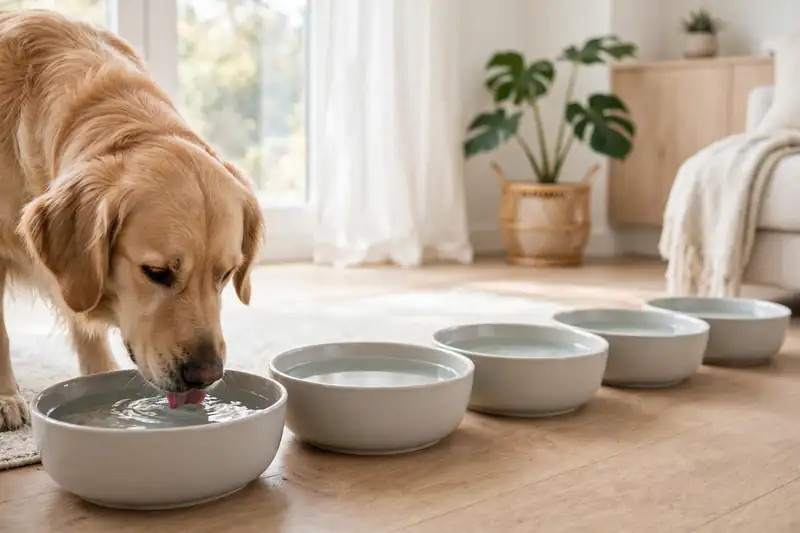
Hydration is the simplest change with the broadest benefit. Every extra trip outside is crystals leaving the bladder instead of settling in it. Wet food is an easy win, since canned food is roughly 75 percent water compared to kibble’s 10 percent. Mixing wet food into meals or switching partially can meaningfully increase total water intake. Fountains appeal to dogs that prefer running water, and multiple bowls remove the friction of walking to the one bowl in the laundry room. Broth can encourage drinking; use low-sodium, onion-free, garlic-free broth, or better, plain water with a splash of tuna water. In hot weather or after exercise, intake needs rise, so keep water available on walks. Watch the output too. A dog that suddenly drinks much more or much less than usual deserves a vet check, since both changes can signal disease.
Breeds at higher risk
Dalmatians are famously prone to urate stones due to a breed-wide defect in uric acid metabolism. Miniature schnauzers, shih tzus, and bichon frises lean toward struvite and calcium oxalate. English bulldogs, dachshunds, and Newfoundlands also appear overrepresented. Any dog can form stones, but these breeds warrant extra vigilance.

Breed risk is not destiny, but it changes the monitoring plan. A Dalmatian owner should know about urate stones before the first symptom, because prevention diets for urate differ from the standard struvite plan and the breed’s metabolism needs specific management. Small breeds dominate the stone statistics partly because small bladders and narrow urethras turn small stones into big problems. If you own an at-risk breed, mention it at wellness visits so the vet can include periodic urinalyses in the routine. Early detection in these breeds often means catching crystals before they become stones, which is a far easier problem. Mixed-breed dogs are not exempt. The genetic factors behind stones are widespread, and any dog with a previous stone is at high risk of another regardless of pedigree.
Recovery and aftercare
After surgery, expect two weeks of restricted activity, pain medication, and antibiotics if infection was present. The vet will recheck the urine to confirm the bladder is healing cleanly. After dietary dissolution, the dog transitions to a long-term preventive plan. In both cases, watch urination habits closely for the first months.

The restricted-activity period tests everyone’s patience. No running, no jumping, leash walks only for bathroom breaks. An e-collar prevents licking the incision. Most dogs bounce back faster than their owners expect, which is exactly when the restrictions matter most. A dog that feels fine on day five can still tear internal stitches. Follow the medication schedule completely, especially antibiotics. Stopping early lets resistant bacteria survive, and resistant urinary infections are miserable to clear. The first recheck urinalysis usually comes within a couple of weeks, then the schedule stretches out. Report any return of straining, blood, or accidents immediately. Recurrence after treatment is common enough that vigilance is part of the plan, not paranoia. Keep a simple log of urination patterns for the first month; it makes changes obvious.
When it is an emergency
A dog that strains repeatedly without producing urine is blocked and needs emergency care now. Other emergencies include a visibly distended painful abdomen, vomiting with urinary symptoms, collapse, or extreme lethargy. Male dogs block more often, but any dog that cannot urinate is in danger regardless of sex.

Urinary blockage is one of the true emergencies in veterinary medicine. When urine cannot leave, potassium and waste build up in the blood, the bladder stretches toward rupture, and the heart can be affected within hours. Do not wait for the morning. Do not try home remedies. Get the dog to an emergency clinic, where the vet will relieve the blockage with a catheter, often under sedation, and stabilize the dog with IV fluids. After the crisis, the underlying stones still need their full treatment plan. Prevention of the next blockage starts the day the dog comes home: prescription diet, hydration, frequent bathroom breaks, and scheduled rechecks. If your male dog has blocked once, ask the vet about long-term strategies specific to his stone type. The first blockage is a warning. The plan you build afterward decides whether there is a second.
Bladder stones are painful, common, and highly treatable when caught early. Learn your dog’s normal urination habits so the abnormal stands out, get persistent urinary symptoms checked promptly, and if stones are diagnosed, commit fully to the treatment and prevention plan. The dogs that do best are the ones whose owners take the rechecks as seriously as the surgery.
Good hydration is part of prevention; see our guide to electrolytes for dogs. For the everyday safe-foods reference, keep what human food dogs can eat bookmarked, and hydrating vegetables like cucumbers help too, covered in can dogs have cucumbers.
Frequently Asked Questions
What are the first signs of bladder stones in dogs?
Straining to urinate, frequent small urinations, blood in the urine, cloudy or bad-smelling urine, and accidents in a house-trained dog. A dog that strains with no urine output needs emergency care.
Can bladder stones in dogs dissolve on their own?
Struvite stones can dissolve with a strict prescription diet over weeks to months. Calcium oxalate, urate, and cystine stones cannot dissolve and must be removed surgically or by other procedures.
What causes bladder stones in dogs?
Oversaturated urine from excess minerals, abnormal pH, bacterial infection, dehydration, diet, and genetics. Certain breeds like Dalmatians and miniature schnauzers are predisposed. Infrequent urination also raises risk.
How are bladder stones diagnosed?
Urinalysis to check pH, crystals, blood, and bacteria, plus X-ray or ultrasound to visualize the stones. A urine culture identifies infection. Removed stones are lab-analyzed to confirm the exact mineral type.
Can diet prevent bladder stones from coming back?
Yes, a prescription urinary diet matched to the stone type is the most effective prevention, fed exclusively. Regular recheck urinalyses catch recurrence early. Over-the-counter urinary foods are not equivalent.
Is surgery always needed for bladder stones?
No. Struvite stones often dissolve with diet alone. Small stones in female dogs can sometimes be flushed out under anesthesia. Surgery is needed for calcium oxalate and other non-dissolvable stones, and for emergencies like blockage.
How can I tell if my dog has a urinary blockage?
Repeated straining with little or no urine produced, a painful or distended abdomen, vomiting, and lethargy. This is an emergency. Get to a veterinary clinic immediately; blockages can become fatal within hours.
This article is general information only and is not a substitute for veterinary advice. If your dog has a health condition, is on a prescription diet, or you are unsure about any food, check with your veterinarian first.

2 thoughts on “Bladder Stones in Dogs: Signs, Causes, and Treatment Options”