

Pig ears are one of the most popular dog chews in America, and one of the most debated. Dogs love them. They are natural, single-ingredient, and long-lasting. But they carry a serious contamination history: in 2019 the FDA and CDC advised all Americans to stop buying and feeding pig ear treats during a multistate salmonella outbreak that sickened 154 people. Add high fat, choking risk, and calorie load, and “good for dogs” becomes a qualified answer at best. This guide gives the full picture so you can decide with facts.
The short answer on pig ears
Pig ears are edible for dogs but far from risk-free. They are high in fat and calories, can carry salmonella and other bacteria, and pose choking and blockage risks for gulpers. They are an occasional supervised chew for healthy dogs, not a daily treat and not appropriate for every household.

That framing is deliberate. Pig ears are not poison, and millions of dogs have chewed them without incident. But the risk profile is heavier than the marketing suggests. The 2019 outbreak proved that contamination can reach across many brands at once, and it sickened people, not just dogs. The fat content rivals the richest treats in the store. Large pieces can obstruct a dog that swallows instead of chews. None of this means your dog can never have one. It means pig ears belong in the same category as raw bones: enjoyable, natural, and deserving of respect, supervision, and careful sourcing. Households with small children or immunocompromised members should weigh the bacterial risk especially carefully.
What pig ears actually are
A pig ear treat is a whole pig ear, cleaned and dried, sold as a chew. It is mostly cartilage, skin, and fat, with a crunchy exterior and a chewy interior. A single ear is high in protein but also high in fat, and one ear can carry several hundred calories. Quality products have no other ingredients.

The appeal is obvious. One ingredient, no chemicals, a texture dogs find deeply satisfying, and enough chewing time to keep a dog busy. The cartilage provides some glucosamine and chondroitin, the same joint-supporting compounds found in chicken feet. But the nutrition label tells the rest of the story. Fat content runs high, often a third or more of calories, and a large ear can approach 300 calories or more. For a 30-pound dog, that is a fifth of the day’s calories in one chew. Processing varies by maker. Some ears are baked, some smoked, some irradiated for pathogen control. That processing difference matters enormously for safety, which is why the source and the label deserve more attention than the price.
The 2019 salmonella outbreak
In 2019, the FDA and CDC traced a multistate outbreak of multidrug-resistant salmonella to pig ear pet treats. The investigation ultimately identified 154 human illnesses across 34 states, with 35 hospitalizations, many in children under five. The agencies advised consumers to avoid all pig ear treats and retailers to stop selling them. The outbreak was declared over in late 2019.
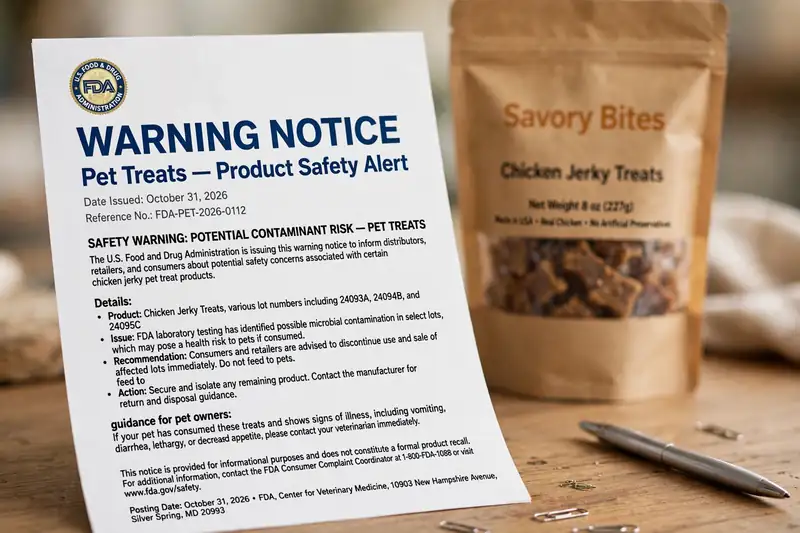
The details are worth knowing because they explain why this chew gets special scrutiny. The outbreak strains were resistant to multiple antibiotics, which made the human illnesses harder to treat. Most of the sick people had not eaten the treats; they got sick from handling them or from contact with dogs that had. The investigation traced products to suppliers in Argentina, Brazil, and Colombia, and the FDA issued an import alert covering pig ear treats from dozens of firms. Several companies issued recalls. Researchers later published the full analysis, calling it the first documented US multistate salmonella outbreak linked to pig ear treats. The outbreak ended, but the lesson stuck: a “natural” single-ingredient chew can carry industrial-scale contamination, and the people most at risk are the humans in the house, especially small children.
Contamination risk today
Pig ears are back on shelves, and the FDA’s blanket warning has lifted, but the underlying risk has not vanished. The FDA maintains an import alert on pig ear treats from firms with salmonella history. Choose irradiated products or brands with transparent sourcing and testing, check for recalls, and handle every pig ear like raw meat.

Irradiation is the single most meaningful safety feature to look for. It kills pathogens without cooking the chew into brittleness, and reputable makers disclose it on the label. Transparent sourcing matters too. A brand that names its suppliers and describes its testing is making a verifiable claim; a bag with no origin information is asking for trust without evidence. The FDA’s advice from the outbreak era still applies as hygiene practice: wash hands after handling pig ears, keep them away from small children, clean surfaces the chew touched, and do not let the dog lick faces after chewing. Store ears dry and sealed, and discard any that smell off. Recalls still happen across the pet treat industry, so checking the FDA recall list periodically is a reasonable habit for any owner feeding animal-based chews.
Fat and calorie load
Pig ears are fatty, calorie-dense chews. A large ear can deliver several hundred calories, mostly from fat. Regular feeding can drive weight gain and, in sensitive dogs, trigger pancreatitis. Count each ear honestly in the daily treat budget, and treat pig ears as an occasional indulgence rather than a routine chew.

The calorie math is what surprises most owners. A chew that feels like a toy eats like a meal. For a small dog, one ear can exceed the entire daily treat allowance, leaving no room for training treats or food toppers. The fat content is the sharper concern. Dogs with a history of pancreatitis should not get pig ears at all, and breeds predisposed to the condition, miniature schnauzers among them, deserve extra caution. Even healthy dogs can get digestive upset from the grease load, especially if the ear is a new food. Introduce it as a partial chew first, not a whole ear in one sitting. And watch the pattern. A pig ear every day is not an occasional treat; it is a dietary habit, and a fatty one. Weekly at most is the sane frequency for a healthy dog, less for small or weight-prone dogs.
Pig ears vs. rawhide
Pig ears are more digestible than rawhide, which is their main advantage in the comparison. Rawhide can swell in the stomach and cause blockages, while pig ear softens as the dog chews. But pig ears are fattier than most rawhide, carry the documented salmonella history that rawhide does not, and both pose choking risks for aggressive chewers.

Owners often ask which is the lesser evil, and the honest answer is that neither is ideal. Rawhide’s danger is mechanical: it does not break down well, and swallowed chunks can obstruct. Pig ears break down better but bring bacterial and fat risks that rawhide generally does not. Both can cause choking in dogs that bite off large pieces. Both are calorie sources that owners underestimate. The comparison that actually helps is with the alternatives in the next section. If the choice is strictly pig ear versus rawhide for a healthy, supervised, careful chewer, the pig ear’s digestibility gives it the edge. But that is a low bar. Most dogs are better served by chews with cleaner safety records, and the rest of this guide explains the handling rules for owners who stick with pig ears anyway.
Choking and blockage risks
The main physical danger is a dog biting off and swallowing a large chunk, which can lodge in the throat or intestines. Aggressive chewers and gulpers are the highest-risk dogs. Always supervise pig ear chewing, take the ear away when it gets small enough to swallow whole, and choose ear size appropriate to the dog.

The endgame of every chew session is the dangerous part. A pig ear chewed down to a two-inch nub is a swallowing hazard, and many blockages trace to exactly that moment. Set the rule before the first chew: when it gets small, it gets taken away and thrown out. No exceptions, no “just one more minute.” Size the ear to the dog from the start. A small ear for a large dog is barely a chew and mostly a gulping risk; a huge ear for a tiny dog is unmanageable. Know your dog’s chewing style. Methodical gnawers are good candidates. Dogs that crack and inhale treats are not. If your dog has ever needed a vet visit for a swallowed object, pig ears are probably not the chew for them. Supervision means watching, not just being in the room. A dog can swallow a chunk in the seconds you look at your phone.
Safe handling rules
Treat pig ears like raw meat. Wash your hands after handling them. Do not let small children handle them. Clean the floor or surface where the dog chewed. Pick up the chew when the dog is done rather than leaving it around. Store unused ears sealed and dry, and buy from brands with transparent sourcing and pathogen controls.

These rules come straight from the FDA’s outbreak guidance, and they remain good practice. The hand-washing rule is the one people skip, and it is the one that matters most, since the 2019 illnesses were largely a handling story. Keep pig ears away from food prep areas. Do not store them next to human snacks where a child might grab one. After the chew session, wipe down the area; dried saliva and grease carry bacteria onto floors where babies crawl. If anyone in the house is immunocompromised, undergoing chemotherapy, or under five years old, reconsider whether pig ears belong in the home at all. The dog’s risk is only half the equation. And keep the packaging until the chew is gone, so you have the brand and lot number if a recall or illness ever needs tracing.
Better chew alternatives
Bully sticks, collagen sticks, and single-ingredient dried meat chews offer long chew time with cleaner safety records. Frozen carrots and stuffed Kongs give chewing satisfaction with minimal risk. For heavy chewers, vet-approved dental chews combine safety with a purpose. Match the chew to the dog’s size and chewing style.

Bully sticks are the closest swap: animal-based, long-lasting, highly digestible, and without the outbreak history. They are still calorie-dense, so the same portion honesty applies. Collagen sticks are a newer option with good digestibility. Dried sweet potato chews work for dogs that like the gnawing without the meat. For the budget-conscious, a frozen carrot is nearly free and surprisingly satisfying, though it will not occupy a power chewer for long. Stuffed Kongs, frozen with a little peanut butter or plain yogurt, turn licking into a long enrichment session. Dental chews with veterinary approval add the teeth-cleaning benefit that pig ears only partly provide. Rotate options rather than relying on one chew. Variety keeps the dog interested and spreads the risk profile across products.
Households that should skip pig ears
Skip pig ears if your home has children under five, anyone immunocompromised, or anyone undergoing chemotherapy, because the bacterial risk extends to people. Skip them for dogs with pancreatitis history, poultry-style fat sensitivity, or a record of swallowing objects. Dogs on prescription low-fat diets should not get fatty extras.

The child rule deserves emphasis because the 2019 outbreak hit kids hardest. Twenty-seven of the 154 cases were children under five, infected through handling treats or contact with dogs that had chewed them. Toddlers put everything in their mouths, and a pig ear on the floor is a target. Immunocompromised people face the same exposure with worse consequences. On the dog side, a pancreatitis history is a hard no, and a dog that has swallowed socks, toys, or chunks of other chews is telling you its chewing style. Prescription diet dogs eat calibrated food, and a fatty ear breaks the calibration. None of these households is depriving the dog. The alternatives above fill the chew slot without the bacterial shadow. A chew should be the safest part of the dog’s day, not the riskiest.
Pig ears are not the villain some headlines made them, but they are not the wholesome treat the packaging implies either. For a healthy adult dog in a careful household, an occasional pig ear from a transparent brand, supervised and handled hygienically, is a reasonable indulgence. For everyone else, the alternatives do the job with less baggage.
For more everyday feeding guidance, see what human food dogs can eat. Bone broth makes a gentler joint-supporting extra, covered in bone broth for dogs, and plain cooked poultry is a leaner chew-time reward in our turkey guide.
Frequently Asked Questions
Are pig ears safe for dogs?
They are edible but carry real risks: salmonella contamination, high fat content, and choking hazards. They are an occasional supervised chew for healthy dogs in careful households, not a daily treat.
What happened with pig ears and salmonella?
In 2019, the FDA and CDC linked pig ear treats to a multistate outbreak of multidrug-resistant salmonella: 154 human illnesses across 34 states, 35 hospitalizations. The agencies advised avoiding all pig ear treats until the outbreak ended later that year.
Are pig ears better than rawhide?
Pig ears are more digestible than rawhide, which can swell and cause blockages. But pig ears are fattier and carry the documented salmonella history. Neither is ideal; bully sticks and collagen sticks are cleaner alternatives.
How often can dogs have pig ears?
For a healthy dog, weekly at most, and less for small or weight-prone dogs. Each ear counts heavily in the daily treat budget. Supervise every session and remove the ear when it gets small enough to swallow.
Can puppies have pig ears?
Puppies can chew pig ears with close supervision once they are past the tiny-baby stage, but size the ear to the puppy and take it away before it becomes swallowable. Many owners prefer softer puppy-specific chews.
Should I wash my hands after handling pig ears?
Yes, every time. The 2019 outbreak spread largely through handling. Also keep pig ears away from small children, clean chewed surfaces, and store unused ears sealed and dry.
What is the safest pig ear to buy?
Look for irradiated products from brands with transparent sourcing and testing, clear origin labeling, and no recall history. Avoid unmarked bulk-bin ears with no brand or origin information.
This article is general information only and is not a substitute for veterinary advice. If your dog has a health condition, is on a prescription diet, or you are unsure about any food, check with your veterinarian first.


1 thought on “Are Pig Ears Good for Dogs? The Salmonella History Matters”