

Bone broth for dogs has gone from a quiet veterinary trick to a full-blown pet-store trend, and unlike many trends, this one has genuine substance behind it. Vets have long used warm, mild broth to coax sick or recovering dogs to eat and drink, and the AKC specifically recommends bone broth as a gentle option for dogs with upset stomachs. It is hydrating, appetizing, easy on the gut, and delivers collagen, gelatin, and minerals in a form most dogs find irresistible. But there is a catch that matters enormously: most broth made for humans, and many store-bought “pet” broths, contains ingredients that are dangerous for dogs. Get the recipe right and bone broth is a wonderful supplement. Get it wrong and you can do real harm. Here is the complete guide.
What Bone Broth Actually Contains
Bone broth is made by simmering animal bones (and often connective tissue) in water for many hours. The long, slow simmer extracts:
- Collagen and gelatin. The proteins that give broth its body when cooled. Gelatin is gentle on the digestive tract and is one reason broth is recommended for sensitive stomachs.
- Glucosamine and chondroitin. Compounds found in cartilage and connective tissue that support joint health. The amounts in homemade broth are modest compared to a joint supplement, but they contribute.
- Amino acids. Including glycine and proline, which play roles in gut lining health and tissue repair.
- Minerals. Calcium, magnesium, phosphorus, and potassium leach from the bones in small amounts.
- Water. Easily overlooked and arguably the most important ingredient, broth is mostly water, which makes it a hydration vehicle.
It is worth being honest about the limits: bone broth is a supplement, not a superfood and not a meal. The nutrient amounts in a serving of broth are small compared to a complete dog food. Its real value is functional, hydration, appetite stimulation, and gentleness, rather than nutritional completeness.
The Benefits Vets Actually Use It For
Appetite stimulation. This is the number-one veterinary use. Dogs recovering from illness, surgery, or a bout of vomiting often refuse dry kibble but will lap up warm broth. The AKC lists bone broth among its recommendations for settling a dog’s stomach precisely because it delivers fluids and a little nutrition in a form that appeals to a reluctant eater.
Hydration. Many dogs, especially seniors, and especially cats, but dogs too, do not drink enough water. Pouring broth over kibble or offering it as a drink increases fluid intake, which supports kidney function and overall health. For a dog that is mildly dehydrated after vomiting or diarrhea (and has been vet-cleared), diluted broth is more enticing than plain water.
Gentle on the stomach. Gelatin-rich broth is easy to digest, which is why it is a staple of the bland-diet approach. For a dog transitioning back to normal food after stomach upset, broth mixed with plain rice or served over kibble eases the way.
Joint and gut support. The glucosamine, chondroitin, and gelatin in broth support joint health and the gut lining. Be realistic about the dose, broth is not a replacement for a joint supplement in an arthritic dog, but as a daily topper it contributes.
Picky eaters. A splash of warm broth transforms boring kibble into something interesting. For healthy dogs that are simply fussy, it is one of the lowest-risk appetite tricks there is.
The Store-Bought Trap: Why Most Human Broth Is Unsafe
This is the most important section in this article. Broth made for human consumption, and even some products marketed for pets, routinely contains ingredients that are toxic or harmful to dogs:
Onion and garlic. The big one. Onion and garlic (all forms, fresh, powdered, cooked) damage dogs’ red blood cells and can cause hemolytic anemia. They are standard ingredients in human stock and broth, and they appear in some pet broths too. Any broth containing onion or garlic in any form is disqualified, full stop.
High sodium. Human broth is salted for human taste. Excess sodium is hard on dogs’ kidneys and cardiovascular system, and can cause excessive thirst, and in large amounts, sodium ion poisoning. Dogs need low-sodium or no-salt-added broth only.
“Natural flavors” and seasonings. Vague flavorings can hide onion and garlic derivatives. Spice blends, peppercorns, and other seasonings add risk without benefit.
Xylitol. Rare in broth, but some “low-sugar” or flavored products contain it. Xylitol is extremely toxic to dogs. Check labels on anything flavored or sweetened.
The rule is simple: if you did not make it and cannot verify every ingredient, do not serve it. When buying commercial bone broth for dogs, look for products specifically formulated for pets with a short, transparent ingredient list: bones, water, maybe a splash of apple cider vinegar (used to help extract minerals), and nothing else.

How to Make Safe Bone Broth at Home
Homemade is the gold standard because you control everything. The AKC’s recommended method:

- Choose your bones. Beef marrow bones, knuckles, chicken carcasses, or turkey necks all work. Use bones from a reputable butcher. Avoid small bones that could splinter if the dog ever got hold of them directly, though in broth-making the bones are always strained out.
- Cover with water in a large pot or slow cooker. Add a tablespoon or two of apple cider vinegar per several quarts of water, the acidity helps draw minerals from the bones. This is optional but traditional.
- Simmer low and slow. 12-24 hours for beef bones; 6-12 for chicken. A slow cooker on low is ideal. Do not boil hard, a gentle simmer extracts without making the broth cloudy and greasy.
- Add NOTHING else. No onion, no garlic, no salt, no peppercorns, no bay leaves. If you want vegetables for your own batch, cook a separate human batch. The dog’s batch stays bones, water, and vinegar only.
- Cool, then refrigerate. Fat rises to the top and solidifies, skim it all off. Dogs do not need the fat cap, and removing it keeps the broth gentle.
- Strain meticulously. Pour through a fine-mesh strainer, then strain again if needed. Every bone fragment must be removed. Cooked bones splinter, and even small fragments can injure the mouth, throat, or intestines. When in doubt, strain a third time.


The finished broth should gel lightly when chilled (a sign of good gelatin content) and smell mildly meaty. If it smells off at any point, discard it.
Portions: How Much Bone Broth Per Day
Bone broth is a topper and supplement, not a meal, it does not contain complete nutrition, and too much can cause loose stools or displace balanced food. A commonly cited guideline in vet-reviewed feeding guides is around 1 ounce of broth per 10 pounds of body weight per day, so roughly 2-3 ounces (a few tablespoons) for a small dog, up to about a cup for a very large dog.
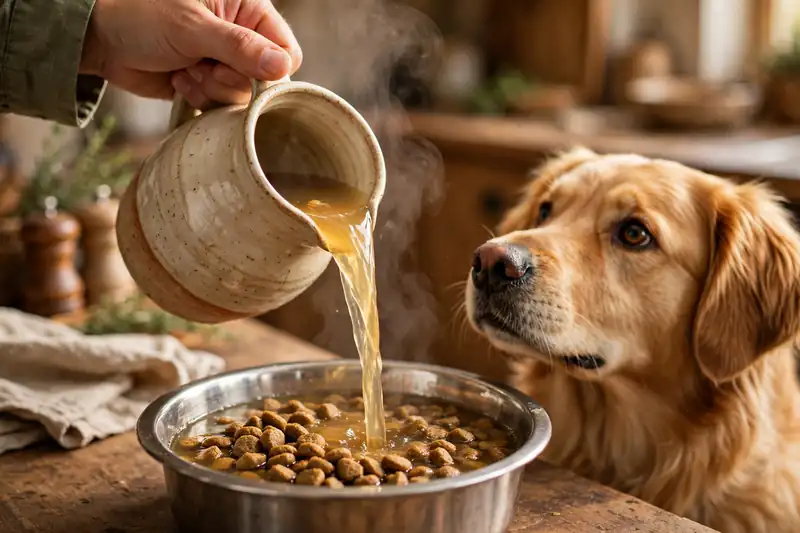
Practical serving ideas:
- As a topper: pour the daily portion warm (not hot) over kibble to boost aroma and moisture.
- As a drink: offer it in a bowl between meals, especially for dogs that under-drink.
- Frozen: freeze in silicone molds or ice cube trays for portioned treats, excellent in summer.
- For recovery: offer small amounts frequently rather than one large serving, and follow your vet’s guidance on reintroducing food.
Start with a small amount the first time, a tablespoon or two, to make sure your dog’s stomach agrees with it, then work up to the full portion over a few days.
Storage and Food Safety
Homemade broth is perishable. Refrigerate it promptly and use it within 4-5 days. For longer storage, freeze it, frozen broth keeps for several months. Ice cube trays are ideal: each cube is roughly an ounce, making portioning effortless, and you can thaw exactly what you need.
Discard broth that smells sour or off, shows any mold, or has been refrigerated beyond 5 days. When reheating, warm it gently, serve warm, never hot. Test the temperature the way you would for a baby’s bottle: it should feel barely warm on your wrist.
Bone Broth vs. Stock vs. Regular Broth
The terms get used loosely, so here is the practical distinction:
- Bone broth: simmered 12+ hours from bones; richest in gelatin and collagen; the best choice for dogs when homemade plain.
- Meat stock: simmered with bones but for less time, often with vegetables and seasonings, frequently contains onion and garlic. Not safe unless verified plain.
- Regular broth: typically meat simmered briefly; thinner; commercial versions are usually high-sodium and seasoned. Not safe for dogs as sold.
For dogs, “bone broth” is the right product only when it is plain, low-sodium, and free of onion, garlic, and seasonings, which in practice means homemade or a verified pet-specific product.
When to Be Careful
Bone broth is gentle, but a few dogs need extra caution:
- Dogs with kidney disease. Even low-sodium broth adds fluid and mineral load. Check with your vet first.
- Dogs with a history of pancreatitis. Use broth with all fat skimmed, and confirm with your vet, rich toppers can be a trigger.
- Dogs on sodium restriction (certain heart conditions). Vet approval needed.
- Dogs with protein allergies. Use bones from a protein your dog tolerates, a beef-allergic dog needs a different base, or should skip broth.
And the standing rule for all extras applies: broth should not displace complete, balanced food. It is a supplement to the diet, not a foundation of it.
The Honest Bottom Line
Bone broth for dogs is one of those rare trends that deserves its place: it genuinely helps with hydration, appetite, and gentle stomach support, and most dogs love it. But the safety rules are non-negotiable, no onion, no garlic, no excess salt, no cooked bone fragments, ever. Make it at home with bones, water, and patience, skim the fat, strain it thoroughly, and serve it as a topper rather than a meal. Do that, and you have one of the simplest, most useful supplements in the canine kitchen.
For the broader framework on safe foods and extras, see our guide to what human food dogs can eat. And if hydration is your goal, pair broth with one of nature’s most hydrating treats, read our article on whether dogs can eat watermelon.
Frequently Asked Questions
Is bone broth good for dogs?
Yes, when it is plain and properly prepared. It supports hydration, stimulates appetite in sick or picky dogs, is gentle on the stomach, and provides gelatin, collagen, and small amounts of joint-supporting compounds. It is a supplement, not a complete food.
Can dogs have store-bought bone broth?
Only if it is specifically formulated for pets or verified free of onion, garlic, excess sodium, and seasonings. Most human broth contains onion/garlic and too much salt. Always read the full ingredient list. “natural flavors” can hide allium ingredients.
How much bone broth can I give my dog per day?
A common guideline is about 1 ounce per 10 pounds of body weight daily, a few tablespoons for small dogs, up to roughly a cup for very large dogs. Start small and increase gradually. It should supplement, not replace, balanced food.
Can bone broth help a dog with an upset stomach?
Yes, this is one of its best-established uses. The AKC recommends bone broth for dogs with stomach upset because it is hydrating, easy to digest, and appetizing when dogs refuse solid food. Offer small amounts; if vomiting persists beyond 24 hours, see your vet.
Is bone broth or chicken broth better for dogs?
Either is fine if plain and safe. Bone broth (long-simmered from bones) is richer in gelatin and collagen. The deciding factor is not the type but the ingredients: no onion, no garlic, low sodium, no seasonings.
Can I give my dog the bones from bone broth?
No, never. Cooked bones splinter and can injure the mouth, throat, stomach, or intestines. All bones and fragments must be strained out of the broth before serving. The broth is the product; the bones are waste.
How long does homemade bone broth last?
About 4-5 days refrigerated in a sealed container. Freeze the rest, ice cube trays make perfect portions, and it keeps for months. Discard anything that smells off.
Can puppies have bone broth?
In small amounts, plain bone broth is generally safe for puppies and can help encourage eating during weaning transitions. As with adults, it must be onion-free, garlic-free, and low-sodium, and it should not displace balanced puppy food.
This article is for informational purposes only and is not a substitute for professional veterinary advice. If your dog has kidney disease, heart disease, pancreatitis, or food allergies, check with your vet before adding broth to the diet.



15 thoughts on “Bone Broth for Dogs: Benefits, Safety Rules, and How to Serve It”