

Colitis in dogs is inflammation of the colon, the large intestine, and it usually shows up as urgent, frequent diarrhea, often with mucus or streaks of fresh blood. Most cases arrive suddenly, scare the owner, and then clear up within a few days with simple care. Some cases drag on and need a vet to find the real cause. This guide covers what colitis looks like, why it happens, what your vet will do, what you can safely do at home, and when bloody stool means an emergency instead.
What is colitis in dogs?
Colitis is inflammation of the colon, the last stretch of the large intestine where water is absorbed and stool takes shape. When the lining is irritated, it cannot do that job, so the result is frequent, watery, urgent diarrhea. Colitis describes where the inflammation is, not one disease, so treatment starts by finding the trigger.
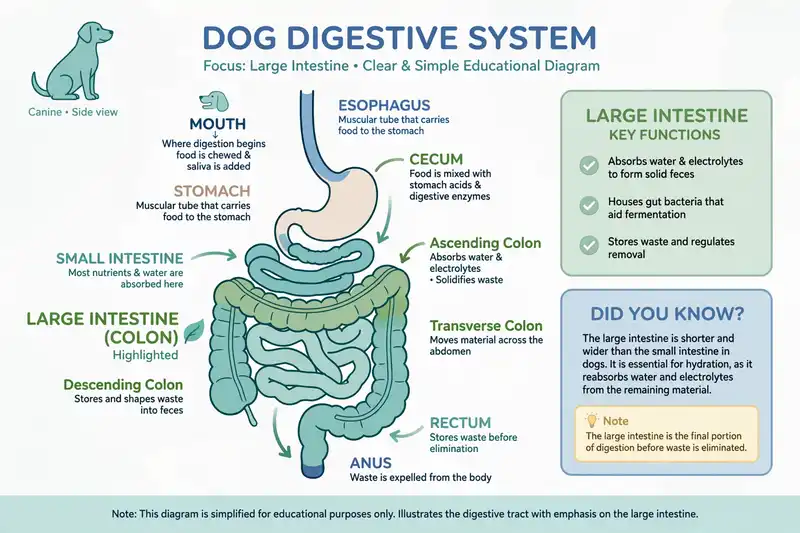
The colon is the final checkpoint of digestion. Food passes through the stomach and small intestine first, where most nutrients are absorbed, and the colon finishes the job by absorbing water and electrolytes and packing waste into solid stool. Inflammation disrupts that process. The colon wall swells, mucus production increases, and water stays in the stool instead of being absorbed. That is why colitis diarrhea looks the way it does: frequent small amounts, urgency, straining, mucus, and sometimes bright red blood from the irritated surface. The blood looks alarming but in simple colitis it comes from the colon lining itself, which is not the same as the dark, tarry stool that signals bleeding higher up in the digestive tract.
Acute vs chronic
Acute colitis appears suddenly and usually resolves within days. Stress, a stolen meal, or a one-time dietary indiscretion are the usual suspects. Chronic colitis lasts longer than two weeks or keeps coming back, and it points to an underlying problem such as parasites, food sensitivity, or inflammatory bowel disease. The distinction matters because acute cases often respond to rest and a short bland diet, while chronic cases need testing and a longer plan.
Signs of colitis to watch for
The classic picture is large-bowel diarrhea: small amounts, passed often, with a strong sense of urgency. Expect mucus in the stool, streaks of fresh red blood, straining as if constipated, and occasional accidents in a house-trained dog. Most dogs with simple colitis still eat, drink, and act fairly normal, which is a reassuring sign.

Watch the details because they tell the vet a lot. Frequency matters: a dog asking out every hour with tiny amounts points to the colon, while large volumes of watery stool point higher up. Mucus is common with colon irritation and looks like a clear or whitish jelly. Fresh red blood on the surface of the stool comes from the colon lining; it is different from black, tarry stool, which indicates digested blood from the stomach or small intestine and is more concerning. Note the dog’s general state too. A bright, hungry dog with mild colitis signs is a very different case from one that is lethargic, vomiting, or refusing water. Keep a simple log of frequency and appearance; your vet will ask, and a day of notes beats a vague memory.
Stress colitis, the most common kind
Stress colitis is the leading cause of large-bowel diarrhea in dogs. Boarding, travel, a move, fireworks, a new pet, or even a changed schedule can trigger it. Stress hormones alter how the colon handles water and motility. Most dogs with stress colitis are back to normal within three to five days.

Boarding kennels are the classic setting. A dog that eats, plays, and sleeps fine can still develop bloody, mucusy diarrhea within a day or two of arriving at a kennel. Nothing in the food caused it. The stress response alone altered colon function. The same thing happens after grooming visits, vet stays, long car trips, or household upheaval like construction or a new baby. Recognizing the trigger helps in two ways. It keeps you from panicking about a serious disease when the pattern fits, and it tells you what to change next time: familiar bedding at the kennel, a pre-trip vet chat about calming strategies, keeping routines steady. If stress episodes keep repeating, talk to your vet about management plans, because repeated flare-ups can wear a dog down over time.
Other causes of colitis in dogs
Beyond stress, common causes include intestinal parasites such as Giardia and whipworms, bacterial infections like Salmonella or Clostridium, dietary indiscretion (garbage, table scraps, sudden food changes), food allergies or intolerances, and inflammatory bowel disease. Trauma, contaminated food, and prolonged exposure to wet environments can also play a role.

Parasites deserve special attention because they are both common and fixable. Whipworms live in the large intestine itself and cause exactly the colitis picture: mucus, fresh blood, straining. Giardia causes softer, greasier stool and can come from contaminated water, including puddles and streams. Bacterial causes often trace back to scavenging: spoiled food, dead animals, compost. Food-related colitis usually follows something specific, like a sudden switch of kibble without a transition period, or a rich fatty meal the gut was not ready for. Allergic colitis tends to recur and often involves a dietary protein such as beef or dairy. Inflammatory bowel disease is the chronic immune-driven version, diagnosed by biopsy when simpler explanations have been ruled out. The list is long, which is exactly why a vet visit beats guessing when the first episode does not follow the simple pattern or when episodes repeat.
How veterinarians diagnose colitis
Your vet starts with the history and a physical exam, then usually runs a fecal test to check for parasites and bacteria. Bloodwork and sometimes imaging follow if the case is severe or persistent. The goal is to separate simple, self-limiting colitis from parasites, infections, and chronic disease that need specific treatment.
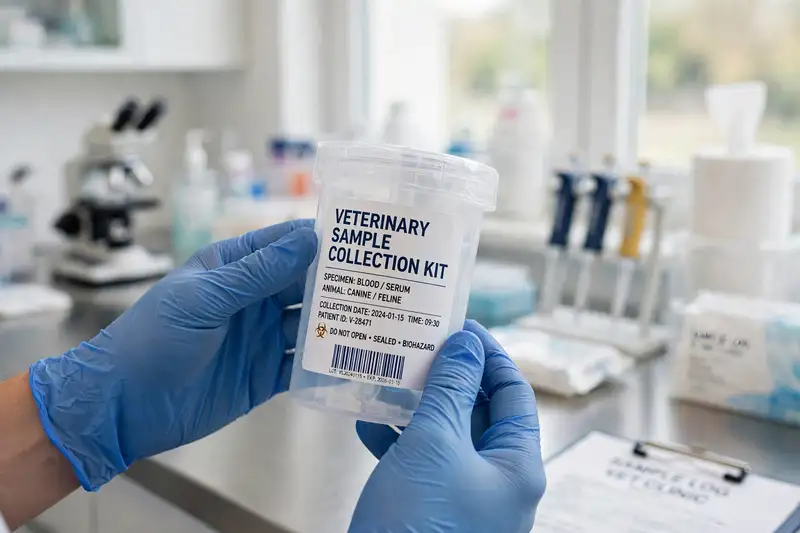
Bring a fresh stool sample to the appointment if you can. It saves time and money. The vet will run a fecal flotation or similar test to look for worm eggs and protozoa, and may test specifically for Giardia. Bloodwork checks hydration, white cell counts, and protein levels, which helps judge how serious the inflammation is. If the colitis is severe, bloody, or not improving, the vet may add abdominal X-rays or ultrasound to rule out foreign bodies, masses, or thickened intestinal walls. Chronic or recurring cases sometimes need colonoscopy with biopsies to diagnose inflammatory bowel disease. None of this is ordered to run up a bill. Each test narrows the cause list, and the cause determines the treatment, so testing is what separates a quick recovery from weeks of trial and error.
Treatment options your vet may use
Treatment follows the cause. Simple colitis often needs nothing more than rest and diet, while parasites need deworming, infections may need specific medication, and inflammatory bowel disease needs anti-inflammatory or immune-suppressing drugs. Your vet may also add probiotics, fiber, or motility-modifying medication to calm the colon.

For uncomplicated cases, the prescription is almost boring: a short fast, then a bland, low-residue diet for a few days. Antibiotics are not automatic anymore. Current veterinary thinking reserves them for diagnosed bacterial causes or severely ill dogs, because routine use does little and can disrupt the gut further. Dewormers handle whipworms and other parasites directly. Metronidazole or tylosin may be used when bacterial overgrowth is suspected. Dogs with inflammatory bowel disease or allergic colitis often need corticosteroids or other immune-modulating drugs, sometimes long term. Probiotic formulations made for dogs help restore normal gut flora after an episode. Motility modifiers can reduce the urgency and cramping. Most dogs respond quickly once the right treatment matches the right cause, and for stress colitis the recovery often starts before any medication is even given.
Home care while your dog recovers
For a mild case in a bright, eating dog, rest the gut briefly, then feed small frequent meals of plain boiled chicken and white rice for a few days before transitioning back. Keep fresh water available, add a little plain canned pumpkin for fiber if your vet agrees, and skip treats and scraps until stools normalize.

The bland diet works because it is easy to digest and gives the colon little to react to. Boil boneless, skinless chicken breast and mix it roughly half and half with plain white rice. Feed small portions three or four times a day rather than one or two big meals. Keep this up for two to three days after the stool firms up, then mix the regular food back in gradually over another few days. A tablespoon or two of plain canned pumpkin (not pie filling) adds gentle soluble fiber that firms loose stool for many dogs. Our pumpkin guide covers the label check and amounts. Do not add new supplements, oils, or rich foods during recovery. If the dog will not eat, keeps vomiting, or the diarrhea worsens on the bland diet, stop the home-care approach and call the vet. Mild cases improve within a day or two; a bland diet is not a substitute for diagnosis when things are not improving.
When colitis becomes an emergency
Call your vet urgently if the diarrhea contains large amounts of blood, the stool is black and tarry, your dog is vomiting repeatedly, refuses water, becomes lethargic or collapses, runs a fever, or shows abdominal pain. Puppies, senior dogs, and dogs with chronic illness have less margin and should be seen sooner.

Most colitis is uncomfortable but not dangerous. The emergency version looks different. Large volumes of bloody diarrhea can dehydrate a dog fast, especially a small one. Black, tarry stool means bleeding higher in the gut, which points to something beyond simple colitis, such as an ulcer or a toxin. Repeated vomiting on top of diarrhea means the whole gut is involved and fluids are leaving from both ends. Lethargy, pale gums, a painful or swollen belly, or collapse are red flags for complications like severe dehydration or a clotting problem. Puppies dehydrate in hours, not days. When in doubt, call. Emergency vets would rather hear “probably just colitis” than see a dog that waited too long. A quick phone call costs nothing and tells you whether this can wait for morning or needs to be seen tonight.
Chronic colitis and long-term management
Chronic colitis lasts longer than two weeks or keeps returning. Management usually means finding the trigger through diet trials or biopsy, then settling the dog onto a long-term plan: a consistent diet (often high-fiber or hypoallergenic), ongoing fiber or probiotics, and medication for inflammatory bowel disease when needed.

Recurring colitis is frustrating because the dog feels fine between episodes, then the mucus and blood return. The workup for chronic cases is methodical. Your vet may start with an elimination diet trial, feeding a single novel protein or a hydrolyzed diet for eight to twelve weeks to test for food allergy. Fiber-responsive colitis is a real and common pattern: adding soluble fiber such as psyllium to a highly digestible diet keeps many of these dogs stable. When diet trials fail, biopsies diagnose inflammatory bowel disease, which is managed rather than cured, usually with diet plus immune-modulating medication. Dogs with chronic colitis do best on boring consistency: same food, same schedule, same fiber, no surprise treats. Keep a symptom diary so flare patterns become visible. Many owners discover their dog’s episodes follow boarding, house guests, or a specific treat, and removing the trigger beats any medication.
How to prevent future flare-ups
Prevention is mostly about gut consistency. Transition foods gradually over a week, keep table scraps and garbage out of reach, maintain regular deworming and fecal checks, manage stress around travel and boarding, and avoid sudden dietary experiments. A stable routine protects a sensitive colon better than any supplement.
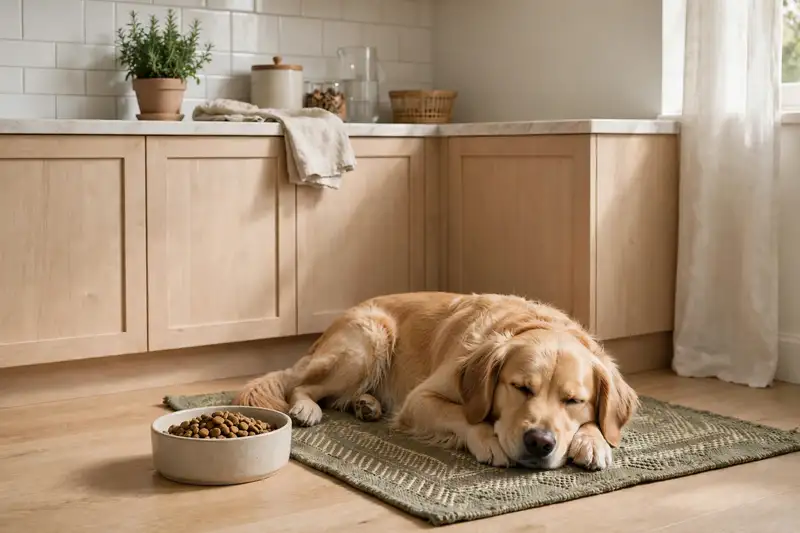
The single biggest preventable cause of colitis flare-ups is abrupt diet change. Mix the new food with the old over seven days, shifting the ratio a little each day. Secure the trash, because garbage raids are a top trigger and the one owners underestimate most. Keep up the deworming schedule your vet set; whipworms do not announce themselves. For dogs with a history of stress colitis, plan ahead: exercise before travel, familiar bedding at the kennel, and a trial overnight stay before a long boarding trip. Probiotics formulated for dogs can help around known stress events when your vet recommends them. None of this is complicated. A sensitive colon wants the same thing every day, and most flare-ups trace back to a day that was anything but the same.
The bottom line on colitis: most cases are short, scary-looking, and very treatable. Watch the stool, note the dog’s energy and appetite, try bland food and rest for a mild episode, and get the vet involved when blood is heavy, symptoms persist past a couple of days, or the dog looks unwell. For the recovery diet, our pumpkin guide and bone broth guide are useful companions, and if your dog eats grass when its stomach is off, our grass-eating guide explains what that means. When in doubt about any food during recovery, the wider human food guide is the safe reference.
Frequently Asked Questions
How long does colitis in dogs last?
Acute colitis usually clears within two to five days with rest and a bland diet. Stress colitis is typically back to normal in three to five days. If diarrhea lasts longer than a week, keeps returning, or the dog seems unwell, a vet visit is needed to find the cause.
Is colitis in dogs contagious?
Colitis itself is not a disease you can catch, but some causes are. Giardia and certain bacterial infections can spread between dogs through contaminated stool or water. Parasitic causes also need the environment cleaned. Your vet can tell you whether the specific cause needs isolation or yard cleanup.
What should I feed a dog with colitis?
Feed small, frequent meals of plain boiled chicken and white rice for a few days, then transition back to the regular food gradually. Some vets recommend adding soluble fiber like plain canned pumpkin. Avoid fatty foods, treats, and table scraps until stools are fully normal.
Can stress really cause bloody diarrhea in dogs?
Yes. Stress colitis is one of the most common causes of large-bowel diarrhea, and the stool often contains mucus and streaks of fresh blood. Boarding, travel, and big household changes are classic triggers. It usually resolves in a few days once the stress passes.
Does colitis in dogs need antibiotics?
Not usually. Current veterinary guidance reserves antibiotics for diagnosed bacterial infections or severely ill dogs. Most mild colitis resolves with rest, diet, and sometimes probiotics. Giving antibiotics “just in case” can disrupt the gut further, so follow your vet’s judgment.
When should I take my dog to the vet for colitis?
Go promptly if there is a large amount of blood, black tarry stool, repeated vomiting, refusal to drink, lethargy, fever, or abdominal pain. Puppies, seniors, and dogs with other illnesses should be seen sooner. Mild cases in bright, eating dogs can be watched for a day or two.
Can colitis come back?
Yes, and it often follows a pattern. Stress colitis recurs with stressful events, food-related colitis with dietary slip-ups, and allergic or IBD colitis without consistent management. Keeping a symptom diary helps you and your vet spot the trigger and build a prevention plan.
This article is general information only and is not a substitute for veterinary advice. If your dog has bloody diarrhea, seems unwell, or symptoms persist, contact your veterinarian promptly.
1 thought on “Colitis in Dogs: Signs, Causes, and How to Help”