

Searching for the best dog food for small dogs usually lands you on ranked listicles full of brand endorsements. This guide takes a different approach: instead of crowning one winner, it teaches you exactly what to look for so you can judge any food yourself. Small dogs have faster metabolisms, tinier jaws, and specific health quirks that generic dog food does not always address. Once you know the criteria, the right choice becomes obvious. For background on sharing table food alongside regular meals, see our guide to what human food dogs can eat.
What Makes Small Dogs’ Nutrition Different?
Small dogs burn calories faster per pound than large dogs, have tiny stomachs that fill up quickly, and are prone to dental disease and low blood sugar. Their food needs to pack more nutrition into smaller, easier-to-chew bites, which is why size-specific formulas exist.

A five-pound Chihuahua and a fifty-pound Lab might eat from the same brand, but their nutritional math is not the same. Small breeds typically need more calories per pound of body weight because they lose heat faster and tend to be more active relative to their size. At the same time, a small dog’s stomach holds very little, so every bite has to count. A food that works for a big dog can leave a small dog underfed on nutrients even when the calorie count looks right.
Then there are the breed quirks. Toy breeds are prone to hypoglycemia, especially as puppies. Small jaws crowd teeth together, making dental disease far more common than in large breeds. These are not minor footnotes; they shape what “good food” means for a small dog. Keep these differences in mind as we go through each label criterion below.
Start With the AAFCO Statement
Every trustworthy dog food carries an AAFCO nutritional adequacy statement saying the food is complete and balanced for a specific life stage. If a food lacks this statement, skip it. Prefer foods validated by actual feeding trials over those validated by nutrient calculation alone.

This one line on the bag matters more than every marketing claim on the front. “Formulated to meet the nutritional levels established by the AAFCO Dog Food Nutrient Profiles” means the recipe was designed to be complete on paper. “Animal feeding tests using AAFCO procedures substantiate that this product provides complete and balanced nutrition” is the stronger claim: real dogs ate it in a controlled trial and thrived. Feeding trials cost manufacturers serious money, so this statement separates serious companies from the rest.
Check the life stage too. “For all life stages” or a specific “puppy,” “adult,” or “senior” designation should match your dog. Puppy formulas have extra protein, fat, calcium, and phosphorus for growth. An adult small dog does not need puppy-level calories, and a puppy should not eat adult maintenance food long term. The AKC’s nutrition guidance explains life-stage feeding in more depth.
Kibble Size and Shape Actually Matter
Small dogs need small, bite-sized kibble they can pick up and chew comfortably. Oversized kibble gets swallowed whole or avoided entirely, which defeats the purpose of dry food’s dental benefits and can cause choking or digestive upset in tiny breeds.

Watch your dog eat sometime. A Yorkie facing standard-size kibble will often crunch it awkwardly, drop pieces, or give up and swallow chunks whole. Small-breed formulas solve this with pea-sized pieces designed for little jaws. The shape matters as well: some kibble is engineered with a texture that scrapes teeth as the dog chews, which helps fight the plaque buildup small breeds are prone to.
This is one of the easiest criteria to check in the store. Many brands show actual kibble size on the bag or have sample displays. If you are switching from a regular formula and your small dog suddenly eats with more enthusiasm, kibble size was probably the barrier all along.
Calorie Density for Fast Metabolisms
Small-breed formulas are typically more calorie-dense than regular adult foods, packing 400 or more calories per cup, so a small dog gets enough energy from a small volume of food. Check the kcal/kg and kcal/cup figures on the label and match portions to your dog’s weight and activity.

Calorie density is where well-meaning owners go wrong in both directions. Feed a low-density “light” food to a tiny, active dog and the dog cannot physically eat enough volume to meet its energy needs. Feed a dense small-breed food with a heavy hand and the pounds pile on fast, because small dogs gain weight on surprisingly small surpluses. A few extra kibbles a day is a meaningful overfeed for a six-pound dog.
Use the feeding guide on the bag as a starting point, then adjust based on your dog’s body condition. You should be able to feel the ribs easily under a thin layer of fat. If you cannot feel them, cut back. Your vet can confirm ideal weight at checkups, which is worth doing since owners of small dogs consistently underestimate chubbiness.
Protein and Fat Levels to Look For
Look for a named animal protein (chicken, lamb, fish) as the first ingredient, with protein around 25 to 30 percent and fat around 15 to 20 percent for most adult small dogs. Puppies and very active dogs need the higher end of those ranges, while couch-potato seniors do better lower.

The ingredient list tells you more than the guaranteed analysis alone. “Chicken” or “chicken meal” as the first ingredient is a good sign. Vague terms like “meat and bone meal” or “animal digest” are not. Meals (rendered, concentrated protein) are not the villain some marketing suggests; a named meal like “chicken meal” is a solid protein source. What you want to avoid is mystery meat.
Fat deserves respect in small-breed diets. It carries fat-soluble vitamins, keeps skin and coat healthy, and makes food taste good enough that picky little dogs actually eat it. But fat is calorie-dense, so the percentage needs to match the dog’s lifestyle. PetMD’s nutrition section has vet-reviewed breakdowns of what these numbers mean in practice.
Small-Breed Puppies and Hypoglycemia
Toy-breed puppies are prone to hypoglycemia (dangerously low blood sugar) and need three to four small meals a day, never going too long without eating. Signs include weakness, wobbliness, glassy eyes, and collapse. This is an emergency: rub honey or sugar water on the gums and get to a vet immediately.

Hypoglycemia strikes tiny puppies because they have almost no fat or glycogen reserves and burn through blood sugar fast, especially when stressed, cold, or overly active. New owners are often told to feed twice a day like an adult dog, which can be dangerous for a two-pound puppy. Until your vet says otherwise, frequent small meals are non-negotiable.
A calorie-dense puppy formula designed for small breeds helps here, since each tiny meal delivers more energy. Keep mealtimes consistent and watch for the early wobbles. If your puppy ever seems suddenly lethargic or unsteady, treat it as urgent. Fast action with sugar followed by a vet visit saves lives in these cases.
Dental Health and Food Texture
Small breeds develop dental disease earlier and more severely than large dogs, thanks to crowded teeth that trap plaque. Dry kibble with a crunchy, teeth-cleaning texture helps, and daily tooth brushing plus veterinary dental cleanings matter far more than any single food choice.

By age three, most small dogs show some degree of periodontal disease. The crowded mouth is the core problem: forty-two teeth crammed into a tiny jaw create tight spaces where bacteria thrive. Crunchy kibble provides mild mechanical cleaning with each bite, which is a genuine advantage over an all-wet diet, though it does not replace brushing.
Some foods carry a Veterinary Oral Health Council seal for proven plaque or tartar reduction. That seal is worth looking for if dental issues run in your dog’s breed. Dental chews help too, sized appropriately so a small dog can actually chew rather than gulp them. But be honest with yourself: no food or chew substitutes for brushing and professional cleanings.
Wet, Dry, or Fresh Food?
Dry food wins on dental benefits, cost, and convenience; wet food wins on palatability and hydration; fresh or gently cooked foods can be excellent if formulated by veterinary nutritionists. Many small-dog owners do well mixing: dry kibble as the base with a spoonful of wet food to entice picky eaters.
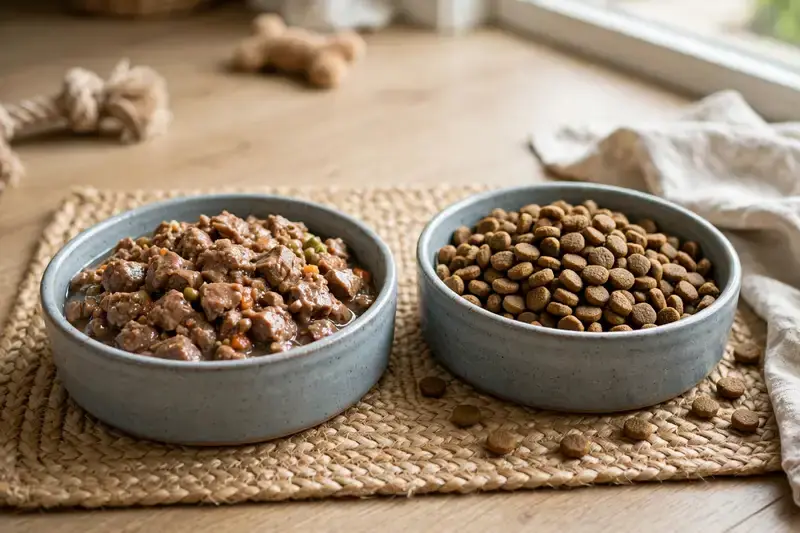
Picky eating is practically a small-breed trait, and wet food’s strong smell breaks through the fussiness. The downside is purely practical: wet food costs more per calorie, spoils fast in the bowl, and does nothing for teeth. Fresh subscription foods solve the palatability problem elegantly but demand careful label scrutiny, since the category includes both rigorously formulated products and marketing-heavy ones with thin nutritional credentials.
Whatever format you choose, the AAFCO statement rule still applies. A beautiful fresh food without a complete-and-balanced statement is just expensive incomplete food. And if your dog has a sensitive stomach during transitions, our bland diet for dogs guide covers how to settle things down.
Matching Food to Life Stage
Feed a small-breed puppy formula until 9 to 12 months, an adult maintenance formula through the middle years, and consider a senior formula around age 7 or 8 with adjusted calories and joint support. Switching at the right time matters more than finding one perfect food for life.

Pregnant or nursing small dogs have the highest nutritional demands of all and need a puppy or all-life-stages formula with vet supervision. Small mothers nursing large litters can lose condition frighteningly fast. If your dog is breeding age and intact, talk to your vet about nutrition before pregnancy, not during. The VCA Hospitals pet care library has life-stage feeding articles worth bookmarking.
Label Red Flags to Avoid
Avoid foods without an AAFCO statement, with vague ingredients like “meat by-products” from unnamed sources, or that make miracle health claims on the front of the bag. Also be wary of exotic-protein boutique foods with no feeding-trial history, given the ongoing questions around some grain-free formulations.

Marketing language is designed to bypass your judgment. “Holistic,” “ancestral,” “human-grade,” and “premium” have no legal definitions in pet food. Gorgeous photos of wild salmon and blueberries tell you nothing about nutritional testing. Flip the bag over and read the boring parts: the AAFCO statement, the ingredient list, the guaranteed analysis, and the calorie content.
Price is a weak signal in both directions. Expensive does not mean tested, and affordable does not mean bad. Some of the most rigorously tested foods on the market sit at mid-range prices from big manufacturers with real research programs. Judge the food, not the price tag or the packaging. The FDA’s animal and veterinary resources include guidance on evaluating pet food claims.
Frequently Asked Questions
How much should I feed my small dog per day?
Follow the feeding guide on your specific food, then adjust to keep your dog at a healthy weight. Most adult small dogs eat between a quarter and one cup of dry food daily, split into two meals. Tiny toy breeds often do better with three smaller meals. Your vet can fine-tune portions.
Is grain-free food better for small dogs?
Not generally. There is no evidence small breeds need grain-free diets, and the FDA has investigated possible links between some grain-free formulations and heart disease. Unless your vet diagnoses a grain allergy, a grain-inclusive food from a tested brand is the safer choice.
Should small dogs eat puppy food longer than large dogs?
Small breeds mature faster, so they typically switch to adult food at 9 to 12 months, earlier than large breeds. Your vet can confirm timing based on your dog’s growth. Keeping them on rich puppy food too long leads to excess weight.
Can I feed my small dog home-cooked meals?
You can, but home-cooked diets need a veterinary nutritionist’s recipe to be complete. Small dogs are less forgiving of nutritional gaps because every bite counts more. Most owners do better with a quality commercial food, using home-cooked extras like plain chicken as occasional toppers.
Why is my small dog such a picky eater?
Small dogs learn quickly that refusing food produces better offers. Consistent mealtimes, a 15-minute food window, and no table scraps usually fix it. Warming the food slightly or adding a spoonful of bone broth helps. If appetite loss is sudden, see a vet.
Do small dogs need supplements?
A complete and balanced food needs no supplementation. Extra calcium, vitamins, or oils can unbalance a good diet, especially in tiny dogs where small amounts have big effects. Only supplement on your vet’s advice, such as joint support for an arthritic senior.
How do I switch my small dog to a new food?
Transition over 7 to 10 days, mixing increasing amounts of new food into the old. Small dogs’ digestive systems protest sudden changes loudly. If soft stool appears, slow the transition. For settling an upset stomach mid-switch, see our guide on electrolytes for dogs and when they are needed.



7 thoughts on “Best Dog Food for Small Dogs: How to Choose the Right One”