
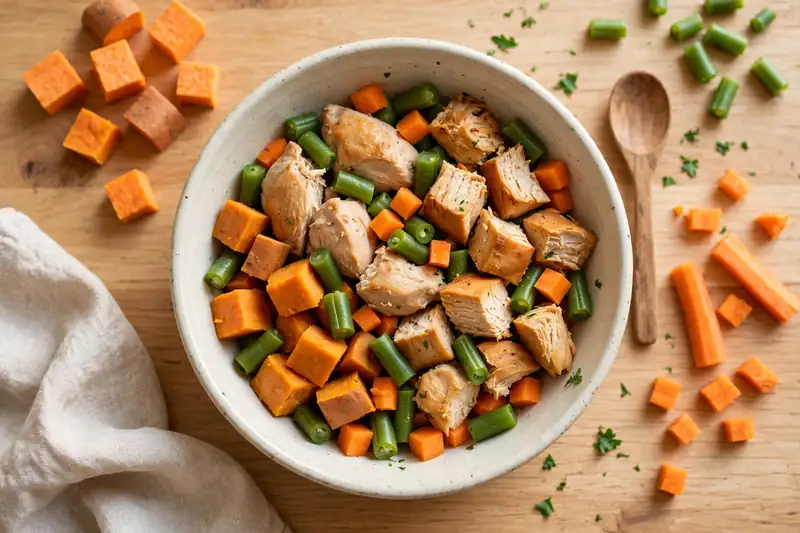
Dog food recipes made at home can be a wonderful way to feed your dog, but most online recipes are nutritionally incomplete. Dogs need precise balances of protein, fat, calcium, and vitamins that a simple meat-and-rice bowl does not provide. The good news is that homemade feeding works well when you follow a proper formula and involve your vet. This guide gives you four simple starter recipes, the safe building formula behind them, the ingredients that must never go in, and honest guidance on portions and balance.
Can you make dog food at home?
Yes, you can make dog food at home, and many owners do it well. But a homemade diet must be complete and balanced, not just a bowl of meat and rice. VCA Animal Hospitals warns that most online recipes lack essential nutrients unless formulated with veterinary guidance, so use proper recipes and involve your vet or a veterinary nutritionist.

Home cooking for dogs sits in an odd spot: enormously popular, widely blogged, and frequently done wrong. The motivation is usually good. Owners want control over ingredients, want to avoid fillers and byproducts, or have a dog with sensitivities that commercial foods do not suit. All of that is legitimate. The problem is that dogs have specific nutritional requirements worked out over decades of research, covering amino acids, fatty acids, calcium, phosphorus, and a long list of vitamins and trace minerals in particular ratios. Research into online homemade recipes has repeatedly found most of them deficient in several nutrients. That does not mean you should not cook. It means the recipe matters more than the enthusiasm. A vet-formulated recipe, or a solid starter recipe plus the right supplements and veterinary oversight, can absolutely work. A random recipe from a blog, fed as the sole diet for a year, is how deficiencies happen.
The balance problem most homemade diets have
The most common homemade mistake is serving plain meat with rice or vegetables and calling it complete. That bowl is short on calcium, zinc, iodine, vitamin D, vitamin E, and essential fatty acids, among others. Dogs fed unbalanced homemade diets for months can develop bone problems, dull coats, and weakened immunity. Balance is not optional; it is the entire point.

Here is the uncomfortable truth about the classic chicken-and-rice bowl: it is a great bland diet for three days of digestive upset, and a poor permanent diet. Meat is rich in phosphorus but poor in calcium, so a meat-heavy diet without added calcium inverts the calcium-to-phosphorus ratio dogs need for healthy bones. That matters enormously for growing puppies, where imbalances can cause real skeletal harm. Then there are the quiet deficiencies: zinc for skin and immunity, iodine for the thyroid, vitamin D, vitamin E as an antioxidant, and the omega-3 fatty acids. A dog can look fine for months while stores deplete, which is why “my dog looks great on it” is not evidence of balance. The fix is not complicated, but it is non-negotiable: either use recipes formulated by a veterinary nutritionist, or add a canine-specific vitamin-mineral supplement plus a calcium source to your starter recipes, with your vet’s approval. The recipes below are built with that in mind.
Ingredients that must never go in dog food
Some human foods are toxic to dogs and must never appear in homemade recipes: onion and garlic in any form, grapes and raisins, chocolate, anything with xylitol, macadamia nuts, alcohol, and cooked bones, which can splinter. Raw bread dough is dangerous too, since it expands in the stomach. When in doubt about an ingredient, leave it out.

Memorize this list before you cook a single batch, because the kitchen is full of things that are fine for you and dangerous for the dog. Onion and garlic damage dogs’ red blood cells, and the effect is cumulative and delayed, so even small regular amounts in cooking are a problem. That rules out onion powder, garlic powder, and pre-seasoned meats. Grapes and raisins can cause kidney failure at unpredictable doses. Chocolate’s theobromine is toxic, with darker chocolate worse. Xylitol, the sweetener in many sugar-free products, can kill a dog through blood sugar crash and liver failure. Macadamia nuts cause weakness and vomiting. Cooked bones splinter into sharp pieces that can perforate the gut; raw meaty bones are a separate debate, but cooked bones are simply out. The safest homemade food is boring by human standards: plain cooked ingredients, no seasoning. Your dog will not miss the garlic.
The safe homemade formula
A balanced homemade meal follows a formula: a lean cooked protein, a cooked carbohydrate, dog-safe vegetables, a small amount of healthy fat, plus a calcium source and a canine vitamin-mineral supplement. Roughly speaking, aim for about 40 percent protein, 50 percent carbohydrate and vegetables, and 10 percent extras including oils and supplements, adjusted to your dog’s needs with veterinary guidance.

Think of every batch as built from five building blocks. The protein, chicken, turkey, lean beef, fish, or eggs, provides the amino acids. The carbohydrate, rice, oatmeal, sweet potato, or pasta, provides energy. The vegetables, carrots, green beans, peas, spinach, or broccoli, add fiber and micronutrients. The fat, a measured drizzle of fish oil or similar, supplies essential fatty acids. And the fifth block is the one most home cooks skip: the minerals and vitamins. A canine multivitamin formulated for homemade diets, plus calcium from a supplement or carefully prepared eggshell powder, closes the gaps that meat and vegetables leave. VCA’s nutritionists stress that properly balanced diets must include a specifically recommended vitamin-mineral supplement, and that removing or swapping ingredients can unbalance a formulated recipe. So once you have a formula that works, stick to it. Improvisation is for your own dinner, not the dog’s.
Four simple dog food recipes to start with
These four starter recipes use plain, dog-safe ingredients and follow the balanced formula. Each makes several meals: cook the components, combine, cool, and add your vet-approved canine supplement and calcium source before serving. They are starting points to discuss with your vet, who may adjust them for your individual dog.
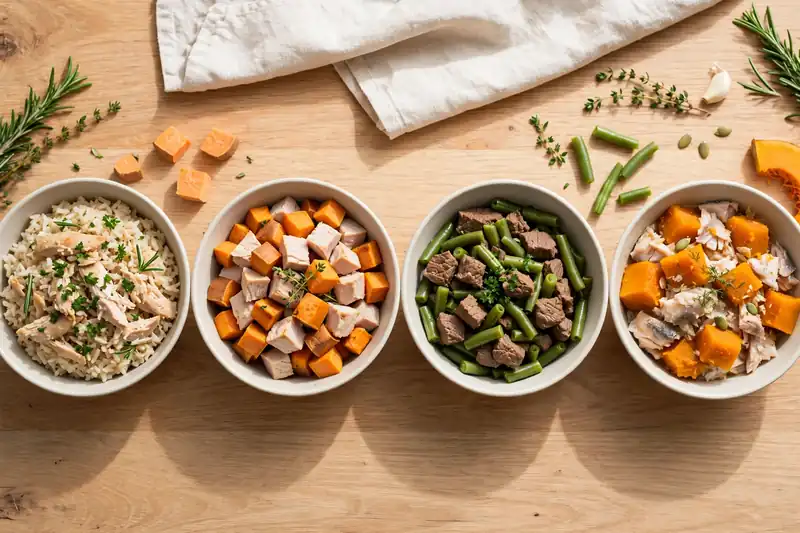
Here are four dependable combinations. For each one, cook everything plain, with no salt, oil, onion, or seasoning, then mix and portion.
Chicken, rice, and veggie bowl. The classic for a reason. Boneless, skinless chicken breast or thighs, cooked through and diced. Brown or white rice, cooked. Carrots, green beans, and peas, lightly steamed. Gentle, affordable, and most dogs love it.
Turkey and sweet potato. Lean ground turkey, browned and drained. Sweet potato, peeled, cubed, and boiled or baked until soft. Spinach, wilted in, and a scrambled egg for extra protein and nutrients. A good pick for dogs bored of poultry and rice.
Beef and oatmeal. Lean ground beef, browned and drained of fat. Plain oatmeal, cooked. Diced carrots and broccoli florets, steamed until tender. Hearty and calorie-dense, so watch portions for less active dogs.
Salmon and pumpkin. Salmon fillets, baked and carefully checked for bones. Plain pumpkin puree, not pie filling. Brown rice and peas. The salmon provides excellent omega-3s, and pumpkin’s fiber is kind to digestion.
For all four, the finishing step is what makes them complete: stir in the canine vitamin-mineral supplement and calcium source your vet recommended, plus a measured amount of fish oil if your vet advises it. Without that step, these are tasty toppers, not complete meals.
Cooking, cooling, and storing safely
Cook all meats fully, wash produce, and keep everything plain. Cool food to room temperature within two hours, refrigerate portions for up to 3 to 4 days, and freeze the rest for up to 2 to 3 months. Reheat gently and cool before serving. Wash bowls, utensils, and hands as you would for your own food.

Home cooking means home food safety, and the standards are the same as for your own meals. Cook poultry to steaming-hot throughout with no pink, brown ground meats fully, and bake fish until it flakes. Wash fruits and vegetables, and keep raw meat away from ready-to-eat components. The cooling step matters more than people think: big pots of food left on the counter for hours are bacterial playgrounds, so divide large batches into shallow containers to cool quickly, then refrigerate. Portion into daily servings before freezing so you only thaw what you need, and thaw in the fridge, not on the counter. When reheating, warm it through and let it cool to lukewarm; dogs do not want it hot. And keep the dog out of the kitchen during prep, both for safety around hot pans and to protect your ingredients from a counter-surfing quality inspector.
How much homemade food does your dog need?
A common starting point is about 2 to 3 percent of an adult dog’s body weight in total food per day, split into two meals, then adjusted for activity, age, and condition. A 20 kg dog would start around 400 to 600 grams daily. Your vet should confirm calories, since needs vary widely.
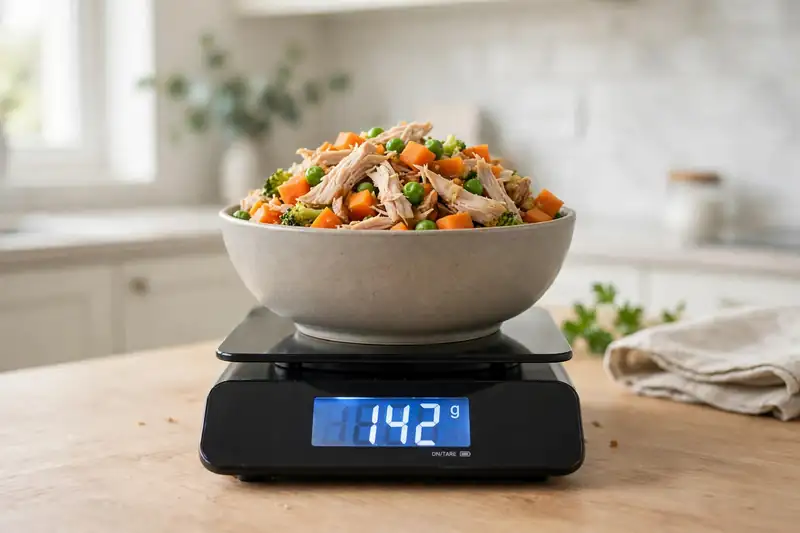
Portion guidance is where generic advice gets shaky, so treat any formula as a starting point, not a prescription. The 2 to 3 percent rule gives you a reasonable launchpad for an average adult dog at a healthy weight. From there, the scale and the mirror are your instruments: weigh the dog every couple of weeks at first, and adjust the food up or down to hold a healthy weight. You should be able to feel the ribs under a light fat cover and see a waist from above. Active and working dogs may need significantly more; spayed, neutered, or senior couch potatoes often need less. Homemade food also varies in calorie density by recipe, which is another reason the vet’s input matters. Bring your recipe and your dog’s weight history to the appointment and ask for a daily calorie target. That single number makes every portion decision easy from then on.
Switching from kibble without digestive drama
Transition over 7 to 10 days: start with about 25 percent homemade mixed into the old food, then shift the ratio every few days until the switch is complete. Some soft stool during the change is normal. If diarrhea persists beyond a few days, slow down the transition or check with your vet.

Dogs’ digestive systems adapt to what they regularly eat, including the bacterial community in the gut, so an overnight switch is asking for trouble. The gradual method is simple: days one to three, roughly a quarter new food; days four to six, half and half; days seven to nine, three quarters new; day ten, fully switched. Watch the stool as your guide. Slightly soft is fine and expected. Watery diarrhea, vomiting, or refusal to eat means you moved too fast, so step back to the previous ratio for a few days. Puppies and dogs with sensitive stomachs may need two full weeks. Keep everything else constant during the switch so you can identify the cause of any reaction. And keep a small bag of the old food until the transition is fully done, just in case you need to pause.
Puppies, seniors, and dogs with health conditions
Puppies, pregnant dogs, and dogs with kidney disease, diabetes, pancreatitis, or other conditions should not eat generic homemade recipes without a veterinary nutritionist’s formulation. Growth and disease change nutrient requirements significantly, and mistakes here have real consequences. Healthy adult dogs are the straightforward candidates for home cooking.

This is the section that prevents the most harm, so read it carefully. Puppies are building skeletons, and the calcium and phosphorus balance in their food directly shapes how those bones form. Get it wrong during growth and the damage can be permanent, which is why generic recipes are not suitable for puppies without professional formulation. Pregnant and nursing dogs have sharply increased needs that generic recipes do not meet. Dogs with kidney disease need controlled protein and phosphorus; dogs with pancreatitis need controlled fat; diabetic dogs need consistent carbohydrates. Each of these is a prescription-diet situation, or at minimum a board-certified nutritionist situation. Senior dogs without health issues can do well on homemade food, but their protein needs and calorie targets differ from a young adult’s, so get the recipe reviewed. The pattern is simple: the further a dog is from an average healthy adult, the more expert input the diet needs.
When homemade food is the wrong choice
Homemade feeding is wrong when it is done casually: unbalanced recipes fed long term, no supplements, no vet involvement. It is also the wrong choice if you cannot commit to the cooking, portioning, and cost consistently. An excellent commercial food fed reliably beats a sloppy homemade diet every time. Be honest about your routine before you start.

Enthusiasm fades, and that is worth planning for. Home cooking means shopping, cooking, portioning, and cleaning on a relentless schedule, because the dog eats every day whether you feel like cooking or not. If your life has stretches where that will not happen, have a backup plan: a quality commercial food for busy weeks, or batch cooking and freezing a month at a time. Cost is the other honest factor. Good meat is not cheap, and neither are the supplements that make the diet complete. For large dogs, homemade can cost several times what kibble does. The best food is the one that is complete, consistent, and actually in the bowl. Some owners land on a hybrid that works beautifully: commercial food as the base for nutritional certainty, with homemade toppers for variety and joy. That combination captures most of the benefit with a fraction of the risk.
Done right, home cooking is one of the most rewarding ways to feed a dog. Just remember the formula, the supplements, and the vet. For protein ideas, our guides to chicken for dogs and turkey for dogs cover safe prep, rice explains the classic carb, and our onion guide is the must-read on what never goes in the pot.
Frequently Asked Questions
Are homemade dog food recipes nutritionally complete?
Most online recipes are not. Studies of internet recipes repeatedly find gaps in calcium, zinc, vitamins, and fatty acids. Use vet-formulated recipes or add a canine vitamin-mineral supplement plus calcium, with your vet’s approval.
What is the simplest balanced homemade dog food?
A lean cooked protein, a cooked carbohydrate, dog-safe vegetables, a little healthy fat, plus a calcium source and a canine multivitamin. The recipes in this guide follow that formula. Plain meat and rice alone is not complete.
Can I feed my dog homemade food every day?
Yes, if the diet is complete and balanced and your vet approves. Many owners feed homemade long term successfully. The key is nutritional completeness, consistent portions, and regular vet checkups, not just good ingredients.
What foods should never be in homemade dog food?
Onion, garlic, grapes, raisins, chocolate, xylitol, macadamia nuts, alcohol, cooked bones, and raw bread dough. Also avoid heavy seasoning, rich sauces, and excessive salt. When unsure about an ingredient, leave it out.
How do I add calcium to homemade dog food?
The most reliable way is a commercial calcium supplement or a canine multivitamin formulated for homemade diets, dosed per your vet’s guidance. Do not guess at amounts, since calcium balance with phosphorus matters, especially for puppies.
Can puppies eat homemade food?
Only with a recipe formulated by a veterinary nutritionist. Puppies have precise calcium, phosphorus, and calorie needs for proper skeletal growth, and generic recipes risk permanent harm. Do not use general adult recipes for puppies.
Is homemade dog food better than kibble?
Not automatically. A complete, high-quality commercial food beats an unbalanced homemade diet every time. Homemade wins when it is properly formulated, supplemented, and fed consistently, giving you full control over ingredients.
This article is general information only and is not a substitute for veterinary advice. If your dog has a health condition, is on a prescription diet, or you are unsure about any food, check with your veterinarian first.

4 thoughts on “Dog Food Recipes: Homemade Meals Done Right”