

Yes, dogs can eat black beans, as long as they are plain and fully cooked. PetMD lists black beans among the bean varieties considered safe for dogs when properly prepared, alongside pinto beans, garbanzo beans (chickpeas), and cooked kidney beans. They offer a respectable package of plant protein, fiber, and antioxidants, and most dogs enjoy them. But beans are one of those foods where preparation is everything: the same black beans that are a healthy occasional treat become a problem when they are raw, undercooked, or seasoned the way humans like them. Here is how to serve them safely, and why your dog may pay for them in gas.

Why Black Beans Can Be Good for Dogs
Black beans bring more to the bowl than most people expect:
- Plant protein. While no plant protein replaces the animal protein at the base of a dog’s diet, black beans contribute meaningful protein as part of an occasional treat.
- Fiber. Beans are rich in both soluble and insoluble fiber, which supports healthy digestion and helps dogs feel full, useful in weight-management contexts.
- Antioxidants. The dark color comes from anthocyanins, the same antioxidant compounds found in blueberries and other dark produce.
- Minerals. Black beans provide iron, magnesium, potassium, and folate in modest amounts.
- Low fat. Unlike many human foods dogs beg for, plain beans are naturally very low in fat.
None of this makes black beans a dietary staple, treats of all kinds should stay under about 10% of daily calories, but as an occasional addition, they are genuinely nutritious.
The Raw Bean Danger: Why “Fully Cooked” Is Non-Negotiable
This is the single most important safety point. Raw or undercooked beans contain lectins, naturally occurring proteins that protect the plant but are toxic to mammals, including dogs and humans. The most notorious is phytohemagglutinin, concentrated especially in raw kidney beans, which can cause severe nausea, vomiting, and diarrhea.
Black beans contain lower lectin levels than kidney beans, but the rule is the same for all dried beans: they must be soaked and then boiled until completely soft. Proper cooking destroys the lectins and makes the beans safe and digestible. Slow cookers, used alone without a boiling step, may not reach temperatures high enough to destroy lectins reliably, so if you use a slow cooker, bring the beans to a full boil first (about 10 minutes) before reducing to a simmer.
Never feed dried beans straight from the bag, and never let your dog eat beans that are still hard or crunchy in the middle. “Al dente” is for pasta, not for dog treats.

Canned Black Beans: The Sodium Problem
Canned black beans are convenient, and they can be acceptable, with a major caveat. Standard canned beans are packed in a salt brine, and the sodium levels are far too high for dogs, especially for dogs with heart conditions. If you use canned beans:
- Choose no-salt-added varieties whenever possible.
- Drain and rinse thoroughly under running water, which washes away a significant portion of the surface sodium.
- Keep the portion small regardless, rinsing reduces sodium but does not eliminate it.
Dried beans that you soak and cook yourself, with no salt added to the cooking water, are the cleanest option and are cheaper too. If canned is what you have, no-salt-added plus a thorough rinse is the acceptable compromise.

Seasoned Beans to Avoid
How humans normally eat black beans is exactly how dogs should not:
- Refried beans. Very high in fat (often cooked in lard or oil), which can trigger pancreatitis, and typically seasoned with garlic, onion, and spices.
- Chili beans / chili con carne beans. Contain onion, garlic, chili peppers, and heavy seasoning, multiple hazards in one can.
- Baked beans. Loaded with sugar, molasses, and spices; some contain onion.
- Any beans cooked with onion or garlic. Both damage dogs’ red blood cells. This includes beans simmered with onion halves “for flavor” even if the onion is removed afterward, the compounds leach into the beans.
- Beans with added oils, butter, or cheese sauces. The fat load is the problem.
The dog’s portion should be beans, water, heat, nothing else. If the beans were seasoned for the family, cook a separate small plain batch for the dog, or simply skip sharing that meal.

Gas, Bloating, and Portions: The Practical Reality
Let us address the elephant in the room: beans make dogs gassy. Beans contain oligosaccharides, complex sugars that dogs (like humans) cannot fully digest. Gut bacteria ferment them, producing gas. This is normal, not dangerous, but it is unpleasant for everyone in the household.
The solution is portion discipline:
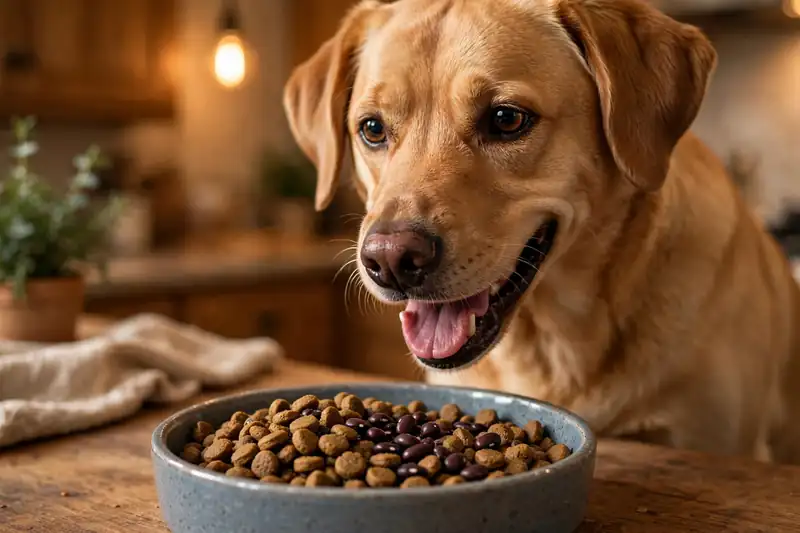
- Start tiny. PetMD’s guidance suggests starting with about 1 teaspoon for a small dog to see how they tolerate beans before offering more.
- A sensible serving for most dogs is 1-2 tablespoons of cooked beans for small dogs, up to roughly half a cup for giant breeds, and only as an occasional treat, not daily.
- Introduce gradually. Do not go from zero to a full serving in one meal. Build up over several days so the gut adjusts.
- Watch the response. Excessive gas, bloating, or loose stool means the portion was too large or beans do not agree with your particular dog. Scale back or skip them.
And the standing rule: all treats and extras combined should stay under roughly 10% of your dog’s daily calories. Beans are a treat, not a protein replacement.
Dogs That Should Be Careful With Beans
Most healthy dogs handle small amounts of plain beans fine, but a few situations call for caution:
- Dogs with kidney disease. Beans are relatively high in protein and phosphorus, which can be a concern for compromised kidneys. Check with your vet.
- Dogs with sensitive stomachs or IBD. The fiber and oligosaccharides that are harmless to most dogs can aggravate sensitive digestive tracts.
- Dogs prone to bloat (large, deep-chested breeds). Gas-producing foods deserve extra caution in breeds like Great Danes, German Shepherds, and Standard Poodles. Keep portions minimal and never feed beans as a large meal.
- Overweight dogs on strict calorie counts. Beans have calories too, count them in the daily budget.
How to Prepare Black Beans for Your Dog
The clean method, start to finish:
- Start with dried black beans (or no-salt-added canned, drained and rinsed).
- Soak dried beans overnight in plenty of water; discard the soaking water.
- Boil hard for at least 10 minutes, then reduce to a simmer until completely soft, typically 60-90 minutes. Taste-test: no crunch, no firmness in the center.
- Add nothing. No salt, no oil, no onion, no garlic, no spices.
- Cool to room temperature and serve a small portion mixed into regular food, or offer a few beans as training treats.
- Mash for small dogs if the whole beans seem difficult to manage.
Refrigerate leftovers and use within 3-4 days, or freeze in small portions.
Which Beans Are Safe and Which to Skip
For quick reference, the generally recognized lists:
Usually safe when plain and fully cooked: black beans, pinto beans, garbanzo beans (chickpeas), kidney beans (must be thoroughly cooked, never raw), lima beans, navy beans, lentils, green beans.
Avoid: raw or undercooked kidney beans (high lectin toxicity), fava/broad beans (difficult to cook through safely), baked beans, refried beans, chili beans, any canned beans in salty brine (unless no-salt-added and rinsed), and any beans prepared with onion, garlic, or heavy seasoning.
When in doubt about a variety, the conservative choice is to skip it, there are plenty of confirmed-safe options.
Serving Ideas: Easy Ways to Offer Black Beans
Once you have a batch of plain, fully cooked black beans, a few serving approaches work well:
As a food topper. Stir a tablespoon of mashed beans into your dog’s regular kibble. Mashing helps smaller dogs manage the texture, and mixing the beans in means they supplement the meal rather than competing with it. This is the easiest way to keep portions honest.
As training treats. Roll small amounts of mashed bean into pea-sized balls and refrigerate them for an hour to firm up. They make soft, low-fat training rewards, though fair warning, most dogs will work harder for meat-based treats, so save the bean balls for easy, well-known cues.
Stuffed in a Kong. Mix mashed beans with a spoonful of plain pumpkin, stuff the mixture into a Kong, and freeze it. The combination of fiber-rich beans and pumpkin makes a long-lasting enrichment puzzle that is gentle on the stomach and keeps a dog occupied far longer than the same food served in a bowl.
Mixed into homemade food. If you prepare homemade meals under veterinary guidance, cooked beans can be part of the rotation, your vet or veterinary nutritionist will tell you how they fit the overall nutrient balance, especially regarding protein and phosphorus.
Whatever the format, the same rules hold: plain beans only, small amounts, occasional, and always introduced gradually so you can gauge your dog’s digestive response before it becomes a regular thing. The first serving is a test; only the uneventful ones earn a repeat.
The Honest Bottom Line
Black beans are a solid “yes, with rules” food for dogs. Plain, fully cooked, unseasoned, and served in small amounts, they are a nutritious occasional treat with real fiber, protein, and antioxidant value. The dangers are all in the preparation: raw or undercooked beans carry toxic lectins, seasoned beans carry onion, garlic, salt, and fat, and oversized portions carry the inevitable gas. Cook them plain, start with a teaspoon, keep them occasional, and open a window, just in case.
For the broader framework on safe foods and treat portions, see our guide to what human food dogs can eat. And for another fiber-rich plant food that vets recommend even more often than beans, read our article on whether dogs can eat carrots.
Frequently Asked Questions
Can dogs eat black beans from a can?
They can, but choose no-salt-added varieties and drain and rinse them thoroughly, standard canned beans sit in a salty brine that is unhealthy for dogs. Dried beans cooked at home with no salt are the better option.
Are black beans toxic to dogs?
No, cooked black beans are not toxic. The toxicity concern applies to raw or undercooked beans, which contain lectins (including phytohemagglutinin) that cause severe gastrointestinal illness. Proper boiling destroys these compounds.
How many black beans can my dog eat?
Start with about 1 teaspoon for a small dog. A reasonable occasional serving is 1-2 tablespoons for small dogs and up to about half a cup for giant breeds. Keep all treats under 10% of daily calories.
Can dogs eat refried beans?
No. Refried beans are high in fat (often lard or oil) and typically contain garlic, onion, and spices. The fat load alone can trigger pancreatitis, and the seasonings add toxicity risk. Skip them entirely.
Do black beans cause gas in dogs?
Yes, very commonly. Beans contain oligosaccharides that dogs cannot fully digest, and gut bacteria ferment them into gas. Small portions and gradual introduction minimize it, but some gassiness is normal with beans.
Can dogs eat raw black beans?
No. Raw or undercooked beans of any variety contain lectins that are toxic to dogs, causing vomiting, diarrhea, and abdominal pain. Always soak and boil beans until completely soft.
Are black beans good for dogs with diarrhea?
Not as a first choice. While the fiber in beans can be useful, beans are also gas-producing and harder to digest than the classic bland options. For diarrhea, plain pumpkin or the vet-recommended bland diet of boiled chicken and rice is the better call.
Can puppies eat black beans?
In tiny amounts, plain cooked black beans are generally safe for puppies, but puppies have sensitive digestive systems and precise nutritional needs. Introduce any new food in very small quantities, and prioritize their balanced puppy food over extras.
This article is for informational purposes only and is not a substitute for professional veterinary advice. If your dog eats raw beans or shows signs of illness, vomiting, diarrhea, lethargy, or bloating, contact your veterinarian promptly.


2 thoughts on “Can Dogs Eat Black Beans? Safe Servings and the Gas Question”