Can dogs eat pears? Safety, portions, and risks
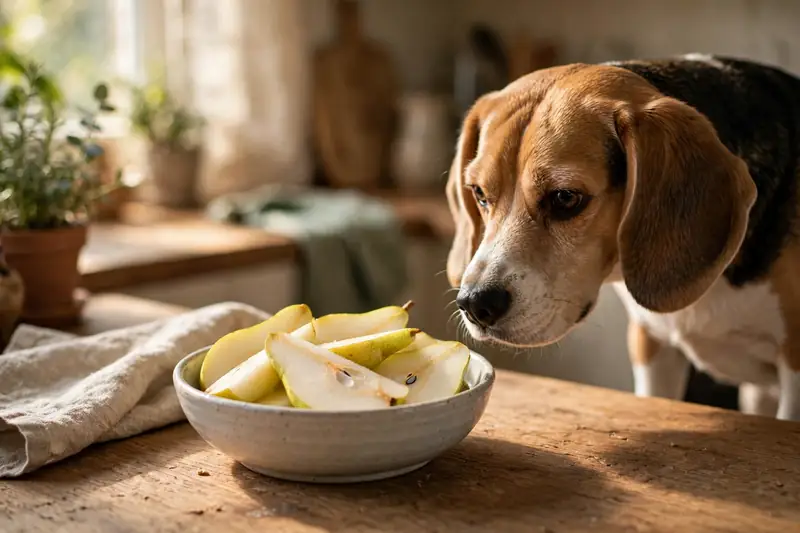
Pear season fills the kitchen with sweet juice and ripe fruit, and it is only natural to wonder whether your dog can share. The answer is yes, with a few firm rules. The soft flesh of a ripe pear is safe for dogs, and it brings fiber, vitamins, and a lot of water along. The seeds and the core are the parts to keep out of the bowl. A few bite-size pieces now and then make pears a fine occasional treat, while whole pears, cores, and canned pears in syrup do not.

Can dogs eat pears? The short answer
Yes, dogs can eat fresh, ripe pears in small amounts. The flesh is safe and carries fiber, vitamin C, and vitamin A. Remove the seeds, the core, and the stem before serving, cut the fruit into bite-size pieces, and keep pears at treat size. Canned pears and pear-flavored products do not belong in the bowl.
The AKC confirms that pears are safe for dogs in moderation, with the same seed and core warning every vet repeats. Pears are not a necessary food. Complete dog food already covers everything your dog needs. What pears offer is a low-effort fruit treat with real nutrition behind it, as long as you follow the preparation and portion rules below.
What pears offer nutritionally
A ripe pear brings fiber, vitamin C, vitamin A, vitamin K, copper, and potassium, with about 84 percent water content that helps with hydration. A medium pear holds roughly 100 calories and around 17 grams of natural sugar, which is why portions stay small.
The fiber is the standout for dogs. It supports healthy digestion and helps stool hold its form, and a few slices of pear can add a gentle fiber bump to the day. The fiber in a dog’s diet matters most when it comes from whole foods rather than sudden large amounts, so treat pear as a contributor, not a fix.
Vitamin C deserves a realistic note. Dogs make their own vitamin C, so they do not need it from fruit the way people do. The extra still does no harm, and the vitamin A and potassium round out a respectable profile for a snack. None of this replaces the balanced nutrition in your dog’s food. Pears are a pleasant add-on, and they earn that spot through fiber and water content more than through any single vitamin.

How to prepare pears for your dog
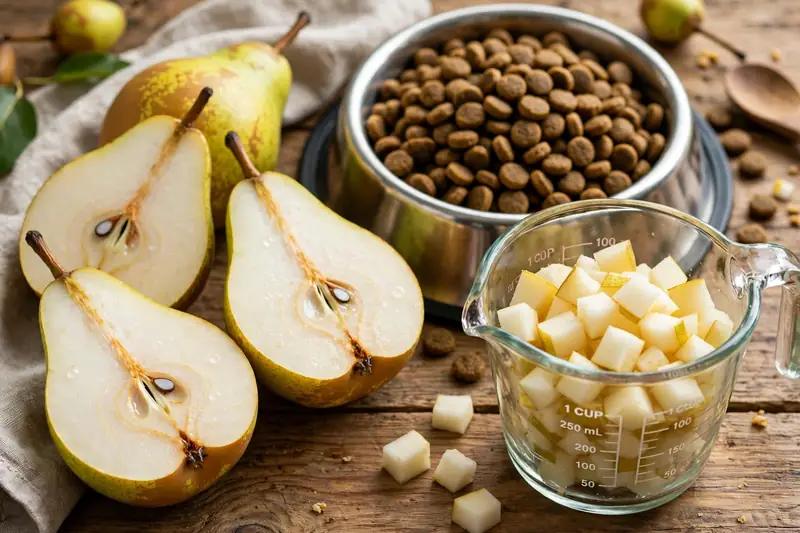
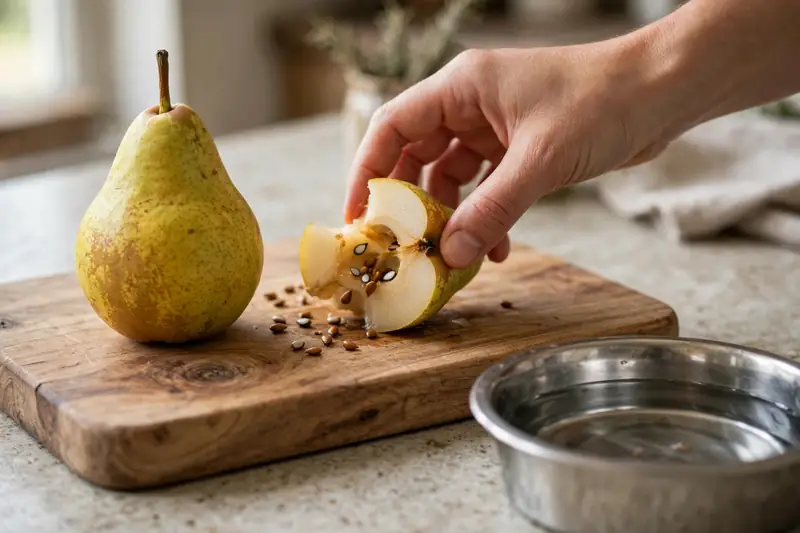
Pick a ripe pear, wash it well, cut away the core and seeds, remove the stem, and slice the flesh into pea-size to thumbnail-size pieces. Ripe means the flesh gives slightly under your thumb. That is the whole routine, and it takes about a minute.
Washing matters because pears sit high on pesticide-residue lists in conventional farming. A good rinse under running water handles it. The skin itself is safe for dogs, so there is no need to peel. Keep it on for the extra fiber, or peel it if your dog finds the texture odd.
The core removal is non-negotiable. Cut the pear into quarters first, then slice the seeded center out of each quarter. The stem goes in the trash, not the bowl, since it is a choking hazard with no nutritional value. Slice the quarters into small pieces, especially for small dogs, because even safe fruit can choke a dog that gulps. If your dog eats from your plate often, keep the list of human foods dogs can eat handy as your quick reference.

How much pear is safe to feed
Keep pears within 10 percent of your dog’s daily calories, and for most dogs that means a few small pieces a few times a week. A small dog under 20 pounds gets one or two small cubes. A medium dog gets two or three thin slices. A large dog can handle three or four slices, occasionally, not daily.
The 10 percent rule protects the balanced nutrition in your dog’s food. Every bite of pear replaces a bite of a complete diet, and fruit brings sugar without the protein and fat a dog’s body runs on. That trade is harmless in small amounts and worse as the fruit portion grows.
A whole pear is too much for any dog in one sitting, and for small dogs even half a pear pushes it. The AKC’s own guidance puts it plainly: one slice now and then suits a small dog, while a whole pear goes too far.
| Dog size | Safe amount | Frequency |
|---|---|---|
| Small (under 20 lbs) | One or two small cubes | A few times a week |
| Medium (20 to 50 lbs) | Two or three thin slices | A few times a week |
| Large (over 50 lbs) | Three or four slices, or half a pear | Occasionally, not daily |
The first serving should be smaller than the chart. One small piece, then a full day of watching. Pears are gentle on most stomachs, but every dog is an individual, and your dog’s reaction decides the real limit.
Pear seeds and the core: the one dangerous part
Pear seeds contain amygdalin, a compound that releases hydrogen cyanide when chewed, so keep every seed and the whole core out of your dog’s bowl. One seed swallowed whole is unlikely to harm a dog, since the danger comes from chewing many seeds, but there is no reason to test that.
Amygdalin sits in the seeds of many common fruits. Apple seeds carry the same compound, which is why the advice is identical for both fruits. Swallowed seeds usually pass through intact. Chewed seeds release their cyanide gradually, and a small dog eating a large number of crushed seeds faces the real risk. The Merck Veterinary Manual’s page on cyanide poisoning in animals describes how cyanogenic compounds from plants act in the body, which is worth a read if you want the science.
The core itself is a separate problem. It is firm, fibrous, and shaped to lodge in a throat. A dog that grabs a pear core and tries to swallow it can choke, especially a small or gulpy dog. The practical rule is simple. Pear flesh for the dog, everything else in the trash. If your dog ever eats several cores at once, call your vet rather than waiting to see what happens.

Sugar, diabetes, and weight gain
Pears are sweet, and that sweetness is the main limit on how much your dog should get. A medium pear carries about 17 grams of natural sugar. Healthy dogs handle that fine in small pieces, but sugar adds up across treats, meals, and the day.
Dogs with diabetes should only get pears with their vet’s approval, and many vets will say no. Fruit sugar hits the bloodstream fast, and diabetic dogs need steady blood sugar above all else. The same caution applies to overweight dogs. Pears are not a diet food. They are a treat, and a dog trying to lose weight has a smaller treat budget than a lean one.
Watch for the quiet sugar stack. A dog that gets pears, training treats, dental chews, and table scraps in one day can end up with far more sugar and calories than the owner intended. Pears fit best on days when the rest of the treat budget is light. If your dog’s weight is a concern, measure the pear pieces instead of eyeballing them.

Fresh pears vs canned, dried, and pear-flavored snacks
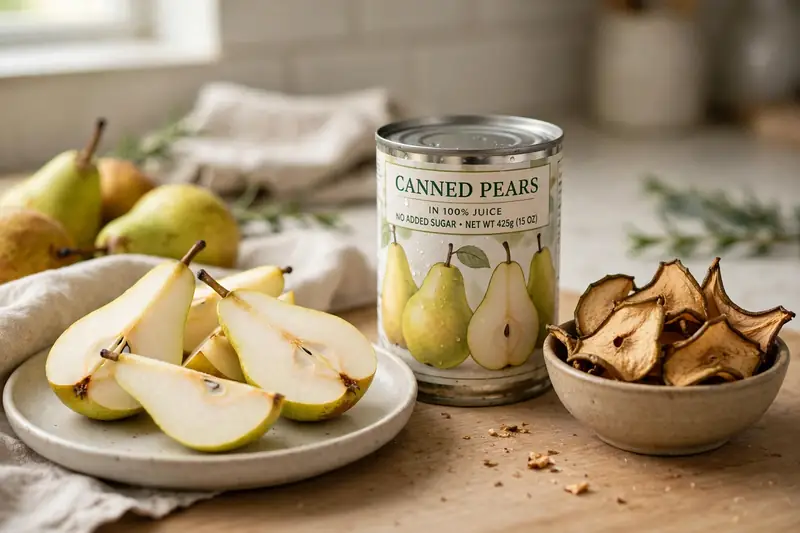
Fresh, ripe pears are the only version worth serving. Canned pears sit in syrup or juice with far more sugar than fresh fruit, and the AKC specifically warns against them because the extra sugar irritates the digestive tract and feeds obesity.
Dried pears are worse in disguise. Dehydration concentrates the sugar, so a small handful of dried pear chips carries the sugar of a whole pear, sometimes with added sugar or preservatives on top. Pear juice, pear nectar, and pear baby food often contain added sugar or concentrate, and none of them suit a dog’s bowl.
Pear-flavored candy, gummies, and baked goods are the ones to read carefully. Sugar-free pear candy can contain xylitol, a sweetener that is extremely toxic to dogs even in small amounts. The ASPCA’s list of people foods to avoid names xylitol among the most dangerous items a dog can swallow. If your dog eats pear-flavored candy, check the ingredient label immediately and call your vet or poison control if xylitol appears.

Pears vs apples, cherries, and other fruits
Pears and apples are near twins for dog feeding. Both are safe in the flesh, both hide amygdalin in their seeds, and both need coring and slicing before serving. If your dog already eats apples safely, pears will follow the same routine.
Cherries tell a different story. Cherries carry their own pit problem, and cherry flesh itself is riskier to feed freely, so pears are the easier fruit of the two. The contrast that matters most is with grapes, which are genuinely toxic to dogs and can damage the kidneys. Pears sit on the safe list, grapes sit on the never list, and no owner should treat all fruit as equal.
Among clearly safe fruits, pears rank with blueberries, watermelon, and strawberries as reliable choices. Pears bring more fiber than most of them and more sugar than blueberries. Rotating among a few safe fruits keeps any single sugar source small, which is the smarter way to share fruit with a dog.
Can puppies and senior dogs eat pears
Puppies can eat pears, but the pieces should be tiny and the amount smaller than for an adult. A puppy’s digestive system is still settling, and new foods should arrive one at a time so you can tell what caused any upset. Use very ripe, soft pear, and skip pears entirely for puppies under eight weeks.
Senior dogs handle pears well when the fruit is soft and ripe. Older dogs sometimes eat less enthusiastically, and a few sweet pear pieces can tempt a picky eater. The cautions grow with age. Senior dogs are more likely to carry diabetes, kidney disease, or weight problems, and any of those changes the answer. A senior with no health issues gets the same treat-size rule as an adult. A senior with a diagnosis gets pears only if the vet says yes.
For both ages, the preparation rules do not relax. Seeds, core, and stem stay out, and pieces stay small. Puppies swallow without chewing more often than adults, which makes small pieces a safety issue, not just a preference.
When to call the vet
Most pear incidents need nothing more than watching. Call your vet when your dog eats a large number of seeds or several cores, shows repeated vomiting or diarrhea, refuses food for more than a day, strains to pass stool, or shows signs of choking such as gagging, pawing at the mouth, or labored breathing.
Choking is the emergency that cannot wait. If your dog is gagging on a piece of pear or core and cannot clear it, act immediately and get to a vet. For a dog that swallowed several cores with seeds, your vet may want to see the dog even if it looks fine, since cyanide signs can take time to appear.
Signs that mean a vet visit rather than home watching include lethargy, a swollen or painful belly, blood in vomit or stool, and any allergic reaction such as facial swelling, hives, or heavy scratching. Pear allergies are rare, but they happen. When in doubt, the call costs nothing and buys certainty.

Frequently asked questions about dogs and pears
Most owners ask about the skin, the seeds, Asian pears, and what to do when a dog grabs a whole pear. The answers below cover the questions that come up most. Your vet’s advice wins for any dog with diabetes, kidney disease, or a history of bladder stones.
Can dogs eat pear skin?
Yes. Pear skin is safe for dogs and adds a little extra fiber. Wash the pear well before serving to remove pesticide residue, since conventionally grown pears can carry it. If your dog dislikes the texture, peel it. The skin is optional nutrition, not a requirement.
Can dogs eat Asian pears?
Yes, with the same rules. Asian pears are a different variety with crisp, apple-like flesh, but the safety picture is identical. Remove the seeds, core, and stem, cut the flesh into small pieces, and keep the portion at treat size.
Can dogs eat pear stems?
No. The stem is a choking hazard and offers nothing nutritionally. Snap it off and throw it away during preparation. If your dog swallows a single stem, watch for gagging or appetite loss over the next day and call your vet if either appears.
Are unripe pears safe for dogs?
They are not toxic, but ripe pears are the better choice. Unripe pears are hard and starchy, which makes them harder to digest and more likely to cause stomach upset. Wait until the pear yields slightly to gentle pressure, then serve it.
Can dogs eat canned pears in water or juice?
Skip them anyway. Even pears canned in water or juice carry more sugar than fresh pears, and juice-packed cans add a meaningful amount. Fresh, ripe pears cost the same effort and give your dog the fruit without the extra sugar.
Can dogs be allergic to pears?
It is rare, but any food can trigger an allergy in an individual dog. Watch for itchy skin, paw chewing, red or infected ears, facial swelling, or hives after eating pears. The VCA guide to food allergies in dogs explains how vets confirm a food allergy with elimination trials. Stop feeding pears and call your vet if you see these signs.
My dog ate a whole pear, core and all. What should I do?
Stay calm and watch. Most dogs pass a whole pear without trouble. Monitor for vomiting, appetite loss, lethargy, or straining to pass stool over the next 24 to 48 hours. Call your vet if any of those signs appear, sooner if your dog keeps retching or seems distressed. A single core’s seeds are very unlikely to poison a dog, but several cores at once deserve a vet call.
Which fruits can dogs eat besides pears?
Plenty. Blueberries, watermelon without seeds or rind, strawberries, bananas, and pineapple are all dog-safe in small portions. Keep grapes, raisins, and citrus-heavy feeding off the list entirely.
Pears earn their yes when the fruit is ripe and fresh, the seeds and core are removed, pieces are cut small, and servings stay at treat size a few times a week. Skip canned pears and pear-flavored products, keep sugar in mind for diabetic or overweight dogs, and let your vet decide for puppies, seniors, and dogs with health conditions.