
Can Dogs Eat Cauliflower? The Full Safety Guide
Yes. Dogs can eat cauliflower, and it is one of the safer vegetables you can share from your kitchen. Serve it raw or cooked, washed and chopped into small pieces, and keep it plain with no butter or seasoning. Most dogs handle it fine, though some get gassy, because cauliflower belongs to the cruciferous family. I keep a bag of florets in the fridge for training treats. This guide covers what cauliflower does for dogs, how much is safe for small and large dogs, how to prepare it, and the few times you should call your vet first.

Can dogs eat cauliflower?
Yes, cauliflower is safe for dogs. It sits on no toxic food list, and vets routinely count it among the vegetables dogs can eat. You can serve it raw for crunch or cooked for easier digestion. Wash it first, chop it into small pieces, skip all butter and seasoning, and treat it as a snack rather than a meal.

The American Kennel Club includes cauliflower in its list of vegetables dogs can eat, and you can check their full rundown in the AKC’s list of vegetables dogs can eat. That puts it in good company with other safe picks, and our roundup of human foods dogs can eat covers more of them. Cauliflower will never replace a balanced dog food, since treats should stay a small slice of the diet. Keep that frame in mind and it becomes a cheap, crunchy extra your dog will probably love.
Dogs with a history of calcium oxalate bladder stones sometimes get told to limit high oxalate foods, but cauliflower is low in oxalates, so it rarely raises flags there. The dogs that should skip it are the ones with very sensitive stomachs that react to any new vegetable, and dogs on strict prescription diets where the vet has ruled out extras. When in doubt, a quick call to your vet settles it.
Why cauliflower is good for dogs
Cauliflower gives dogs fiber, vitamin C, vitamin K, vitamin B6, folate, and potassium, with very few calories. The fiber supports healthy digestion, and the vitamins help the immune system, blood clotting, and energy metabolism. It also carries antioxidants that protect cells from everyday damage. That is a lot of nutrition packed into a crunchy, low calorie snack.

The fiber is the quiet star here. It keeps stools formed and feeds the good bacteria in the gut, which is why vets often suggest fibrous vegetables for dogs that need digestive support. You can read more about how fiber works in our guide. At roughly 25 calories per cup, cauliflower also works as a treat for dogs watching their weight, since it fills the bowl without filling out the waistline.
One honest footnote: cauliflower contains goitrogens, natural compounds also found in kale and cabbage. They can interfere with thyroid function, but only if a dog eats very large amounts day after day. Normal snack portions are not a concern. If your dog has diagnosed hypothyroidism and takes thyroid medication, mention the snack habit to your vet at the next visit.
Raw vs cooked: which is better for dogs?
Both are fine, so the honest answer is that it depends on your dog. Raw cauliflower keeps the most crunch and the most vitamin C, and many dogs love the texture. Lightly steamed or boiled cauliflower turns soft and easy to digest, which suits puppies, seniors, and dogs with sensitive stomachs. Pick whichever version your dog prefers and digests well.

Cooking does break down some of the fiber, which is why steamed florets tend to cause less gas than raw ones. If your dog turns up its nose at the soft version, try the raw crunch. Dogs that like gnawing on hard snacks often take to raw florets the way they take to carrots. What you should never serve is cauliflower deep fried, roasted in oil, or tossed with seasoning. The cooking method matters more than the raw or cooked question.
Here is the tradeoff at a glance:
| Raw cauliflower | Cooked cauliflower | |
|---|---|---|
| Texture | Firm and crunchy | Soft |
| Best for | Dogs that like to chew | Puppies, seniors, sensitive stomachs |
| Gas risk | Slightly higher | Slightly lower |
| Prep | Wash and chop | Wash, chop, steam or boil plain |
How to prepare cauliflower for your dog
Wash the head under running water, cut it into small bite size florets, and serve it plain. Steam or boil the pieces for a few minutes if you want them soft. Skip butter, oil, salt, cheese sauce, garlic, and onion. Big chunks are a choking hazard, so chop small for little dogs.
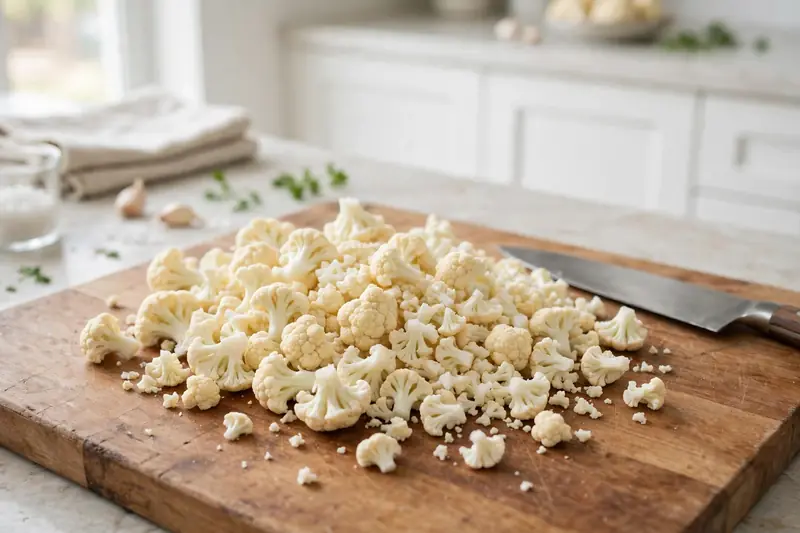
The seasoning rule is the one that actually matters. Garlic and onion damage a dog’s red blood cells, and both sit on the ASPCA’s list of people foods to avoid. A plain floret is safe; the same floret tossed in garlic butter is not. Frozen cauliflower is fine too. Thaw it or cook it first, and skip the seasoned steam in bag mixes, since those often hide onion or garlic powder in the ingredient list.
How much cauliflower can dogs eat?
Treat cauliflower as a treat, which means it should stay under 10 percent of your dog’s daily calories. For most dogs that is a small handful of florets a few times a week. Start with one or two florets the first time and watch for gas or loose stool before you offer more.

The 10 percent treat rule is the standard most vets use, and VCA Hospitals applies it to vegetables the same way it applies it to biscuits. Your dog’s main nutrition still comes from a complete dog food. Use the table below as a starting point, then adjust to your dog. A dog with a cast iron stomach can handle the upper end; a gassy one should stay at the lower end.
Spread the servings through the week rather than loading them into one day. Three small treat sessions beat one big pile, both for digestion and for keeping the 10 percent budget honest. If cauliflower becomes a regular in your rotation, count it alongside every other extra, including training treats and table scraps, since the allowance covers all of them together.
| Dog size | Body weight | A sensible serving |
|---|---|---|
| Small dogs | Under 20 lb | 1 to 2 small florets |
| Medium dogs | 20 to 50 lb | 2 to 4 florets |
| Large dogs | 50 to 90 lb | 4 to 6 florets |
| Giant breeds | Over 90 lb | 6 to 8 florets |
Will cauliflower give my dog gas?
It can, and this is the most common complaint about it. Cauliflower is a cruciferous vegetable, and like its cousins it contains raffinose, a sugar that dogs digest poorly. Undigested raffinose ferments in the gut, and fermentation makes gas. The effect is dose dependent. A floret or two rarely causes trouble, while a big bowl almost guarantees a gassy evening.

The fix is simple. Start small, build up over a week, and keep servings modest. Lightly cooking the florets helps a little, since heat breaks down some of the gas forming sugars. If your dog gets painfully gassy or bloated every single time, cauliflower just may not agree with them. There are plenty of other vegetables, so there is no reason to push through it.
One thing worth knowing: flatulence alone is almost never dangerous. It becomes a concern only if it comes with a swollen belly, retching without vomit, or obvious pain, which can signal bloat. Those signs are rare after vegetables, but they are worth recognizing because bloat is an emergency no matter what caused it.
Cauliflower vs broccoli for dogs
Both are safe, but cauliflower is the gentler choice. Broccoli contains isothiocyanates, compounds that can irritate a dog’s stomach in large amounts, which is why vets cap broccoli at a small share of the diet. Cauliflower carries far less of these compounds. For dogs with touchy stomachs, that difference is enough to matter.

Nutritionally the two are close cousins, so if your dog already tolerates broccoli, cauliflower is an easy swap that may sit even better. If you want the full breakdown on the other half of the pair, read our guide to broccoli for dogs. Some owners rotate the two through the week, which also keeps treat time from getting boring.
Taste is the other difference. Broccoli has a stronger, slightly bitter edge that some dogs reject, while cauliflower is milder and a little sweet. Picky eaters that snub broccoli often accept cauliflower without a fuss, which makes it the better first try if your dog is new to cruciferous vegetables.
Puppies and senior dogs
Puppies can eat cauliflower once they are weaned and eating solid food, but keep pieces tiny and servings small. Their digestive systems are still learning, so one small floret is plenty for a first try. Senior dogs do well with it too, especially steamed soft, since the fiber supports digestion and the low calorie count helps with weight.

For puppies, the choking risk matters more than the nutrition. Chop florets down to pea size for toy breeds and small pups, and always supervise. For seniors with sore teeth or sensitive guts, soft cooked pieces go down easier than raw crunch. If your dog is recovering from vomiting or diarrhea, hold the vegetables and start with a bland diet first, then add treats back once stools are normal.
When to call the vet
Cauliflower itself rarely causes emergencies. Call your vet if your dog ate cauliflower cooked with garlic, onion, or heavy seasoning, if a small dog swallowed a large chunk and is coughing or gagging, or if vomiting, diarrhea, or bloating lasts more than a day. A little gas after a new food is normal.

The seasoning cases are the real ones to watch, because the danger there comes from the garlic or onion, not the cauliflower. The Merck Veterinary Manual keeps a reference on the foods that are genuinely hazardous to dogs, and it is worth a look if you ever doubt an ingredient. True bloat is a different matter: a swollen hard belly with restlessness or unproductive retching is an emergency, so skip the phone and drive.
FAQs
Can dogs eat cauliflower raw?
Yes. Raw cauliflower is safe and many dogs enjoy the crunch. Wash it well and chop it into small pieces, since raw florets are firm and can be a choking hazard for small dogs. If raw pieces upset your dog’s stomach, try steamed instead, which most dogs find easier to digest.
Can dogs eat cauliflower stems and leaves?
Yes, the stems and leaves are safe too, but they are tougher and more fibrous than the florets. Chop them very fine or skip them. Most dogs prefer the tender florets, and there is no nutritional reason to insist on the woody parts.
Can dogs eat frozen cauliflower?
Yes, as long as it is plain. Thaw it first or cook it lightly; rock hard frozen chunks are tough on teeth and easy to choke on for small dogs. Avoid seasoned frozen mixes, which often contain onion powder, garlic powder, or added salt.
Is cauliflower good for dogs with sensitive stomachs?
It can be, if you go slow. Offer one small cooked floret and wait a day. Cooked is gentler than raw for touchy stomachs. If you see loose stool or extra gas, stop and try a different vegetable. Dogs with chronic digestive issues should get new foods cleared by their vet first.
Can dogs eat cauliflower pizza crust?
Usually not a good idea. Store bought cauliflower crusts often contain onion powder, garlic powder, cheese, and a lot of salt. Check the ingredient label, and when in doubt, offer a plain floret instead.
How often can dogs have cauliflower?
A few times a week is plenty. Keep it inside the 10 percent treat allowance alongside all other snacks. Daily cauliflower is not harmful in small amounts, but variety gives your dog a wider mix of nutrients, so rotate it with other safe vegetables.

Conclusion
Cauliflower earns its place as a dog safe snack. It is cheap, low in calories, and full of fiber and vitamins, and most dogs crunch it happily. Keep it plain, chop it small, and watch the portions. Start with a floret or two, and you will know within a day whether your dog’s stomach agrees with it. That is really all there is to it.
This article is for general information only and is not a substitute for veterinary advice. Every dog is different, and dogs with thyroid disease, kidney issues, or food allergies may need different guidance. If you are unsure about anything in your dog’s diet, talk to your veterinarian.


