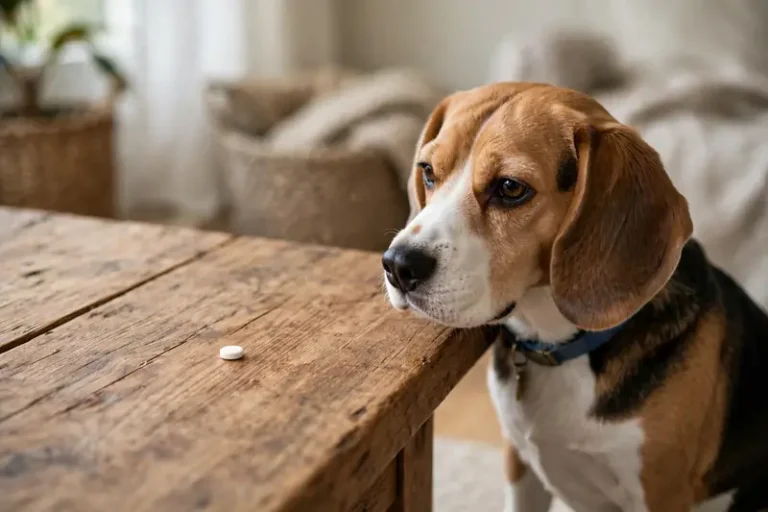
Halloween fills the house with candy bowls, open doors, and tempting smells at dog height. That mix makes it one of the riskiest nights of the year for dogs. Chocolate, xylitol in sugar-free candy, raisins, and even empty wrappers can land a dog at the emergency vet. The good news is that Halloween dog treats can still be part of the fun. Simple homemade treats made with plain pumpkin and peanut butter let your dog join in safely, and a few smart habits keep the dangerous stuff out of reach. This guide covers what harms dogs at Halloween, safe store-bought and homemade options you can make for next year, and how to handle trick-or-treat night.
Are Halloween dog treats safe? The short answer
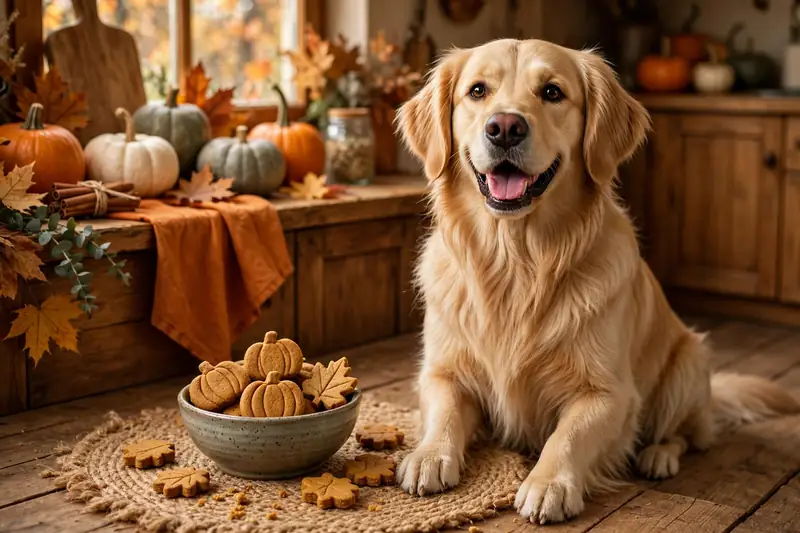
Yes, Halloween dog treats are safe when they are made for dogs or baked at home with dog-safe ingredients like plain pumpkin and xylitol-free peanut butter. Human Halloween candy is never safe for dogs. Chocolate, sugar-free candy and gum with xylitol, raisins, and candy wrappers can poison a dog or block the intestines.
The difference comes down to ingredients, not the holiday theme. A pumpkin-shaped cookie baked from pumpkin puree and oat flour is a fine dog treat, while a fun-size candy bar in the same shape can be dangerous. Keep human candy stored high and sealed, and give your dog treats made or bought with dogs in mind.
Portions matter too. Even safe dog treats are extras, not meals. Two or three small biscuits are plenty for a small dog; larger dogs can handle a few more. Overfeeding rich treats causes stomach upset even when every ingredient is safe.
Chocolate: the biggest Halloween candy danger
Chocolate is toxic to dogs because of theobromine and caffeine, and dark chocolate and baking chocolate carry the highest concentrations. Milk chocolate is less concentrated, but a dog can still eat enough from a trick-or-treat bowl to get sick. If your dog eats any chocolate, call your veterinarian instead of guessing whether the amount was safe.
Theobromine affects a dog’s heart, nervous system, and kidneys. Dogs process it far more slowly than people do, which is why a candy bar that barely affects a human can seriously harm a dog. The rule is simple: darker and more bitter means more dangerous.
Watch for vomiting, diarrhea, restlessness, rapid breathing, a racing heart, and muscle tremors. Severe cases progress to seizures and collapse. Signs can take several hours to appear, so do not assume your dog is fine right away. White chocolate contains very little theobromine, but it is still mostly sugar and fat and belongs nowhere near a dog’s mouth. The ASPCA Animal Poison Control Center takes chocolate calls every Halloween and can advise you if your vet is closed.

Xylitol in sugar-free Halloween candy
Xylitol is a sugar substitute that is extremely toxic to dogs, and it often appears on labels as birch sugar or E967. Sugar-free gum, mints, some candies, and even some peanut butter contain it. Small amounts can crash a dog’s blood sugar and then damage the liver. Check every label before sharing anything sweet with your dog.
Xylitol causes a dog’s body to release a large surge of insulin. Blood sugar crashes within 10 to 60 minutes, causing weakness, wobbling, collapse, and seizures. Liver damage can follow a day or two later, and it can be fatal. Even half a stick of sugar-free gum has poisoned small dogs. There is no safe dose to test.
Look for xylitol, birch sugar, wood sugar, and E967 on ingredient lists. Some companies market xylitol-sweetened products as natural or sugar-free, which fools plenty of owners. Our guide to peanut butter for dogs explains how to pick a jar with no xylitol, since a few brands do contain it. The FDA’s animal and veterinary resources also warn pet owners about xylitol in everyday products.

Wrappers, sticks, and foil: the choking and blockage risk
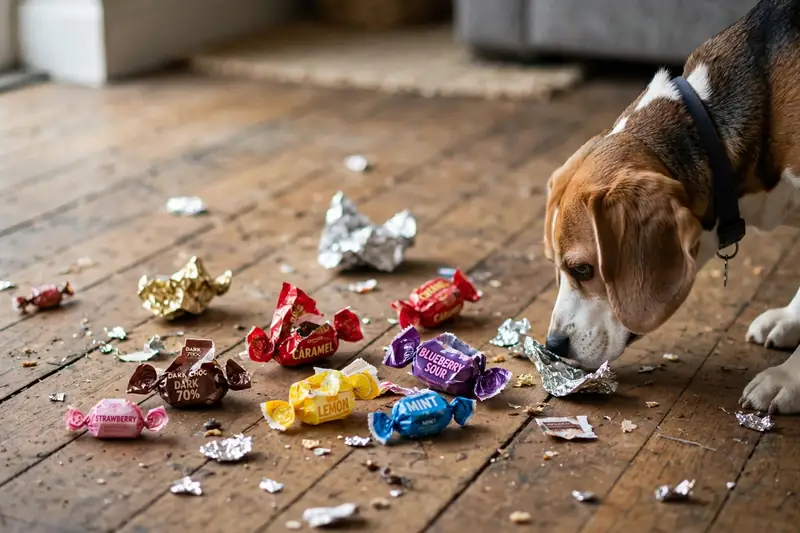
Candy wrappers, foil, plastic sticks, and lollipop handles can choke a dog or block the intestines. Dogs often swallow candy whole without chewing, wrapper and all. If your dog ate a wrapper, watch for vomiting, loss of appetite, belly pain, and straining, and call your vet if any of these appear.
Foil and cellophane do not break down in the gut. A single wrapper usually passes, but several can clump together and block the intestines. Plastic lollipop sticks are worse because they are rigid and can lodge in the throat or gut. A blockage often needs surgery, an expensive and stressful outcome for something preventable.
Prevention is mostly about trash discipline on Halloween night. Empty your dog’s reach of candy bowls, unwrap candy away from the dog, and take wrappers straight to a closed bin. Tell kids the rule too, because children drop wrappers at exactly dog-nose height. After trick-or-treaters leave, do a quick floor check for stray candy and foil before the dog gets the run of the room.
Safe store-bought Halloween dog treats
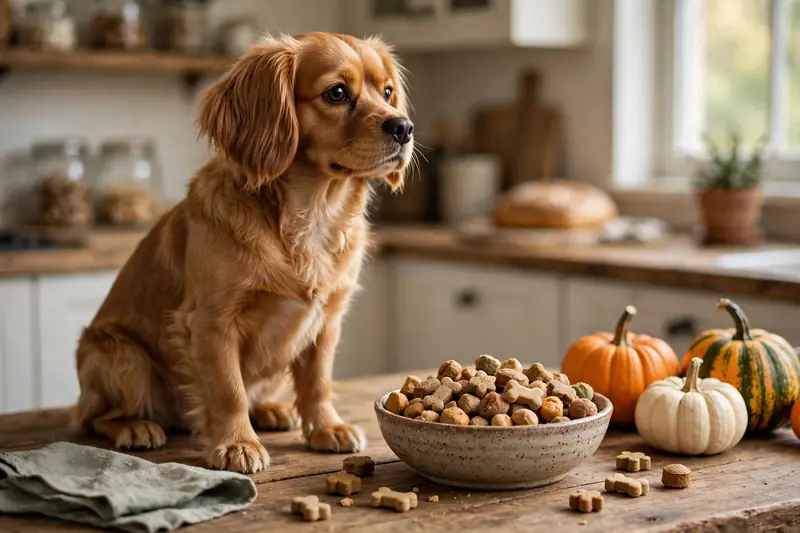
Safe store-bought dog treats have short, readable ingredient lists with no chocolate, xylitol, raisins, artificial sweeteners, or mystery flavorings. Single-ingredient treats and pumpkin-based biscuits are solid choices. Read the label every time, keep portions small, and match the treat size to your dog.
Skip anything listing xylitol, birch sugar, sorbitol in large amounts, chocolate flavor, cocoa, or onion and garlic powder. Vague terms like natural flavors deserve a second look on unfamiliar brands. Treats marketed for Halloween follow the same rules; the pumpkin shape on the box changes nothing inside.
A treat meant for a Labrador is a choking risk for a Chihuahua, so break large biscuits into smaller pieces for small dogs. Treats should stay under about 10 percent of daily calories. A bag of festive treats does not replace dinner, no matter how much your dog stares at you.

Homemade pumpkin peanut butter Halloween dog treats
Mix 1 cup plain canned pumpkin (not pie filling), half a cup of xylitol-free peanut butter, and 2 cups of oat flour into a dough, roll it out, cut shapes with cookie cutters, and bake at 350 degrees Fahrenheit for 20 to 25 minutes. Cool completely before serving. They keep about a week in an airtight container in the fridge.
Ingredients you need
Use plain canned pumpkin puree, not pumpkin pie filling, which contains sugar and spices like nutmeg. Check that the peanut butter lists no xylitol, birch sugar, or added sweeteners; plain peanut butter with just peanuts and salt is best. Oat flour binds the dough, and you can make it by blending rolled oats. One beaten egg is optional for a firmer biscuit.
How to bake them
Stir the pumpkin and peanut butter together, then work in the oat flour until a firm dough forms. Roll it to about a quarter inch thick on a floured surface. Cut pumpkin, bat, or bone shapes, place them on a parchment-lined baking sheet, and bake until firm and lightly golden at the edges. Cool on a rack. Bake a little longer for crunchier biscuits.
Storage and portions
Store cooled treats in an airtight container in the fridge for up to a week, or freeze them for up to three months. Give one or two small biscuits per day to small dogs and two or three to large dogs. Our guide on whether pumpkin is good for dogs explains its fiber benefits in more detail.

More safe homemade Halloween treat recipes
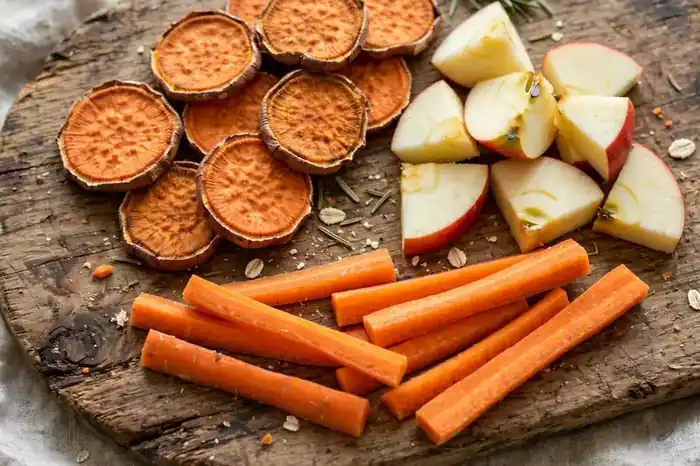
Sweet potato chews, frozen apple banana bites, and plain carrot sticks make easy Halloween dog treats beyond the pumpkin biscuits. Use plain, unseasoned ingredients with no added sugar, and skip spices like nutmeg. Introduce any new treat in small amounts first to check your dog’s stomach.
Sweet potato chews
Slice a sweet potato into quarter-inch rounds, lay them on a parchment-lined sheet, and bake at 250 degrees Fahrenheit for about two to three hours, flipping once, until chewy and dried. They keep a week in the fridge. Sweet potatoes are safe for dogs when cooked plain, and their natural sweetness makes them a favorite.
Frozen apple banana bites
Mash half a banana with a quarter cup of unsweetened applesauce, spoon small dollops onto parchment, and freeze until solid. These work as a cool treat and store in the freezer for a month. Remove apple seeds and core first, since seeds contain compounds that release cyanide. Apples are safe for dogs once seeded and cored.
Plain carrot sticks
Peel and cut carrots into sticks sized for your dog, and serve them raw or lightly steamed with nothing added. Carrots are low in calories and good for teeth. Carrots are one of the safest vegetables for dogs, and most dogs love the crunch.
Ingredients you must never put in dog treats
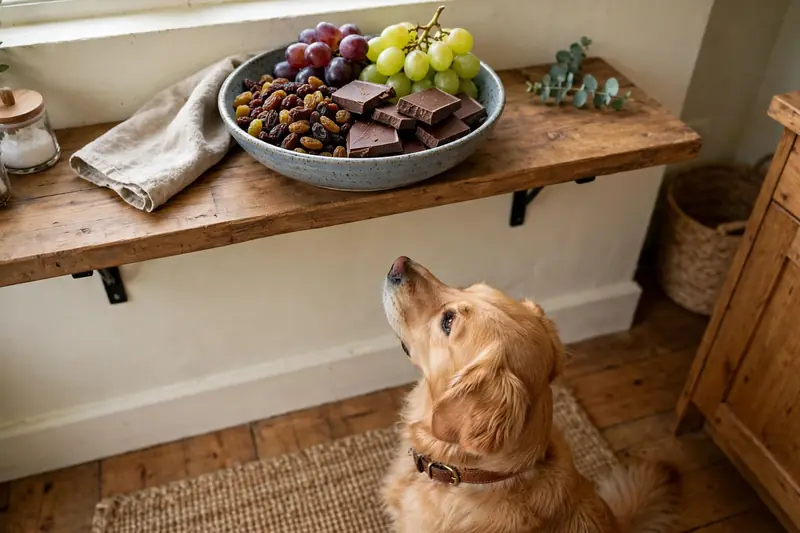
Never use chocolate or cocoa, xylitol or birch sugar, raisins or grapes, macadamia nuts, onion or garlic powder, nutmeg, or alcohol in homemade dog treats. Each of these is toxic to dogs even in small amounts, and holiday baking is exactly where they sneak into recipes meant to be shared.
| Ingredient | Why it harms dogs |
|---|---|
| Chocolate and cocoa | Theobromine poisoning: vomiting, tremors, seizures, heart problems |
| Xylitol and birch sugar | Rapid insulin release, blood sugar crash, liver failure |
| Raisins and grapes | Kidney failure in some dogs, even from small amounts |
| Macadamia nuts | Weakness, vomiting, tremors, fever |
| Onion and garlic powder | Damages red blood cells, causes anemia |
| Nutmeg | Contains myristicin, causes tremors and seizures in dogs |
| Alcohol | Dangerous drop in blood sugar and body temperature, coma |
Raisins deserve a special warning at Halloween because they appear in trail mix, granola bars, and some baked goods. Grapes and raisins can cause kidney failure, and sensitivity varies between dogs, so there is no safe amount. Nutmeg shows up in pumpkin spice blends, which is another reason to use plain pumpkin puree rather than pie filling. The AKC guide to human foods dogs can and cannot eat is worth bookmarking before holiday baking.
Costume and trick-or-treat night safety
Keep your dog’s costume simple, comfortable, and free of small parts, masks, and anything that limits breathing, vision, or movement. On trick-or-treat night, settle your dog in a quiet room away from the front door, keep every candy bowl out of reach, and make sure ID tags are on in case of an escape.
Most dogs tolerate a simple bandana or a loose cape. Full costumes with tight elastic, dangling pieces, or face coverings stress many dogs and create chewing hazards. Watch for lip licking, yawning, turning away, or freezing. A costume your dog hates is not worth the photo, so supervise the whole time and remove it at the first sign of distress.
Constant doorbell rings and strangers in masks upset many dogs, and an open front door is an escape route. Settle your dog in a back room with water, a chew, and some background noise before the first visitors arrive. Keep jack-o-lanterns with real candles out of tail range. Cracked glow sticks taste awful and cause drooling and agitation, though they are rarely dangerous. The Merck Veterinary Manual is a solid reference on household toxins.

What to do if your dog ate Halloween candy
Move the remaining candy out of reach first, then note what your dog ate, how much, and when it happened. Call your veterinarian or the ASPCA Animal Poison Control Center right away. Do not try to make your dog vomit unless a veterinarian tells you to, and keep the candy packaging so the vet can check the ingredient list.
Chocolate and xylitol poisonings are both time-sensitive, and what the vet can do depends on how much time has passed. Gather the facts before you call: the type of candy, the approximate amount, the time it was eaten, and your dog’s weight. If the candy was sugar-free, say so immediately, because xylitol cases move fast. If your vet advises vomiting, follow their instructions exactly; our guide on how to induce vomiting in dogs explains what vets typically recommend and when they advise against it.
Do not wait for symptoms to decide. By the time a dog looks sick, valuable treatment time has passed. A quick call costs nothing and often ends with reassurance. Save the poison control number in your phone before Halloween, not during the panic.

Frequently asked questions about Halloween dog treats
Dog owners ask the same questions every October about candy, costumes, and homemade treats. When in doubt about something your dog ate, your vet’s advice beats any general article.
Can dogs eat Halloween candy?
No. Halloween candy is made for people, not dogs. Chocolate contains theobromine, sugar-free candy often contains xylitol, and many candies include raisins or macadamia nuts. Even candy that is not directly toxic is mostly sugar and fat, which upsets a dog’s stomach. Give dog-specific treats instead.
My dog ate chocolate on Halloween. What should I do?
Call your vet or poison control right away. Tell them the type of chocolate, how much your dog ate, your dog’s weight, and when it happened. Dark chocolate is more dangerous than milk chocolate. Do not induce vomiting unless the vet instructs you to, and keep the wrapper for the ingredient list.
Are pumpkin dog treats safe?
Yes, when made with plain pumpkin puree. Plain canned pumpkin is gentle, full of fiber, and safe for most dogs. Never use pumpkin pie filling, which contains sugar and spices like nutmeg. Homemade pumpkin biscuits with oat flour and xylitol-free peanut butter are one of the easiest safe Halloween treats.
Can dogs have peanut butter in homemade treats?
Yes, as long as the peanut butter contains no xylitol. Check the label for xylitol, birch sugar, or added sweeteners. Plain peanut butter made from just peanuts and salt is the safest choice. A few brands marketed as low sugar or natural do contain xylitol, so check every new jar.
How long do homemade dog treats last?
Most homemade dog treats last about a week in an airtight container in the fridge. Crunchy baked biscuits kept dry can last two to three weeks. Anything with meat, eggs, or dairy spoils faster. Freeze extras for up to three months and thaw portions as needed.
Are Halloween costumes safe for dogs?
Simple costumes are fine for most dogs as long as they fit loosely, allow normal breathing and movement, and have no small parts to chew off. Skip masks and anything tight around the neck. Supervise your dog the whole time, and take the costume off if the dog shows stress.
Should I take my dog trick-or-treating?
It depends on the dog. Calm, well-socialized dogs that enjoy crowds can handle it with a short leash, ID tags, and no candy access. Anxious dogs, reactive dogs, and puppies usually do better at home in a quiet room. Crowds, costumes, and constant doorbells overwhelm many dogs, so be honest about yours.
Halloween with a dog works best when you plan for the dog separately from the candy. Keep the human treats sealed and out of reach, bake a batch of pumpkin biscuits for next October, and give your dog a quiet spot when the doorbell starts ringing. A little preparation keeps the night fun for everyone.