

This one has the shortest answer of any article on this site. Can dogs take ibuprofen? No. Not for pain, not for fever, not for swelling, not in a small dose, not just once. Ibuprofen, sold as Advil and Motrin, is toxic to dogs at any dose. Even a single tablet can cause life-threatening damage to a small dog, and larger dogs are not safe either. If your dog is hurting, there are veterinary medicines made for exactly that. This guide explains why ibuprofen is so dangerous, what poisoning looks like, what to do in the first minutes after exposure, and how to make sure it never happens in your house.
Can dogs take ibuprofen?
No. Dogs should never be given ibuprofen under any circumstances. PetMD states this directly: even a small amount can cause life-threatening toxicity, including stomach ulcers, kidney failure, seizures, and death. Dogs metabolize this drug very differently from people, and there is no safe home dose.

The confusion is understandable. Ibuprofen is one of the most common medicines in the world. It sits in purses, nightstands, and kitchen cabinets. When a dog limps, the mental leap from “this helps my pain” to “this will help my dog’s pain” takes about two seconds. But dogs lack the ability to process this drug the way humans do. What is routine for you is poison for them. If your dog needs pain relief, the only safe path runs through your veterinarian.
The rule in one sentence
If the label says ibuprofen, Advil, or Motrin, keep it away from your dog completely. No exceptions, no improvising.
Why ibuprofen is toxic to dogs
Ibuprofen belongs to the NSAID family, non-steroidal anti-inflammatory drugs. It works by blocking COX enzymes, which reduces pain and inflammation. The catch is that those same enzymes protect the stomach lining, maintain blood flow to the kidneys, and help blood clot normally. Block them, and all three protections fail at once.

In the stomach, the unprotected lining develops ulcers that can bleed or even perforate. In the kidneys, reduced blood flow causes tissue damage that can progress to acute kidney failure. PetMD explains that relatively low doses can lead to life-threatening effects, and the damage does not always announce itself early. A dog can look okay while ulcers form and kidneys struggle. That silent progression is what makes ibuprofen so treacherous compared to toxins with immediate, obvious symptoms.
Dogs are not small people
This is the principle behind every “never give” on this site. Human drug safety data means nothing for dogs. Their enzymes, metabolism speed, and organ sensitivity differ, and ibuprofen happens to hit dogs at every weak point at once.
How little is dangerous
Any amount. PetMD is explicit: if your dog ingests even a small amount, treat it as an emergency. There is no threshold below which you can relax, no “just a nibble” exception. A single 200 mg tablet, the standard adult dose for a person, can seriously harm a small dog.

Size changes the severity, not the need to act. A large dog that ate one tablet still needs a vet call, because individual sensitivity varies and you cannot see what is happening inside. Chewable or liquid formulations add another wrinkle: they may contain xylitol, which is independently toxic to dogs. So a flavored ibuprofen product can poison a dog two ways at once. The takeaway never changes. Any ingestion, any dog, any amount: call for professional help immediately.
Do not do the math yourself
Owners sometimes try to calculate whether the dose was “probably fine” based on the dog’s weight. Do not. Toxicity depends on the individual dog, and only a vet or poison control professional can assess the real risk.
Signs of ibuprofen poisoning
Symptoms can start within hours, though some take longer to appear. Early signs look like stomach trouble: vomiting, with or without blood, diarrhea, sometimes with blood, and loss of appetite. The dog may seem lethargic or depressed. Later signs can include tremors, seizures, and changes in urination as the kidneys are affected.

As toxicity progresses, the signs get more serious. PetMD lists bloody or black stool, blood in vomit, stomach ulcers and perforation, increased thirst and urination followed by decreased or absent urine as the kidneys fail, incoordination, tremors, seizures, coma, and death. Watch for pale gums, abdominal pain, and a dog that suddenly drinks far more water than usual or stops urinating. Any of these after known or suspected ibuprofen exposure is an emergency, not a wait-and-see situation.
Symptoms can lag behind damage
Kidney injury in particular can develop quietly. A dog that vomited once and then seemed fine may still be in trouble. That is why professional evaluation matters even when the dog looks okay.
What to do immediately
Call your veterinarian, an emergency clinic, or an animal poison control line right now. The ASPCA Animal Poison Control Center runs 24 hours at 888-426-4435, and the Pet Poison Helpline is available at 855-764-7661. Have the product container in your hand when you call.

Tell them what was taken, the tablet strength, your best estimate of how many, when it happened, and your dog’s weight. Bring the container if you head to the clinic. Do not induce vomiting at home. PetMD specifically warns against it, because vomiting can cause aspiration pneumonia and make things worse. Your vet may induce vomiting under controlled conditions if the timing is right, or may go straight to other treatments. Follow their instructions exactly and do not add home remedies on top.
Speed beats certainty
Do not wait to confirm how many tablets are missing. Call with your best estimate. Treatment is most effective early, and professionals would rather hear from you too soon than too late.
How veterinarians treat it
Treatment depends on how much was ingested, how long ago, and how the dog is doing. If ingestion was very recent, the vet may induce vomiting in the clinic and give activated charcoal to bind the drug before it absorbs. Blood and urine tests check how the kidneys are coping.
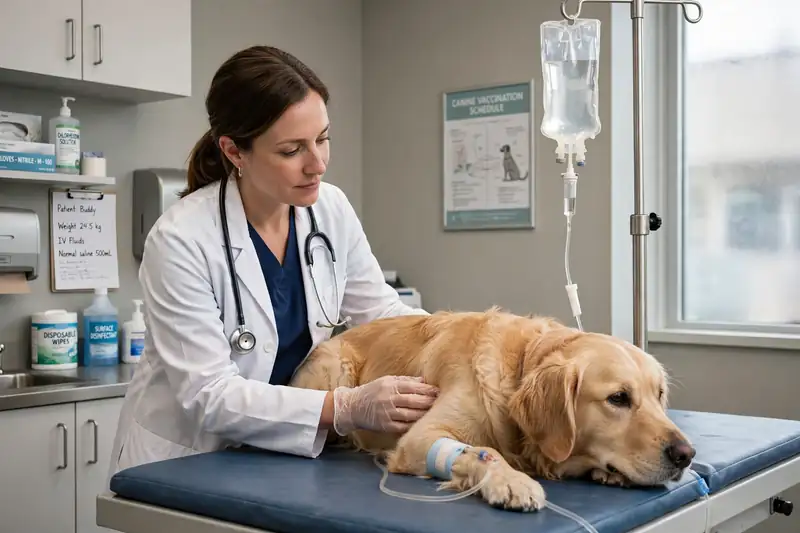
IV fluid therapy is the cornerstone of treatment, flushing the system and supporting the kidneys through the danger period. Medications to protect the stomach lining and control vomiting are commonly added. In severe cases with significant kidney damage, hospitalization for days may be needed, and the prognosis depends heavily on how quickly treatment started. This is aggressive, hospital-level care. It is also the reason early action matters so much: the same exposure that is treatable in the first hour can become far more serious by the next morning.
What recovery looks like
Dogs treated early often recover fully. Dogs treated late may face lasting kidney damage. The difference is usually measured in hours, which is why the emergency call cannot wait.
How dogs usually get into ibuprofen
Almost never because an owner decided to medicate. The typical stories are accidents. A purse left on the floor with a pill bottle inside. Tablets dropped on the kitchen counter and knocked down. A nightstand bottle chewed open by a bored dog. A pill organizer with the days mixed up and a dog that eats first and asks questions never.

Dogs are drawn to the coatings and flavorings on tablets, and a bottle that rattles is a toy until it is a tragedy. Guests are a common blind spot: visitors set bags down at dog height without thinking about what is inside. Children, too, may share or spill. Knowing the patterns helps because every one of them is preventable with a small habit change.
The guest-bag check
When visitors arrive, ask them to hang bags up or place them in a closed room. It feels awkward the first time. It feels normal after that, and it closes one of the most common exposure routes.
Ibuprofen versus other human painkillers
Ibuprofen is not the only human painkiller that is dangerous for dogs. Naproxen, sold as Aleve, is in the same drug family and is similarly toxic. Acetaminophen, sold as Tylenol, damages the liver and red blood cells in dogs and can be fatal. Aspirin carries its own serious risks and should never be given without direct veterinary guidance.
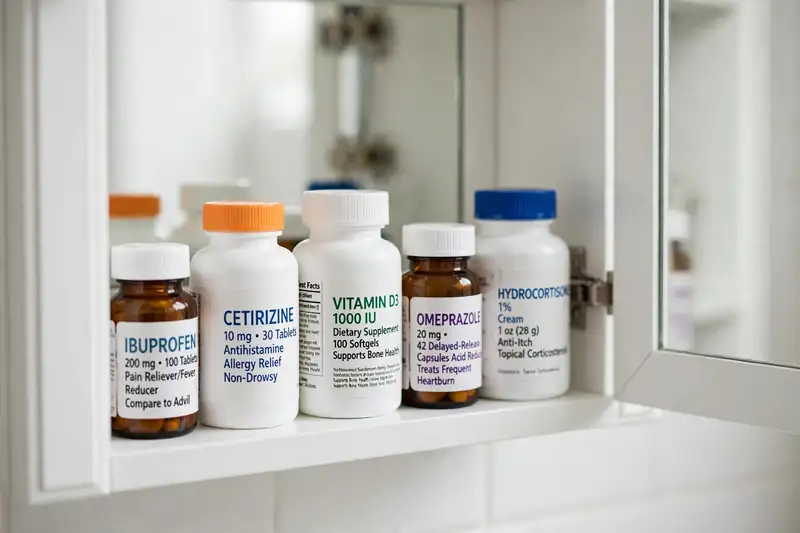
The pattern is that none of the human medicine cabinet is safe territory for improvising dog care. Each drug fails in a different organ, but they all fail. Combination cold and flu products are especially sneaky because they bundle several of these drugs together, sometimes with decongestants that are also toxic. If your dog gets into any human medication, the response is the same: identify the product, call the vet or poison control, and do not guess.
One cabinet, one rule
Treat every human medication as off-limits for dogs unless your vet explicitly directs otherwise. That single rule covers ibuprofen, naproxen, acetaminophen, and everything else on the shelf.
Safe pain relief for dogs
Real pain relief for dogs exists, and it starts at the vet clinic. Dog-specific NSAIDs such as carprofen were developed and tested for dogs, with proper dosing and known safety profiles. Your vet chooses based on your dog’s size, age, health, and what is causing the pain.

For chronic conditions like arthritis, the plan usually goes beyond pills: weight management, appropriate exercise, joint supplements, and sometimes physical therapy. For sudden pain or injury, the vet visit itself is the treatment pathway, because pain is a symptom and the cause needs identifying. Our guide to carprofen dosage for dogs explains what vets actually prescribe and how it is used safely. The price of a vet visit is real, but it buys something no medicine cabinet can: a diagnosis and a drug that was made for the patient in front of you.
Never bridge the gap with human meds
Waiting for a vet appointment is uncomfortable, but filling the wait with ibuprofen can turn a treatable problem into an emergency. Rest, restricted activity, and observation are the safe bridge.
Preventing the next accident
Prevention is unglamorous and completely effective. Store all medications in high, closed cabinets, never on nightstands or low counters. Use pill organizers with locking lids, and keep them put away rather than sitting out. Count tablets now and then, clean up dropped pills immediately, and keep poison control numbers saved in your phone.

Count tablets occasionally so you notice if any go missing. Clean up immediately if you drop a pill; getting down on the floor to search feels silly until you remember who else searches the floor with their mouth. Teach children that pills are never for the dog. And keep the poison control numbers saved in your phone now, before you need them: ASPCA Animal Poison Control at 888-426-4435 and Pet Poison Helpline at 855-764-7661. Both are staffed around the clock. If an accident does happen despite all this, our guide to how to induce vomiting in dogs explains the vet-directed procedure for those first critical minutes.
Ibuprofen for dogs is one of the clearest no’s in pet care. Not a smaller dose, not a different brand, not just this once. The drug attacks the stomach, the kidneys, and clotting all at once, and dogs cannot handle it the way people can. Keep it locked away, know the poisoning signs, and call for help the moment anything goes wrong. For the wider picture on keeping everyday items safe around dogs, see our guide to what human food dogs can eat.
Frequently Asked Questions
What should I do if my dog ate ibuprofen?
Call your veterinarian, an emergency clinic, or a poison control line immediately: ASPCA Animal Poison Control at 888-426-4435 or Pet Poison Helpline at 855-764-7661. Have the product container ready, do not induce vomiting at home, and follow professional instructions exactly.
How much ibuprofen is toxic to a dog?
Any amount can be dangerous. PetMD advises treating even a small ingestion as an emergency. Toxicity varies by dog, so there is no safe threshold you can calculate at home. Always get professional guidance.
Can I give my dog ibuprofen for pain or fever?
No. Never give ibuprofen for pain, fever, swelling, or any other reason. Dogs need veterinary evaluation and dog-specific medications. Giving ibuprofen risks ulcers, kidney failure, seizures, and death.
What are the signs of ibuprofen poisoning in dogs?
Vomiting with or without blood, bloody or black diarrhea, loss of appetite, lethargy, increased thirst followed by reduced urination, pale gums, tremors, incoordination, and seizures. Signs can appear within hours, but kidney damage can develop quietly.
Is Advil the same as ibuprofen for dogs?
Yes. Advil is a brand name for ibuprofen, as is Motrin. All ibuprofen products carry the same toxicity risk for dogs, and flavored versions may also contain xylitol, which is independently toxic.
Can the vet still help if hours have passed?
Often yes, but treatment is most effective early. IV fluids, stomach protectants, and monitoring can still help after a delay. Do not assume too much time has passed. Call and let the professionals decide.
Is naproxen (Aleve) safer than ibuprofen for dogs?
No. Naproxen is in the same drug family and is similarly toxic to dogs. Acetaminophen (Tylenol) is also dangerous. No human painkiller should be given to a dog without explicit veterinary direction.
This article is general information only and is not a substitute for veterinary advice. If your dog has ingested any medication, or you are unsure about pain relief, contact your veterinarian or a poison control line immediately.



3 thoughts on “Ibuprofen for Dogs: Never Give It”