Trazodone is a prescription medication that veterinarians commonly use to help dogs with anxiety and stress. This guide covers what trazodone does, how it works, its side effects, dangerous drug combinations, and when to call your vet. It is prescription only, so nothing here replaces your vet’s judgment. Your vet determines the dose for your dog’s weight and condition.

What is trazodone, and why do vets prescribe it for dogs?
Trazodone is a prescription medication that veterinarians commonly prescribe to dogs for anxiety and stress. It belongs to a class of drugs called serotonin modulators, and it helps dogs stay calm during thunderstorms, vet visits, grooming, travel, and post-surgery crate rest. It is only available through a veterinarian.

Trazodone was developed for humans, but vets have used it in dogs for years and it is now one of the more common canine anti-anxiety medications. It is not a true sedative. It takes the edge off fear so the dog can cope without panicking. The American Kennel Club notes that vets reach for it because it works relatively quickly, wears off within hours, and is generally well tolerated, which makes it useful for one-off events and short recovery periods alike.
Trazodone comes in tablet form. Your vet or pharmacist can tell you whether the specific tablets prescribed for your dog can be given with food, since a small meal can reduce stomach upset in some dogs.
What situations does trazodone help with?
Vets prescribe trazodone for situational stress such as fireworks, thunderstorms, vet or grooming appointments, car travel, and boarding stays. It is also used for separation anxiety alongside behavioral training and to keep dogs calm during post-surgery rest. Your vet decides whether it fits your dog’s specific situation.

Noise phobias are a leading reason dogs take trazodone. Fireworks and thunderstorms send countless dogs into shaking, panting panic. For predictable events, trazodone given ahead of time can mean the difference between a terrified dog and one that merely seems uneasy.
Fearful dogs can be impossible to examine, which puts clinic staff at risk and means the dog misses proper care. A dose before the visit helps the dog tolerate handling.
After orthopedic surgery, a restless dog can ruin the repair, so trazodone helps these dogs accept crate rest. Vets also use it for separation anxiety with a training plan, since medication alone does not teach a dog that being alone is safe.
How does trazodone work in a dog’s body?
Trazodone affects serotonin, a brain chemical linked to mood and anxiety. It blocks certain serotonin receptors and mildly slows serotonin reuptake, which produces a calming effect. The result is reduced anxiety and drowsiness in most dogs. It does not knock a dog out like anesthesia, and most dogs remain responsive.

Serotonin helps regulate mood in the brain. In plain terms, trazodone adjusts how the brain receives serotonin signals so the anxiety response gets turned down. The dog still perceives the storm or the car ride, but the panic is blunted.
Most dogs become calmer and a bit sleepy, which is the intended effect. A dog on trazodone should still walk, respond to its name, and eat. If a dog is unresponsive, stumbling badly, or cannot be roused, that is not normal sedation and your vet needs to hear about it.
Trazodone does not build new coping skills. A dog terrified of thunderstorms will still be afraid next year unless training happens in between. Think of it as a bridge that makes the stressful event survivable while you work on the underlying fear with a trainer or a behavior plan from your vet.
How long does trazodone take to start working?
Trazodone usually starts working within one to two hours after your dog swallows it, and giving it with a small meal can speed up absorption. For predictable events like fireworks or vet visits, give it well ahead of time. Your vet will advise on the right timing for your dog’s situation.
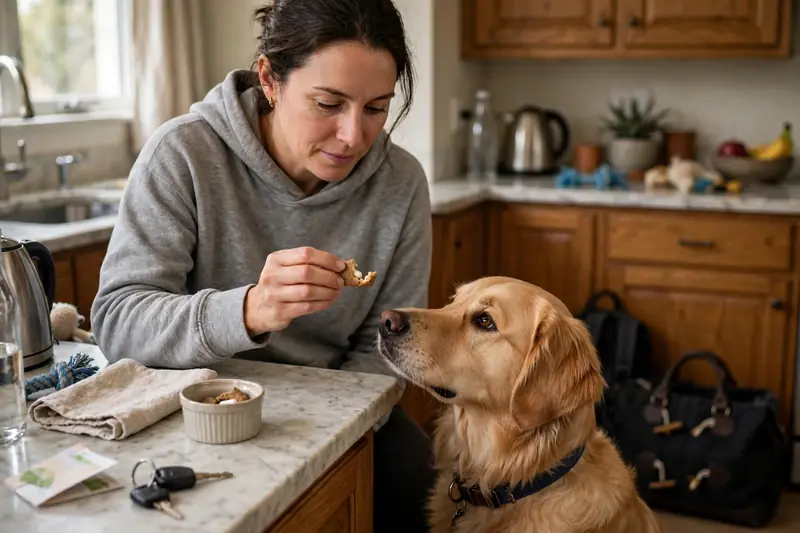
Timing is where owners make the most mistakes. Giving trazodone when the dog is already in full panic is far less effective than giving it while the dog is still calm. For scheduled events, most vets suggest giving it an hour or two beforehand, but follow your vet’s specific instructions.
The calming effect lasts several hours and then fades, which is why trazodone suits situational use. For an all-day event like July 4th, plan the timing around when the noise is worst and ask your vet whether a repeat dose later is appropriate.
Every dog metabolizes medication a little differently. The first time your dog takes trazodone, watch the response on a calm day if possible, so you know how your dog reacts before a real storm.
What side effects should you watch for?
The most common side effects of trazodone are mild sedation, drowsiness, and wobbliness. Some dogs vomit, lose appetite, drool, or develop diarrhea. A few become restless instead of calm. Rare but serious reactions include collapse, difficulty breathing, tremors, or prolonged erection in males, and these need immediate veterinary care.

Mild sedation is what most owners notice first. Your dog may seem sleepy, lie down more than usual, or look unsteady for a few hours. For many owners this is the goal, and it fades as the medication wears off. Keep your dog on level ground until the clumsiness passes.
Some dogs get stomach upset. If your dog vomits after a dose, tell your vet, who may adjust the timing around meals. A simple bland diet for a day or two can help while the stomach settles.
A small percentage of dogs react paradoxically and become more agitated instead of calmer. If that happens, do not give another dose. Call your vet, since this reaction means trazodone may not suit your dog. Go to an emergency clinic for collapse, trouble breathing, tremors, or pale gums. In male dogs, a prolonged erection lasting hours is a rare emergency.
Which medications are dangerous to combine with trazodone?
Trazodone can interact dangerously with other drugs that affect serotonin, including certain antidepressants such as fluoxetine and sertraline, and monoamine oxidase inhibitors. Combining them can trigger serotonin syndrome, a medical emergency. Extra sedation can occur with other sedatives, and blood pressure can drop further with some heart drugs, so tell your vet about every medication.

Serotonin syndrome is the interaction every owner must know about. It happens when trazodone combines with another serotonergic drug, such as the antidepressants fluoxetine or sertraline, or a monoamine oxidase inhibitor, without veterinary supervision. Signs include agitation, tremors, vomiting, diarrhea, rapid heartbeat, and fever. It can come on quickly and it is an emergency. Never combine these drugs on your own or stop a current medication abruptly.
Trazodone also adds to other sedatives and can lower blood pressure, which matters for dogs on heart medications, so your vet needs the full picture before any procedure. Hand your vet a complete list of everything your dog takes, including supplements. Many owners do not realize that common human painkillers such as ibuprofen are dangerous for dogs on their own.
How does trazodone compare with non-prescription calming options?
Trazodone is a prescription drug and not the only option. Non-drug approaches include desensitization training, exercise before stressful events, calming music, and pheromone diffusers. Over-the-counter supplements such as calming treats and melatonin may help mild anxiety. Compare options with your vet, since the right choice depends on how severe your dog’s anxiety is.

For mild uneasiness, calming treats or melatonin may be enough. These are over-the-counter supplements with subtle effects, and you should still clear any supplement with your vet first.
Desensitization training is the only option that reduces fear long term, by exposing the dog to the scary sound gradually at low intensity. A good walk before a stressful event also burns off nervous energy.
| Option | What it is | Best for |
|---|---|---|
| Trazodone | Prescription anti-anxiety medication | Moderate to severe anxiety, panic, post-surgery calm |
| Calming treats | Over-the-counter supplements | Mild uneasiness, everyday stress |
| Melatonin | Over-the-counter supplement | Mild anxiety, nighttime restlessness |
| Training and desensitization | Behavioral work with a trainer or vet plan | Long-term fear reduction of any severity |
Trazodone is for dogs that panic, injure themselves, or cannot be examined safely. Be honest with your vet about severity, since that decides where to start.
What are the warning signs of a trazodone overdose?
Overdose signs include extreme sedation, collapse, vomiting, tremors, rapid heartbeat, difficulty breathing, or seizures. Treat any suspected overdose as an emergency and contact your veterinarian or an animal poison control line immediately. Bring the pill bottle so the vet can see what your dog took.

Overdoses usually happen when a dog gets into the pill bottle or an owner gives an extra dose by mistake. Dogs chew through supposedly secure bottles, so store trazodone in a closed cabinet well out of reach.
If you suspect an overdose, do not wait for symptoms. Call your vet or the ASPCA Animal Poison Control line right away with your dog’s weight and how many tablets are missing. Do not induce vomiting unless a professional tells you to.
At the clinic, the vet may use activated charcoal to bind the drug in the stomach. This is strictly a veterinary procedure. Never give charcoal at home. Bring the pill bottle so the vet knows exactly what your dog took.
Which dogs should not take trazodone, and when should you call your vet?
Dogs with liver or kidney disease, heart problems, glaucoma, seizure disorders, or a known allergy to trazodone may need a different plan, and puppies, pregnant, and nursing dogs need special care. Older dogs can be more sensitive to sedation. Call your vet promptly about unusual behavior, breathing changes, or symptoms that do not resolve.

Trazodone is processed through the liver and kidneys, so dogs with disease in either organ may not clear it normally. Heart conditions, seizure history, glaucoma, or a past bad reaction all call for a careful discussion with your vet about alternatives.
Very young puppies, pregnant or nursing dogs, and seniors all need extra caution, since young bodies handle drugs differently and older dogs are more sensitive to sedation. Trazodone in these cases is a careful veterinary decision.
Call your vet promptly for labored breathing, pale gums, collapse, tremors, or continued vomiting. The consistent advice from VCA Hospitals pet care library and VCA Hospitals is to never wait and see with breathing problems, collapse, or seizures.
Trazodone is a useful tool for canine anxiety under veterinary supervision. The rules are simple: prescription only, never share human medication, tell your vet about every other drug, and store the bottle out of reach.
Frequently asked questions
Below are the questions dog owners ask most often about trazodone, based on what comes up in vet clinics and in search. Each answer assumes your vet has prescribed or discussed the medication for your dog. For anything specific to your dog’s health, weight, or other medications, your veterinarian is the authority, not this guide.

Is trazodone safe for dogs?
Yes, trazodone is considered safe for most dogs when a veterinarian prescribes it and the owner follows the instructions. It has been used in veterinary medicine for years with a well understood safety profile. The main risks come from unsupervised use, incompatible drug combinations, or accidental overdose.
Can I give my dog my own trazodone prescription?
No. Human tablets may come in strengths that are wrong for your dog, and some contain coatings not ideal for dogs. More importantly, your vet must check your dog’s health, weight, and current medications first. A prescription written for you was designed for a human, not a 20-pound terrier.
How long does the effect of trazodone last in dogs?
The calming effect typically lasts several hours and then fades, which suits situational use like storms or appointments. Duration varies by dog and whether it was given with food. If the effect wears off too quickly or lasts too long, mention it at the next vet visit.
Can dogs take trazodone every day?
Some dogs take trazodone daily, for example during post-surgery crate rest or a behavior plan for separation anxiety. Daily use is a veterinary decision that needs follow-up appointments for monitoring. Do not turn situational use into daily use on your own.
Will trazodone make my dog too sleepy to function?
Most dogs become calm and a bit drowsy but still walk, eat, and respond normally. Heavy sedation where the dog can barely stand is not the expected effect. If your dog seems excessively sedated, call your vet before the next dose.
Can puppies or senior dogs take trazodone?
It depends on the dog. Very young puppies, pregnant or nursing dogs, and dogs with liver, kidney, or heart disease need extra caution. Senior dogs can be more sensitive to sedation. Your vet weighs these factors and may suggest an alternative.
What should I do if my dog ate trazodone that was not prescribed for him?
Treat it as a potential emergency and do not wait for symptoms. Call your vet or an animal poison control line immediately with your dog’s weight and how much was eaten. Do not induce vomiting unless a professional says so. Keep the pill bottle for the vet.
What should I do if I miss a dose of trazodone?
Give it as soon as you remember unless the next dose is near, and never double up. A missed dose is always safer than a doubled one. If your dog spits out pills, pill pockets can help. When in doubt, skip it and call your vet.