
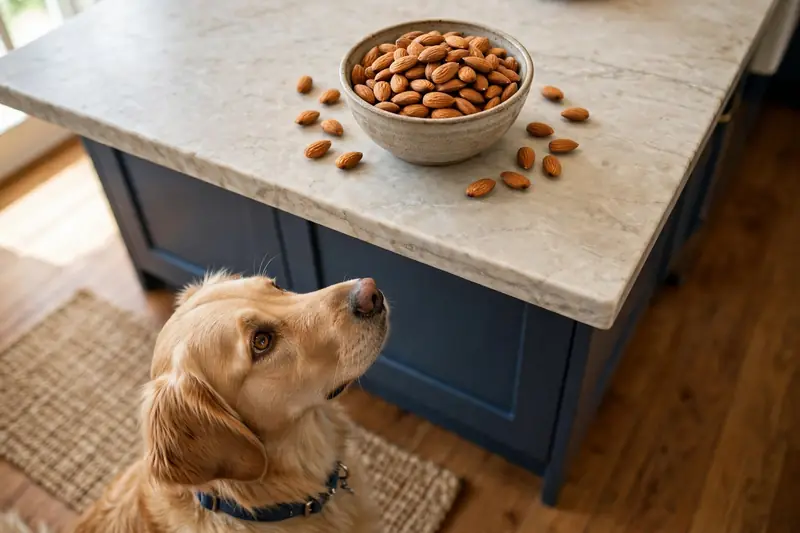
Can dogs eat almonds? The veterinary answer is no. Do not feed almonds to your dog. They are not poisonous the way macadamia nuts are, which confuses a lot of owners, but “not poisonous” and “safe” are very different things. Almonds are hard for dogs to digest, rich enough in fat to cause serious stomach trouble, and shaped exactly wrong for a dog’s throat. There is no nutritional payoff that justifies any of it. This guide explains the real risks, what to do if your dog gets into them, and the treats that are genuinely better.
Can dogs eat almonds?
No. Vets say dogs should not eat almonds. Sweet almonds are not acutely toxic the way macadamia nuts are, but they are hard to digest, high in fat, and a choking and obstruction risk. There is no nutritional benefit that justifies those risks. Keep almonds, and especially seasoned almonds, away from your dog.

That short answer surprises owners who think of almonds as a health food. For humans, they are. For dogs, the digestive system is built for meat, not hard tree nuts, and every almond is a small gamble with digestion, fat load, and throat shape. One stolen almond will most likely pass without drama in a medium or large dog, but that is luck, not safety. The sections below lay out the three routes by which almonds harm dogs, the seasonings that make things worse, and exactly what to do if your dog gets into the jar.
Not toxic, but not safe: the distinction that matters
The American Kennel Club gives the short answer plainly: no, dogs should not eat almonds. Sweet almonds, the kind sold for snacking, are not toxic to dogs the way macadamia nuts are. But the AKC immediately adds the reasons to avoid them anyway. Dogs cannot digest almonds easily, and eating them can lead to gastrointestinal distress.

This is the distinction owners miss. Toxicity is only one way a food harms a dog. Almonds harm through three other routes: digestion, fat, and shape, and those are enough. A food does not need to be poisonous to be a bad idea. Think of it this way: a tennis ball is not toxic either, but you would not feed one to your dog. Almonds sit in that same category, not poisonous, but wrong for a dog’s body in ways that can still end in an emergency vet visit.
The digestive problem
Dogs cannot break almonds down the way humans do. The tough texture and composition resist digestion in the canine gut, which is why even a few almonds can produce vomiting, diarrhea, gas, and abdominal discomfort, especially in smaller dogs and sensitive stomachs. The fat compounds the issue, since rich fatty foods can trigger gastroenteritis and, in susceptible dogs, pancreatitis.

Pancreatitis is a painful inflammation of the pancreas that causes repeated vomiting, abdominal pain, and serious illness requiring veterinary care. One handful will not cause it in every dog, but it is a roll of the dice with no upside: the dog gains nothing from the almonds that a proper treat would not provide more safely. Smaller dogs face the worst of the digestive problem, because the same few almonds represent a much larger dose relative to body weight. And dogs with already sensitive stomachs can react to amounts that a hardy large dog would shrug off.
Choking and obstruction: the shape problem
An almond is almost perfectly designed to cause trouble in a dog’s throat: smooth, hard, and just the wrong size to lodge. Small breeds are at obvious risk, but any dog that gulps rather than chews, which describes most dogs faced with a dropped snack, can choke or end up with an almond lodged in the esophagus.

Beyond choking, there is obstruction. Almonds that make it to the stomach do not always make it through. Hard, poorly digested pieces can contribute to blockages, particularly in small dogs or when several are eaten at once. Signs of obstruction include repeated vomiting, appetite loss, lethargy, abdominal pain, and no stool. That combination is a veterinary emergency, not a wait-and-see situation. If your dog is pawing at the mouth, gagging, or struggling to breathe, get to a vet immediately. Do not blindly sweep the throat unless you can see the object, since you may push it deeper.
Seasoned almonds are worse
Plain almonds are bad enough, but flavored varieties add new dangers. Salted almonds bring excess sodium, causing extreme thirst, vomiting, and sodium-related illness. Smoked or spiced almonds often contain onion or garlic powder, both toxic to dogs. Chocolate-covered almonds layer chocolate toxicity on top.

Wasabi or “hot” varieties cause severe mouth and stomach irritation. Honey-roasted almonds add a sugar load to the usual almond risks. If your dog got into almonds, identifying the seasoning matters as much as the count. Tell your vet exactly which variety it was, because the seasoning may be the bigger threat than the nut. A bowl of garlic-seasoned almonds eaten by a terrier is a genuinely different emergency from a single plain almond stolen by a retriever, and your vet needs that detail to advise you correctly.
A note on bitter almonds
Nearly all almonds sold in the United States are sweet almonds. Bitter almonds are a different variety containing compounds that release cyanide, and they are genuinely toxic, but they are not sold as snacks in the US. Your pantry almonds carry digestive, fatty, and mechanical risks. The distinction matters only for almond products bought abroad.

For the almonds in your kitchen, the serious risks need no cyanide to matter. The digestive trouble, the fat load, and the choking shape are enough to keep them off the menu. Do not let the “at least they are not bitter almonds” thought relax you. Sweet almonds send dogs to the vet on their own merits. If you ever buy almond products abroad, check what variety they contain, and when in doubt, keep them away from the dog entirely.
What to do if your dog ate almonds
Assess four things first: how many, what kind, how big your dog is, and when. A single plain almond stolen by a large dog is different from a bowl of garlic-seasoned almonds eaten by a terrier. For the first case with no symptoms, offer water, skip rich treats for the day, and watch for vomiting or diarrhea over 24 hours.

For seasoned almonds, especially onion, garlic, or chocolate varieties, call your vet or poison control, since the seasoning may be the bigger threat than the nut. For a large amount in any dog, call your vet, because obstruction and pancreatitis risks rise with quantity. For any choking signs, pawing at the mouth, gagging, distress, or difficulty breathing, treat it as an emergency right now. Over the next day or two, repeated vomiting, appetite loss, lethargy, abdominal pain, or no bowel movements all warrant a prompt vet visit. When you call, report the variety, the approximate count, your dog’s weight, and the timing. Do not induce vomiting unless your vet specifically instructs it.
Better treats than almonds
Every reason people reach for almonds has a dog-safe equivalent. For crunch, offer baby carrots, apple slices with no seeds, or cucumber rounds. For training, use small pieces of plain cooked chicken or blueberries. For the nut-butter experience, a fingertip of xylitol-free, unsalted peanut butter works, since the form is safer and the portion is controllable.

For enrichment, puzzle toys, frozen Kongs, and snuffle mats deliver mental work that beats snacks. Dogs do not crave almonds specifically. They crave the interaction, the crunch, the reward moment, and all of those arrive safely through better options. Begging itself is a trained behavior, and the fix is training, not finding a “safe nut.” Decide the house rule (no nuts, period, is simplest), enforce it with everyone including guests, and redirect the begging energy: a dog that sits politely while you snack earns a proper dog treat afterward. For the chronic counter-surfer, management beats willpower. Nuts live in closed containers in closed cabinets, trail mix never sits in an open bowl, and party snacks go away before the dog works the room.
Almonds vs other nuts: the quick ranking
Macadamia nuts are genuinely toxic, causing weakness, vomiting, and tremors: never feed them. Black walnuts are toxic too: never. Almonds, cashews, pecans, and pistachios are not acutely toxic but are high-fat, hard to digest, and carry choking risks: avoid them all. Plain, unsalted peanuts are the least problematic nut, but still fatty.
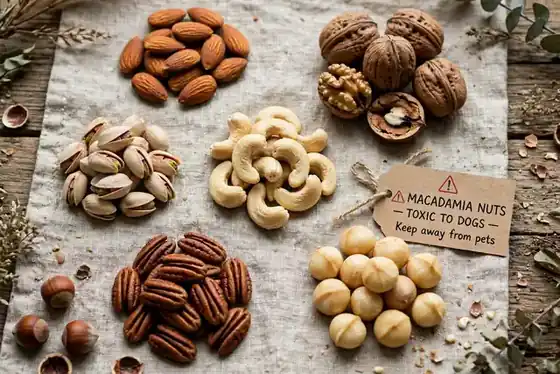
The pattern is clear: no nut is a good dog treat. The best nut for a dog is the one that stays in the jar. Peanuts deserve one clarification: think of them as the best of a bad category, not a recommended treat. They are softer and easier to chew than almonds, which removes the worst of the choking risk, but the fat remains, portions stay small, and no nut belongs in a dog’s regular diet. If you want a truly safe crunchy reward, vegetables like carrots or green beans beat every nut in the jar.
Almond milk, almond flour, and other almond products
What about the almond products in your kitchen? Unsweetened almond milk is generally fine as a small splash for most dogs. It is mostly water, low in fat, and useful for softening kibble or mixing medications. The rules: unsweetened only, unflavored, small amounts, and check for xylitol like you would with nut butter.

Almond flour shows up in some homemade dog treats. It is essentially ground almonds without the choking shape, so in small amounts within a baked treat it is acceptable. The fat content is unchanged, so treats made with it stay firmly in the occasional category, and “grain-free” marketing should not convince you it is health food. Culinary almond oil in a drop or two is not a concern, but there is no reason to add it deliberately. Amaretto, marzipan, and almond pastries are firmly no: the sugar, and potentially alcohol or chocolate, make them unsuitable. A dog that counter-surfs a marzipan fruit needs the same assessment as any rich, sugary theft: monitor, and call the vet if the amount was large or chocolate was involved. The through-line: processing removes the choking risk, but the fat, and in sweetened products the sugar and xylitol risk, remains.
The honest summary: almonds occupy an awkward middle ground, not poisonous enough to scare people, harmful enough to hurt dogs. They offer no nutrition your dog needs, resist digestion, threaten small throats, and carry enough fat to cause real illness. “My dog ate one and was fine” is survivorship bias, not safety data. Keep the jar closed, the trail mix out of reach, and reach for the treats that were actually made for dogs. Your dog will never know what they are missing, and will never miss the vet bill either.
For the same plain-only, small-portion thinking across the foods dogs meet most often, see our wider guide to what human food dogs can eat. And for a crunchy treat dogs genuinely love, our apple guide covers the safe way to share.
Frequently Asked Questions
Are almonds poisonous to dogs?
Sweet almonds, the snack kind, are not acutely toxic like macadamia nuts, but they are still unsafe: hard to digest, high in fat, and a choking and obstruction risk. Vets advise against feeding them.
My dog ate one almond, should I worry?
One plain almond in a medium or large dog will most likely pass without issue. Monitor for vomiting or digestive upset over 24 hours, and call your vet if symptoms appear or the almonds were seasoned.
Can dogs eat almond butter instead?
In tiny amounts, xylitol-free almond butter is safer than whole almonds, but the label must be checked carefully for xylitol (also listed as birch sugar), and portions stay at teaspoon scale.
Are salted almonds worse for dogs?
Yes. The excess sodium adds vomiting, extreme thirst, and sodium-related illness risk on top of the almond’s own problems. Seasoned varieties with onion or garlic powder are worse still.
What nuts are actually toxic to dogs?
Macadamia nuts are the famously toxic one, causing weakness, vomiting, tremors, and hyperthermia, and black walnuts are also toxic. Treat all nuts as off-limits: the non-toxic ones still cause digestive, fat, and choking problems.
Can almonds cause pancreatitis in dogs?
They can contribute. The high fat content is the mechanism, and repeated or large fatty indulgences raise the risk in susceptible dogs. Pancreatitis signs like repeated vomiting, abdominal pain, and lethargy need prompt vet care.
What should I do if my dog is choking on an almond?
If your dog is pawing at the mouth, gagging, or struggling to breathe, it is an emergency: get to a vet immediately. Do not blindly sweep the throat unless you can see the object, since you may push it deeper.
Are peanuts safer than almonds for dogs?
Plain, unsalted peanuts are the least problematic nut for dogs: softer, easier to chew, and safe in small amounts. But they are still fatty, so portions stay small, and no nut belongs in a dog’s regular diet. For a truly safe crunchy reward, carrots or green beans beat every nut in the jar.
This article is general information only and is not a substitute for veterinary advice. If your dog has a health condition, is on a prescription diet, or you are unsure about any food, check with your veterinarian first.



2 thoughts on “Can Dogs Eat Almonds? Why Vets Say No”