A bowl of fresh raspberries is hard to share politely. They are soft, sweet, and they fit perfectly in a dog’s mouth, which is exactly why so many owners end up asking the question with a dog staring up at them. The answer is good news: raspberries are one of the safer fruits you can give a dog. They are not toxic, they are low in calories, and most dogs genuinely enjoy them.
The catch is the dose. Raspberries contain a natural form of xylitol, the sweetener that can kill a dog in sugar-free gum or candy. The amounts in fresh berries are tiny, but they are why moderation matters. This guide covers safe portions, serving tips, health benefits, and the warning signs of too many.

Can dogs eat raspberries? The short answer
Yes, dogs can eat raspberries in moderation. Fresh, washed raspberries are safe for dogs and make a healthy occasional treat. Keep portions small, a few berries for small dogs and a small handful for large ones, because raspberries contain trace amounts of natural xylitol and fruit sugar that can upset a dog’s stomach in large amounts.
Raspberries land on the safe side of the fruit world. The AKC guide to human foods dogs can and cannot eat treats berries as acceptable occasional foods, and raspberries specifically are widely considered safe by veterinary sources. There is no toxin in the berry flesh, no dangerous pit, and nothing in the skin that harms dogs.
Moderation does real work here. A dog that eats a full pint off the counter is heading for a rough evening of gas and diarrhea, since fruit sugar and fiber are fine in small doses and rough on the gut in large ones. If you share other people food with your dog, the list of human foods dogs can eat is worth bookmarking.

The xylitol question: how much is really in raspberries
Raspberries contain only trace amounts of natural xylitol, far below any toxic dose. A medium-size dog would need to eat roughly 32 cups to approach dangerous levels, which no dog would ever do. The real xylitol danger comes from sugar-free gum, candy, and peanut butter, not from fresh berries.
Xylitol earns its scary reputation honestly. In dogs, it triggers a fast, massive release of insulin, which can crash blood sugar within 30 minutes and damage the liver at higher doses. As little as 0.1 grams per kilogram of body weight can cause hypoglycemia. That is why sugar-free gum, which can hold a full gram of xylitol per piece, is one of the most common poisoning calls vets get.
Raspberries are a different situation. The xylitol occurs naturally in amounts so small that toxicity from berries alone is not realistic, and the stomach upset from the fiber and sugar would stop the feast long before xylitol mattered. The Merck Veterinary Manual covers xylitol poisoning in its toxicology section, and the culprits it describes are manufactured sugar-free products, never fresh fruit.
Bottom line: do not let the word xylitol scare you off raspberries, but do let it sharpen your label reading. Keep sugar-free gum, candy, and mints out of reach, and check peanut butter labels before sharing a spoonful.

How many raspberries can a dog eat
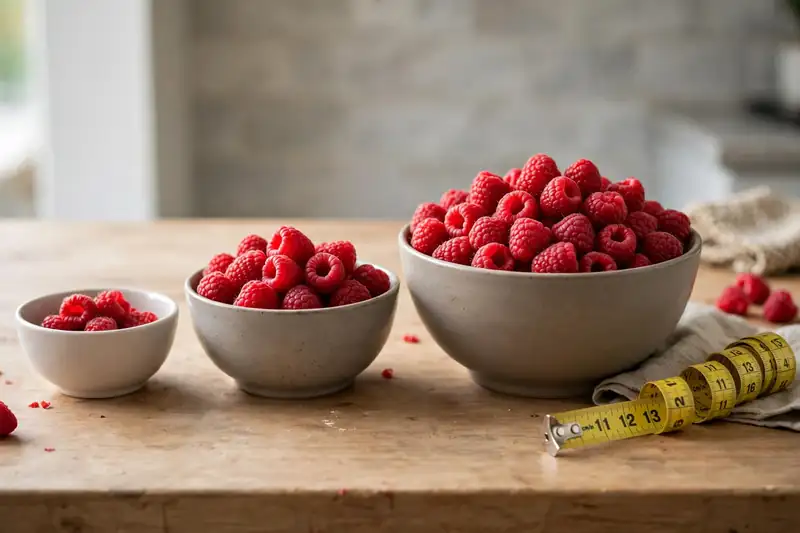
Keep raspberries under 10 percent of your dog’s daily calories. In practical terms, that works out to about 3 to 4 berries for a small dog, 5 to 8 for a medium dog, and up to 10 for a large dog, offered a few times a week rather than every day.
The 10 percent rule is the backbone of treat feeding. Your dog’s regular food delivers complete nutrition, and every treat calorie displaces a calorie of that balanced food. A few berries barely register; a daily bowlful starts to matter.
| Dog size | Safe amount | How often |
|---|---|---|
| Small (under 20 lbs) | 3 to 4 berries | A few times a week |
| Medium (20 to 50 lbs) | 5 to 8 berries | A few times a week |
| Large (over 50 lbs) | Up to 10 berries | A few times a week |
The first time, give less than the table suggests: one or two berries, then wait a full day and watch for soft stool or gas. Your dog’s stomach sets the real limit, not any chart. Dogs with sensitive digestion or a history of pancreatitis deserve a vet conversation first.
One more habit worth building: count the berries as they go in. It is easy to toss “a few” that turn into twenty when a dog is doing its best pleading eyes. A small handful, counted once, keeps the treat honest.
How to prepare raspberries for dogs
Wash raspberries under cool running water, pat them dry, and serve them whole or lightly mashed. Fresh berries are the best choice, and frozen raspberries work well as a summer treat. Skip canned raspberries in syrup, dried berries with added sugar, and any product sweetened with xylitol.
Washing matters more with raspberries than with thick-skinned fruit, since there is no peel to throw away. Rinse them in a colander, give them a gentle shake, and pick out any soft or moldy ones. Organic berries reduce pesticide exposure, though a thorough wash is the important part either way.
Whole berries are fine for most dogs. For toy breeds and enthusiastic gulpers, mash them lightly with a fork first. Choking is rare with soft raspberries, but a dog that inhales food can surprise you, and mashing also makes a couple of berries feel like a bigger treat.
Frozen raspberries deserve a mention because dogs tend to love them. They make a crunchy, cooling snack on hot days and work well in a puzzle toy. Let them thaw a few minutes for very small dogs, since rock-hard berries are tough on tiny teeth. Dried raspberries are a different story: they concentrate the sugar, and many add extra sugar on top. Canned berries in syrup are worse, a sugar bath with nothing to offer a dog.
One thing you never need to worry about is the seeds. Raspberry seeds are tiny and pass through harmlessly. That sets raspberries apart from stone fruits, where the pits are the real hazard, as the cherry safety guide explains. No pitting, no coring, no prep beyond a wash.

Nutritional benefits of raspberries for dogs
Raspberries bring fiber, vitamin C, manganese, potassium, and antioxidants in a low-calorie package. The fiber supports healthy digestion, the antioxidants help protect cells from everyday damage, and manganese plays a role in bone and joint health. Dogs make their own vitamin C, so treat that part as a bonus rather than a nutritional requirement.
A cup of raspberries holds about 64 calories and around 8 grams of fiber, which is a lot of fiber for very few calories. For dogs that need to feel full without extra weight, that ratio is genuinely useful. The fiber guide for dogs explains how the right amount keeps digestion moving smoothly, and berries are one of the tastiest ways to add a little.
The antioxidants are the quieter benefit. Raspberries are rich in anthocyanins, the pigments behind their deep red color, plus ellagic acid and quercetin, which help neutralize free radicals from normal metabolism. Older dogs may benefit most, though no single treat is a health plan on its own.
Manganese supports bone development, metabolism, and the body’s own antioxidant defenses, while potassium helps with normal muscle and nerve function. None of this makes raspberries a superfood, and your dog’s regular food already covers the essentials. What raspberries offer is a treat that gives something back instead of just adding empty calories.

Raspberries vs raspberry-flavored foods
Plain raspberries are safe, but raspberry-flavored products usually are not. Jam, candy, syrups, and flavored yogurts pack added sugar, and sugar-free versions can contain xylitol in genuinely dangerous amounts. If a product lists xylitol, birch sugar, or E967 on the label, keep it away from your dog.
Raspberry jam is the most common trap. It starts with real fruit and then adds sugar at roughly equal weight, which turns a healthy berry into a sugar delivery system. A lick off a spoon will not harm a healthy dog, but jam should never be a treat. Raspberry candy is worse: hard candies are a choking hazard, and sugar-free candy often contains xylitol at the exact doses that poison dogs.
Flavored yogurt sits in the middle. Plain yogurt is fine for most dogs, as the yogurt feeding guide covers, but raspberry-flavored yogurt usually means added sugar and artificial flavoring. If you want to mix berries into yogurt for your dog, stir fresh raspberries into plain yogurt yourself. It takes ten seconds and skips everything you do not want.
Xylitol hides under several names: birch sugar, wood sugar, and E967. It shows up in sugar-free gum, mints, candy, some peanut butters, and even some medications. Scan ingredient lists before any flavored product reaches your dog.

Signs your dog ate too many raspberries
Too many raspberries usually cause mild stomach upset: gas, gurgling, loose stool, or diarrhea within a few hours. Watch for repeated vomiting, belly pain, lethargy, or refusal to eat, and call your vet if any of those appear or if symptoms last more than a day. Xylitol poisoning from the berries alone is not a realistic scenario.
Mild overindulgence shows up as digestive noise: a grumbly stomach a few hours after the berries, softer stool, maybe one bout of vomiting as the stomach clears itself. This usually resolves on its own within a day. Keep water available, skip treats until the stool firms up, and feed the next meal lighter than usual.
The signs that earn a vet call are different in kind. Repeated vomiting that will not stop, a painful or swollen belly, extreme lethargy, bloody stool, or a dog refusing food and water for more than a day all point past simple overeating. If upset lingers beyond 24 hours, the gastroenteritis guide describes what vets look for. For urgent worries, the ASPCA Animal Poison Control line is the resource most vets recommend.
One special case: if your dog ate raspberries along with something else, like a whole pie or a bowl of sugar-free candy, the something else is the emergency. Call your vet with the packaging in hand so they can see exactly what and how much was eaten.

Raspberries for puppies and senior dogs
Puppies can have raspberries in very small amounts once they are eating solid food. Start with a single berry, mashed, and wait a full day to check for stomach upset before offering more. Healthy senior dogs follow the adult rules with slightly smaller portions, since older dogs burn fewer calories and their treat budget shrinks with them.
Puppy digestion is still learning. Introduce new foods one at a time, in tiny amounts, so you can tell what caused a problem if one appears. A single mashed raspberry is a perfect first fruit, small enough that even a bad reaction stays mild. Two or three berries a few times a week is plenty through the first year.
Senior dogs get the adult portions trimmed down. An older dog that naps most of the afternoon needs fewer calories than it did at four, and treats shrink with the meals. For seniors with diabetes, the fruit sugar deserves a vet’s opinion first, since even natural sugar counts. Dogs on prescription diets should get the same check, because those diets are formulated precisely. The VCA Hospitals site can help you find a vet for that conversation.

Raspberries vs blueberries and strawberries
All three berries are safe for dogs in moderation. Blueberries are the lowest in sugar and easiest to portion one by one. Strawberries are the sweetest, so they need the smallest servings. Raspberries have the most fiber, and they are the only one with natural xylitol, which is why portions matter most with raspberries.
| Berry | Sugar per cup | Standout trait | Portion note |
|---|---|---|---|
| Raspberries | About 5 g | Highest fiber of the three | Count them, a small handful max |
| Blueberries | About 10 g | Lowest calorie, easy to portion | A small handful is fine |
| Strawberries | About 7 g | Sweetest taste, dogs love them | Fewer berries, hull the tops |
A cup is far more than any dog should eat at once, so treat these as comparisons, not serving suggestions. Blueberries are the most forgiving berry for frequent treating, while strawberries need the tightest portion control because of their sugar.
In practice, variety beats loyalty. Rotating between the three gives your dog different flavors and slightly different nutrients across the week. The blueberry guide covers why that little berry is many vets’ favorite training treat, and the strawberry guide explains how to handle the leafy tops. Mix and match across the week, keep each serving small, and the berry rotation stays firmly in treat territory.

Frequently asked questions about dogs and raspberries
Most owners ask about daily feeding, frozen berries, seeds, jam, and puppies. The short version: a few plain berries a few times a week is the sweet spot, frozen berries are fine as an occasional treat, the tiny seeds are harmless, and anything raspberry-flavored with added sugar or xylitol stays off the menu.

Can dogs eat raspberries every day?
They should not. Daily berries turn a treat into a habit and push fruit sugar and fiber past what most dogs handle comfortably. A few times a week in the portion sizes above is the right rhythm. If your dog has come to expect a daily berry, rotate in other low-calorie treats on the off days.
Can dogs eat frozen raspberries?
Yes. Frozen raspberries are just raspberries, and many dogs love the crunch on a hot day. They work well in puzzle toys and frozen treat molds. Let them thaw for a few minutes before serving to very small dogs, since fully frozen berries are hard on tiny teeth.
Are raspberry seeds dangerous for dogs?
No. Raspberry seeds are tiny, soft, and pass through the digestive tract without any trouble. They are nothing like the pits of stone fruits, which are the real choking and toxicity hazard. You never need to deseed raspberries for your dog.
Can dogs eat raspberry jam?
No, not as a treat. Jam is mostly sugar with some fruit, and the sugar load is far beyond what a dog needs. Sugar-free jams are worse, since they may contain xylitol at dangerous levels. A tiny lick off your toast will not harm a healthy dog, but keep the jar out of reach.
Can puppies eat raspberries?
Yes, in very small amounts. Start with one mashed berry once your puppy is eating solid food, wait a day to check for stomach upset, and build up to two or three berries a few times a week. Puppies have sensitive digestion, so introduce any new food slowly and one at a time.
Can raspberries kill a dog?
Fresh raspberries cannot kill a dog at any amount a dog would realistically eat. The natural xylitol in berries exists only in trace amounts. What can kill a dog is xylitol from sugar-free products like gum and candy, which is a genuine emergency. Keep those products locked away and the berries in reasonable portions.
Raspberries earn their yes honestly. They are safe, low in calories, and full of useful nutrients, with only two rules attached: keep the portions small and keep the flavored products away. A few fresh berries a few times a week is a treat most dogs will love. Wash them, count them, then watch your dog discover that sweet-tart taste.