
The correct Benadryl dosage for dogs is the question behind almost every late-night allergy search. The widely cited guideline is 1 milligram of diphenhydramine per pound of body weight, given two to three times a day. A 25-pound dog lands at 25 mg, which is exactly one standard tablet. That number is a starting point, not a prescription. Benadryl is used in dogs off label, the right product matters more than most owners expect, and some dogs should never get it. This guide covers the dosing math, the full chart, both common forms, and every safety line worth knowing.
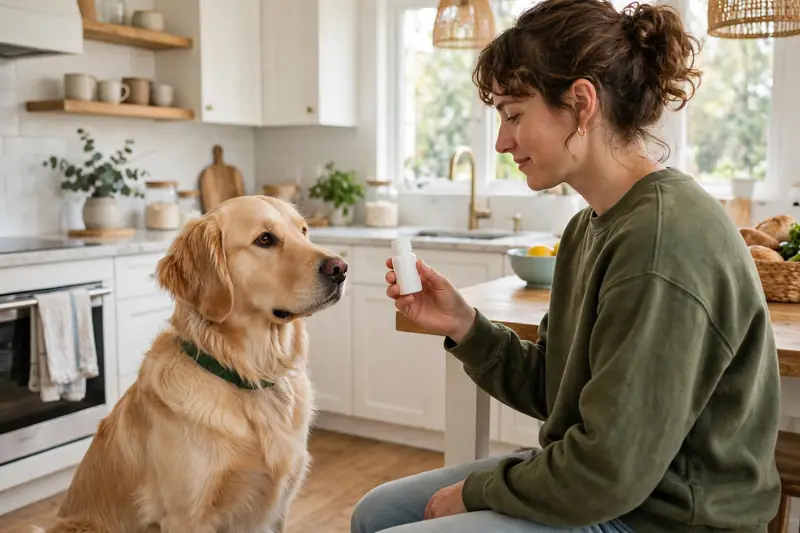
What is the correct Benadryl dosage for dogs?
The widely cited dose is 1 mg of diphenhydramine per pound of body weight, given two to three times daily. A 25-pound dog gets 25 mg, which is one standard tablet. Always confirm the dose with your vet first, since health conditions and other medications change what is safe.
The math stays simple because standard Benadryl tablets hold 25 mg of diphenhydramine each. Weigh your dog and match pounds to milligrams. A 50-pound dog gets 50 mg, or two tablets. A 12-pound dog gets about 12 mg, which is where a pill cutter or the liquid form comes in.
Benadryl was approved for people, and vets prescribe it for dogs off label based on decades of clinical experience. That is normal in veterinary medicine, and it is why your vet should be in the loop before the first dose. The American Kennel Club’s guide to Benadryl for dogs cites the same 1 mg per pound figure and stresses vet approval first. Like other dog medication dosing guides such as the carprofen dosage guide, this chart is general information. Your vet turns it into a prescription for your specific dog.

Benadryl dosage chart by dog weight
Find your dog’s weight in the left column, read across for the milligram dose, then use the tablet or liquid column to measure it. The chart rounds to the nearest practical amount, and your vet can fine-tune the numbers for very small or senior dogs.
For dogs under 10 pounds, liquid is easier than splitting tablets into crumbs. Weigh on a kitchen scale rather than guessing, and reweigh every few months as weight drifts.
| Dog weight | Dose (mg) | 25 mg tablets | Liquid (12.5 mg per 5 mL) |
|---|---|---|---|
| 5 lbs | 5 mg | Liquid recommended | 2 mL |
| 10 lbs | 10 mg | About half a tablet | 4 mL |
| 15 lbs | 15 mg | About half a tablet | 6 mL |
| 20 lbs | 20 mg | About three quarters of a tablet | 8 mL |
| 25 lbs | 25 mg | 1 tablet | 10 mL |
| 30 lbs | 30 mg | About 1 tablet | 12 mL |
| 40 lbs | 40 mg | About 1 and a half tablets | 16 mL |
| 50 lbs | 50 mg | 2 tablets | 20 mL |
| 60 lbs | 60 mg | About 2 and a half tablets | 24 mL |
| 75 lbs | 75 mg | 3 tablets | 30 mL |
| 100 lbs | 100 mg | 4 tablets | 40 mL |
Two cautions. First, “about” is doing real work in the tablet column: a 15-pound dog needs 15 mg and half a tablet gives 12.5 mg. Most vets accept that gap, but confirm with yours. Second, past 100 pounds, ask your vet for the ceiling rather than extending the math alone.

How often can you give a dog Benadryl?
Most vets suggest every 8 to 12 hours, which works out to two or three doses per day. Do not shorten the interval to make it work faster, and never give more than three doses in 24 hours without your vet saying so.
Spacing matters because diphenhydramine needs time to clear. Stacking doses closer than 8 hours raises the blood level higher than planned, and that is when side effects like heavy sedation or agitation show up. If the morning dose seems to wear off by dinner, that is normal. Give the next dose on schedule rather than early.
Consistency beats precision on the clock. Pick times you can repeat daily, such as breakfast and bedtime for a twice-daily schedule, and add a midday dose only if your vet prescribed three. If a dose seems to do nothing at all, resist the urge to double the next one. A dog that gets no relief from a correct dose needs a different plan, and that plan starts with a vet visit, not a bigger dose.

Tablets vs liquid: which Benadryl form to use
Plain 25 mg tablets are the easiest form for most dogs, because one tablet matches the dose for a 25-pound dog and halves are simple to split. Children’s liquid works better for very small dogs, but only a plain diphenhydramine liquid with no xylitol, alcohol, or decongestants.
The tablet label should list one active ingredient: diphenhydramine. Anything else on that list is a reason to put the box back. Benadryl-D contains pseudoephedrine, a decongestant that is dangerous for dogs. Benadryl Allergy Plus and similar combination products add ingredients your dog does not need. Chewables and flavored tablets sometimes contain xylitol, the sweetener that can cause liver failure in dogs, so read the inactive ingredients too.
Children’s liquid diphenhydramine usually comes at 12.5 mg per 5 mL. That concentration makes small doses easy to measure with an oral syringe, which is why vets often prefer it for dogs under 15 pounds. Check the label the same way you would for tablets. Some liquids add alcohol or extra sodium, and flavored versions are the ones most likely to hide xylitol. When the label is clean, liquid and tablets do the same job. The choice is about measuring accuracy, not strength.
How to measure and give the right dose
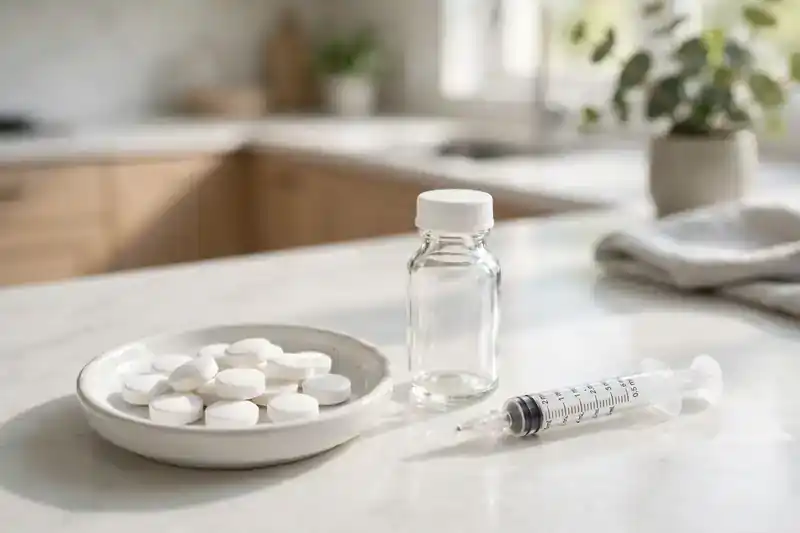
Weigh your dog first, since the entire dose depends on that number. Split tablets with a pill cutter for accuracy, use an oral syringe for liquid, and double check the math before your dog swallows anything. For liquid, divide the milligram dose by 2.5 to get milliliters.
No pet scale? Stand on a bathroom scale holding your dog, then weigh yourself alone and subtract. It beats a guess, and the dose math tolerates small errors.
For tablets, a pill cutter costs a few dollars and splits cleaner than a kitchen knife, which tends to crumble the tablet and scatter the dose. For liquid at 12.5 mg per 5 mL, each milliliter holds 2.5 mg, so divide the milligram dose by 2.5 to get milliliters. A 20-pound dog needs 20 mg, which is 8 mL. Draw it up in an oral syringe, slide the tip into the side of your dog’s mouth, and push slowly so your dog swallows instead of spitting.
A pea-size ball of peanut butter around the tablet works for most dogs, and peanut butter is safe as long as the label shows no xylitol. Dogs that eat around the pill do better with pill pockets. Give a plain treat first, then the dosed treat, then one more plain treat as a chaser.

When to give your dog Benadryl
Benadryl fits mild allergy flare-ups: itchy skin, hives, watery eyes, sneezing, mild swelling from a bug sting, and short-term nerves from travel or fireworks. It does not fix the underlying allergy, and it is the wrong answer for severe reactions, so know where the line sits.
Seasonal itching is the classic case: a dog that starts scratching every spring is reacting to pollen, and Benadryl takes the edge off. Hives often respond well, and a single bug sting with local swelling is another reasonable use. For travel or fireworks nerves, some owners pair it with calming treats for dogs or ask their vet about melatonin for dogs, since Benadryl’s drowsiness is a side effect rather than a reliable calmative.
Know the situations where Benadryl is not enough. Trouble breathing, a rapidly swelling face or throat, repeated vomiting, or collapse after a sting or bite point to anaphylaxis, and that needs a vet immediately, not a tablet. Benadryl also masks symptoms without treating causes. A dog with year-round itching probably has food or environmental allergies that need diagnosis, and the VCA Hospitals pet health resources explain how vets work those cases up. Using Benadryl as a daily crutch for an undiagnosed allergy delays the real fix.

How long does Benadryl take to work in dogs?
Expect the first effect in 30 to 60 minutes, with the full effect landing around the one-hour mark. One dose usually lasts 8 to 12 hours, which is why the dosing schedule spaces doses that far apart. If nothing changes after two hours, call your vet rather than redosing early.
An empty stomach speeds absorption slightly, while a full meal slows it by a bit. The difference is small enough that you should not dose on an empty stomach just to shave off minutes, especially since some dogs get mild nausea from the tablet. Give it with a small snack if your dog’s stomach is sensitive.
Watch the clock after the first dose of the day. If itching or hives look no better after two hours, the dose may be wrong, the trigger may be ongoing, or Benadryl may simply not be the right drug for this flare. One ineffective dose is information, not a reason to redose early. Call your vet and describe what you gave, when, and what changed. That call goes better when you have the package nearby, since the exact product and strength guide the next step.

Benadryl side effects in dogs
Drowsiness is the most common side effect, and many owners notice it within an hour of the dose. Dry mouth, mild grogginess, and softer stool can follow. Most side effects fade as the dose wears off, but agitation or trouble urinating means calling your vet.
Sleepiness is so common that some owners give the dose at bedtime on purpose. A dog that naps hard for a few hours after Benadryl is having the expected reaction. Dry mouth shows up as extra water drinking or thicker drool, so keep fresh water down and do not be surprised if the bowl empties faster. A little wobbliness on stairs is normal while the dose peaks.
Less common effects include reduced appetite, mild diarrhea or constipation, and dry eyes, and these usually pass with the dose. The Merck Veterinary Manual notes that diphenhydramine’s anticholinergic action explains most of them: the same action that dries a runny nose dries the mouth.
A few signs break the pattern and earn a call. A dog that becomes restless or agitated instead of sleepy is having a paradoxical reaction. Straining to urinate, a racing heartbeat, or dilated pupils that do not settle also need veterinary advice. Dogs with kidney disease or liver disease clear drugs more slowly, so side effects can run stronger and longer in them, which is another reason the vet sets their dose.

Benadryl overdose in dogs: signs and what to do
An overdose can flip Benadryl’s effects. Instead of sleepy, the dog becomes agitated, restless, or hyperactive, with a rapid heartbeat, dilated pupils, dry gums, and trouble urinating. Severe cases bring tremors or seizures. Call your vet or poison control right away if you suspect an overdose.
Most overdoses happen in ordinary ways. Two family members each give the evening dose. Someone misreads the syringe and gives 20 mL instead of 8. A dog chews through a bottle left on a low table. The extra-label status of Benadryl means there is no official canine toxic dose published for owners, so treat any amount above the chart as a call, not a wait-and-see.
Do not induce vomiting unless a professional tells you to. Note the time, the product, and roughly how much your dog got, then call your vet first. After hours, the ASPCA Animal Poison Control line is the resource most vets recommend, and a consultation fee may apply. Have the package in hand when you call, since the strength and the ingredient list shape the advice. Prevention is dull but effective: one person owns the dosing schedule, the bottle lives in a closed cabinet, and every dose gets logged on the fridge or your phone.

Frequently asked questions about Benadryl dosing for dogs
Owners ask most about puppies, pregnancy, mixing medications, missed doses, and when the vet needs to take over instead of a home dose. The answers below cover those, with the safe-dosing rules from the guide above applied to each situation you are likely to face at home.

Can puppies have Benadryl?
Very young puppies should not get Benadryl unless a vet directs it. Puppies under about 12 weeks process drugs unpredictably, and dosing a two-pound puppy from a 25 mg tablet is guesswork with real risk. Older puppies can use it with vet guidance, usually at the same 1 mg per pound math. If your puppy is itching or swelling, the vet visit matters more than the antihistamine.
Can I give Benadryl to a pregnant or nursing dog?
Only if your vet says so. Diphenhydramine passes into milk, so nursing puppies would get a share of the dose. Pregnant dogs have almost no safety data for this drug. For mild itching, vets often prefer non-drug measures like oatmeal baths or removing the trigger first.
What medications should never be mixed with Benadryl?
Never combine it with Benadryl-D or any product containing pseudoephedrine, and do not stack it with other antihistamines or sedatives unless your vet approves. Some antidepressants and MAO inhibitors can interact badly. Tell your vet every medication and supplement your dog takes before starting, including flea preventives and calming products.
When should I call the vet instead of giving Benadryl?
Call instead of dosing when your dog has trouble breathing, a rapidly swelling face or throat, repeated vomiting, or collapse. Also call first for dogs with glaucoma, urinary blockage, prostate enlargement, heart disease, high blood pressure, hyperthyroidism, or seizure disorders. The vet may choose a different drug entirely.
Can dogs take Benadryl every day?
Only under veterinary direction. A few days during pollen season is common with vet approval, but months of daily use usually means an undiagnosed allergy that deserves a workup. Daily use can also lose effectiveness over time. If you reach for the bottle every morning, book the vet visit instead.
What should I do if I miss a dose?
Give it when you remember, unless the next dose is nearly due. Then skip the missed one and return to the regular schedule. Never double up: the doubled peak brings on the agitation and rapid heartbeat described in the overdose section.
Can I give Benadryl on an empty stomach?
Yes, but a small snack is kinder. A few dogs get mild nausea from the tablet, and a spoonful of food with the dose prevents it without slowing things much. Liquid given straight can taste bitter, so follow it with a treat.
The 1 mg per pound rule makes Benadryl dosing simple, and for most healthy adult dogs it works out to an easy tablet or two. Simple is not the same as casual. Use a plain product, weigh your dog, measure with a syringe or a pill cutter, keep the schedule at two to three doses a day, and keep your vet in the loop from the first dose. Done that way, Benadryl stays what it should be: a useful tool for mild flare-ups, not a gamble.


