Can dogs eat cashews? Technically yes, cashews are not toxic to dogs. But “not toxic” and “good idea” are very different things, and with cashews the gap is wide. The American Kennel Club tree-nut guide confirms cashews are not poisonous, then immediately adds the catch: they are high in fat, and eating too many can lead to stomach upset, pancreatitis, and obesity. This guide explains where the real line is, and the mixed-nut trap that turns a mild risk into a genuine emergency.
Cashews are not toxic to dogs, but they are not a sensible treat
No, cashews will not poison your dog, and the American Kennel Club confirms this. But they carry a high fat load that can upset stomachs and trigger pancreatitis, so most dogs should not get them as a treat. A tiny number of plain, unsalted cashews is the absolute ceiling, and zero is the safest choice.
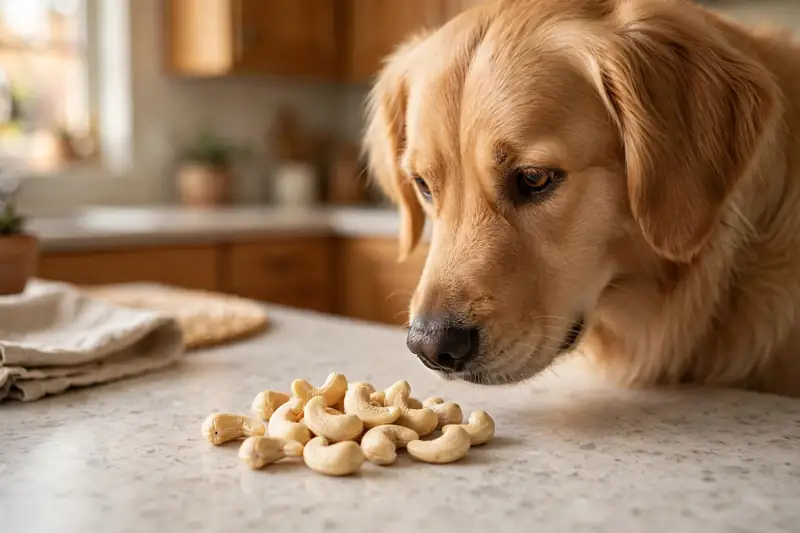
The American Kennel Club states plainly that cashews are not poisonous to dogs. That single fact is where most casual advice stops, and it is exactly where the real questions start. “Not toxic” only means your dog will not be poisoned by the nut itself. It says nothing about the fat load, the salt on commercial varieties, or the macadamia nuts hiding in the same bowl.
Cashews sit in a “safe but not sensible” zone: nothing inside one improves a dog’s diet, because a complete dog food already covers every nutrient they carry. The rest of this guide covers the fat risk, the mixed-nut trap, and the narrow rules for the rare exception.
What cashews actually contain
Cashews are mostly fat, with some protein, carbohydrates, and trace minerals like magnesium and phosphorus. A dog’s complete food already supplies all of these in the right amounts, so cashews add nothing a dog needs. A small handful can top 150 calories, which can wipe out a 10-kg dog’s whole daily treat allowance.
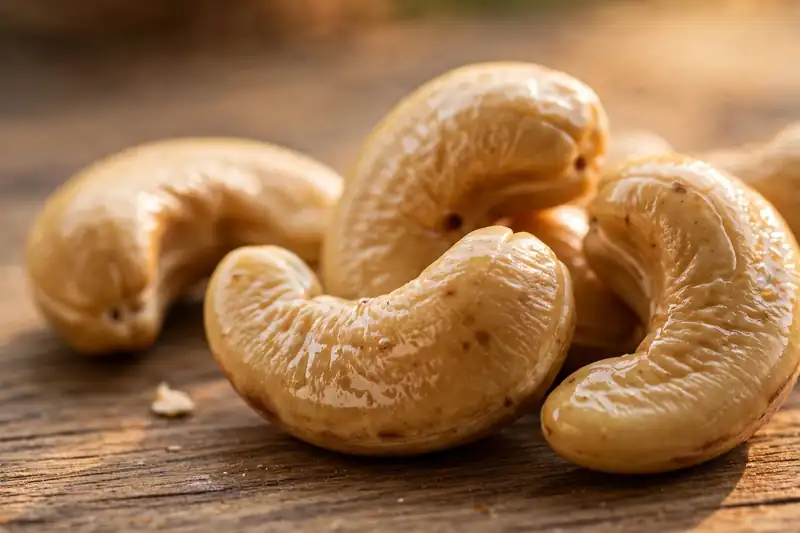
Cashews are energy-dense, which is a polite way of saying most of their calories come from fat. They also carry protein, carbohydrates, and trace minerals such as magnesium and phosphorus. In a human diet that profile can fit. In a dog’s diet it does not, because a complete dog food already delivers those nutrients in the right proportions without the fat overload.
The calorie math is the quiet reason cashews are a poor treat. A small handful can easily exceed 150 calories. For a 10-kg dog, that one handful can blow past the entire 10% daily treat allowance, the share of daily calories that should come from treats rather than meals. The dog gets a burst of fat and nothing it was missing.
The fat problem: pancreatitis and obesity
This is the main danger. High-fat foods can trigger pancreatitis, a painful and sometimes life-threatening inflammation of the pancreas, and the AKC names it explicitly for cashews. Miniature Schnauzers and dogs with a prior episode face higher risk. Beyond acute illness, steady fatty treats push dogs toward obesity, which shortens and worsens their lives.
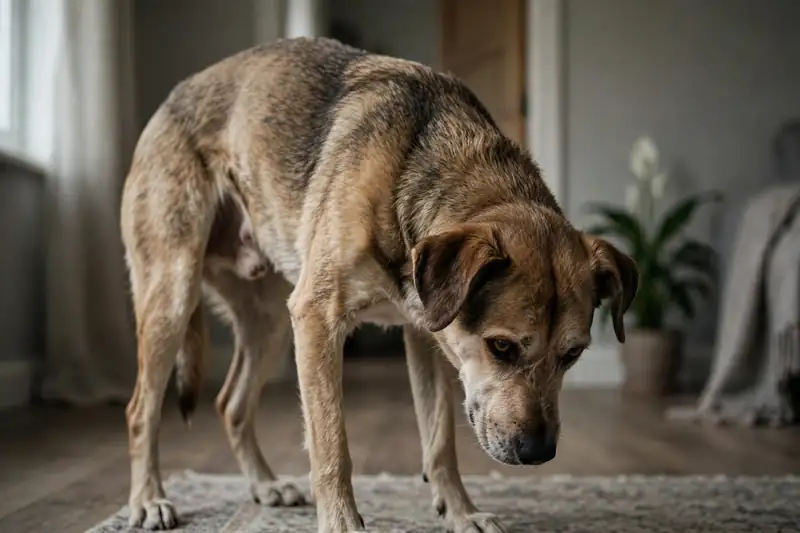
Pancreatitis is a painful inflammation of the pancreas, the organ that produces digestive enzymes. A heavy fat load can trigger it, and once triggered it can progress quickly. In severe cases it becomes life-threatening. The AKC lists it explicitly among the consequences of feeding dogs too many cashews.
Learn the warning signs. Repeated vomiting, diarrhoea, loss of appetite, abdominal pain (watch for the hunched “prayer” posture), lethargy, and dehydration all point toward pancreatitis. It ranges from mild to severe, and it cannot be diagnosed or treated at home. If vomiting follows a nut binge, especially with belly pain, call your veterinarian promptly instead of waiting to see if it passes.
Some dogs carry extra risk. Miniature Schnauzers are famously prone to pancreatitis, and dogs that have had an episode before can relapse after a single fatty incident. For those dogs, a fatty snack is a risk not worth taking at all.
Then there is the slow damage. Regular fatty treats quietly build toward obesity, and obesity shortens and worsens dogs’ lives. One cashew will not do that. A habit of sharing fatty snacks will.
The mixed-nut trap: macadamias and other hidden dangers
Cashews rarely travel alone, and that is where real danger enters. Mixed-nut bowls and trail mixes often contain macadamias, which are clinically toxic to dogs, causing vomiting, weakness, tremors, wobbliness, and overheating within hours. Never let your dog eat from a mixed bowl. Read the label on any single-ingredient cashew package before sharing.
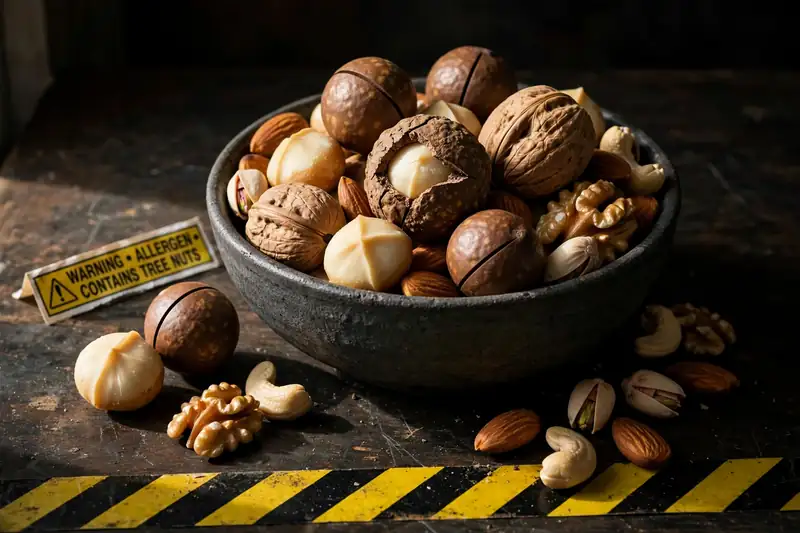
Here is where cashews turn genuinely dangerous, and it has little to do with the cashew itself. Cashews are rarely sold alone. They arrive in mixed-nut assortments, trail mixes, and party bowls, and those mixes very often contain macadamia nuts. Macadamias are clinically toxic to dogs: even small amounts can cause vomiting, weakness, tremors, wobbliness, and overheating within hours.
The rule is absolute. Never feed cashews from a mixed bowl, a trail mix bag, or a party tin. Only offer plain, single-ingredient cashews from a package whose label you have read yourself.
Other nuts in the bowl carry their own hazards: black walnuts are toxic to dogs too. Almonds are not toxic but are a choking hazard and hard to digest. Pecans and Brazil nuts bring extreme fat loads plus mold risks. And the raisins or chocolate pieces hiding in trail mix are emergencies on their own.
If your dog eats from a mixed-nut bowl, assume macadamias were involved and call your vet immediately. Do not wait for symptoms.
Travel is where this discipline usually breaks, so keep human snack bags sealed and elevated and bring the dog’s own treats on outings. If a raid happens, read the mix’s ingredient list and call your vet with specifics: which nuts, how much, any chocolate, raisins, or xylitol.
Salted, flavored, and coated cashews to avoid
The cashews people actually buy cause most of the practical harm. Salted cashews overload dogs with sodium, honey-roasted and savory coatings add sugar, spices, and sometimes onion or garlic powder, and chocolate-covered cashews add theobromine toxicity. Only plain, shelled, unsalted, and unseasoned cashews are ever in the conversation.

Salted cashews deliver excess sodium, which causes extreme thirst and urination; large amounts can cause salt poisoning. Honey-roasted, chili, or cheese-coated cashews add sugar, spices, and flavorings dogs do not need, and the onion and garlic powder in savory coatings are actively harmful. Chocolate-covered cashews layer theobromine toxicity on top of everything else. Some commercial roasting adds oils that compound the fat load further.
Strip all of that away and the list of acceptable cashews is short: plain, shelled, unsalted, unseasoned, raw or dry-roasted. Everything else is out, no exceptions for “just one” flavored cashew.
Raw vs roasted: does preparation matter?
Not much. Both raw and roasted cashews are acceptable if they are unsalted and unseasoned, roasting does not make cashews toxic or safe. What matters is the additives: avoid oil-roasted, salted, or flavored kinds. Never feed cashews in their shells, which contain irritating compounds and pose a choking hazard. Buy them shelled.
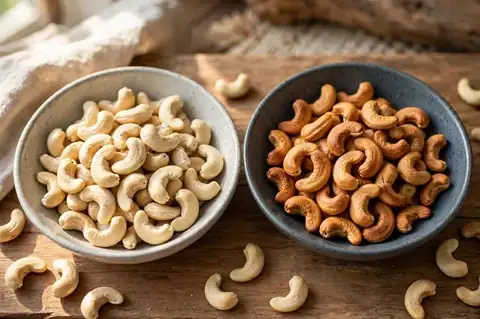
Both are acceptable provided they are unsalted and unseasoned. The varieties to avoid are the ones roasted in oil with salt or flavorings.
Never feed cashews still in their shells. Cashew shells contain irritating compounds and are a choking hazard, so always buy them shelled.
Cashew butter follows the same logic in a more concentrated form. It packs the fat, the calories, and the appeal into a spoonable spread, so the rules tighten. Only plain cashew butter with a single-ingredient label (cashews, nothing else) ever qualifies, and “qualifies” still means a thin smear, not a spoonful. Run the full label check: xylitol or birch sugar is deadly to dogs, and added salt, added oils, and added sugars all disqualify the jar. Flavored varieties like honey, chocolate, or cinnamon-sugar are out. Used correctly, a smear inside a chew toy is fine enrichment; used carelessly, cashew butter is the fastest way to overfeed fat.
How many cashews a dog can have: the strict limit
Keep it genuinely small: one cashew for a small dog, two to three for a medium dog, three to four for a large dog, only occasionally, inside the 10% treat allowance. Puppies get none. A dog with a sensitive stomach, a weight problem, or a pancreatitis history gets zero too.
The limits are strict because the margin is small:
Small dogs: one cashew, occasionally. Medium dogs: two to three cashews, occasionally. Large dogs: three to four cashews, occasionally.
“Occasionally” means not daily. A couple of times a week at most, and always inside the 10% treat allowance.
Watch the individual dog. Puppies have sensitive stomachs and should get no cashews at all; stick to puppy-appropriate treats. A dog with a sensitive stomach, a weight problem, or a pancreatitis history should get zero too. There is no nutritional reason a dog needs cashews, so when in doubt, skip them.
Choking hazards, sensitivities, and digestive upset
Cashews’ curved, kidney-bean shape makes them awkward to chew, a real choking hazard for small dogs and fast eaters. Break them into smaller pieces or skip them for small breeds. Too many cashews often cause vomiting or diarrhoea from the fat load alone. Dogs can also develop nut sensitivities, so watch for itching or swelling after a first taste.
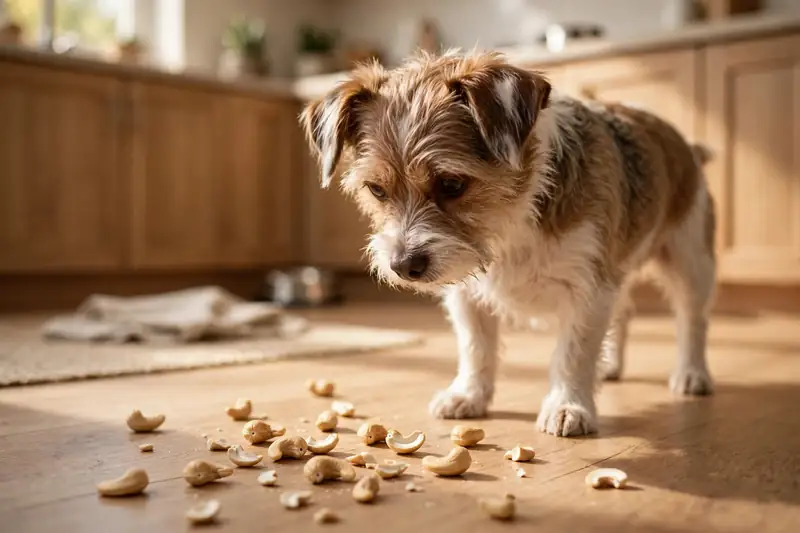
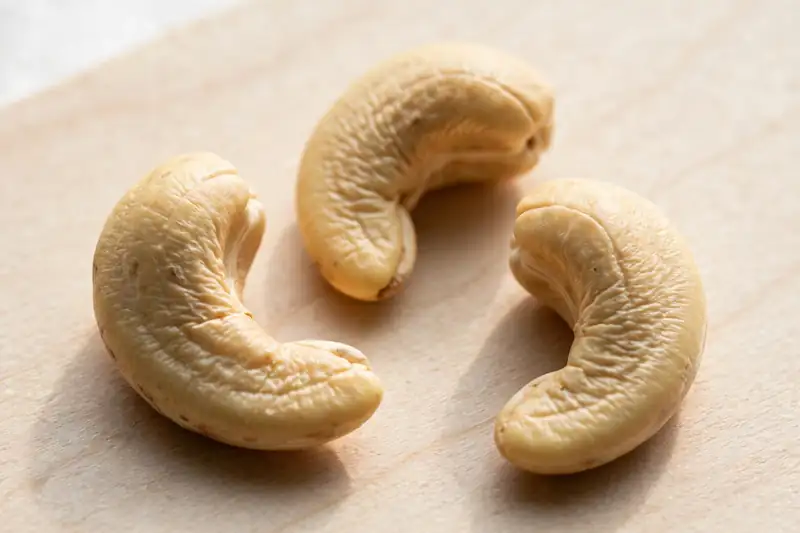
A cashew’s curved, kidney-bean shape makes it awkward to chew, and for small dogs and fast eaters it can become a choking hazard. For small breeds, break cashews into smaller pieces or skip them entirely.
Even dogs that chew well often pay for too many cashews with vomiting or diarrhoea from the sheer fat load. A mild, passing upset after a stolen cashew or two usually resolves on its own. Persistent symptoms mean a vet call.
Dogs can also develop sensitivities to nuts, cashews included. After a first taste, watch for itching, skin redness, ear inflammation, or swelling, the same vigilance you would apply to any new food. True nut allergies are uncommon in dogs, but the fat-related problems are common enough that the distinction rarely matters in practice.
What to do if your dog eats too many cashews
First check what kind was eaten: plain cashews in a moderate amount means monitoring, while salted, flavored, chocolate-covered, or mixed-nut cashews mean escalating. If macadamias may be involved, call your vet immediately without waiting for symptoms. Note the amount, the type, and your dog’s weight before you call.

Stay calm and work through this in order.
- Check what kind was eaten. Plain cashews in a moderate amount means monitoring. Salted, flavored, chocolate-covered, or mixed-nut cashews mean escalating.
- If macadamias may be involved, call your vet immediately. Do not wait for symptoms.
- Watch for 24 to 48 hours. The signs that matter: vomiting, diarrhoea, appetite loss, belly pain, lethargy.
- Call your vet if symptoms appear or a large quantity was eaten. Have the details ready: the amount, the type, and your dog’s weight.
- Do not induce vomiting unless your vet specifically instructs it.
A large fatty binge can trigger vomiting, diarrhoea, or pancreatitis hours after the event, so the watching period matters as much as the first minutes. Your vet needs specifics, not “he ate some nuts,” so keep the package or a photo of its ingredient list.
Frequently asked questions
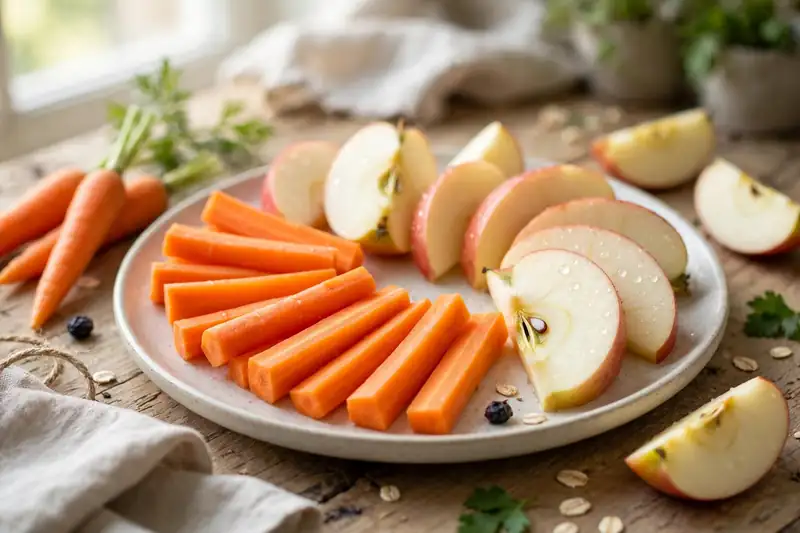
The quick answers to what owners ask most: cashews are not toxic but are a high-fat risk, portions stay tiny and occasional, puppies get none, and mixed-nut bowls are the real emergency. Plain, unsalted, shelled cashews are the only kind that ever qualifies, and for most dogs, carrot sticks or apple slices beat cashews every time.
Are cashews toxic to dogs?
No. Unlike macadamia nuts, cashews contain no compound that poisons dogs. But they are very high in fat, and too many can cause stomach upset, pancreatitis, or obesity. “Not toxic” does not mean safe to feed freely.
How many cashews can a dog eat?
Very few: one for a small dog, two to three for a medium dog, three to four for a large dog, occasionally, not daily. Dogs with weight, pancreas, or stomach issues should get none.
Can puppies eat cashews?
No. Puppies have sensitive stomachs, and high-fat foods can cause rapid digestive upset. Stick to treats made for puppies until they are grown.
Are raw or roasted cashews better for dogs?
Neither has the edge. Both are fine as long as they are plain, shelled, unsalted, and unseasoned. Avoid oil-roasted, salted, honey-coated, or flavored varieties entirely.
What if my dog ate cashews from a mixed-nut bowl?
Assume macadamia nuts were in the mix and call your vet immediately. Macadamias are genuinely toxic, and waiting for symptoms wastes the window for early treatment.
Can dogs eat cashew butter?
Only if the label lists one ingredient, cashews, with no added salt, sugar, oils, or xylitol (also sold as birch sugar), and even then only a thin smear, rarely. Check the jar the way you would check peanut butter.
My dog ate a whole bag of cashews, what should I do?
Do not panic, but do not ignore it either. Note how much was eaten, whether they were salted or flavored, and your dog’s size, then call your veterinarian with those details. A large fatty binge can cause vomiting, diarrhoea, or pancreatitis, sometimes hours later. Watch for repeated vomiting, belly pain, lethargy, and appetite loss over the next 24 to 48 hours, and call back immediately if any appear. Do not induce vomiting unless your vet specifically tells you to.
The honest summary: cashews occupy the “safe but not sensible” zone. They will not poison your dog, but their fat threatens the pancreas and their usual packaging can hide macadamias, which absolutely will poison your dog. Nothing about a cashew improves a dog’s diet.
The sharing ritual does not need cashews anyway. Carrot sticks, apple slices (no seeds), blueberries, and cucumber rounds all deliver the bonding without the fat load, and a smear of xylitol-free peanut butter inside a chew toy keeps a dog busy far longer. For training rewards specifically, small pieces of plain cooked chicken outperform any nut: high value, low risk.
For the same plain-only, small-portion thinking across the foods dogs meet most often, see our wider guide to what human food dogs can eat. For another food where fat is the whole story, our broccoli guide shows how the 10% rule works in practice, and our strawberry guide offers a sweet treat with real nutritional upside.
This article is general information only and is not a substitute for veterinary advice. If your dog has a health condition, is on a prescription diet, or you are unsure about any food, check with your veterinarian first.